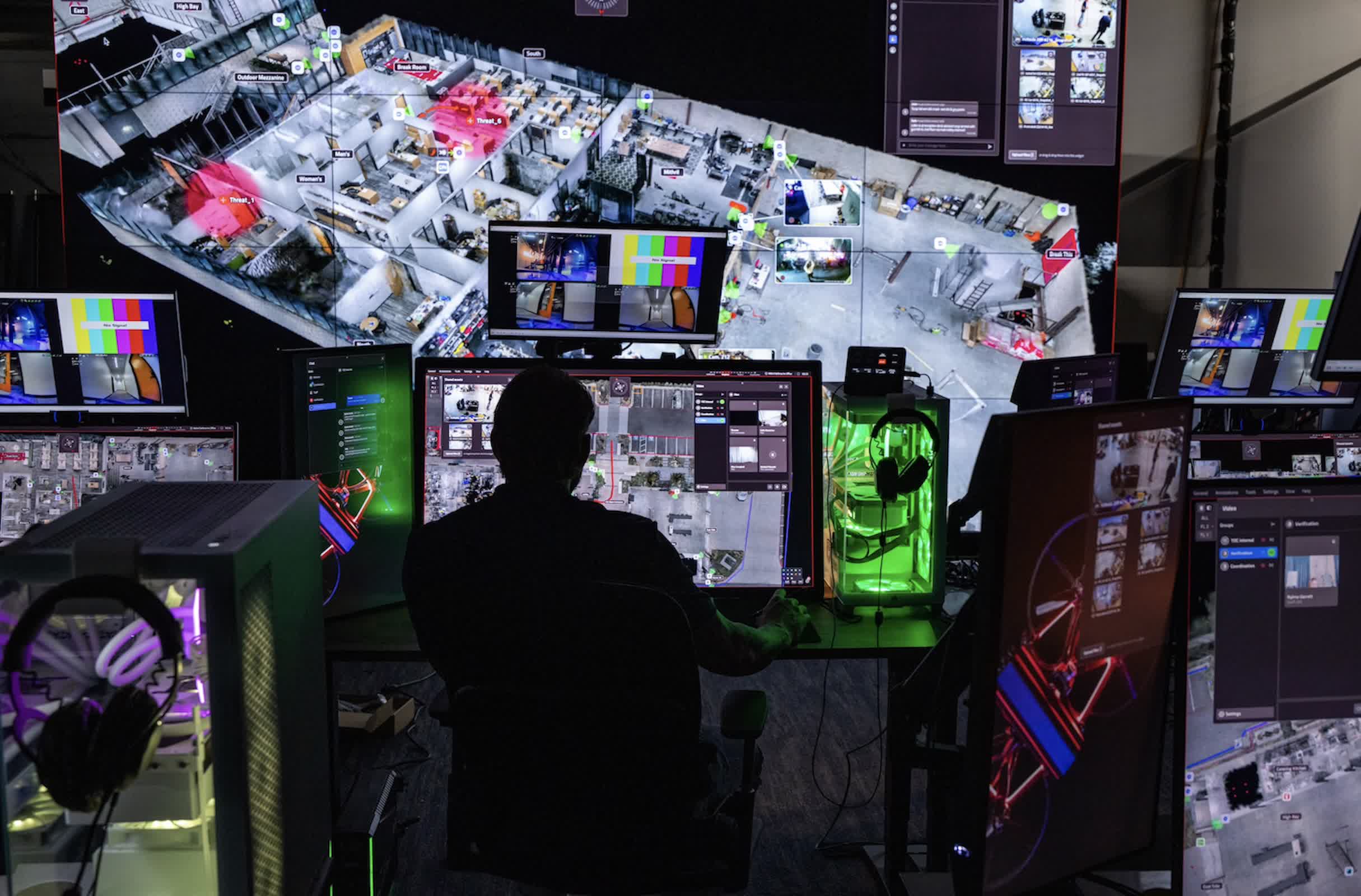
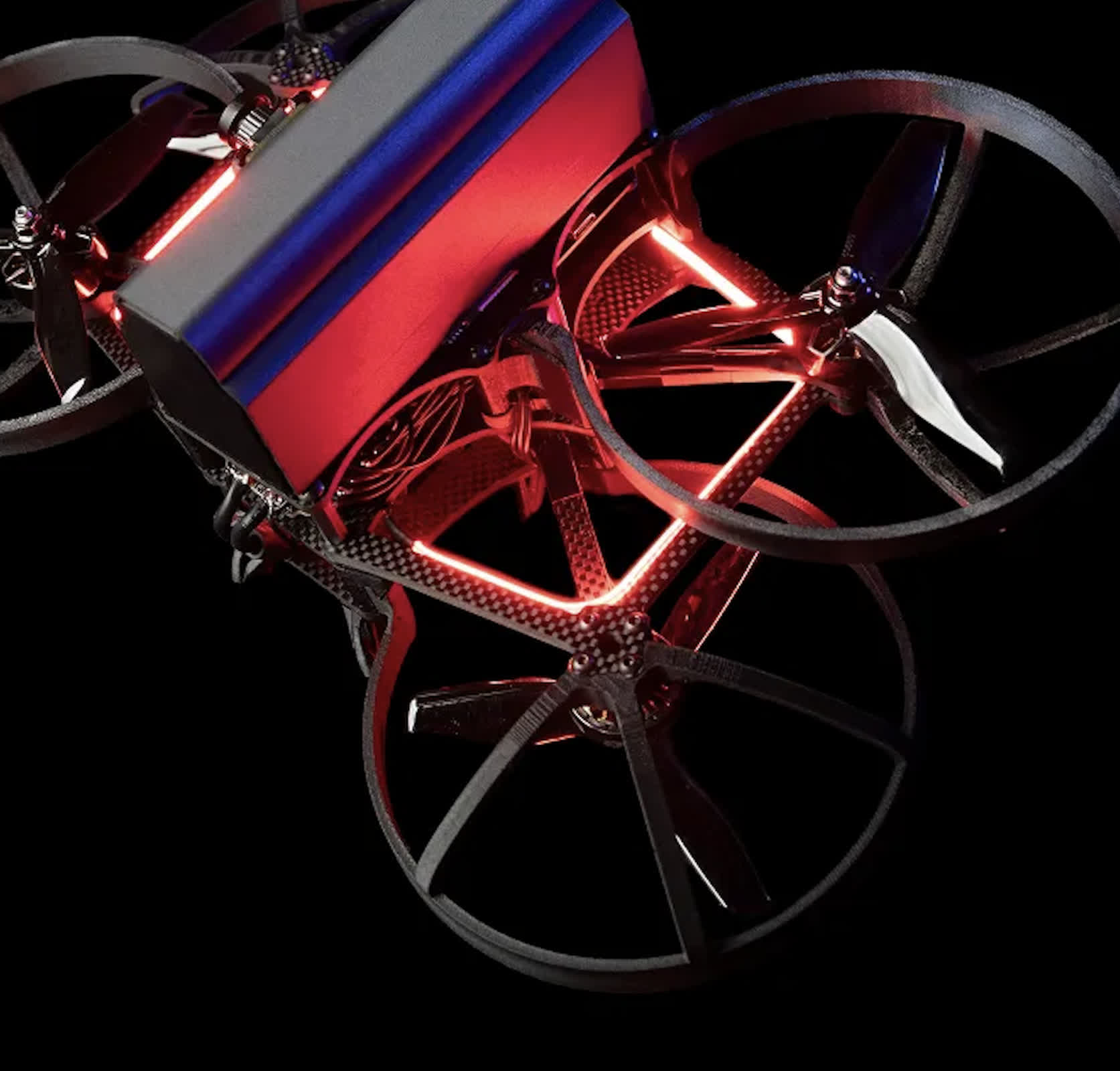
Forward-looking: When classes resume this fall at Deltona High School in Florida, students might find an unusual addition to their campus security system: ceiling-mounted drones designed to respond to active shooter threats. The machines – called Black Arrows and built by Austin-based startup Mithril Defense – can race through school corridors at speeds up to 100 miles per hour, emit piercing alarms, flash strobes, and even spray pepper gel at an attacker.
The deployment marks a new test of drone-based security technology in US schools. Backed by more than $500,000 in state funding, Florida and Georgia are rolling out Mithril's technology as part of broader school safety initiatives. The goal, company executives say, is speed. Pilots operating from Mithril's Austin headquarters could reach attackers faster than on-site officers.
"It's revolutionary," Volusia County Sheriff's Office Capt. Todd Smith, who oversees school safety in the district, told the Wall Street Journal. "This is the future."
Mithril Defense was founded in 2023 by British entrepreneur Justin Marston and former Navy SEAL command master chief Bill King. The idea for its school security platform, known as the Campus Guardian Angel system, emerged after Marston watched videos of small Ukrainian drones used against Russian soldiers.
"Our vision is ultimately to be in every school in the nation and to eradicate mass shootings," Marston said.
The company's drones were first tested in 2024 at an abandoned Austin school before extensive training exercises with law enforcement. Mithril's team includes veterans and competitive drone pilots, some as young as 18. Together, they use the same software that powers Epic's Fortnite to build detailed 3-D maps of school interiors. These virtual reconstructions help pilots remotely navigate classrooms and hallways with precision.
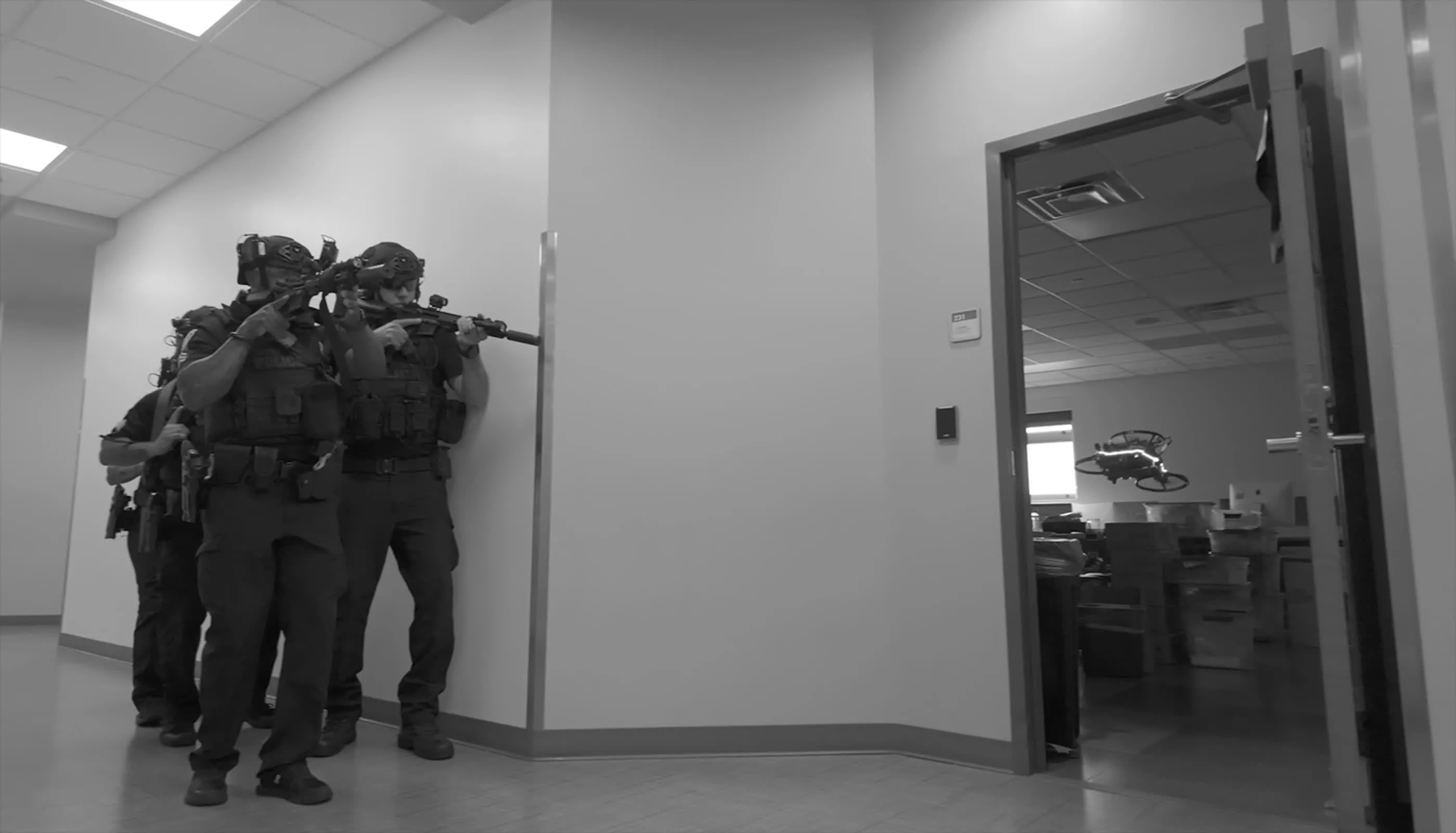
Unlike police drones dispatched after a 911 call, Mithril's aircraft remain dormant in ceiling-mounted boxes, charging until a threat activates them. When triggered, they launch in formations of three, providing live surveillance through encrypted feeds that local law enforcement can access via an app. Each drone's battery lasts 10 to 15 minutes – enough time, the company says, to give officers a tactical advantage.
"We can take every corner, we'll swing every door first, because we don't care if we get shot, we're metal and plastic," said Christian Van Sloun, Mithril's chief drone pilot. "It's kind of like cheating in a videogame after you die."
The technology comes at an annual cost of roughly 50 cents per square foot, or about $8 per student per month. In Texas, parents near Houston have raised over $200,000 to bring the system to a local high school.
Mithril's project enters a crowded space of school security innovations, from AI-based gun detection systems to wearable panic buttons. Police departments nationwide are also expanding drone programs, often deploying them as first responders.
Yet critics say the technology raises ethical and practical questions. "We have a real mental health crisis in schools, and we could be using the money to deal with that," said Barry Friedman, a law professor at New York University who studies policing. Others warn that remote force could be misused. "When you make it really easy to use force, zero risk proposition, something you can do remotely sitting in your IT room, then it's going to be overused," said Jay Stanley, a senior policy analyst with the American Civil Liberties Union.
Company leaders insist the drones would activate only during active shooter situations, though Marston acknowledged that bystanders could still be injured. "We believe we can help in the vast majority of these mass shootings," he said.
Parents in Volusia County have expressed a mix of concern and hope. "To find out that we're one of the first ones to get this pilot program was a little nerve-racking at first," said Jessica Clayton, whose two children attend Deltona High School. "But at the same time, you have to start somewhere, and I'm hoping this can be a positive influence for the community."
Mithril, meanwhile, is already planning to expand its technology beyond schools. The company has held live demonstrations for oil and gas producers, financial firms, and retail operators – all potential clients for a future built around autonomous security forces.
Masthead: The Wall Street Journal