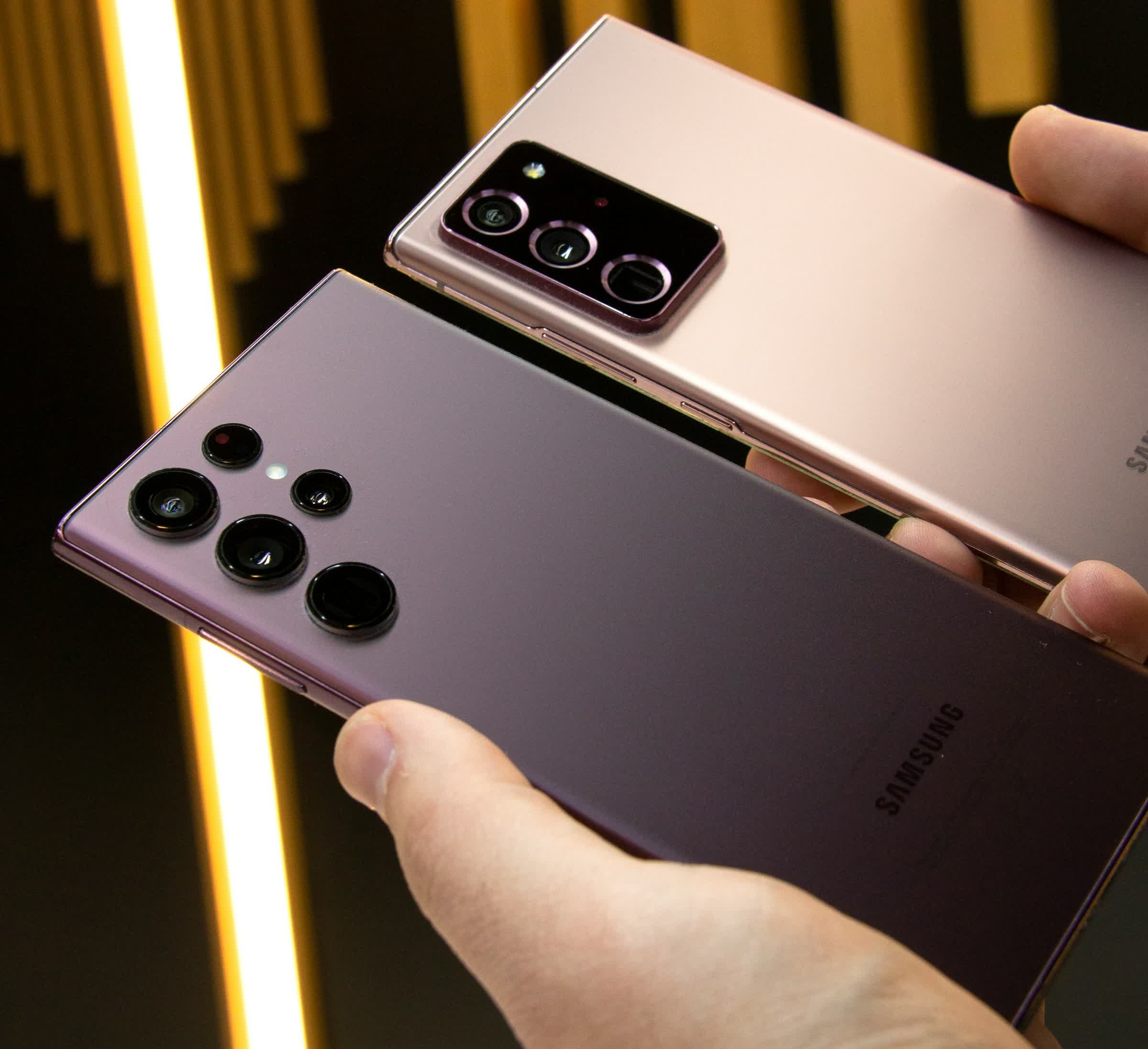
In brief: Samsung and Apple continue to lead the pack when it comes to global smartphone sales, but the tech giants are at the bottom in the area of phone repairability. Samsung fared slightly better than its rival with a score of D (E being the lowest), while Cupertino managed a D-.
The repairability scores come from the Failing the Fix 2026 study by the US Public Interest Research Group (PIRG) Education Fund, a nonprofit consumer advocacy group.
This fifth edition uses the EU's European Product Registry for Energy Labeling (EPREL) criteria for assessing smartphones. It covers 105 devices, grouped by manufacturer.
The results show that despite being the world's two leading smartphone makers, mobile devices from Samsung and Apple are the least repairable.
Apple is the bottom of the table. Its D- score only just manages to avoid the lowest repairability rating of E. Samsung is only slightly above Apple with a score of D.
At the other end of the scale is Motorola. It might not compete with Apple and Samsung when it comes to sales, but the report states that its phones are the most repairable, scoring an impressive B+.
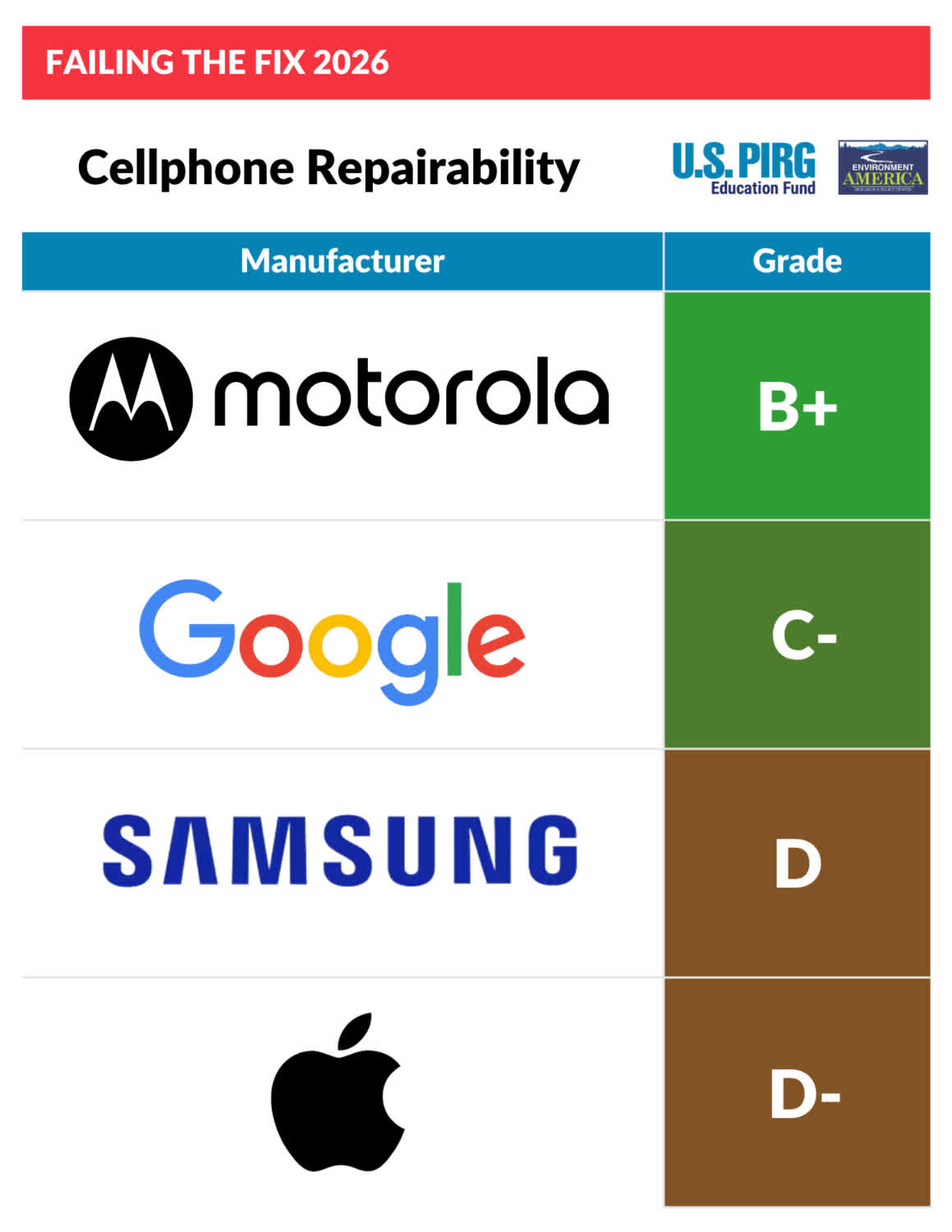
Google and its Pixel line are right in the middle when it comes to repairability. The company's C- score places it above Samsung on the table
The European Union repair score takes into account factors such as the availability of spare parts, tools, and repair information, the length of software support, and the number of steps required for simple repairs like replacing a phone battery.
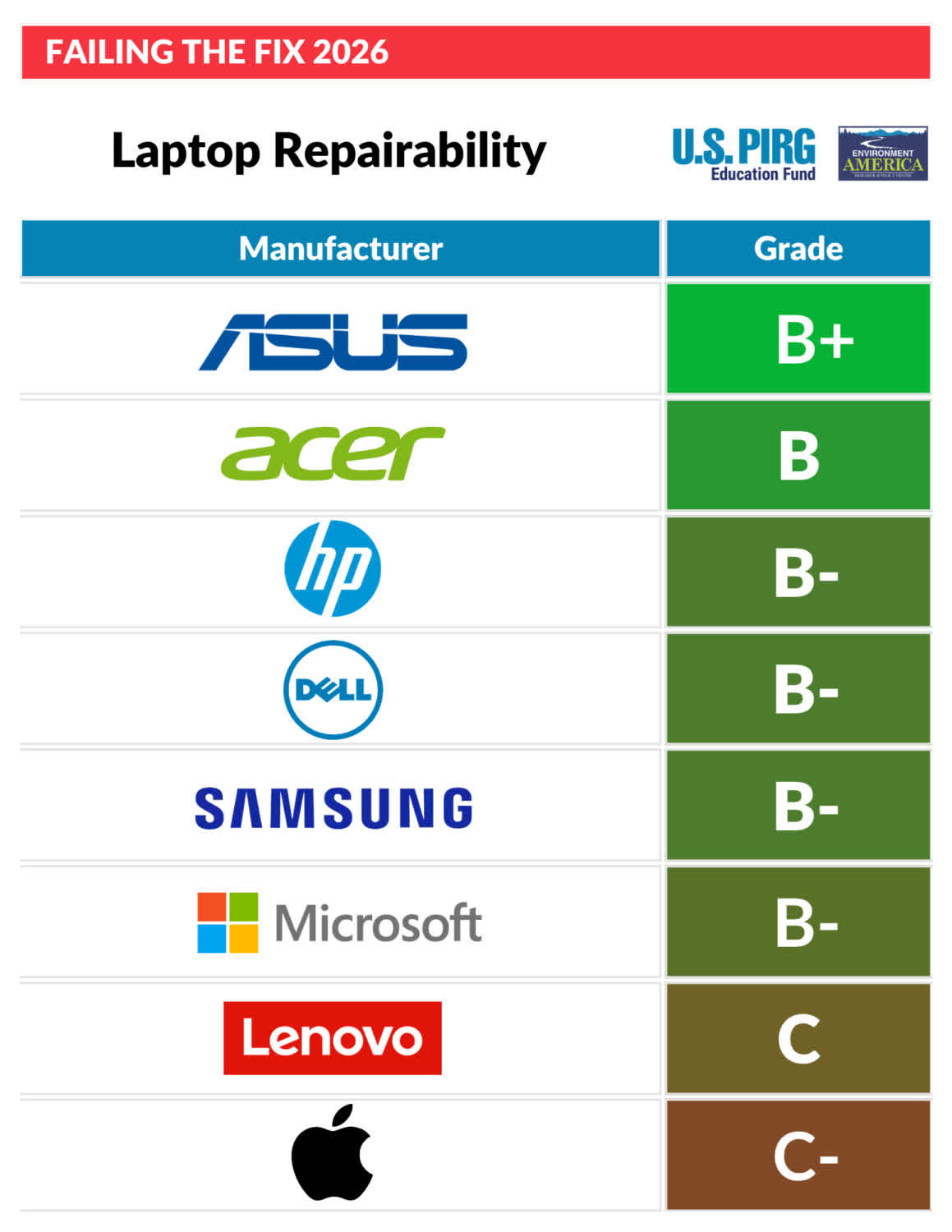
The report also looks at laptop repairability, which uses an index introduced by the French government. The scores here are notably better than with mobiles, though Apple is once again at the bottom with a C-. Samsung is three places higher, scoring a B-, while Asus tops the chart with B+.
It's possible that the results don't include the new MacBook Neo. Apple's budget machine recently underwent a teardown by YouTuber Tech Re-Nu, who found it to be one of Apple's most repair-friendly MacBooks in years – iFixit came to the same conclusion with its teardown.
The report notes how unrepairable devices are a problem for the environment and contribute to the growing amount of electronic waste.
The findings also underscore why right-to-repair policies matter. The EU's smartphone rules, in force since June 20, 2025, require repairability labels, spare-parts access, and longer software support, while PIRG's scorecard also penalizes brands linked to groups opposing repair legislation.