In brief: Nobody wants to see gas become more expensive. Apart from Tesla, that is, which has just reported an increase in global demand for its EVs as a result of soaring fuel prices following the conflict in Iran. The announcement arrived as part of the company's first-quarter earnings report, which contained a few better-than-expected results.
Tesla said on Wednesday that it had seen a "resurgence" in global demand for its vehicles, while the US experienced "slight growth." It also posted its highest first-quarter order backlog in more than two years – an impressive figure considering the federal EV tax credit ended last year.
CFO Vaibhav Taneja said part of the reason for that renewed interest was rising gas prices following the start of the war in Iran and the subsequent disruption to traffic through the Strait of Hormuz.
The current national average price of gas is just over $4 per gallon, the highest it has been since Russia invaded Ukraine in 2022. And even if the strait reopens fully, experts expect it to take months before prices return to anything close to normal.
This isn't the first sign of the crisis affecting EV sales. It was reported earlier this month that more buyers are turning to used electric vehicles to avoid painful trips to the pumps. The secondhand market is also being helped by the hundreds of thousands of leased EVs from the early 2020s that are now re-entering circulation.
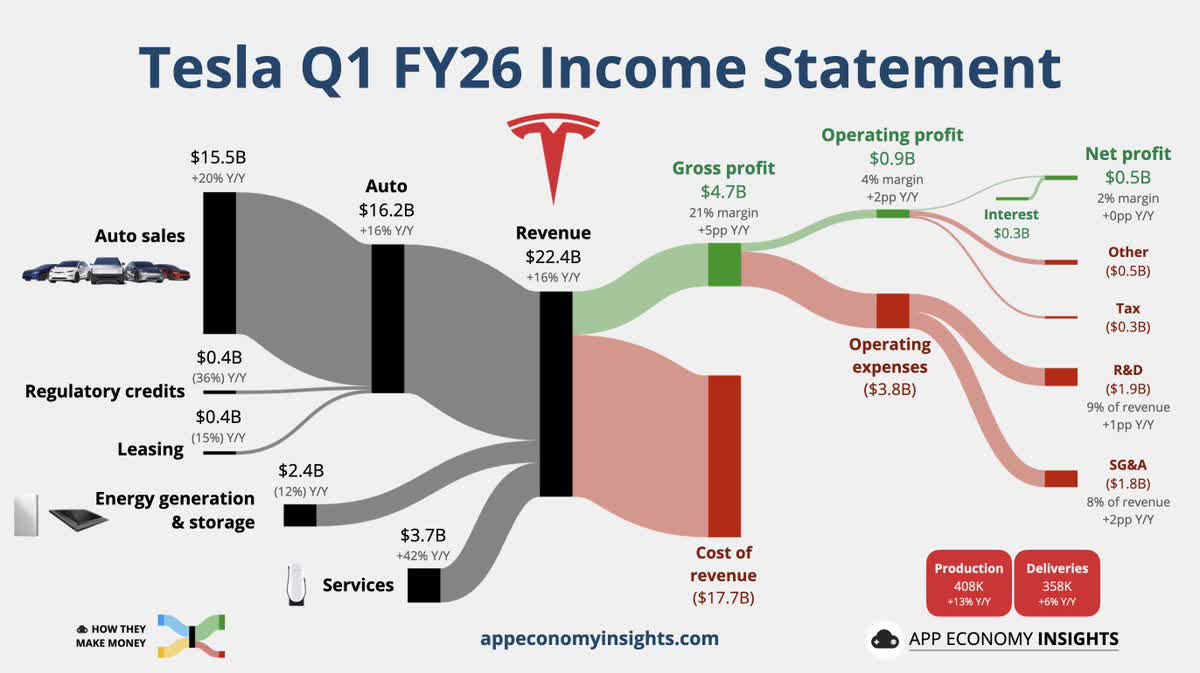
Elsewhere in the report, Tesla revealed earnings of 41 cents a share, above Wall Street's 37-cent estimate. Revenue came in at $22.39 billion, which was shy of forecasts of around $22.6 billion, but the company still managed to surprise analysts with positive free cash flow of $1.44 billion.
That doesn't mean everything is suddenly rosy again at Elon Musk's firm. Tesla said earlier this month that it delivered 358,023 vehicles globally in the first quarter, up year over year but still below analyst expectations. The company also produced more than 408,000 vehicles during the period, highlighting an inventory gap that suggests demand hasn't fully returned.
There's also the issue of where Tesla is planning to spend its money. Investors initially welcomed the earnings report, but some of that optimism faded after the company said it now expects to spend more than $25 billion this year, up from its previous $20 billion forecast. Importantly, much of that cash is set to go toward AI, robotics, and robotaxis rather than the core car business.