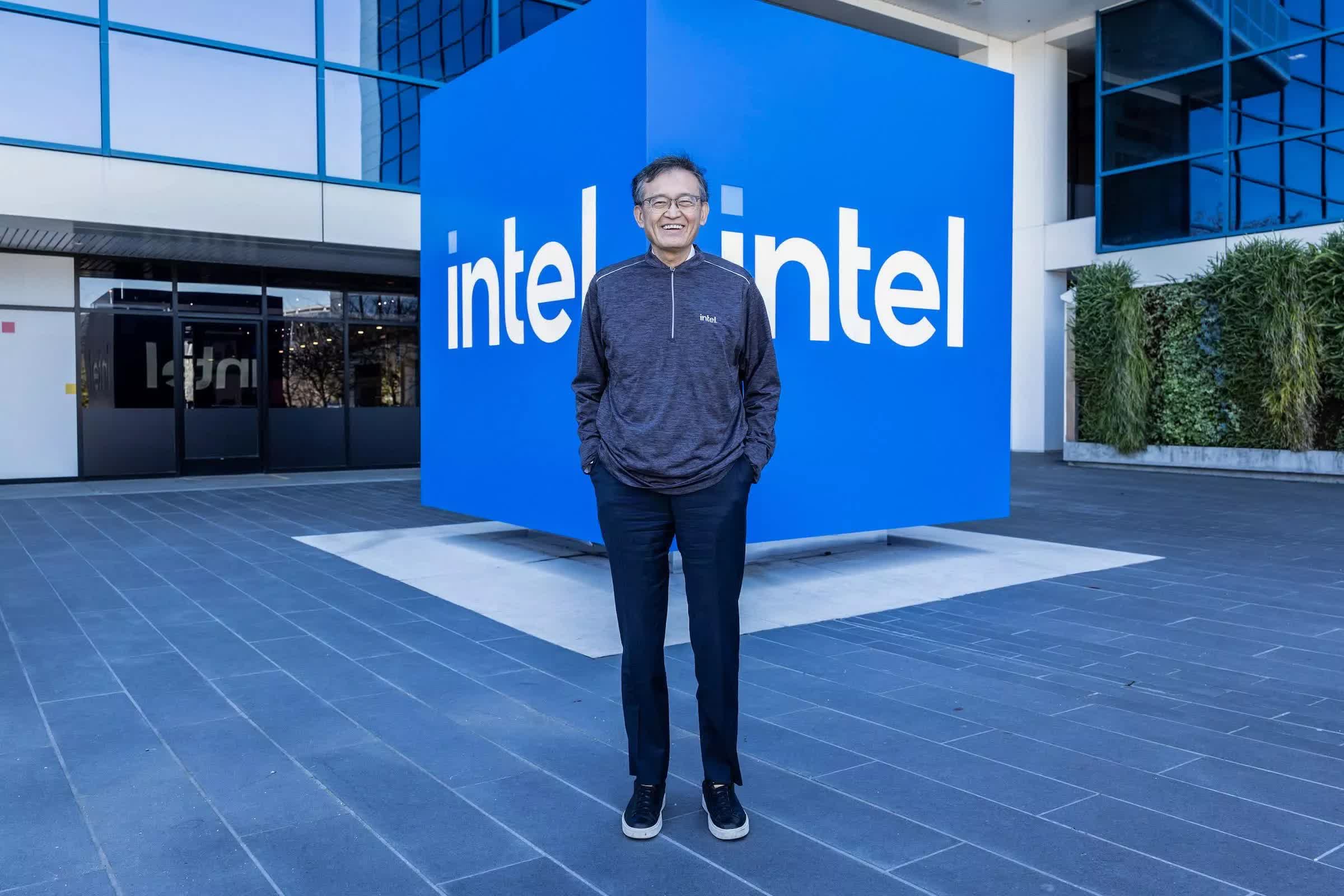
Bottom line: Intel's latest earnings suggest a shift is underway in how artificial intelligence workloads are built – and, in turn, which chips matter most. For much of the current AI cycle, GPUs have dominated the conversation, driven by Nvidia's grip on model training. But Intel's March-quarter results point to growing demand for something else: general-purpose processors and the systems that support AI agents.
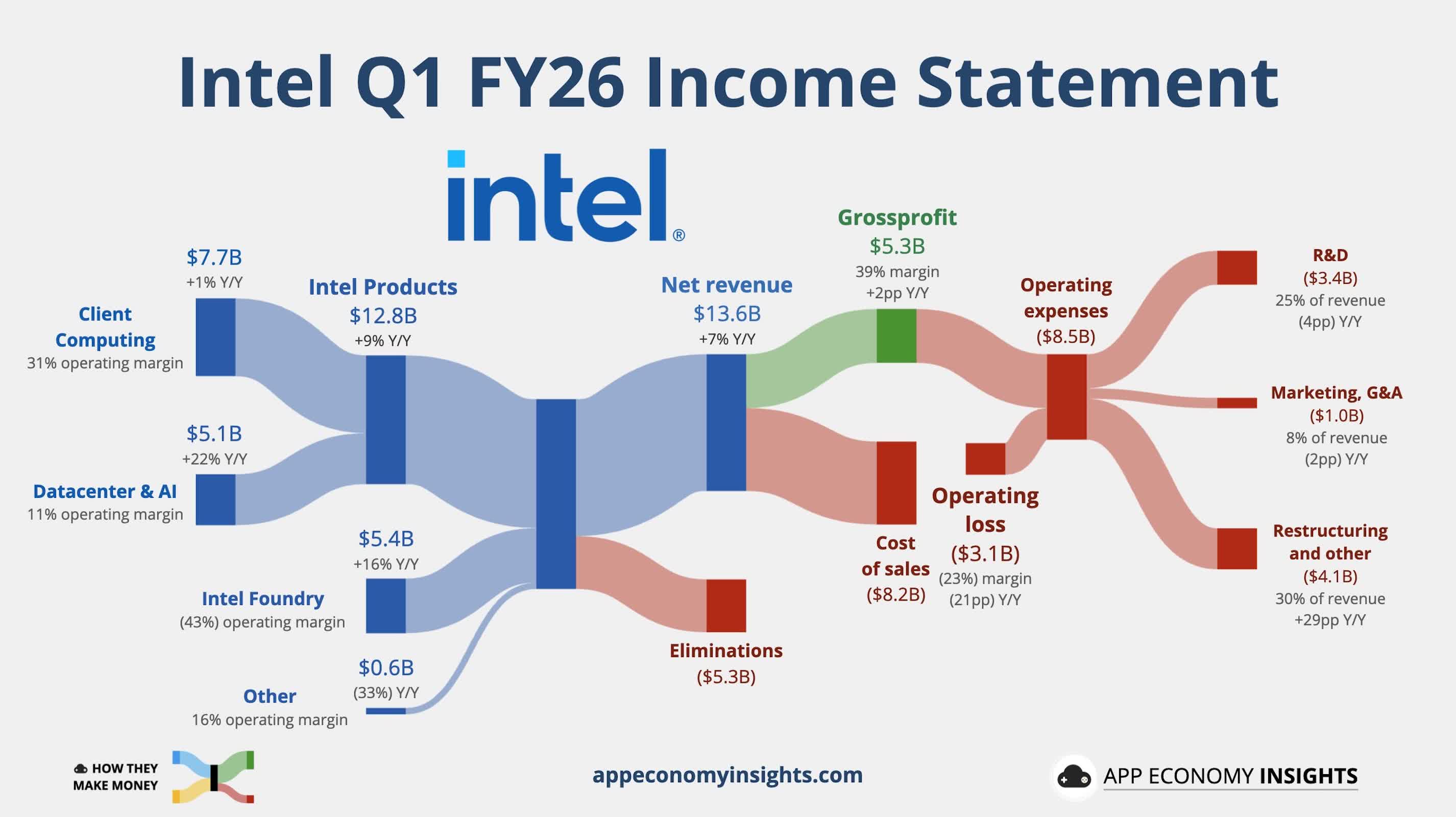
The company reported $13.6 billion in revenue for the quarter, up 7% year over year and well above analyst expectations. Intel also raised its current-quarter revenue guidance to between $13.8 billion and $14.8 billion, exceeding the roughly $13 billion analysts had projected.
The change is tied to how AI is now being deployed. As deployments move beyond centralized model training toward inference and autonomous agents operating closer to users, compute requirements are becoming more heterogeneous. That trend is benefiting CPUs, which have long been considered secondary in AI infrastructure.
Credit: App Economy Insights
"The next wave of AI will bring intelligence closer to the end user, moving from foundational models to inference to agentic," said chief executive Lip-Bu Tan. "This shift is significantly increasing the need for Intel's CPUs and wafer and advanced packaging offerings."
Nowhere is that more visible than in Intel's data-center business, which generated $5.1 billion in revenue for the quarter, well above expectations of $4.5 billion. The segment relies heavily on CPUs that power servers handling both training support tasks and inference workloads. Tan noted that the balance between CPUs and GPUs is already changing, with systems now requiring one CPU for every four GPUs, compared with one to eight in the past.
That shift reflects the growing complexity of AI systems, where more of the overall workload, especially on the inference side, depends on CPUs. It also reflects a broader hardware refresh cycle, with many customers replacing older servers with new systems.
Intel's resurgence is not limited to processors. The company is also seeing renewed interest in its manufacturing business, particularly in advanced packaging technologies that allow multiple chips to be integrated into a single system. These techniques are becoming more important as AI systems use more chips per server.
Chief financial officer David Zinsner said advanced packaging is now a key driver of foundry revenue.
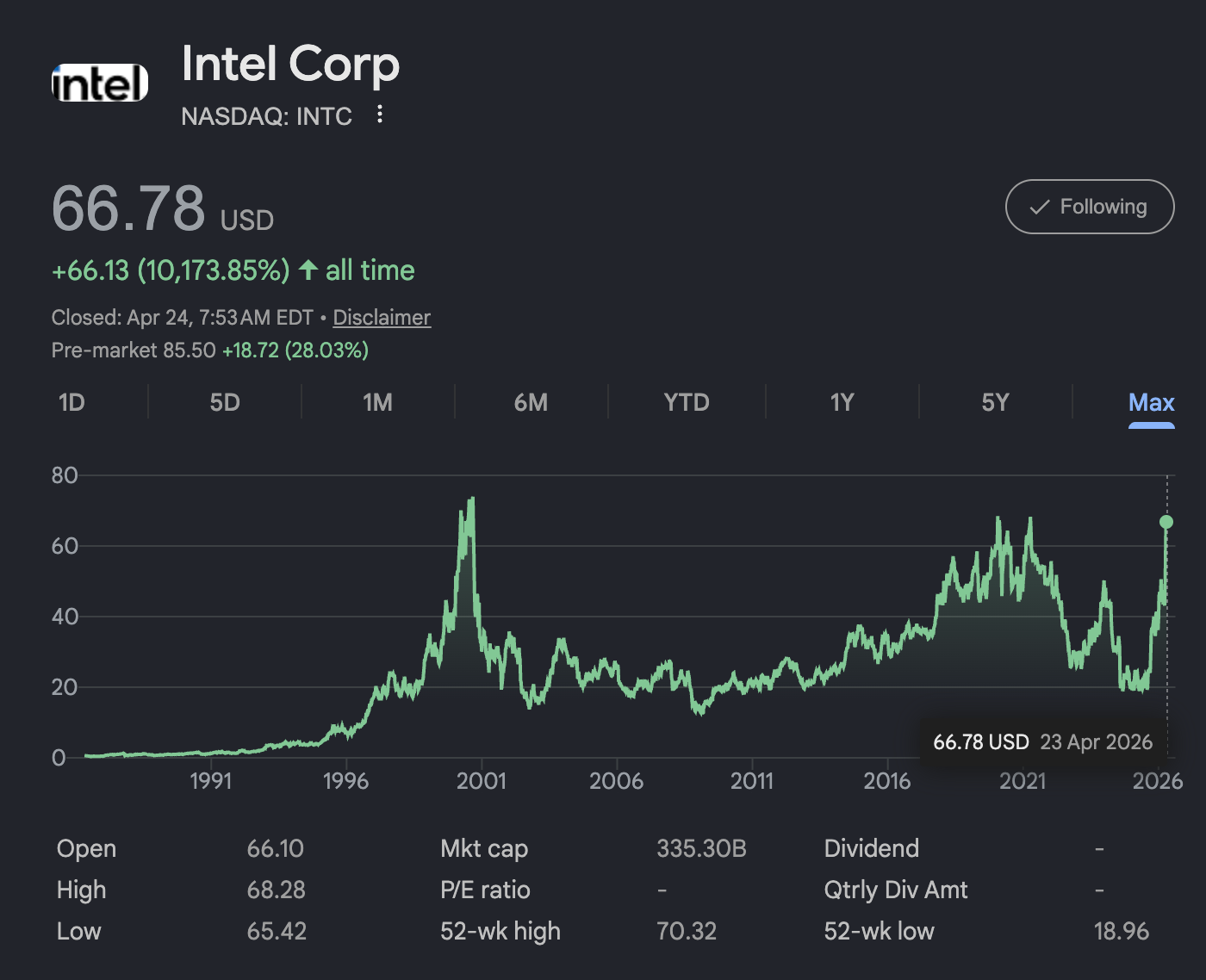
External factors are also shaping Intel's trajectory. A 10% stake disclosed by the Trump administration last summer has coincided with a sharp rise in the company's stock, which has nearly tripled since August to close at $66.78 on Thursday. Meanwhile, Intel has joined Elon Musk's Terafab project as a strategic partner, though the scope of its involvement remains unclear.
"Terafab is very important. Lip-Bu and Elon are still working out exactly what the business will entail," Zinsner said. "Elon looks at a process and figures out what doesn't work about it and then fixes it. Applying that to foundry is really exciting to us. We'll have him certainly help us figure out how to make the fabs more economical."
Tan framed the collaboration in broader terms, pointing to structural constraints in global chip production. "Clearly, Elon and I, we believe that the global supply chain is not keeping pace with the rapid acceleration of demand," he said. "We can learn a lot together."
Despite the operational momentum, Intel reported a net loss of $3.7 billion for the quarter, driven by one-time charges tied to its stake in Mobileye and financial arrangements related to the government investment. Excluding those items, the company earned $1.5 billion, or 29 cents per share, ahead of expectations.
Challenges do remain, though. Intel continues to trail rivals such as Nvidia and AMD in high-performance AI accelerators, and its foundry business has struggled to consistently attract major customers. Demand for PC chips, historically a core revenue driver, is expected to stay weak amid rising component costs.
Even so, the results point to a phase of AI where no single chip type dominates, and the mix matters more. As workloads split across training, inference and agent-based systems, Intel appears to be regaining relevance in the parts of the stack it has always occupied.