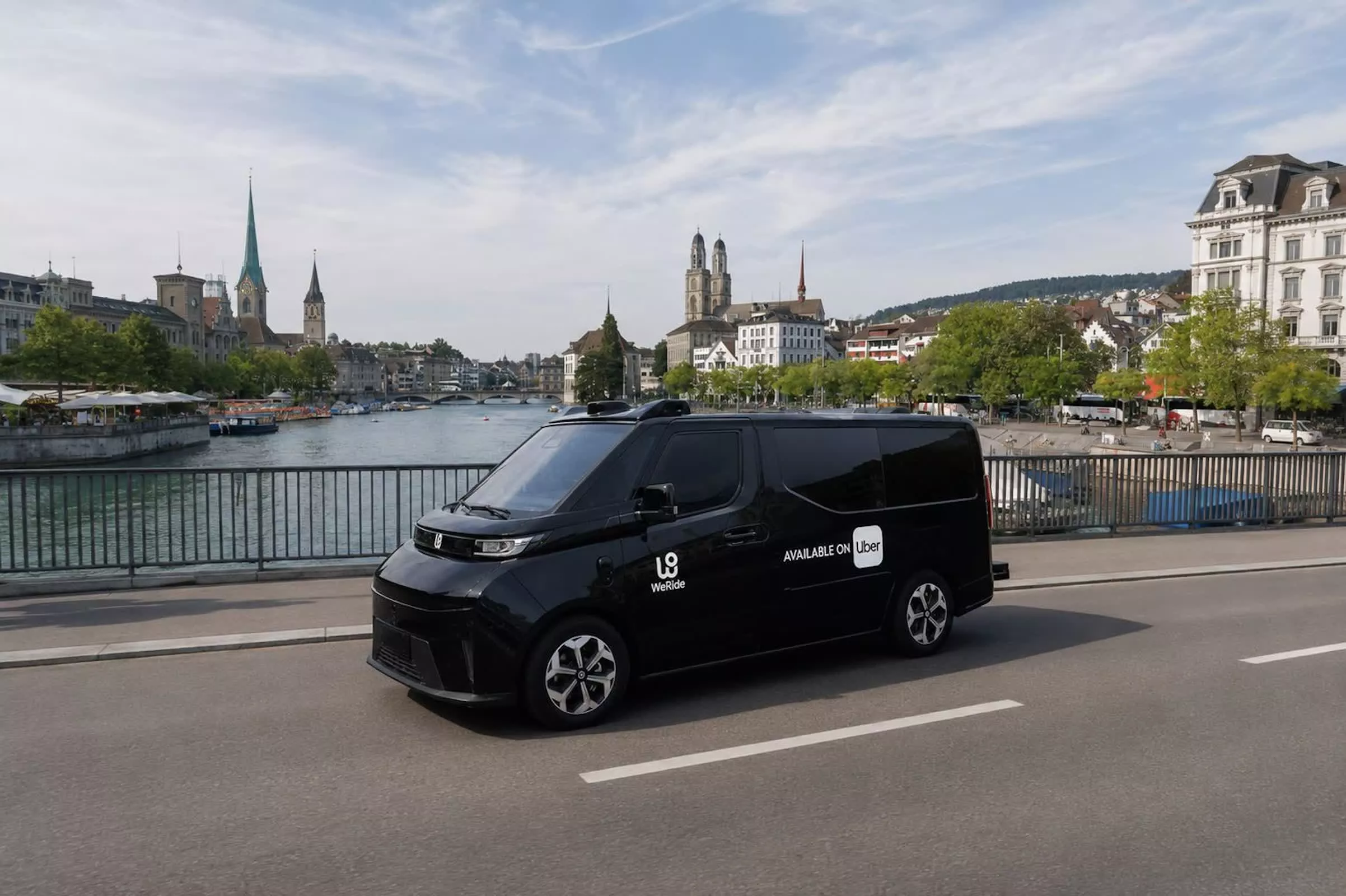
Bottom line: Uber is moving quickly to put robotaxis on its main app, backed by a large cash pile and new approvals for real-world testing. The company plans to spend about $10 billion over the next few years to deploy 120,000 autonomous vehicles. It expects to run robotaxi services in at least 15 cities this year, putting it in direct competition with Alphabet's Waymo and Tesla as they all push to turn self-driving technology into a commercial service.
Chief executive Dara Khosrowshahi said the spending is possible because Uber is generating strong cash flow from its core business. In the second quarter, the company produced a record $2.8 billion in free cash flow. Over the past 12 months, free cash flow has reached about $10.1 billion as bookings continue to grow. "We're investing from a position of strength, as we accelerate our cross-platform strategy at a global scale and build the world's largest platform for autonomous vehicles," he said. "Our ambition is clear: to become the world's leading commercialization platform for autonomous mobility."
Instead of building a single in-house autonomous driving system, Uber is trying to become the main platform that connects multiple AV technologies to riders. The company shut down its own autonomous vehicle program in 2020 during a cost-cutting push. Over the past year, it has shifted to working as an intermediary for AV startups around the world.
That includes agreeing to invest in vehicle fleets and taking equity stakes in companies such as Zoox, Rivian, and Lucid, a change from its earlier asset-light approach. Uber is also sending out hundreds of sensor-equipped vehicles to collect driving data for its partners, who use that information to train and refine their self-driving systems.
One of the key partnerships is with Wayve, a UK-based autonomous driving company focused on software that can handle complex city streets. On Wednesday, Uber said Wayve had received permits from Transport for London to launch a commercial robotaxi service with a supervising driver behind the wheel. "I believe that it's the UK's first license for AV technology to operate and a big step forward for the UK," Alex Kendall, Wayve's chief executive, told the Financial Times, adding that the approval should allow the two companies to offer rides to Londoners in "a matter of weeks." Transport for London said it had cleared 15 of Wayve's modified Ford Mustang Mach-E vehicles to operate with a safety driver while the technology is tested on public roads.
Uber's push into robotaxis comes as investors are still debating how autonomous vehicles will affect its core ride-hailing business. The stock is down 13% in 2026 as some shareholders worry that robotaxis could disrupt the existing model that relies on human drivers. Uber is arguing that its base of more than 200 million customers and its ability to route trips across different services will give it an advantage as AVs become more common.
Balaji Krishnamurthy, Uber's chief financial officer, said the company will keep using its balance sheet to back growth projects, including AVs and international expansion. He pointed to Uber's €13 billion offer for German delivery group Delivery Hero as part of that strategy. Uber has already paid about $4 billion for a 37% stake ahead of a formal bid, a move that would open access to faster-growing markets in Europe and the Middle East if the deal goes through.
The next test for Uber will be whether its platform-based AV strategy can turn technical progress into dependable services on busy city streets. The Wayve permits in London and robotaxi launches in other cities will bring Uber's autonomous vehicle partners to more riders and regulators. The industry must still prove that driverless transport can be safe, scalable, and profitable.