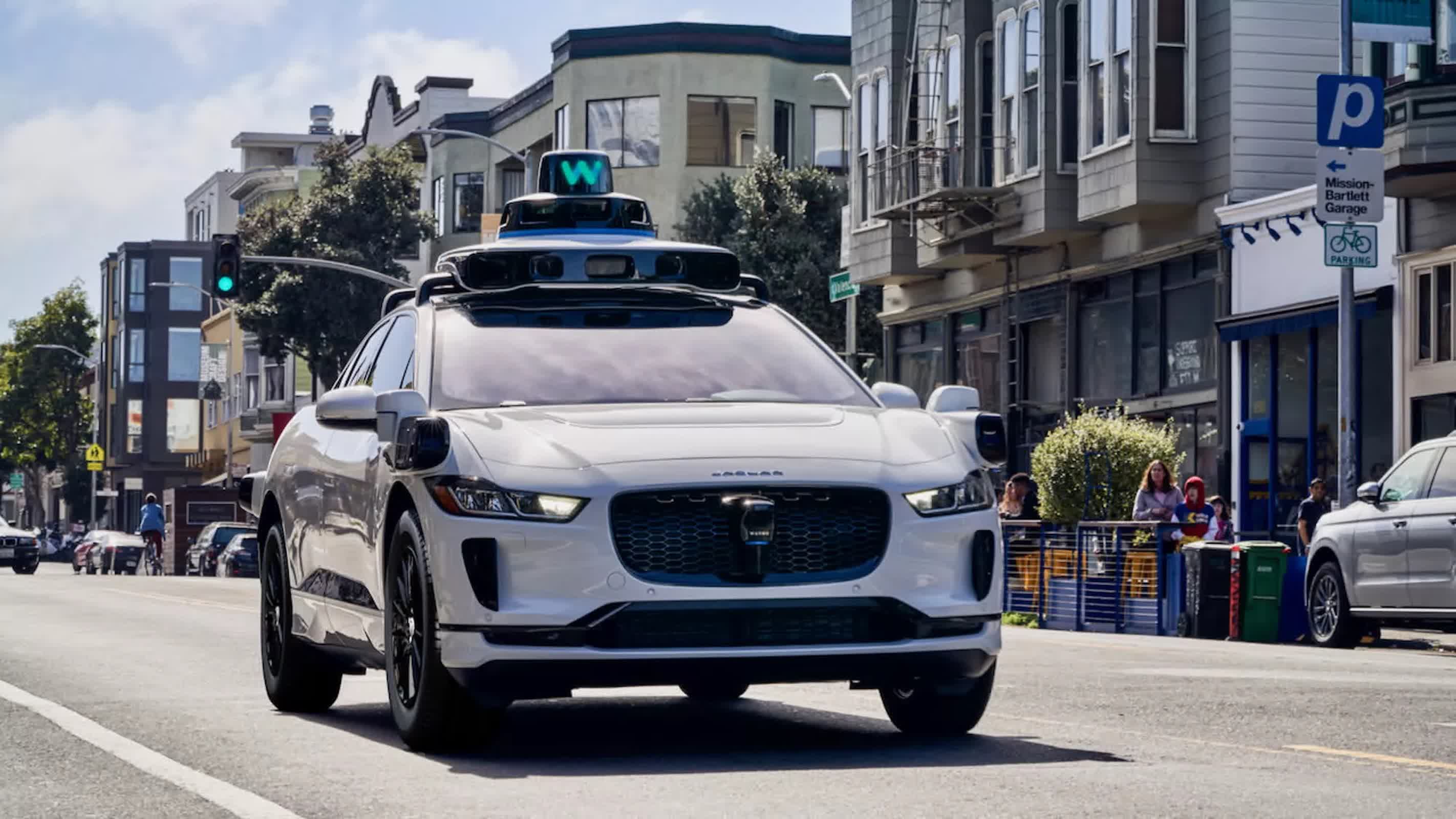
Facepalm: Even with advanced autonomous vehicles, a small failure at the end of a ride can cause real problems. That's what happened to Di Jin, a Bay Area businessman whose Waymo trip to San Jose Mineta International Airport ended with the car driving off while his suitcase was still locked in the trunk. The issue surfaced only after the vehicle reached the terminal, when Jin attempted to retrieve his belongings.
"I pressed the trunk open button, tried to get my luggage, but it doesn't do anything, and it drives away immediately," Jin told NBC.
Waymo's robotaxis rely on a tightly integrated system of sensors, software controls, and passenger interfaces. Riders can access the trunk through the Waymo app, the vehicle's in-car display, or a physical button on the trunk itself. However, the incident appears to have stemmed from the vehicle transitioning out of the active ride state and departing before the passenger retrieved his luggage. In Jin's case, that transition appears to have completed before the trunk opened, effectively ending the interaction and sending the vehicle on its next task.
Once the car left the airport, recovering the luggage became complicated. Without a driver to handle lost items, Jin had to deal with the company directly. He contacted Waymo customer support but was told the vehicle had already been routed back to a depot and could not return.
Jin wound up boarding his flight without any of his belongings. "So I have no luggage, no clothes to change, and all my work notes are in my luggage," he said.
Later that day, Waymo confirmed via email that the suitcase had been located at one of its facilities. But the company's response showed the limits of a driverless service. Without a human driver responsible for lost items, the process shifts to centralized handling, leaving customers to navigate retrieval logistics themselves.
"While we would love to get this item back to you as quickly as possible, Waymo is unable to cover the cost of shipping labels or courier fees," a support team representative wrote.
Instead, Jin was offered two complimentary rides to pick up the luggage in person. He said that would require more than 2 hours of travel, making it impractical compared to simply having the item returned. "It sounds terrible," Jin said. "It doesn't make any sense at all, because it's not my mistake."
The incident points to a gap in how these systems handle the end of a trip, especially when something goes wrong. Much of the focus in self-driving technology has been on navigation, safety, and real-time decision-making on the road. Those systems have advanced rapidly, but edge cases – like what happens during passenger drop-off – depend on smaller interactions between software controls and user behavior, where failures are less visible but still disruptive.
In this instance, the issue wasn't how the vehicle drove, but how it handled the final seconds of the ride. A missed or delayed command was enough to trigger a chain of events that the system wasn't designed to easily correct.
For companies operating robotaxi fleets, incidents like this highlight a different kind of challenge. The technology may be capable of navigating urban environments, but reliability also depends on how well the system manages routine human interactions – especially those that occur just before a passenger walks away.
Update (May 6): Waymo contacted TechSpot to clarify that passengers can access vehicle trunks through the Waymo app, the in-car display, or a physical trunk button. The company also said it waived the rider's luggage shipping fee after the incident. The story has been updated to reflect these.