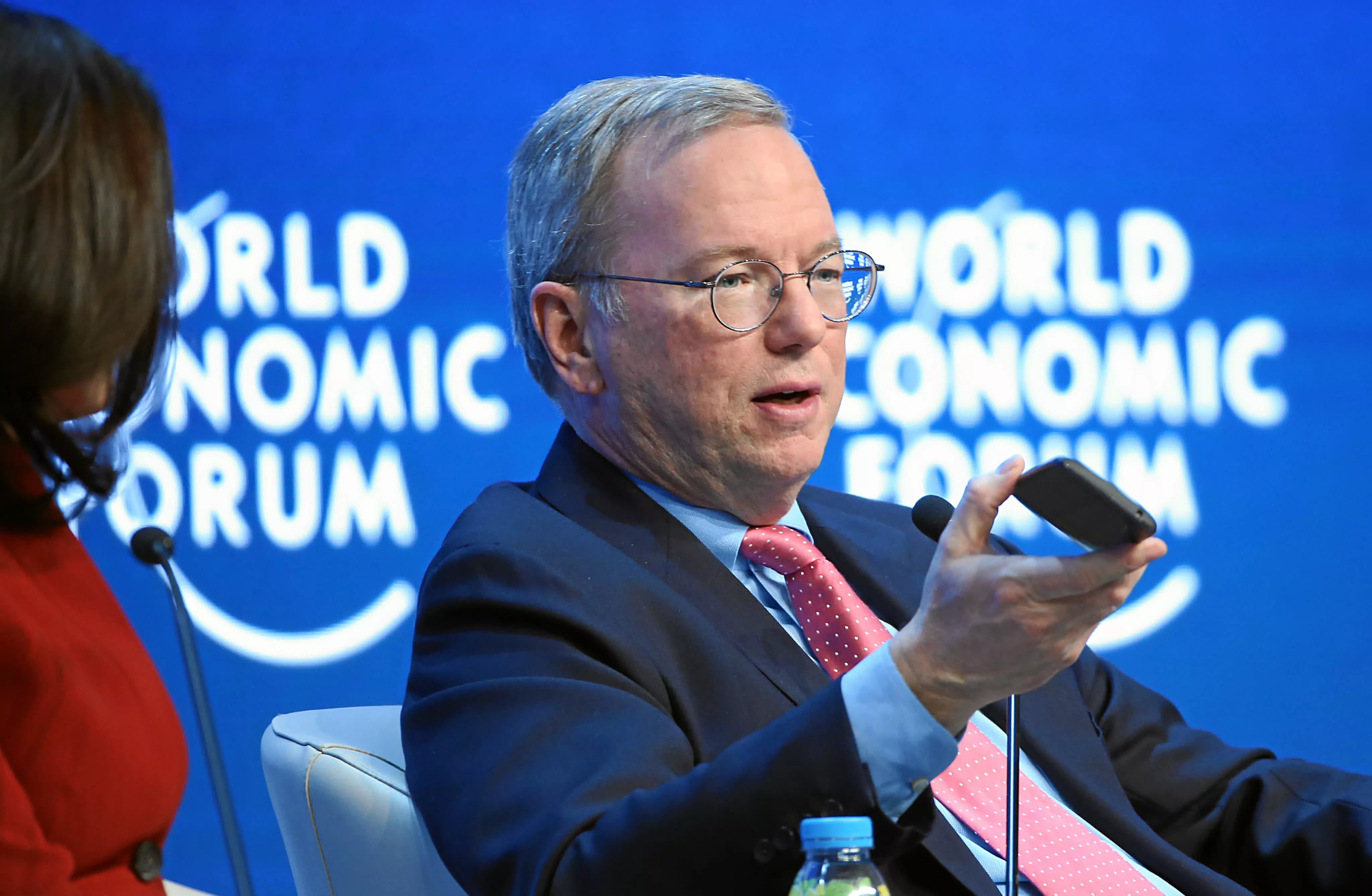
A hot potato: Just because AI is becoming prevalent doesn't mean it's becoming more accepted. For the second time in the space of a week, someone who spoke about the technology during a university graduation ceremony was met with a chorus of boos. On this occasion, the speaker was none other than former Google CEO Eric Schmidt.
Schmidt, who served as Google's CEO during its early years between 2001 and 2011 and was Alphabet chairman until 2017, was speaking about AI during a commencement speech at the University of Arizona.
Schmidt was on shaky ground when he started talking about the dark side of modern technology, something he acknowledged he helped build.
"We thought that we were adding stones to a cathedral of knowledge that humanity had been constructing for centuries, but the world we built turned out to be more complicated than we anticipated," Schmidt said. "The same tools that connect us also isolate us. The same platforms that gave everyone a voice – like you're using now – degraded the public square."
Boos were rising at this point, and they grew louder when Schmidt moved on to the controversial topic of AI – especially its negative impacts.
"I know what many of you are feeling about that. I can hear you. There is a fear," Schmidt said, pausing as the noise crescendoed. "There is a fear in your generation that the future has already been written, that the machines are coming, that the jobs are evaporating, that the climate is breaking, that politics are fractured, and that you are inheriting a mess that you did not create."
Schmidt did admit that the fears were "rational," but his solution was for the young audience to help shape artificial intelligence.
The former Google boss then appeared to abandon his attempts at empathy by talking about how fantastic AI is, adding a bit of a taunt to those who refuse to use it.
"You can now assemble a team of AI agents to help you with the parts that you could never accomplish on your own. When someone offers you a seat on the rocket ship, you do not ask which seat. You just get on."
Schmidt seemed frustrated at the cacophony of boos, at one point curtly saying "if you let me make this point, please," which only made things worse.
If this all feels a little familiar, it's because almost exactly the same thing happened at another graduation ceremony last week. On that occasion, Gloria Caulfield, VP of strategic alliances at Tavistock Group, made the mistake of calling AI "the next industrial revolution." This led to a chorus of boos from graduates from UCF's College of Arts and Humanities and the Nicholson School of Communication and Media.
Caulfield's response to the anger was a panicky, "Okay. We've got a bipolar topic here I see […] I love it, passion, let's go."
Despite pleas from many tech executives that often dip into outrage over people's lack of love for AI, sentiment toward the tech is not improving. Direct and indirect job losses keep growing, anger over new data centers is increasing, and AI-generated content in any medium is met with public outcry. But Schmidt still thinks we need to get on that rocket ship.
Schmidt is no stranger to making controversial statements. He previously said that the United States' work-from-home culture means it struggles to compete with China and its infamous "996" work system. He also blamed Google's remote work policy for the company lagging behind rival OpenAI in the artificial intelligence race.