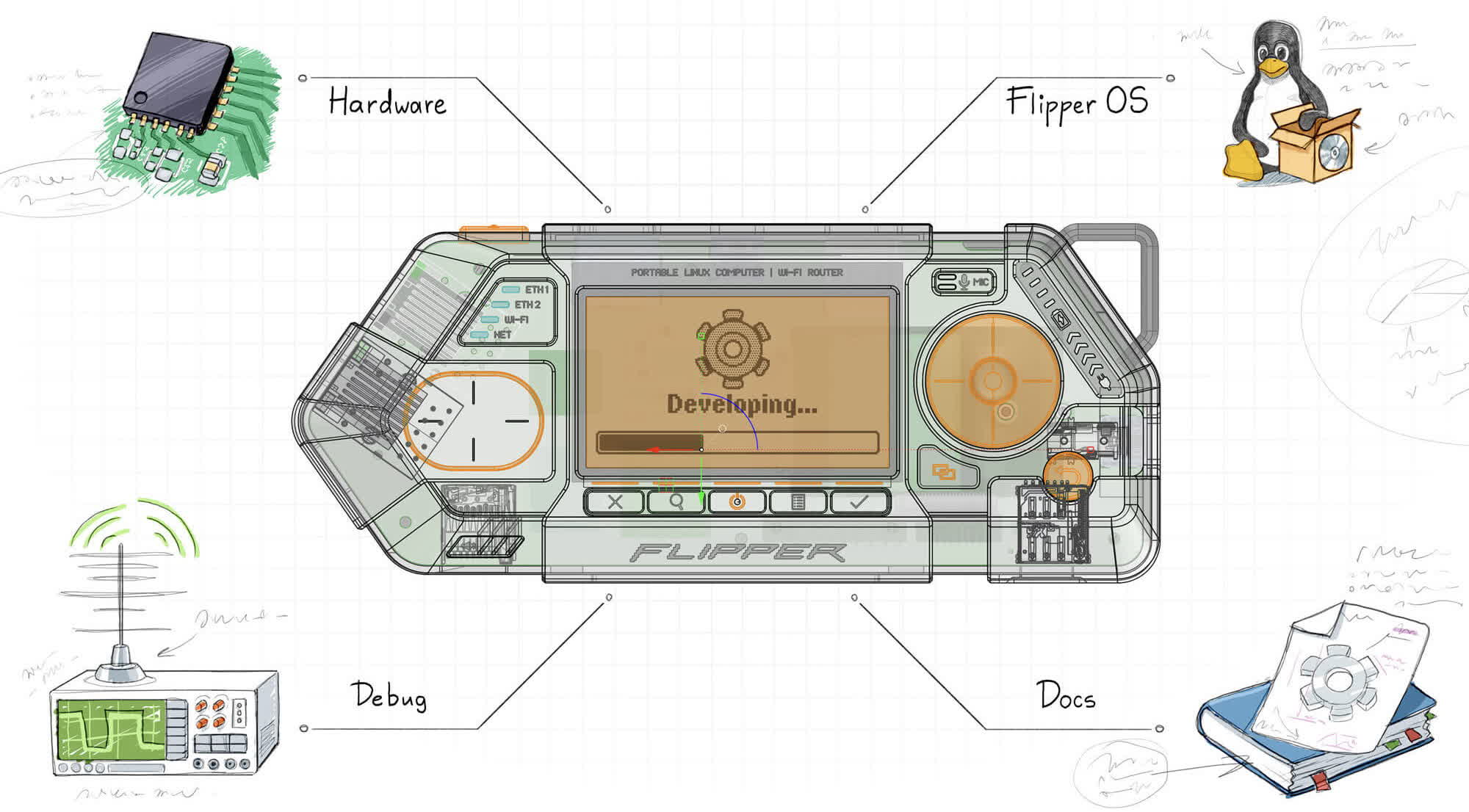
DIY CyberDeck: The company behind the popular and controversial Flipper Zero is working on a novel hardware project. Flipper's new multi-tool device will include all the "hacking" features of the previous device, while significantly extending functionality with a dedicated approach to portable computing.
After turning opsec conventions upside down with the "toy-like" Flipper Zero tool, Flipper Devices is now developing yet another "fun" project that could make a significant impact on security and customized computing projects.
The company founded by Alex Kulagin and Pavel Zhovner plans to create a "cyberdeck" of sorts, although they will likely retain the same cyber-dolphin mascot as the original device.
As explained on the project's official page, Flipper One is a community-driven effort focused on creating a capable, Linux-based mini-tool for hackers. The device would essentially work as a Linux mini-PC, with its own operating system, firmware conventions, and "app store" to customize its features and operational capabilities.
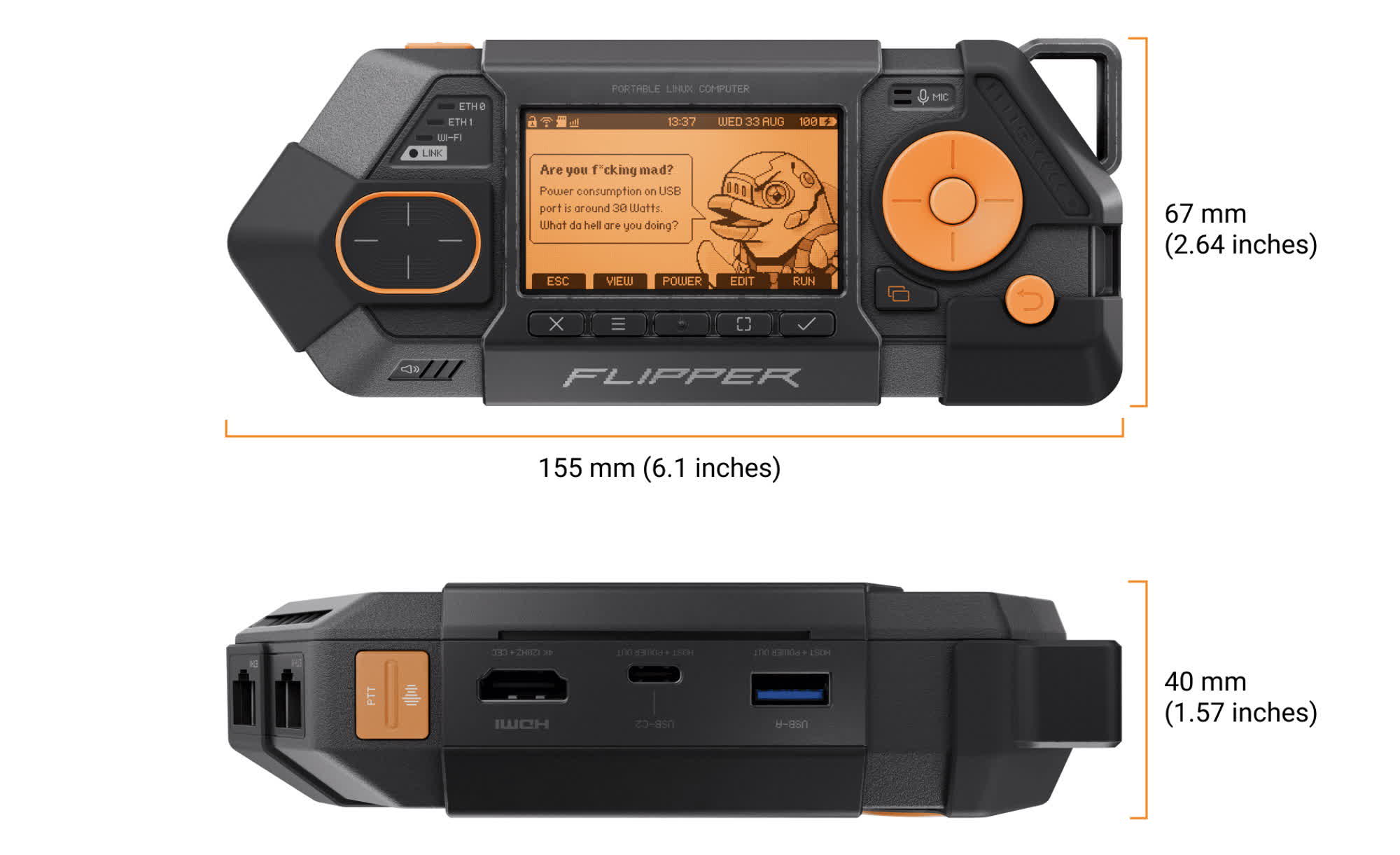
Flipper Devices is building Flipper One out in the open, and is still working on finalizing many of the device's features or specifications. In a recent interview, Zhovner announced some of the basic specs the developers have apparently chosen as the project's foundation. The device will use a Rockchip RK3576 SoC processor, which can allegedly provide better multi-core CPU performance than the Raspberry Pi 5 single-board computer.
Flipper One's main focus will be networking and IP-based communications, which is why it will support plenty of wireless (and wired) standards including Ethernet, Wi-Fi 6E, and 5G thanks to an eSIM or a physical SIM port.
Furthermore, the hardware design should include an M.2 module for fast storage performance, and an additional PCIe expansion slot to further extend the device's functionality.
Zhovner explained that his team wants to create a device that could serve the needs of both hacking enthusiasts, and people who are curious about what a real computing device can do in portable form. Flipper One's main navigation controls include a basic D-pad interface and many programmable buttons. Just like many other hardware features, Flipper is still working on the details here.
Zhovner's idea about computers dates back to an era when you could purchase a brand-new PC, boot to DOS, and start experimenting or learning how things worked. "From the very beginning, I could understand how the boot system worked," Flipper CEO said, while "today, all manufacturers create their own logic that is absolutely vendor locked."
Will Flipper One follow the same fate as Flipper Zero, the controversial multi-tool device that got banned in some parts of the world for being a popular option as a wireless cracking tool or RFID skimmer? Zhovner plans to sell the new device for $350 and expects to open a Kickstarter crowdfunding campaign later this year.