
First look: The Hacknect cable conceals inside an ESP32-S3 microcontroller, a chip more commonly found on development boards than tucked inside a cable. By hiding it there, the idea is to turn a simple accessory into a programmable device.
A USB cable is not typically something that raises eyebrows. Most people plug one in and move on. But a Kickstarter device is challenging that assumption by packing a surprising amount of computing power into something that looks completely ordinary.
The engineering choice is deliberate. The chip targets AIoT workloads and includes 2.4 GHz Wi-Fi, Bluetooth LE, and well-established software support. It is paired with a microSD slot hidden inside the USB Type-A connector, though nothing about the cable's exterior gives that away.
From a functionality standpoint, Hacknect works in two ways. On the surface, it behaves like a standard USB cable, supporting data transfer and charging. Underneath, it functions as a programmable interface that can interact with connected devices. HID emulation can simulate keystrokes or mouse inputs, effectively mimicking user behavior at the system level.
The device is controlled from a browser-based interface. Once connected, users can manage payloads, configure actions, and trigger commands from a phone or computer. Those payloads are stored locally on the microSD card, keeping the system self-contained and portable.
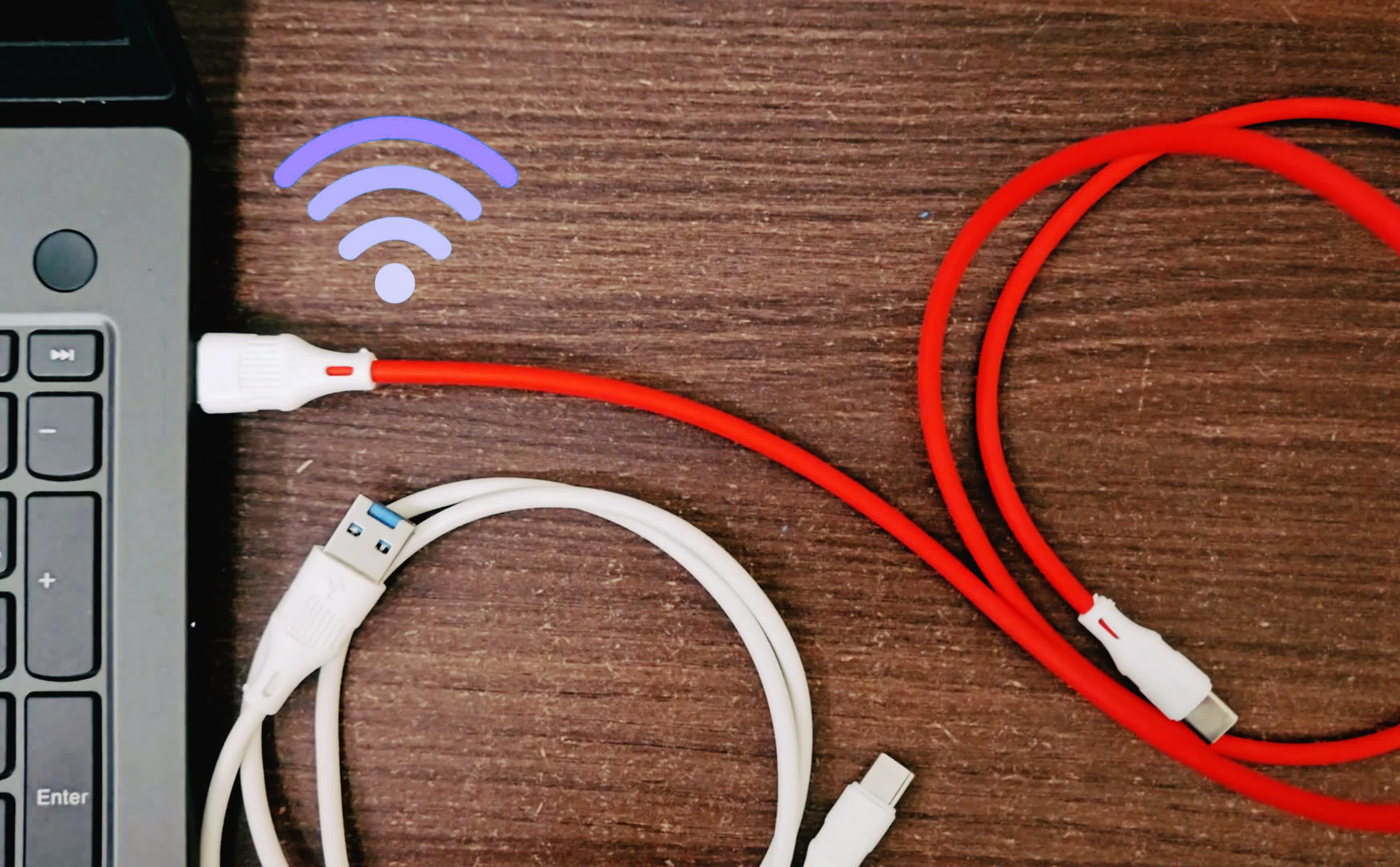
Wi-Fi removes the need for physical interaction. Commands can be triggered remotely, expanding the range of possible use cases. For developers and security professionals, that translates to easier testing and automation without being tethered to the device.
A built-in self-destruct function rounds out the feature set. A single command wipes all stored data and payloads, a feature that aligns with its positioning as a tool for security workflows. And because it's open source, users can customize it and easily integrate it into their existing setups.
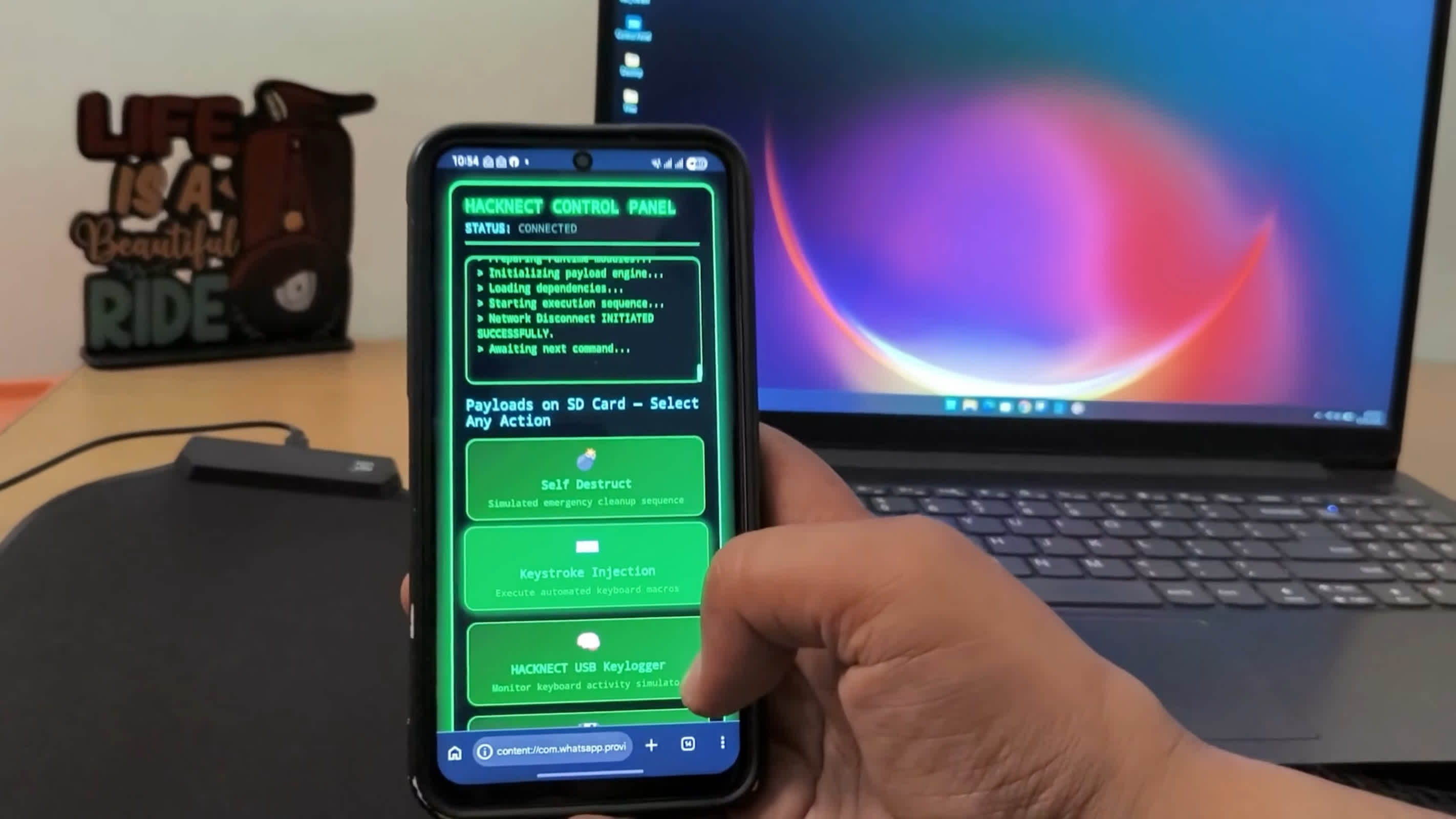
The Hacknect inevitably draws comparisons to the likes of the O.MG cable, which also embeds wireless functionality into a seemingly standard cable. The distinction is cost. With a starting price of around $82 for early backers, Hacknect lowers the barrier to entry while promising comparable capabilities and open-source support.
The Kickstarter campaign has surpassed its funding goal, with several weeks still to go. If development stays on track, initial units are expected to ship in August. Still, the usual caveats around crowdfunding apply. Backing a project does not guarantee delivery, and timelines have a way of slipping.