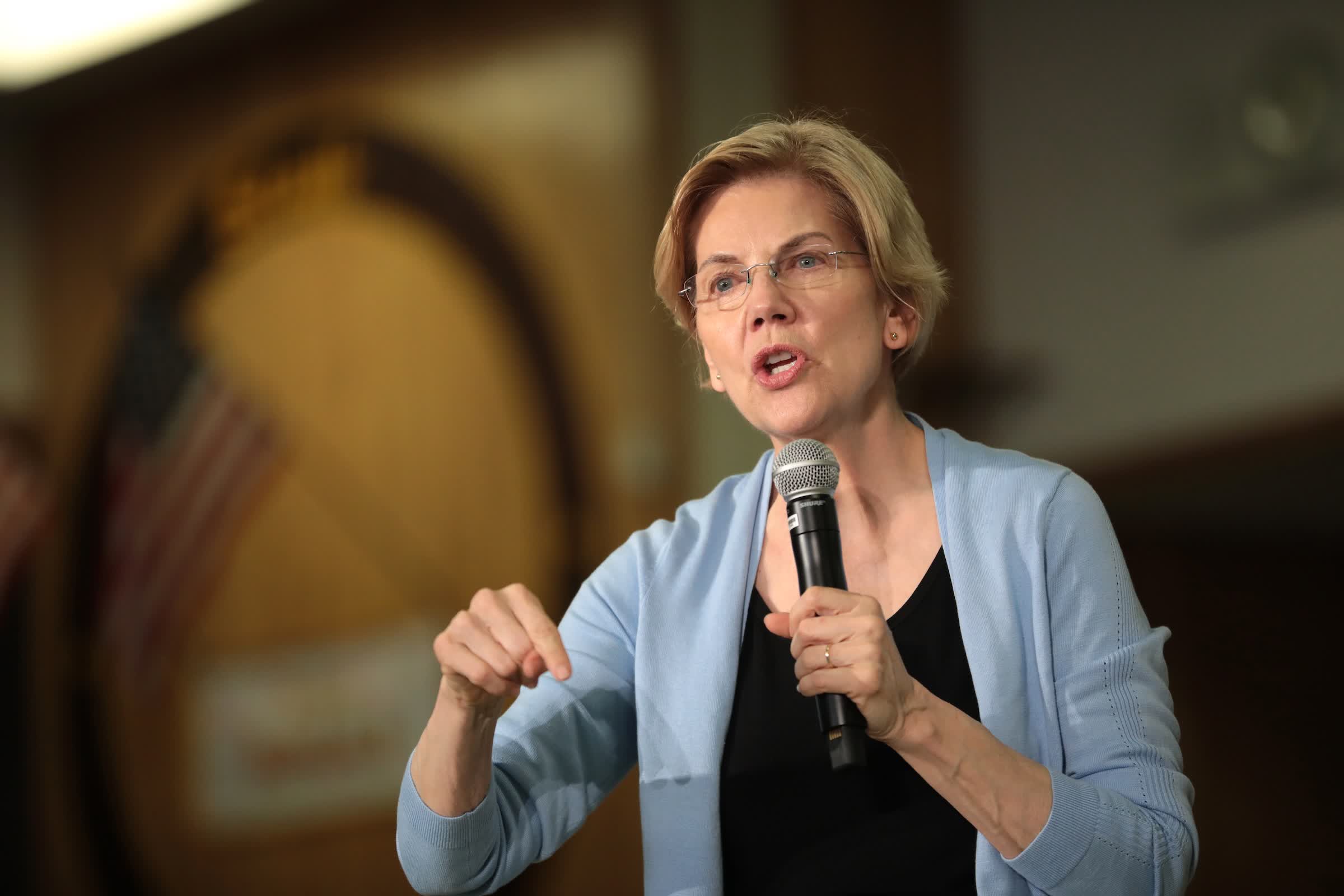
Bottom line: A growing share of the artificial intelligence economy is being built not just on algorithms, but on physical infrastructure – massive data centers, energy-intensive compute, and capital that is increasingly concentrated among a small group of companies. Sen. Elizabeth Warren wants to tax that foundation.
In a Time magazine op-ed published Wednesday, the Massachusetts Democrat argued that the economic gains tied to AI are not being broadly shared. Instead, she said, they are flowing to a narrow set of firms and executives while ordinary consumers face rising costs linked to the technology's expansion.
"Building an economy that works for all of us will require multiple policy responses. But it starts by acknowledging: it's time to tax AI and invest in people," Warren wrote.
Her proposal centers on taxing AI companies directly, with a particular focus on the large data centers that power their systems. These facilities consume large amounts of energy, a key reason Warren wants to target them with a new tax. Warren's approach would scale taxes based on that footprint, writing that "the bigger the data center, the more they pay."
Training advanced AI models and supporting inference at scale require substantial consumption, which has begun to place pressure on local power grids in some regions. Warren proposed an excise tax tied to that usage, arguing it could help offset costs that are increasingly reflected in consumer utility bills. She said families should be able to recover some of those expenses as electricity prices "skyrocket."
The proposal reflects a shift in how policymakers are thinking about AI. In Warren's view, that means looking directly at AI data centers and the energy they consume, not just at how AI systems behave. Those factors are becoming harder to separate from broader questions about who benefits from AI's growth.

Warren tied that growth to widening disparities in wealth and employment. She pointed to the rise of new tech billionaires and job losses in some sectors, while reiterating her support for a federal wealth tax. In the same argument, she named industry leaders such as OpenAI CEO Sam Altman and Amazon founder Jeff Bezos.
"Taxing AI is one way we make sure the winnings from AI benefit all Americans, rather than channeling them only to the wealthy few," she wrote.
Her proposal arrives at a time when Congress has struggled to move forward on comprehensive AI legislation. Disagreements within and between parties have slowed efforts to establish rules around the technology, leaving taxation largely unaddressed.
At the same time, public and expert opinion on AI continues to diverge. Stanford University's 2026 AI Index Report found a significant gap between how researchers and the general public view AI's impact, along with a slight increase in public concern about its risks. That disconnect could make it harder to build political support for new AI-related taxes.
Warren also criticized the current tax structure, saying it favors buying equipment over hiring people. She pointed to existing tax breaks for technology investments, calling them "effectively a tax penalty for hiring human beings and a tax break for buying equipment."
Some in the tech industry have proposed alternative approaches. Altman, for example, recently suggested creating a public wealth fund that would give citizens a financial stake in AI-driven growth, regardless of their position in traditional markets. He has also backed the idea of taxes linked to automated labor, particularly as AI threatens to erode the tax base that supports programs like Social Security and Medicaid.
Warren did not go into detail on more expansive versions of AI taxation, though she acknowledged that additional ideas – ones that "sound radical today" – may eventually be part of the conversation. For now, her focus is narrower: aligning tax policy with the physical and economic realities of AI systems, especially the infrastructure that makes them possible.