Through the looking glass: The smartphone market was already heading for a brutal 2026 thanks to the AI-driven memory shortage. Now, IDC says the situation is going to be even worse, with the US-Iran war adding enough pressure to push the industry toward its steepest annual decline on record.
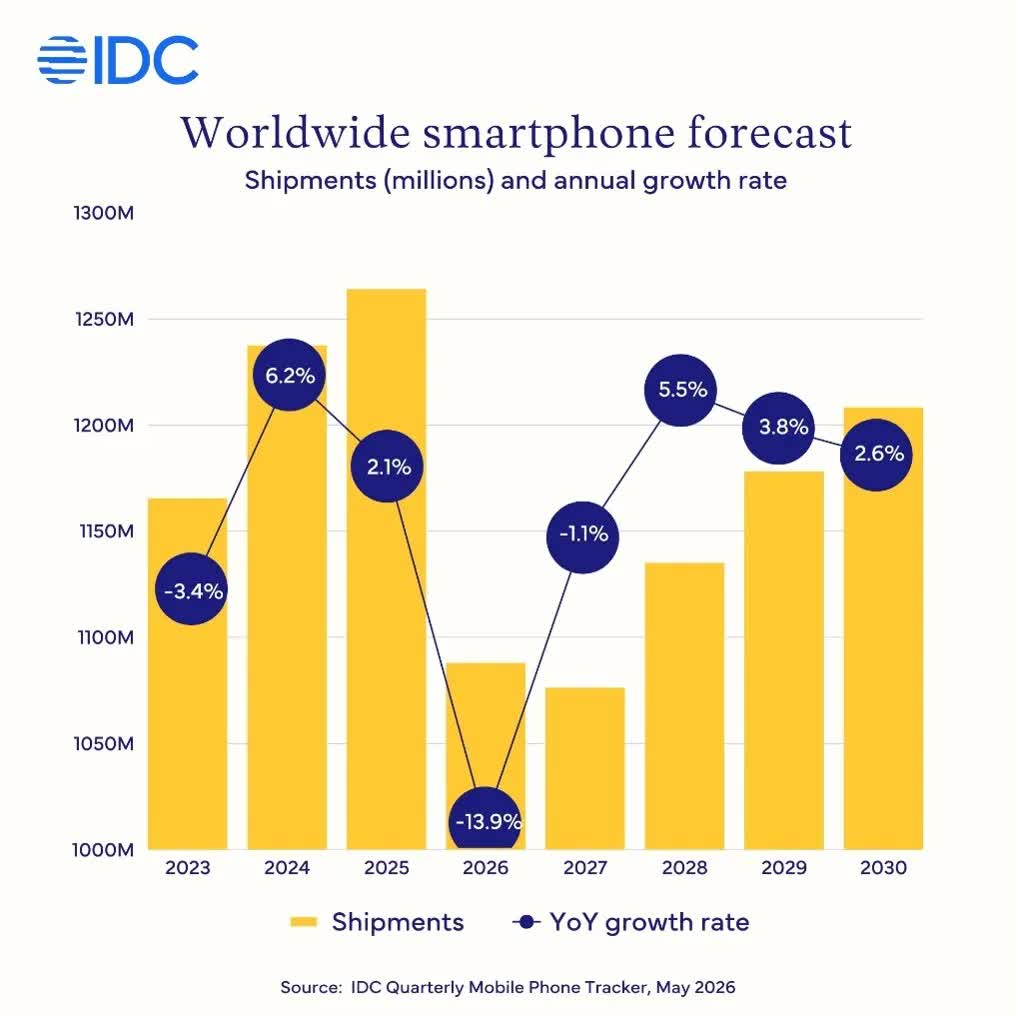
According to IDC's latest Worldwide Quarterly Mobile Phone Tracker, global smartphone shipments are forecast to fall 13.9% year over year in 2026 to 1.09 billion units. That's worse than the 12.9% decline that the company predicted in February, and it would leave the market at its lowest shipment total since 2013.
It shouldn't come as a surprise to hear that the memory shortage remains the biggest problem. AI data centers keep soaking up vast amounts of DRAM and NAND, pushing prices higher and forcing phone makers to reevaluate what they can build and sell profitably. The same squeeze has already been hammering PC makers, SSD buyers, and other consumer hardware categories.
But IDC says the US-Iran war has exacerbated the situation. The blockade of the Strait of Hormuz has sent oil and gas prices higher, raising the cost of shipping components. Freight and insurance costs are also rising, making cheaper phones even harder to justify.
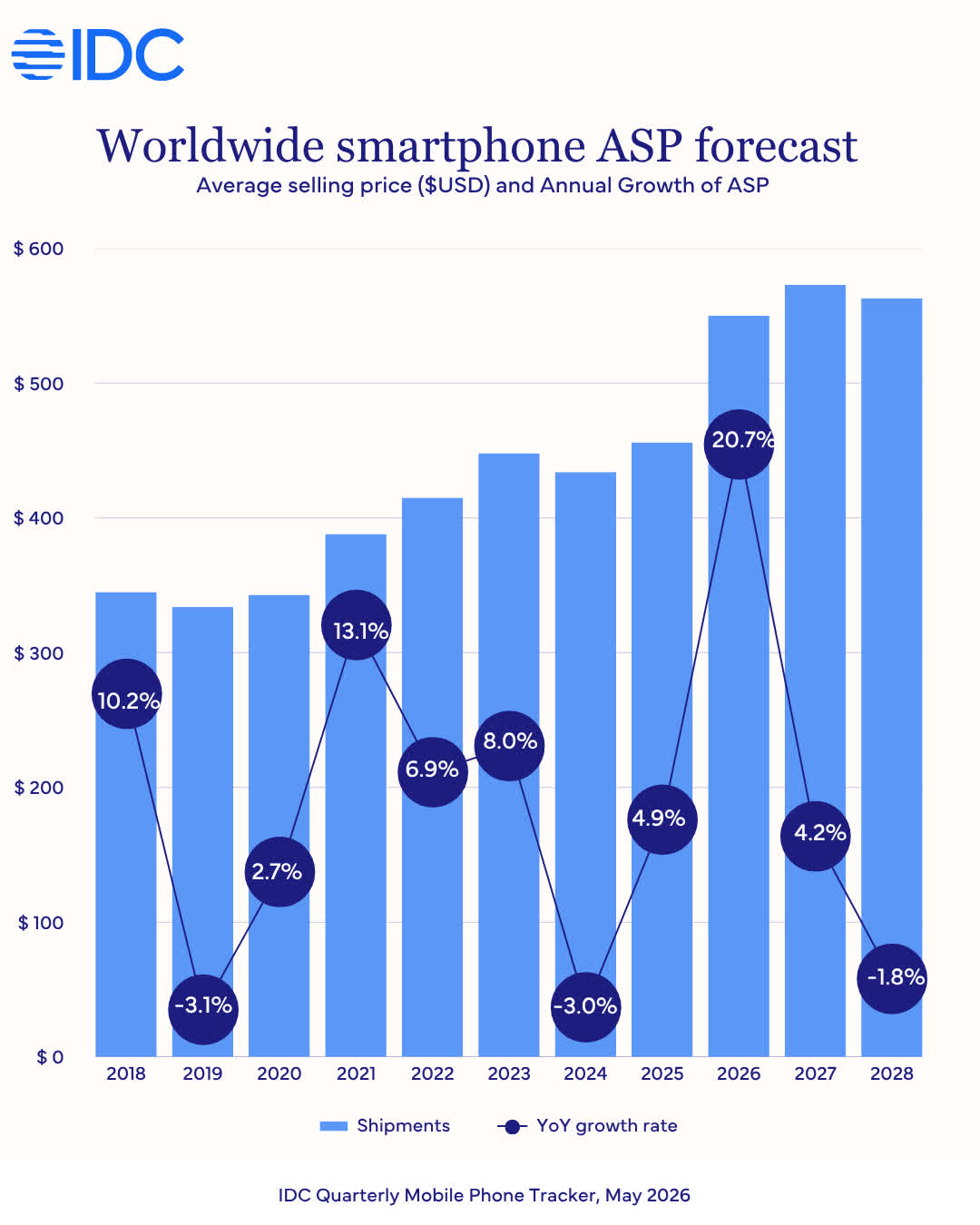
"Combined, these pressures are compelling vendors to reduce shipments, raise prices, and concentrate on higher price tiers – elevating smartphone ASP to a record $550, up $100 from last year," said IDC research director Nabila Popal.
That $550 average selling price is also up from IDC's previous $523 forecast for this year. It underlines the strange position the industry now finds itself in: fewer phones are going to ship, but the market's overall value is still expected to rise 3.8% as vendors push consumers toward pricier models.
IDC says the sub-$200 segment will shrink the most, especially in emerging markets where cheap Android handsets dominate. The Middle East and Africa is expected to fall 23%, Central and Eastern Europe 19%, and Asia-Pacific excluding Japan and China 14%. North America should fare better with a 6.3% drop, largely because it is already skewed toward premium devices.
"For consumers, it means the era of ultra-cheap smartphones is over," Popal added.
Android shipments are forecast to decline 20%, while Apple's iOS outlook has improved to a 5.2% drop, giving it a record 22% share. Samsung is also expected to gain ground thanks to secured memory supply, a stronger Galaxy S26 lineup, and aggressive midrange pricing.
Foldables are one of the few bright spots, with IDC forecasting 20% growth this year. But for the wider market, the next couple of years look rough. IDC now expects another 1.1% decline in 2027 before a 5.5% rebound in 2028, assuming memory supplies finally normalize.