What just happened? Is the AI crisis showing any signs of abating? Not according to C.C. Wei, the CEO of TSMC. Speaking at the company's annual shareholders' meeting, Wei said the world's largest contract chipmaker won't be able to meet customer demand for years. He also revealed that TSMC would "like" to raise prices for its customers.
Wei said demand for AI chips remains extremely strong and customers are still upbeat about the industry's outlook. "It will be a long time before we can meet customer demand," he said.
That's not exactly a surprising revelation, of course. TSMC sits at the center of the AI hardware boom, producing advanced chips for many of the companies spending billions of dollars on accelerators, servers, and data center infrastructure.
Nvidia, Apple, AMD, Broadcom, and others depend heavily on the Taiwanese firm, which means every surge in demand eventually lands on TSMC's doorstep.
Wei said the company is working hard to avoid becoming a bottleneck in the global semiconductor supply chain, but the problem is no longer just about wafer capacity. According to reports, the squeeze now extends across equipment suppliers, upstream vendors, power, chipmaking capacity, and advanced packaging. So even if TSMC wants to build more, the rest of the industry has to keep up as well.
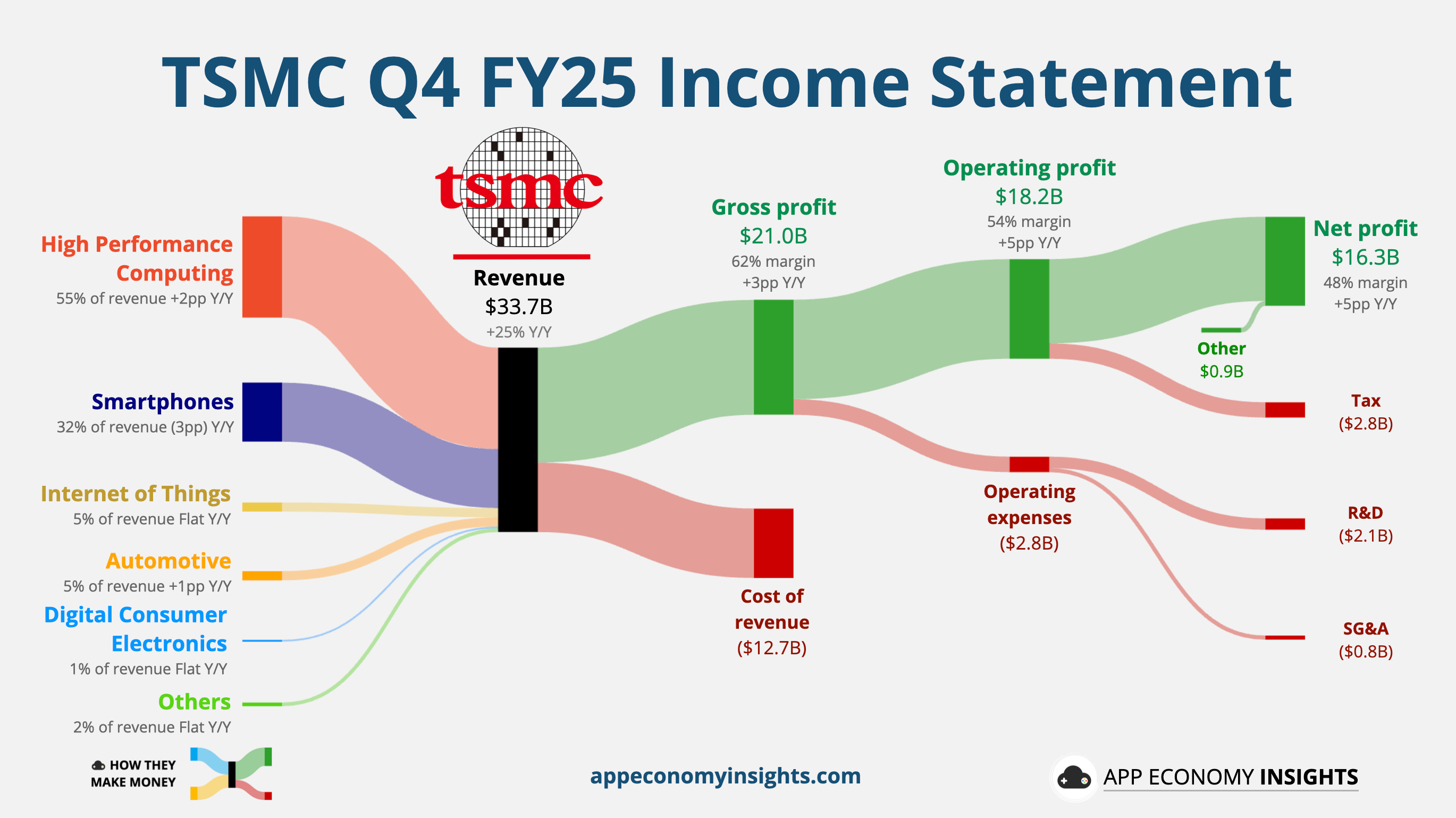
The company is certainly spending money like it expects AI demand to last. TSMC's US investment plans now total $165 billion, covering new Arizona fabs, advanced packaging facilities, and an R&D center. However, Wei warned that it would take a very long time to meet US customers' needs using American production, and the company's earlier goal of having 30% of its 2nm-and-below capacity in the US is looking difficult due to environmental permit delays and labor shortages.
The pricing comment is likely to attract almost as much attention as the shortage warning. Wei said TSMC would "like" to raise prices, citing rising component costs, but added that TSMC would not introduce hikes as abrupt as some memory makers.
The wider market is already feeling the consequences of AI's endless appetite for hardware. DRAM, NAND, and HBM shortages have pushed up prices and made everything from graphics cards to laptops more expensive.
The obvious caveat is that all of this assumes the AI spending boom continues. If this really is a bubble that's on track to burst, demand could crater at an unprecedented speed. Until that happens, Wei believes the AI chip crunch still has a long way to run.