In context: When a market is utterly dominated by a single player as AI infrastructure has been by Nvidia, it's tough for any rival to make a dent. No company knows this better than AMD. They've been battling in many segments against Nvidia, as well as other semiconductor giants like Intel, for decades now.
That challenge hasn't deterred AMD. If anything, it seems to have sharpened the company's focus. At its recent Advancing AI event in San Francisco, AMD rolled out an unusually dense wave of announcements spanning AI infrastructure for the cloud and enterprise data centers, AI-powered client devices, and physical AI for robotics.
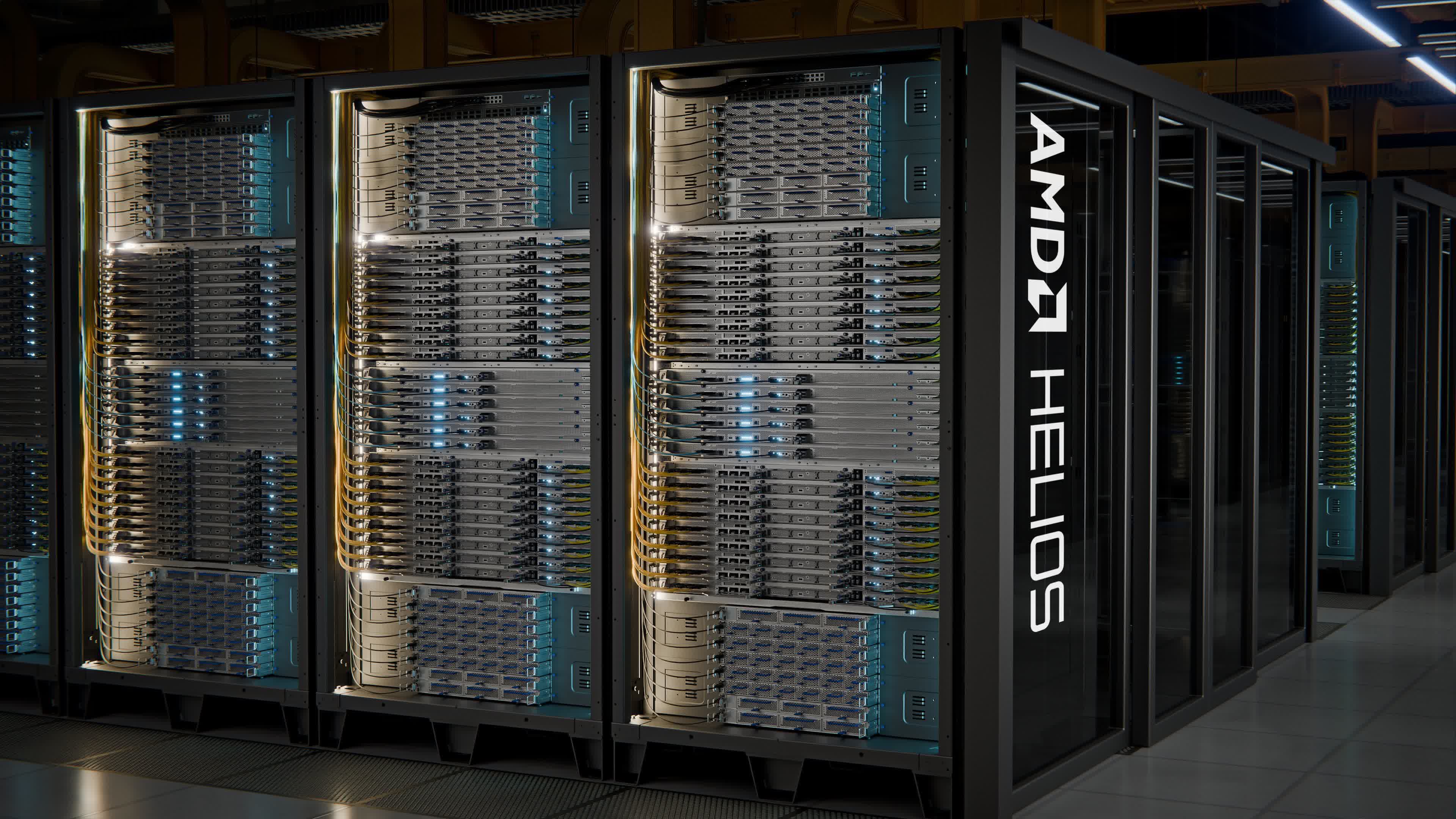
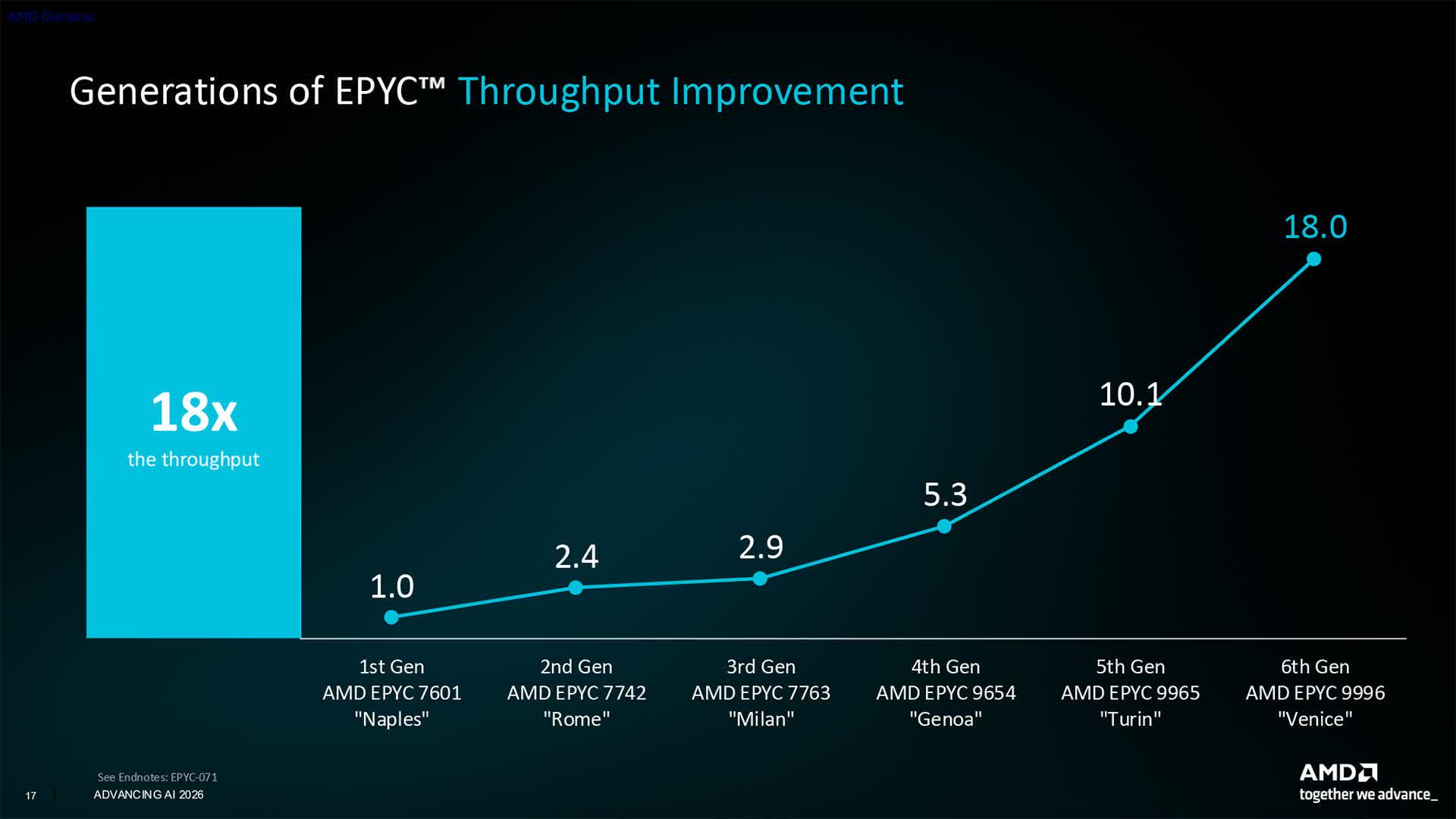
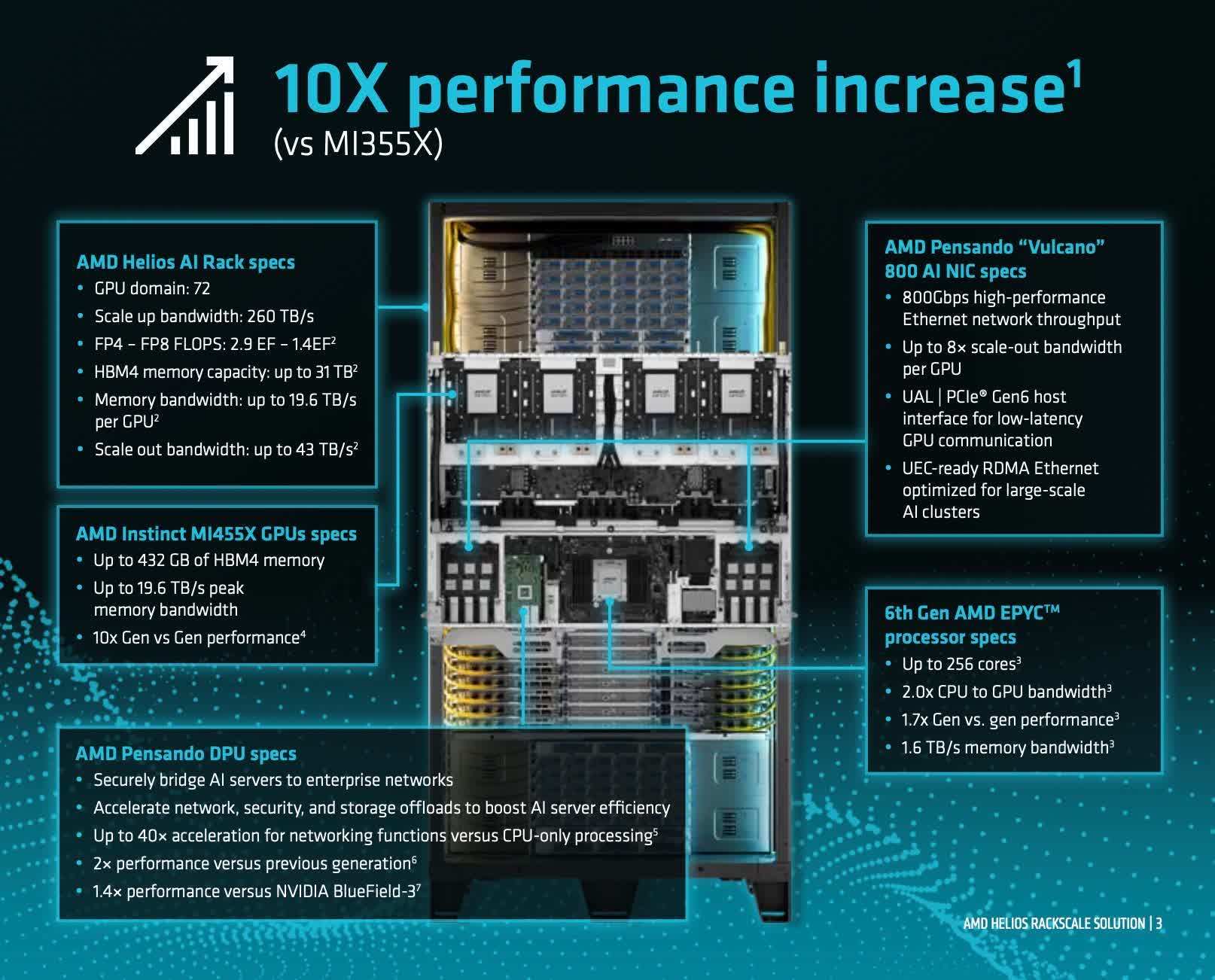
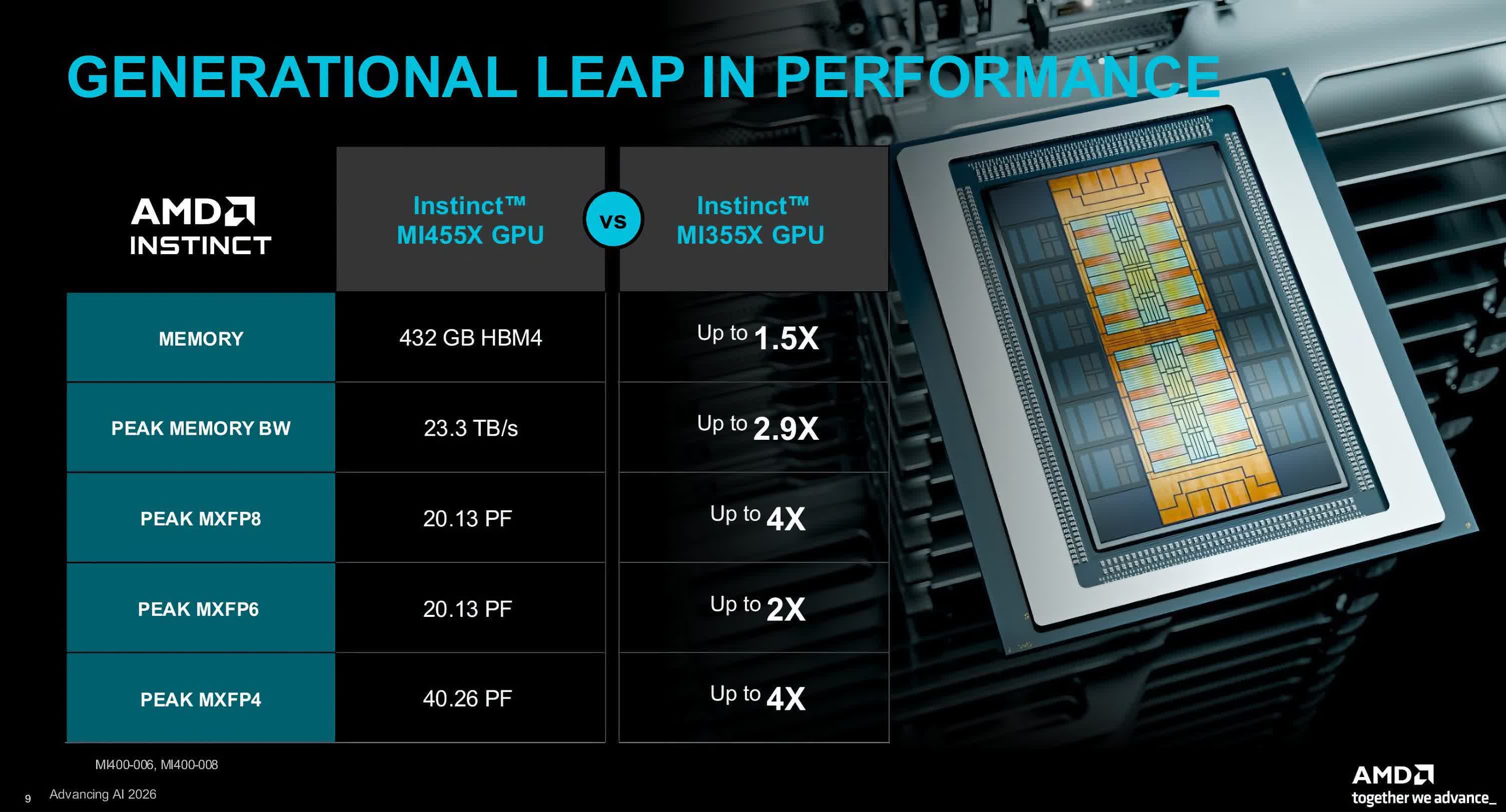
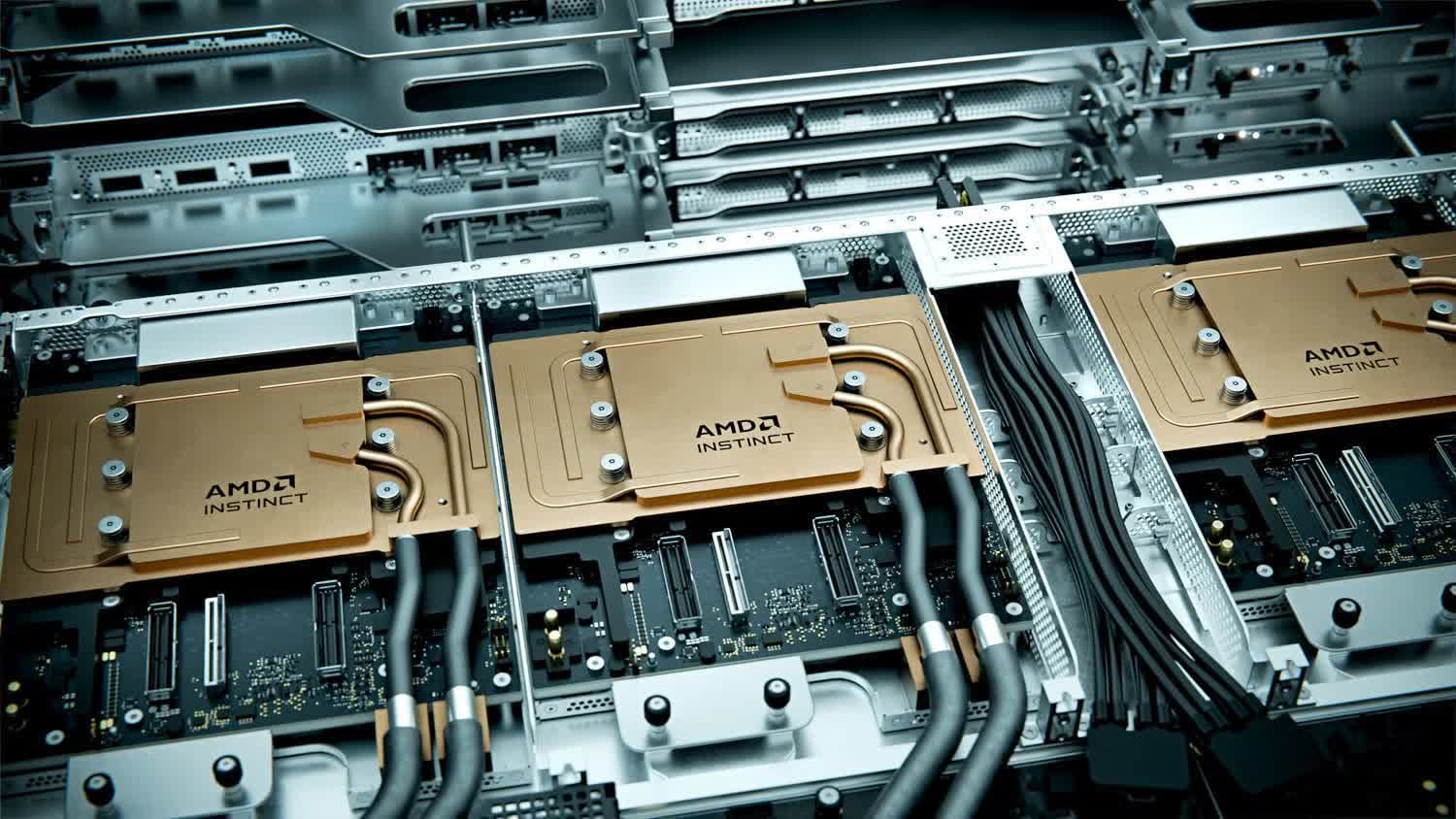
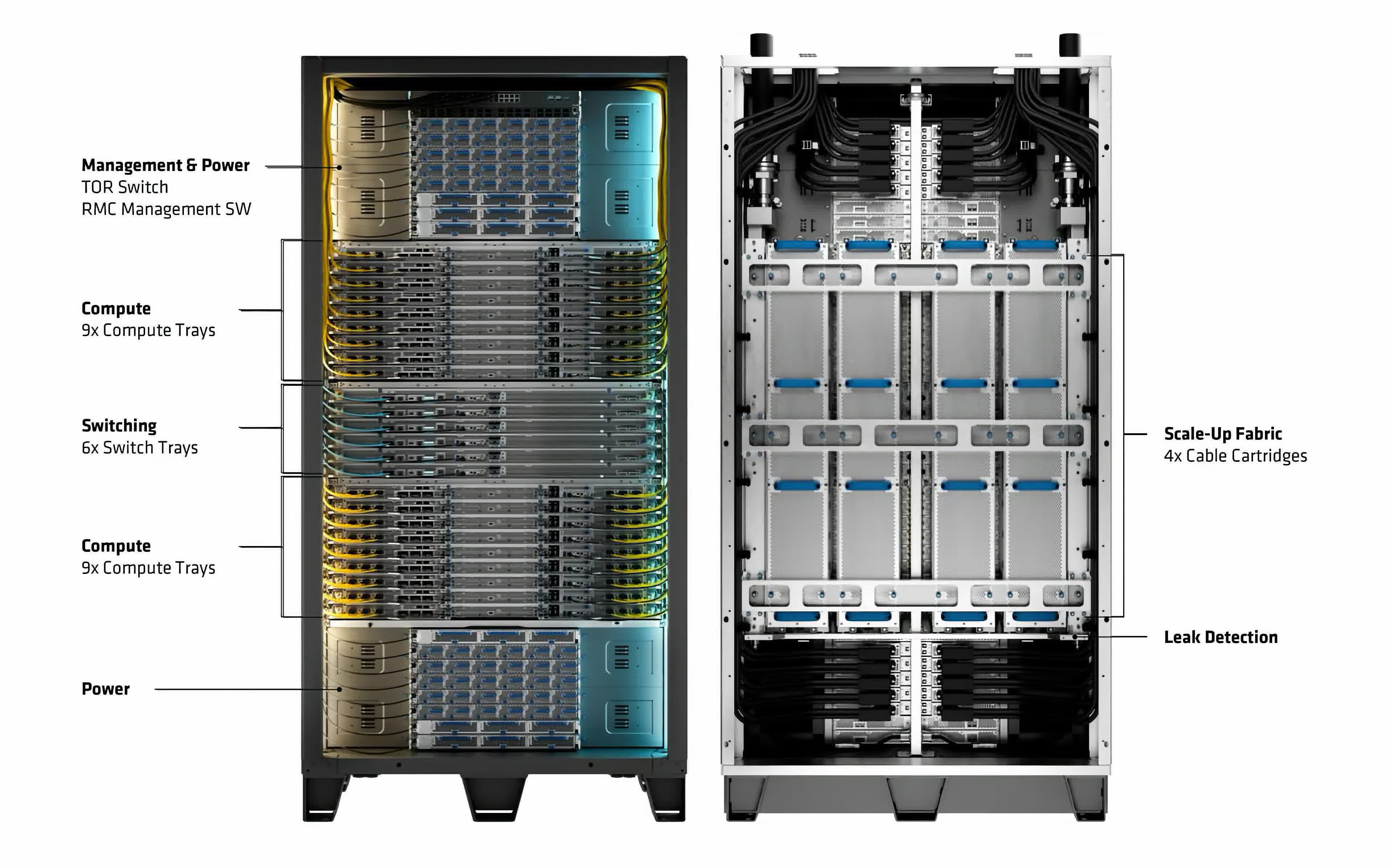
The big news was the official launch of the Helios rack, AMD's first full AI infrastructure rack solution powered by 6th-gen Epyc CPUs, Instinct MI455X datacenter GPUs, and Pensando networking chips.
AMD first previewed Helios at last year's event, but actually shipping it is an important step, both philosophically and practically. Nvidia has trained the market to expect rack- and datacenter-scale solutions as table stakes for AI infrastructure, and without a shipping rack product of its own, AMD was at a real disadvantage. With Helios shipments now set to begin later this quarter, AMD can credibly call itself a serious contender in AI infrastructure, and organizations shopping for the technology now have a legitimate alternative to weigh.
That new confidence was reflected in the customers and partners AMD paraded on stage. From Anthropic and OpenAI on the frontier-model side to Meta and enterprise customers like AT&T, there was a genuine sense of energy and partnership running through the event.
CEO Lisa Su went out of her way to highlight how closely AMD had co-designed Helios with its earliest customers, a reminder of how much it pays to actually listen to what buyers want before finalizing a product.
AMD didn't stop at building a credible alternative; it also made some aggressive claims about outperforming the competition outright.
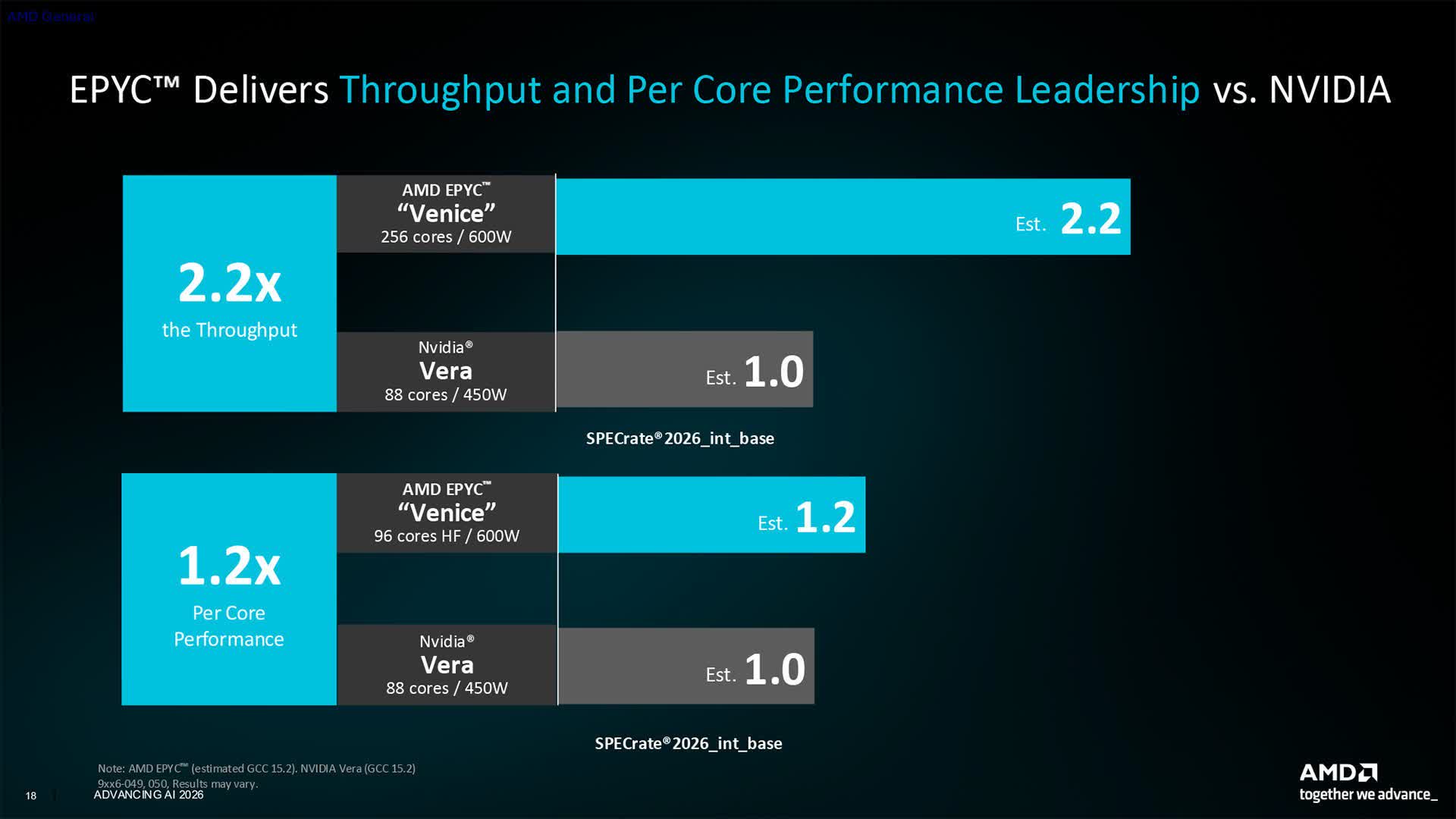
How well benchmark claims translate to real-world performance is always hard to judge in advance, but AMD touted 20% greater per-core performance for its latest Epyc CPUs over Nvidia's new Vera CPU, among other figures.
The company also highlighted Helios's larger HBM4 memory capacity and faster memory bandwidth compared with similar Nvidia rack systems. However those numbers hold up once independent, third-party benchmarks arrive, it's fair to say AMD is now offering a hardware alternative to Nvidia. For customers chasing low-latency inference, AMD also announced a partnership with Cerebras that will let a Cerebras rack sit side by side with a Helios rack for demanding workloads.
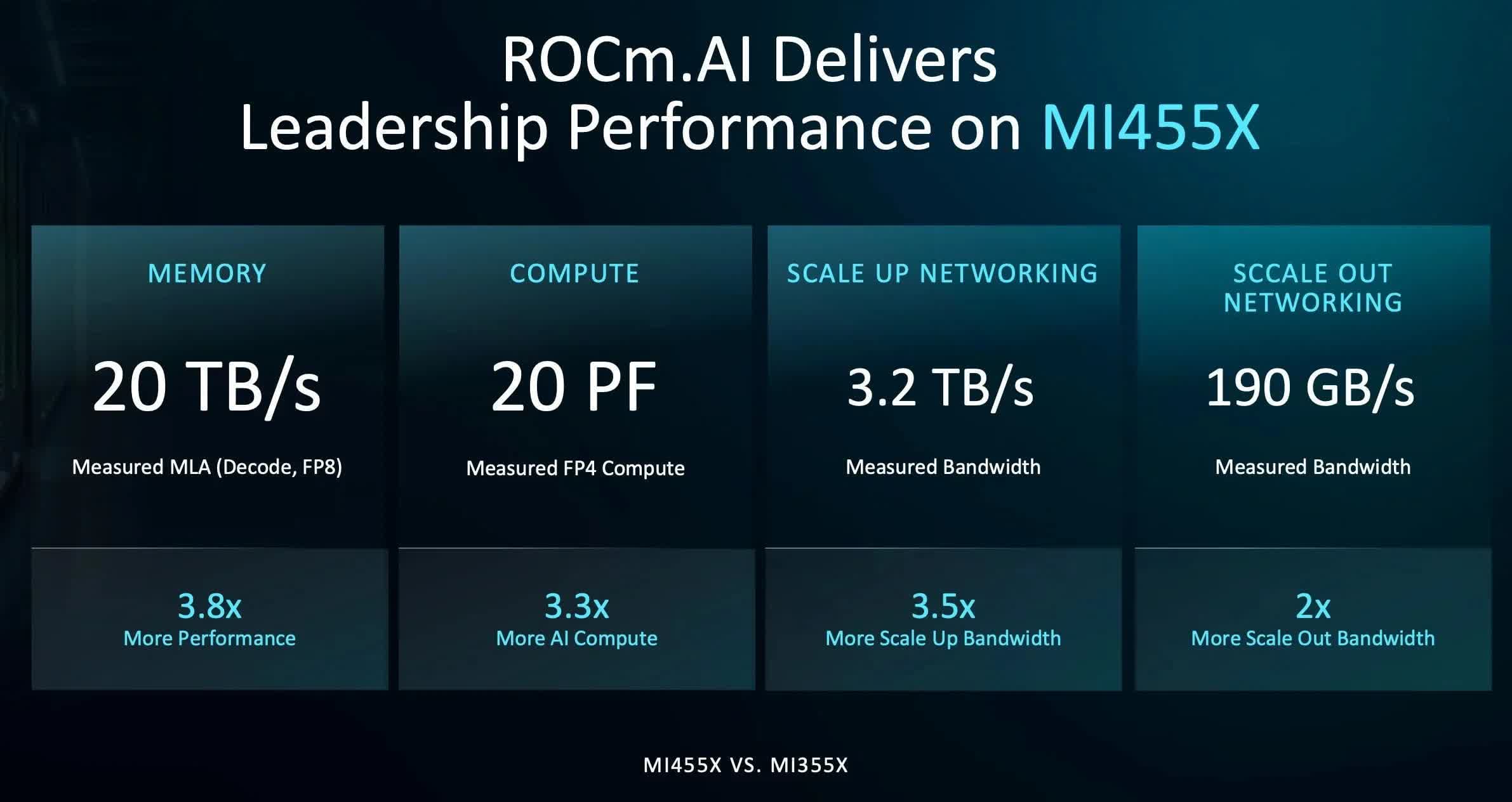
Of course, AI infrastructure is about more than hardware, and one of the more intriguing announcements from Advancing AI was a new version of AMD's software stack, called ROCm.ai. It's designed to use AI-assisted programming to make building software optimized for AMD hardware significantly easier – including, for example, porting code originally written in CUDA over to ROCm.
Given Nvidia's roughly two-decade head start with CUDA, a wholesale industry shift won't happen overnight, but it does make the so-called "CUDA moat" look less daunting than it once did. A ROCm.ai feature called Hyperloom, purpose-built to optimize AI applications for ROCm, looks particularly compelling: at the event, Anthropic described how an engineer let Claude run autonomously over a single weekend to adapt and tune performance on an AMD Instinct MI355X chip – and came back Monday to a working, steadily improving performance curve.
Beyond the data center, AMD also had something to say about PCs and robotics. On the PC side, the company detailed a new AI-focused deskside computing device, codenamed Gorgon Halo, built on an enhanced version of its Ryzen AI Max APU that pairs a Zen 5 CPU with an RDNA 3.5 GPU.
The device will offer up to 192GB of unified memory, at a price still to be determined but likely steep given current DRAM costs. Even so, it's an interesting entry in the growing class of developer-focused AI systems hitting the market.
More surprising was a new partnership with Cisco to bring AI agent management, observability, and tokenomics tools to this class of device. Leveraging Cisco's Cloud Control, AI Defense, and Splunk technologies, the joint solution is aimed at organizations planning to deploy AI-focused PCs at scale.
Details are still thin, but it's a notable partnership that shows how AMD and Cisco are working to bring more comprehensive AI tooling to the enterprise.
Finally, AMD made several announcements in physical AI and robotics. Few people realize AMD has had a substantial presence in industrial robotics for years, largely thanks to the technology it picked up when it acquired Xilinx in 2022.
The kind of reprogrammable FPGAs Xilinx has built for years are essential to many robotics systems, both for adapting to new AI algorithms and for sensor fusion – tying together the camera and sensor feeds most robots rely on. Combined with AMD's traditional CPUs and GPUs, that gives the company a broad portfolio to draw from.
The result is the new Kria AI SOM, a system-on-module, and the Kria AI Robotics Developer Platform that pairs it with a carrier board for robotics designs. Both are built around AMD's Ryzen AI Embedded X100 series SoCs, alongside new open-source Kria AI Robotics Platform software. Together, it's a comprehensive toolkit for robotics developers and further cements AMD's role as a significant player in the field.
Nvidia will almost certainly remain the AI infrastructure leader for the foreseeable future, but it's now clear AMD has come to play, and that's good news for everyone. As in any market, competition drives faster, better advancements, and it will be worth watching how the AI semiconductor landscape continues to evolve from here.
Bob O'Donnell is the founder and chief analyst of TECHnalysis Research, LLC a technology consulting firm that provides strategic consulting and market research services to the technology industry and professional financial community. You can follow him on Twitter @bobodtech