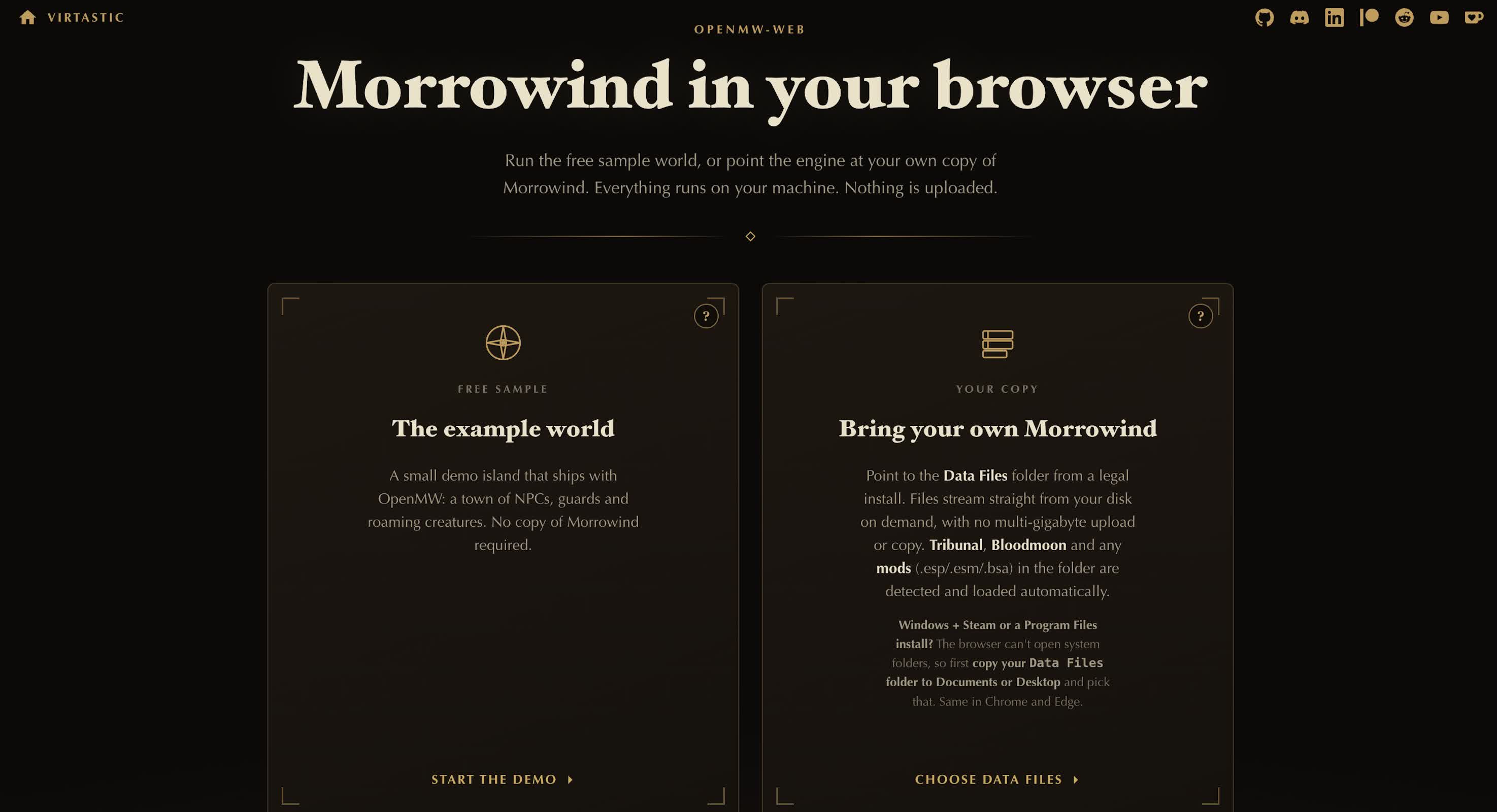
First look: A browser tab can now run Morrowind's engine, a game that once pushed desktop hardware to its limits. A new project called OpenMW-Web brings The Elder Scrolls III into a web browser using the OpenMW engine, rather than through streaming or emulation.
The project, shared by a developer known as /u/Dumpster_Buddy, is built on OpenMW, an open-source reimplementation of Morrowind's original engine. OpenMW was developed to support Windows, macOS, and Linux, and to reduce the bugs and limitations of the original 2002 engine.
The distinction is central to the project's technical appeal. Because it does not rely on streaming, the system avoids remote-server dependence. And since it does not use emulation, it keeps features such as shadows, water, saves, and gamepad support working.
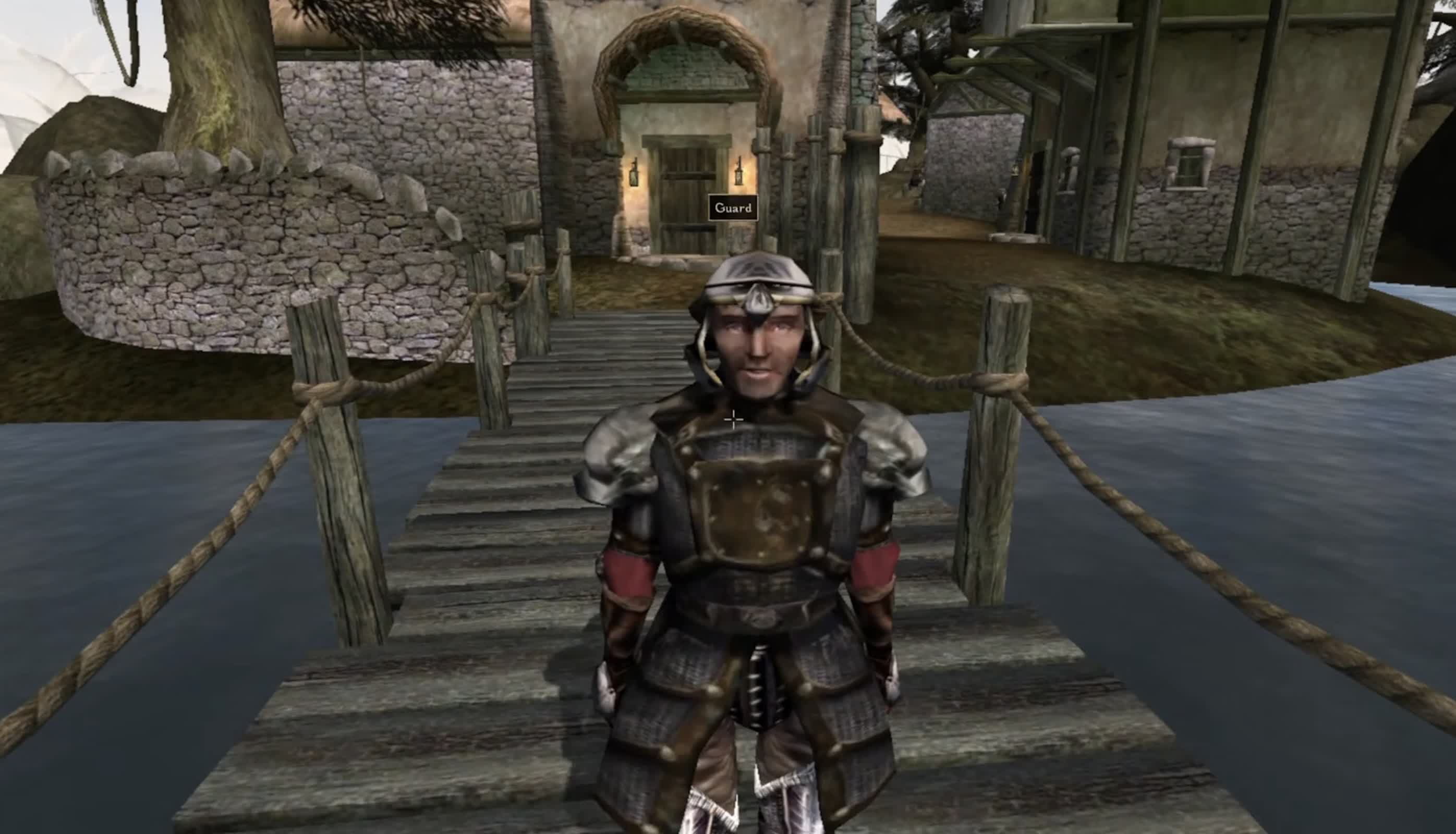
The web app currently offers a self-contained "example world" that runs without any installation or external files, effectively acting as a test area for the engine in the browser. To access the full game, users must point the application to their own Morrowind data files. Once connected, the full game becomes playable, with options to change settings and save progress.
The developer said the system does not upload any files and currently works best on desktop versions of Chrome, Edge, and Brave. The setup relies on browser-based local file access.
While the browser version is functional, it is not positioned as a replacement for a traditional installation. Running OpenMW as a standalone application remains more straightforward. But the web-based approach shows how far browser technology has come in handling 3D graphics, input, and saved games.
The project also points to where enthusiast-driven development could go next. The developer has indicated plans to expand the feature set, including potential mod support and even multiplayer functionality. Those additions would make the project more capable, but it is just an experiment for now.

Recent efforts have also included a dual-screen implementation for handheld hardware. The browser version extends that experimentation into web-native territory.
There are still limitations. Early testing indicates that input handling, particularly mouse interaction in menus, can be inconsistent. These issues do not take away from the technical achievement. Running a game engine with rendering, physics, and input support inside a browser is a notable feat.
For now, OpenMW-Web remains an enthusiast project rather than a mainstream way to play. It requires user-supplied game data and some tolerance for rough edges. It also shows how open-source engines can give older games a new life in the browser.