
Rumor mill: Google is planning a sharp increase in production of its in-house AI chips, a move that could put it on par with Nvidia in total accelerator volume within the next few years. According to a research note from Fubon, Google plans to deploy between 12 million and 15 million ninth-generation TPUs by 2028.
If those numbers hold, Google's output would be in the same range as Nvidia's projected shipments. Fubon estimates that Nvidia supplied 8.2 million data center GPUs in 2026 and could reach 12.4 million by 2028. That would mark a notable shift, with a single cloud provider producing a volume of AI accelerators comparable to the leading merchant chip supplier.
The TPU v9 will use four compute dies, in line with the industry's shift to multi-die designs, while Google's planned production is expected to more than double capacity requirements compared with 2027 levels. Packing multiple large dies into a single chip requires advanced interconnect and packaging, and producing them at scale adds complexity.
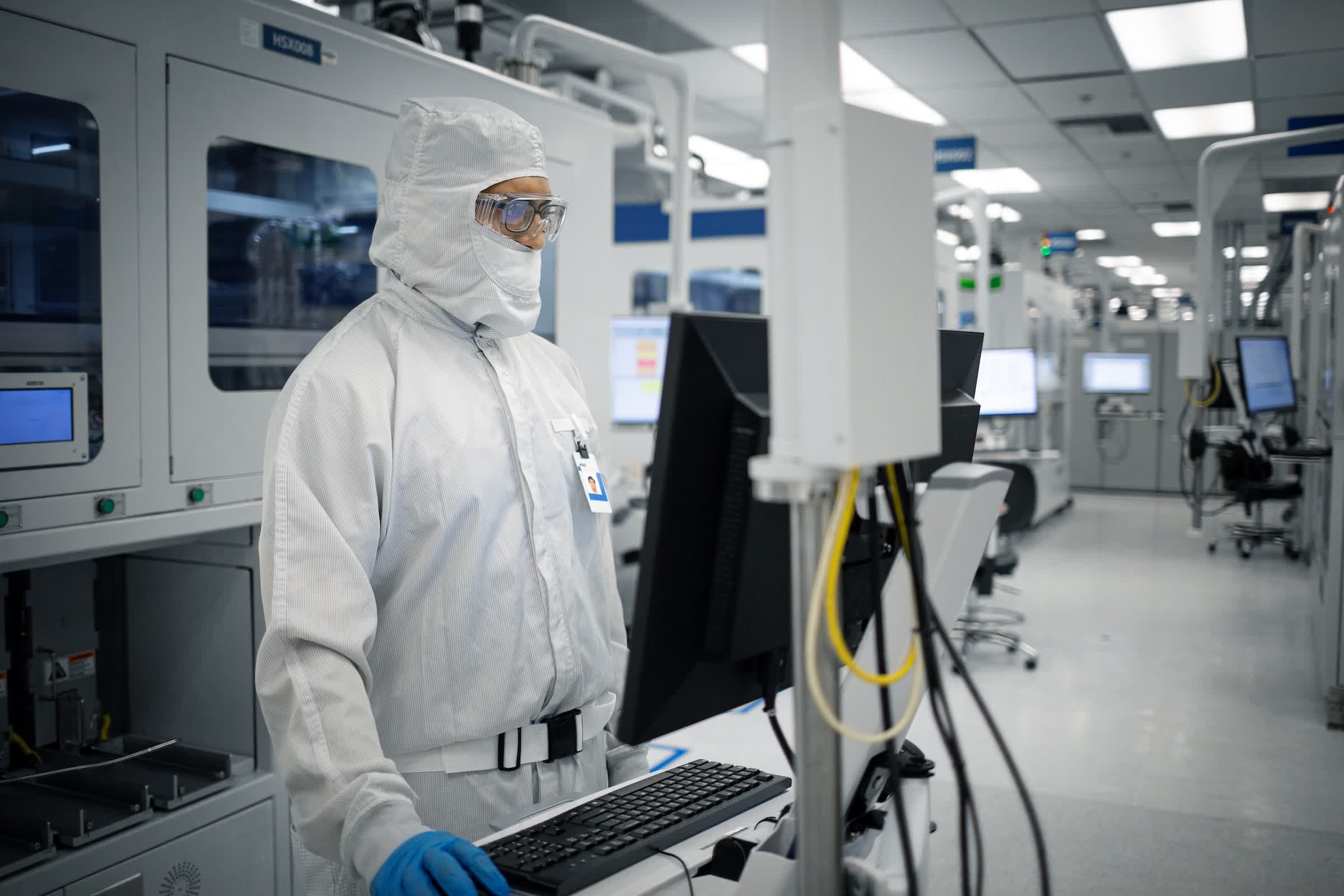
Manufacturing capacity is likely to be a constraint. Fubon's analysts suggest that TSMC alone may not be able to meet Google's demand, pointing to a potential role for Intel Foundry.
Recent reports support that view, indicating that Intel has already secured orders to produce millions of TPUs after Google tested its advanced packaging capabilities. That relationship would make sense given the design requirements of chiplet-based processors. Packaging technologies differ across manufacturers, and package designs built around Intel's EMIB or EMIB-T are not directly compatible with TSMC's CoWoS-L.
Google has been building its own AI chips for roughly a decade, steadily increasing their role across its infrastructure. What began as a way to support internal workloads has grown into a broader strategy that includes its cloud business. If Google reaches its 2028 target, it would likely become the largest single user of AI accelerators. That does not mean it will stop buying from Nvidia, but it would give the company far more control over its compute stack and supply.

Performance comparisons between TPU v9 and Nvidia's next-generation systems, including Rubin and Rubin Ultra, are not yet available. But the scale of Google's plans signals confidence in its approach and suggests that competition in AI hardware is increasingly about deployment volume, not just chip performance.