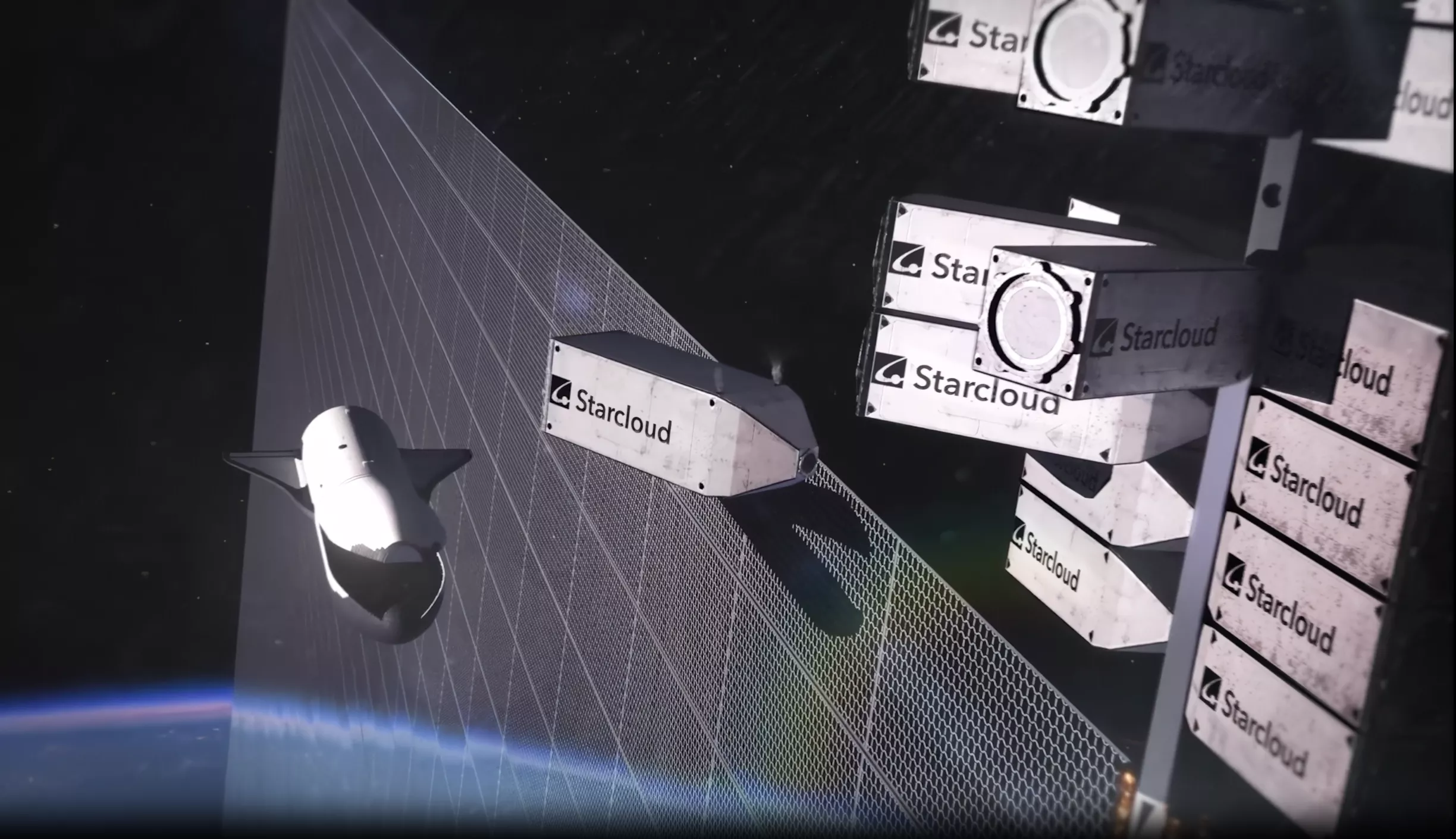
Why it matters: Bitcoin miners have spent years chasing cheap electricity around the planet, but will leaving our atmosphere reap better results? Nvidia-backed Starcloud wants to take cryptomining into orbit, putting dedicated mining hardware aboard its second spacecraft. The startup believes abundant solar power could make space an attractive home for an industry notorious for its energy consumption.
CEO Philip Johnston says Starcloud will be the first company to mine Bitcoin in space, with ASICs riding aboard Starcloud-2 when it's expected to launch in early 2027.
In an interview shared by Johnston earlier this year, he estimates that a B200 GPU drawing one kilowatt costs around $30,000, compared with roughly $1,000 for an ASIC consuming the same power. That's a comparison of hardware cost per kilowatt, rather than a claim of 30 times better mining efficiency.
Starcloud's main ambition is to build data centers in space. Its earlier mission sent an Nvidia H100 into orbit aboard a satellite roughly the size of a small refrigerator. The approximately 60-kilogram Starcloud-1 launched in November 2025 as an early test of that concept.
Starcloud-2 is designed to expand that into a commercial service, combining a GPU cluster, persistent storage, continuous access, and dedicated thermal and power systems. Its sun-synchronous orbit supports the company's solar-powered plans. Google is pursuing a similar idea through Project Suncatcher, using TPUs and optical links between satellites.
Cooling, however, remains an engineering challenge. Space offers a cold background, but a vacuum provides no air to carry heat away through convection. The spacecraft must transfer heat from its electronics to radiators that emit infrared radiation. Radiator area, operating temperature, and surface properties all affect how much heat can escape.

Johnston also acknowledges that ASICs can become outdated faster than GPUs, giving the mining hardware less time to pay for itself. Meanwhile, miners on Earth can already use sources such as flare gas to generate electricity for around two to three cents per kilowatt-hour, he says.
Cheap chips and plentiful sunlight make space-based cryptomining an interesting pitch. Whether it can compete with mining on Earth will depend on how much it costs to launch and cool the hardware, and how long those ASICs remain profitable.