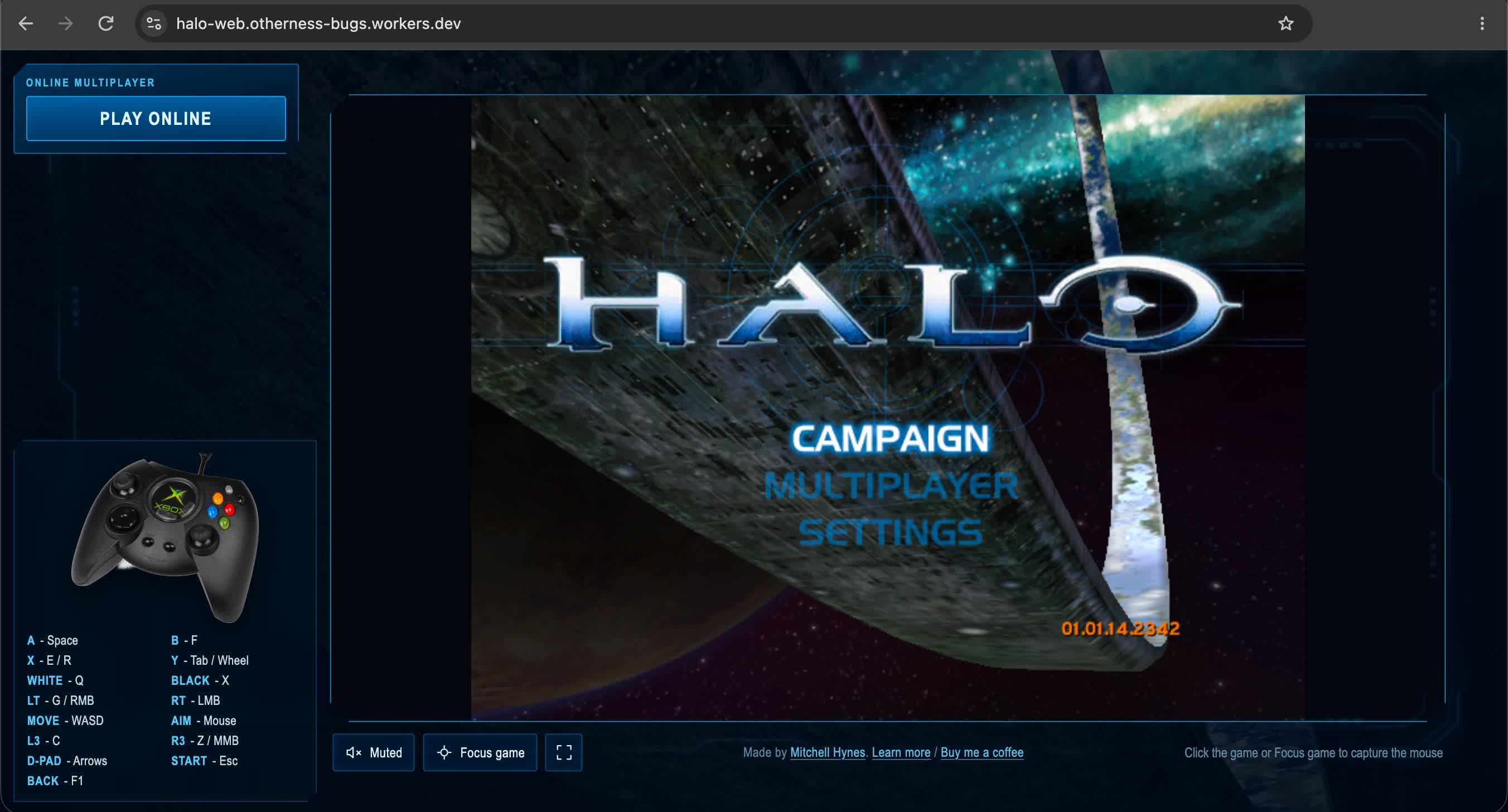
First look: Halo: Combat Evolved can now be played in a web browser, complete with its full single-player campaign and a multiplayer mode built for up to 128 players. The project arrives just days after the 2001 shooter was decompiled, giving developers a new base for ports, modifications and other technical experiments, like this one.
This browser Halo "release" shows how quickly recovered game code can become a working project, even when the original was built for a fixed console platform.
Created by Mitchell Hynes, the browser version runs a port of the original game through a standard web browser rather than a console or traditional PC installation. It includes the campaign from start to finish, along with online multiplayer.
The campaign appears to be the more stable part of the project. Early hands-on reports say it runs well in Google Chrome and closely matches the original Xbox release. Hynes has mapped the original Xbox Duke controller's controls to a mouse-and-keyboard setup, letting the game play like a conventional PC shooter while preserving the original control logic.
That is a notable shift for a game built around fixed console hardware. The first Halo was developed for the original Xbox, where the hardware, controller and operating system were tightly controlled. Running it in a browser introduces a different technical environment, including browser-based input handling, graphics processing and network communication.
– Mitch (@mitchellhynes) September 29, 2026
The new multiplayer mode is the more ambitious part of the project. The original game was built around split-screen play, local system-link sessions and smaller multiplayer groups.
Supporting 128 players requires a far larger networking setup, with the game handling player movement, weapons, vehicles and combat events across many connected clients. Reports so far suggest the multiplayer mode has been less reliable than the campaign.
The project follows the recent decompilation of Halo: Combat Evolved. For older games, decompilation – the reconstruction of software into code that developers can inspect and modify – can open the door to new ports, performance improvements, expanded modding tools and changes that were not possible through traditional fan patches.
In Halo's case, the decompilation has already prompted discussion around uncapped frame rates, more extensive mods and additional platform support. The browser version is an early example of what can happen when a classic game becomes easier for outside developers to adapt.
Browser ports have become more common for older games in recent years. Fan-made browser versions have appeared for Grand Theft Auto: Vice City, the original Diablo and Half-Life. These projects vary in scope, but they share the same basic goal: making older games accessible through modern hardware and software without requiring the platforms they originally shipped on.
Other recent decompilation efforts are moving in a similar direction. Super Mario Galaxy has been fully decompiled, with a PC port in development. Work on the Nintendo DS title Kingdom Hearts 358/2 Days is also progressing toward a playable PC release.
The legal status of these projects remains unclear. Decompilation and fan ports can raise copyright issues, particularly when they involve full commercial games. Microsoft, Nintendo and Square Enix could challenge projects based on their games, and the projects' continued availability is not guaranteed.