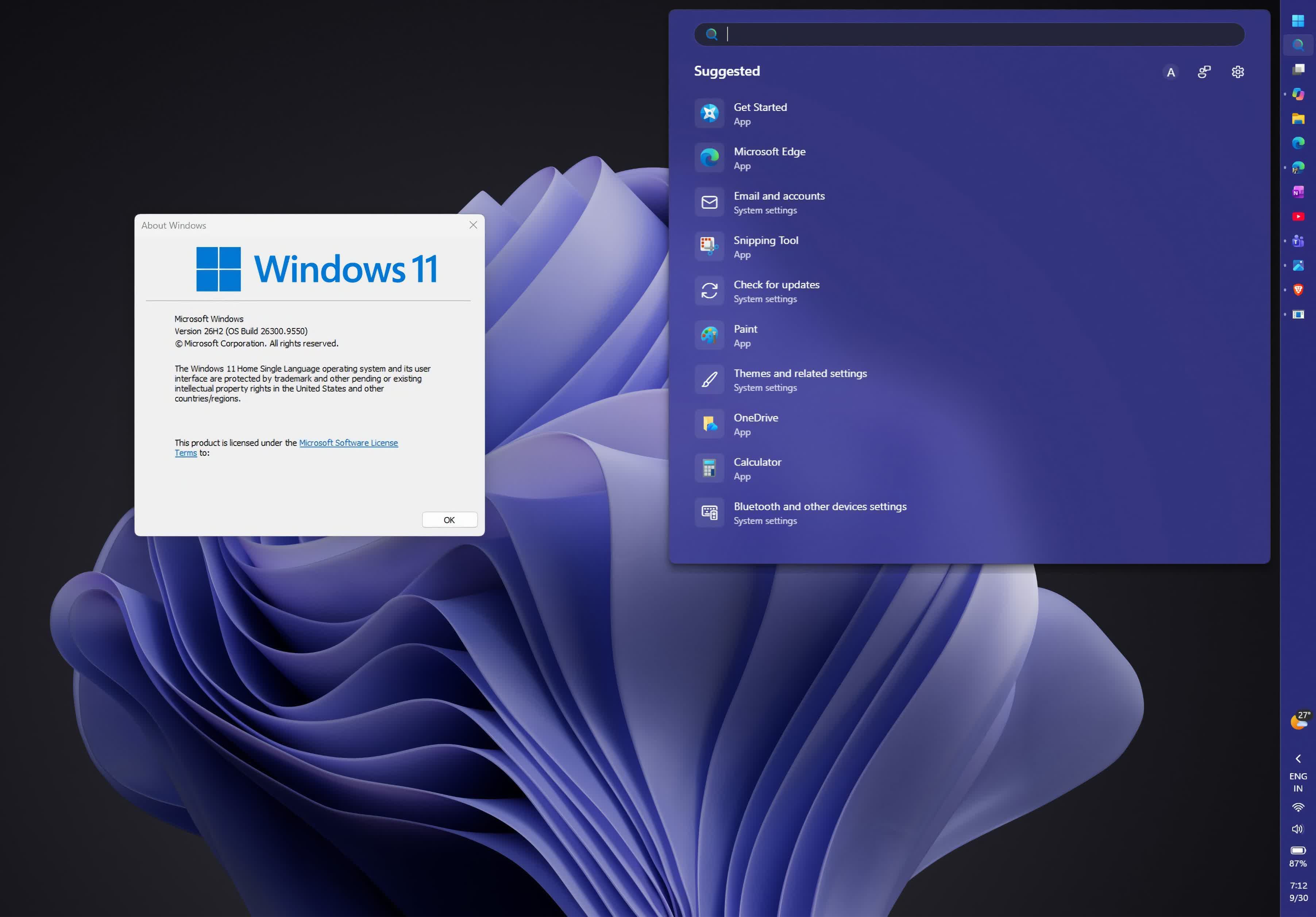
The takeaway: Microsoft has officially released Windows 11 26H2 to the stable channel, rolling it out to all eligible users. The update is described as an "enablement package" that simply switches on dormant features delivered with previous monthly updates. It's a tiny 174 KB download for devices that are already up to date with all cumulative updates.
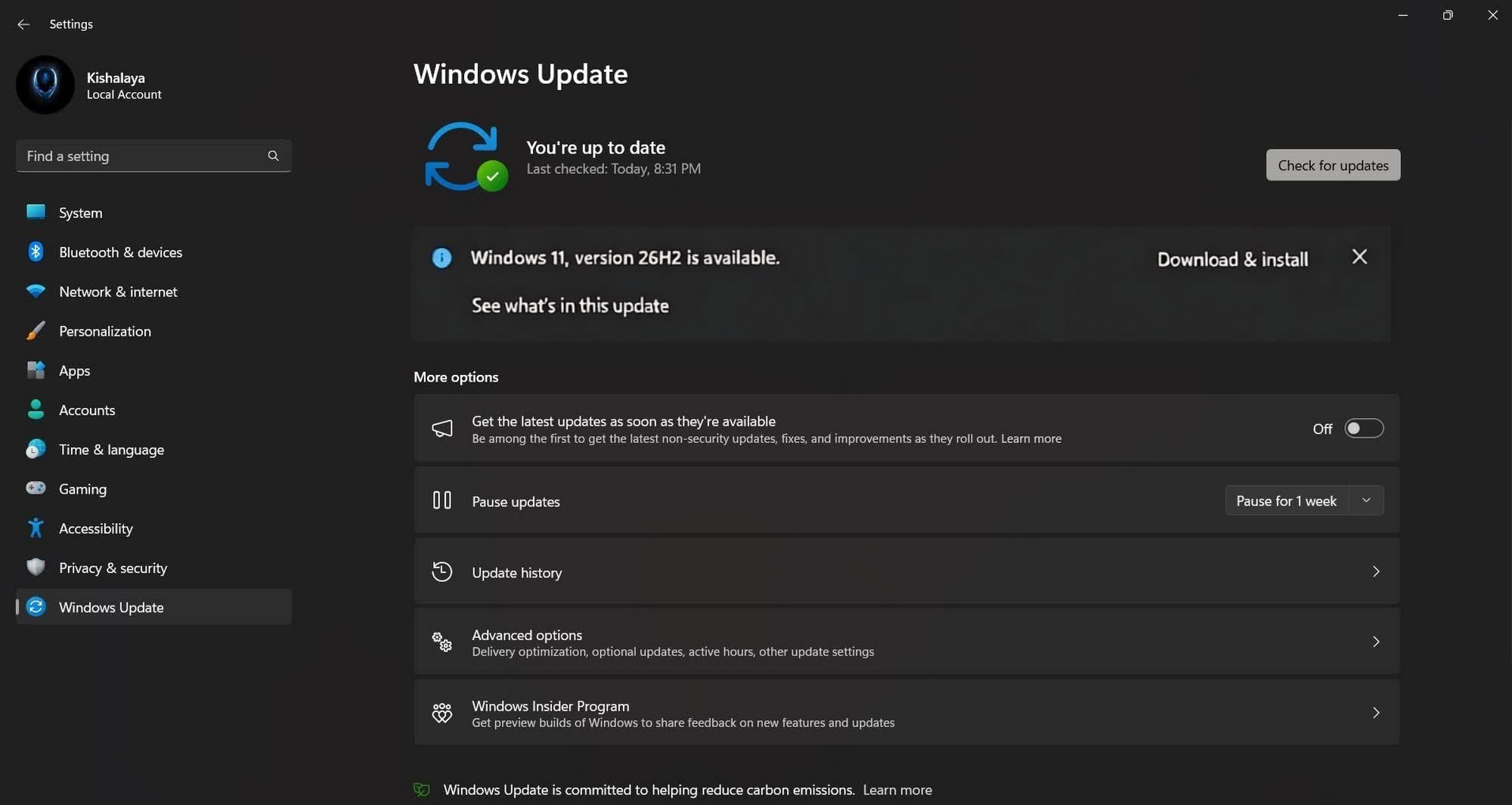
Windows will automatically notify you when the update becomes available for your device. If you'd rather not wait, open Settings, select Windows Update in the left pane, and turn on "Get the latest updates as soon as they're available." Then click "Check for updates" and hit "Download and install" if the update is offered for your PC.
Microsoft calls version 26H2 a "predictable and low-disruption update" and insists it shouldn't raise any stability or compatibility concerns, since it shares the same underlying code as versions 25H2 and 24H2. All three are based on the Germanium release, which introduced fundamental changes to Windows 11, including deep optimization for ARM64 architecture and AI hardware.
Version 26H2 enables several dormant features across the Start menu, Taskbar, File Explorer, Windows Search, Gaming, Task Manager, and Networking. It also activates AI features in Settings, Task Manager, Narrator, and more, along with multiple personalization options, accessibility tools, productivity boosts, and security upgrades.
One of the biggest advantages of 26H2 is its improved support lifecycle. Despite sharing the same servicing branch as 24H2, the new version extends support for Windows 11 Home and Pro editions to October 2028, while devices running 25H2 and 24H2 will remain supported until October 2027 and October 2026, respectively.
For Windows 11 Enterprise and Education, support for 26H2 will run through October 2029, compared with October 2028 for 25H2 and October 2027 for 24H2. Windows 11 26H2 IoT Enterprise will also be supported until October 2029.
Earlier this year, Microsoft detailed how its Windows team has been prioritizing performance and stability over new features, following persistent complaints about crashes, compatibility issues, and sluggish performance.
According to CEO Satya Nadella, the company is trying to win back users by focusing on "core features and fundamentals that matter most to our customers."
Masthead credit: Windows Latest