
Forward-looking: Almost 10 years after he first raised the issue, Bill Gates has repeated his warning that robots should pay taxes. The Microsoft co-founder points out that as automation takes more people's jobs, the amount of tax being paid will fall. The solution, he believes, is to make robots pay the same FICA taxes that humans would.
Speaking to Ezra Klein of The New York Times, Gates said that society should get to decide how to protect its workers even if it's making them jobless.
The billionaire described a unit of labor that could be defined so that work done by either humans or robots would be subject to the same FICA tax.
The US payroll tax funds Social Security and Medicare. Employees generally pay 7.65% of wages: 6.2% for Social Security and 1.45% for Medicare, with employers paying a matching amount. High earners can also owe an additional Medicare tax.
Automation-related job losses on an apocalyptic scale could be disastrous for society. Not only would the government see a drastic decline in tax revenue, those laid off would struggle financially. Gates said taxing robots could provide economic security for citizens while allowing governments to keep collecting taxes. He says the money could come from the savings companies make from not having to employ human workers.
"Just because the economic signals say that it'd be lower cost to use an AI doesn't mean society has to do that," he said.
In August, Gates published a nearly 6,000-word essay titled The turbulent AI era is here. The choices we make now are critical. He warned that the transition to the AI era will be one of the most turbulent times in human history. And that right now, we are not preparing adequately for that transition.
That essay also called for robots to be taxed, along with AI tokens. "If you're an employer and you hire someone, you pay payroll taxes on their earnings," Gates wrote. "But if you buy a robot, you can usually write it off right away as a business expense. The tax system nudges you toward replacing people with machines."
Gates also believes an AI tax would slow the rush away from human labor and raise money for retraining and a stronger safety net.
AI continues to be responsible for thousands of job losses, either through direct replacements or indirectly as companies prioritize resources toward the technology – despite execs now trying to play down the scope of the impact. Jobloss.ai reports that there have been just under 130,000 AI-related job losses in the US since January 2025.
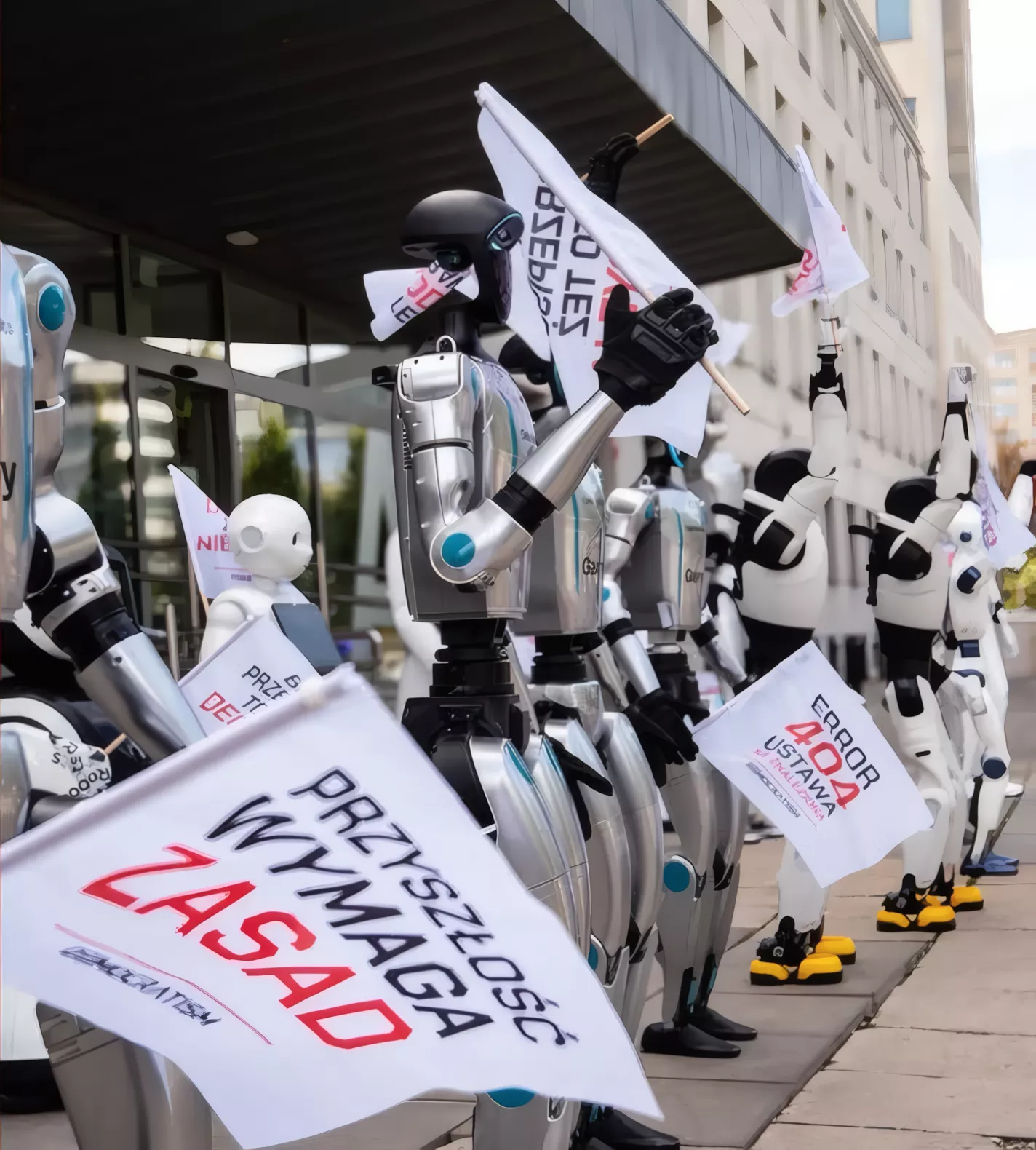
It's not just white-collar jobs under threat. Companies are starting to eye robots for positions beyond warehouses and factories. One California county is taking the issue so seriously that it wants businesses to pay a fee when robots take someone's job, while a protest over the issue in Poland even included robots.
Gates first called for a robot tax in 2017, years before ChatGPT arrived. Back then, he said the tax could also be used to help people who've lost their jobs to automation by funding training for positions that require human empathy and understanding, such as care for the elderly and children with special needs.