
Why it matters: AI upscaling has long been a primary advantage of modern PC graphics cards and the PlayStation 5 Pro over standard current-generation consoles. While the base PS5's new Quick Spectral Super Resolution (QSSR) doesn't upscale games quite as well as the PS5 Pro's PSSR, Nvidia DLSS, or AMD FSR 4, early testing shows significantly higher image quality than earlier upscaling methods used in console games, such as TAA or FSR 3.
With a free update released on Thursday, Marvel's Wolverine and Ghost of Yōtei have introduced the first machine-learning-based upscaler that supports the base PlayStation 5. QSSR provides noticeably clearer graphics at virtually no performance cost.
Digital Foundry's testing shows that, while QSSR can lower Wolverine's framerate by around 9 fps compared to developer Insomniac's homegrown upscaler at the same resolution, the new method can produce cleaner images from a lower resolution, reclaiming those lost frames. Side-by-side comparisons show that QSSR reduces shimmering, ghosting, and other distortions common in PS5 games.
Compared to the PS5 Pro's PSSR, the catch is that QSSR's higher computational cost makes upscaling to 4K more difficult. For example, Wolverine still looks significantly sharper on the premium console because its dedicated AI cores, which support INT8 math, provide the headroom to upscale from around 1200p to 4K. In comparison, QSSR, which relies on slower FP16 math and other optimizations, only lifts the game from about 936p to 1440p.
Still, the feat is remarkable because ML upscaling was previously thought impossible on the standard PS5. Although Wolverine previously upscaled from 1080p to 1440p on the console, QSSR manages to make 936p look superior.
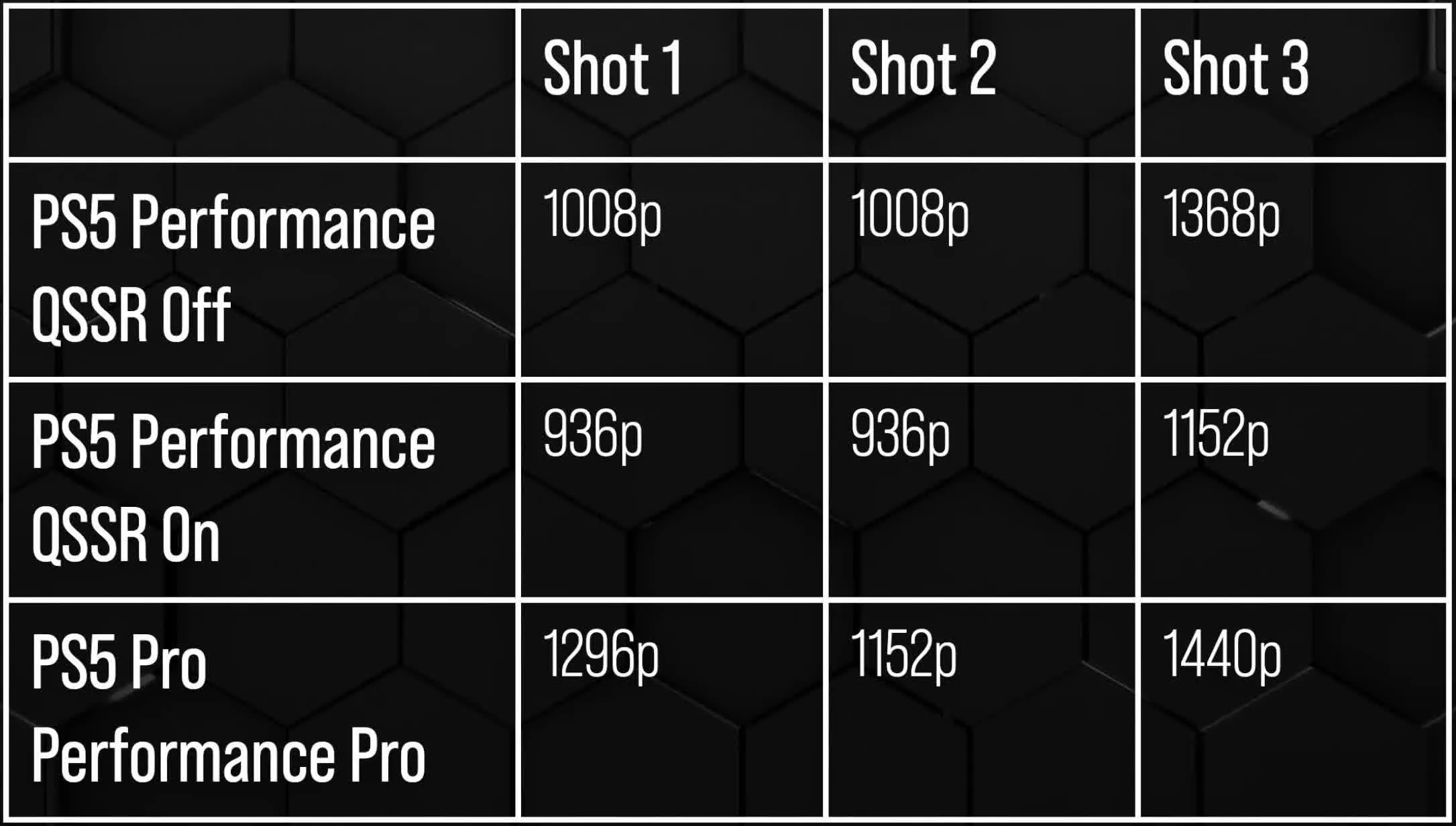
The results bode well for PS5 games that still use older FSR and TAA solutions, and Sony claims patching these titles is relatively straightforward. QSSR should be a drop-in upgrade for games that already support PSSR on PS5 Pro, and tests with Ghost of Yōtei indicate that QSSR's performance cost might match that of FSR 3.1, providing sharper visuals at the same framerate.
Meanwhile, PC modders have already brought AMD's FSR 4, which helped inspire PSSR, to older Radeon graphics cards, and the GPU manufacturer is set to officially extend support for the feature to RDNA 2 cards next year. This is possible due to FSR 4's INT8 implementation. Since the Xbox Series consoles also support INT8 math, they could theoretically receive an AI upscaler similar to QSSR or FSR 4, but neither AMD nor Microsoft has announced such plans.