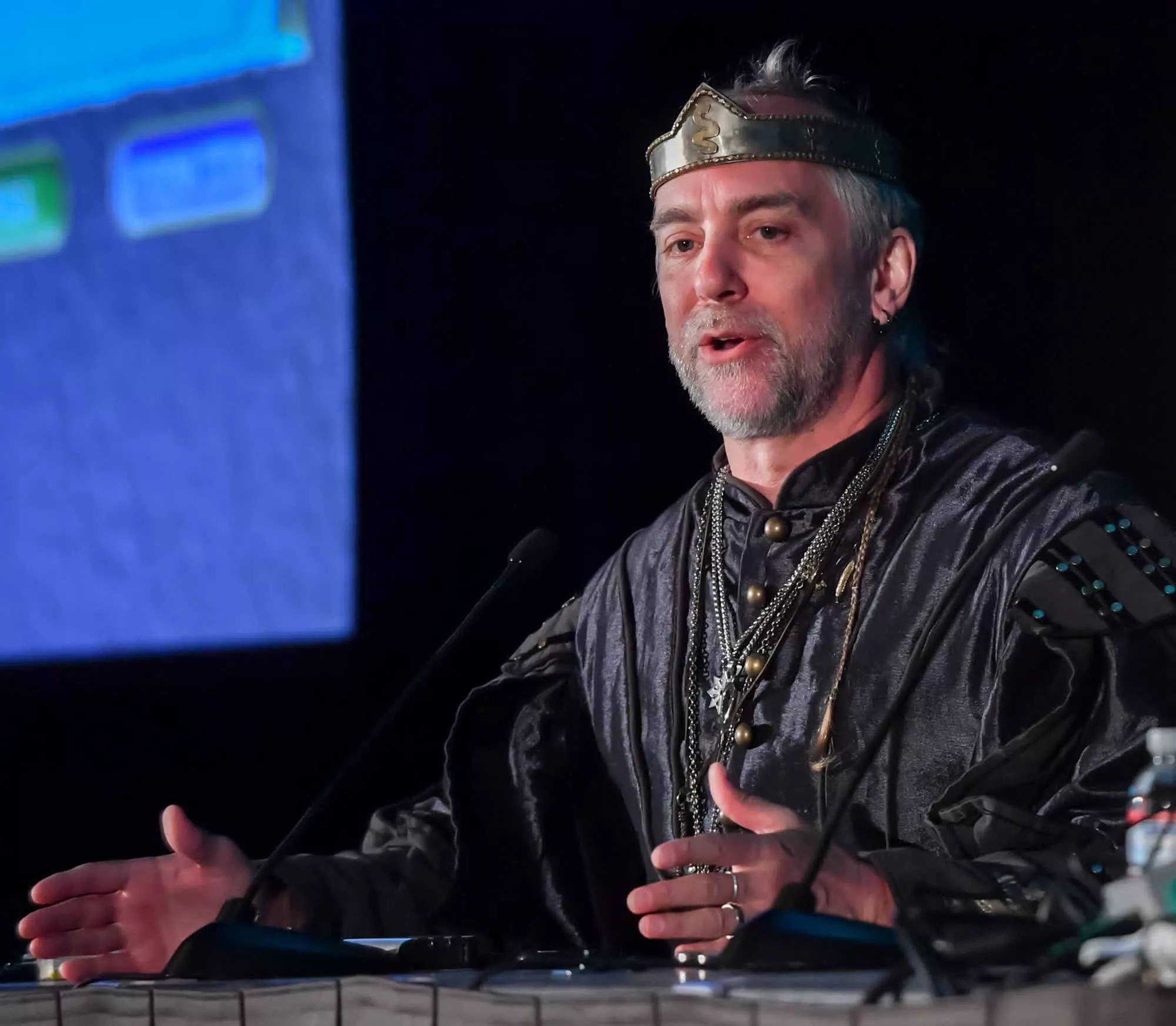
True Classics: Richard Garriott recently confirmed that he will soon reacquire the IP rights to the Ultima series from EA. The distinguished game designer and the publisher have already exchanged a few emails about the matter, so things could soon start moving again for one of the most iconic CRPG series of all time.
Richard Garriott will soon get the Ultima rights back and is already planning what to do with the series afterward. The British-born American game designer, entrepreneur, and space tourist played a major role in establishing the CRPG genre during the home computer era. Now, the man behind the Lord British persona wants another go at the popular series, which debuted almost half a century ago.
Garriott recently reiterated what he believes will happen a year from now. Thanks to a "really weird" US copyright law, the original rights holder can essentially reclaim their intellectual property 35 years after selling it to someone else. The process does not require any payment; the original owner simply needs to notify the current rights holder a year before reclaiming the IP.
Lord British contacted EA, the most recent holder of the Ultima rights, in April this year. As he explained in the interview, the publisher acknowledged his request and confirmed that it would act in accordance with US copyright law.
As things stand, Garriott will officially regain ownership of the Ultima series in 2027. The designer is spending this year considering his next move, as the Ultima brand might still carry some weight among CRPG fans. Lord British could eventually re-release the earlier Ultima games on modern platforms or launch an entirely new Ultima experience. He is even considering working with EA again to secure the franchise's future in gaming.
"The point is – I have control again of the future of my seminal product line," Garriott said in the interview.
Richard Garriott sold Origin Systems, along with the Ultima series, to Electronic Arts in 1992. Ultima IX, the last mainline entry in the series, came out in 1999. Subsequent attempts to revive the franchise, such as the free-to-play Ultima Forever: Quest for the Avatar in 2013, failed to gain enough traction among gamers.
Throughout the 80s and early 90s, Ultima helped introduce new conventions and mechanics to computer role-playing games. Alongside Wizardry, Might and Magic, and a few other influential franchises, the series established standards and pioneered innovations that many successful games later adopted. To this day, fans continue to build new projects and remakes using the creative DNA of the original Ultima games.