A new OnlyOffice fork is Europe's answer to Microsoft Office

Skye Jacobs

Posts: 1,907   +58
Staff
In context: A new open-source productivity suite built by European tech firms is sparking a broader debate around software sovereignty, licensing, and trust in the open-source ecosystem. The project, called Euro-Office, aims to give governments and companies across Europe a locally developed alternative to Microsoft Office and, in the process, has created a rift with the project it is built on, OnlyOffice.
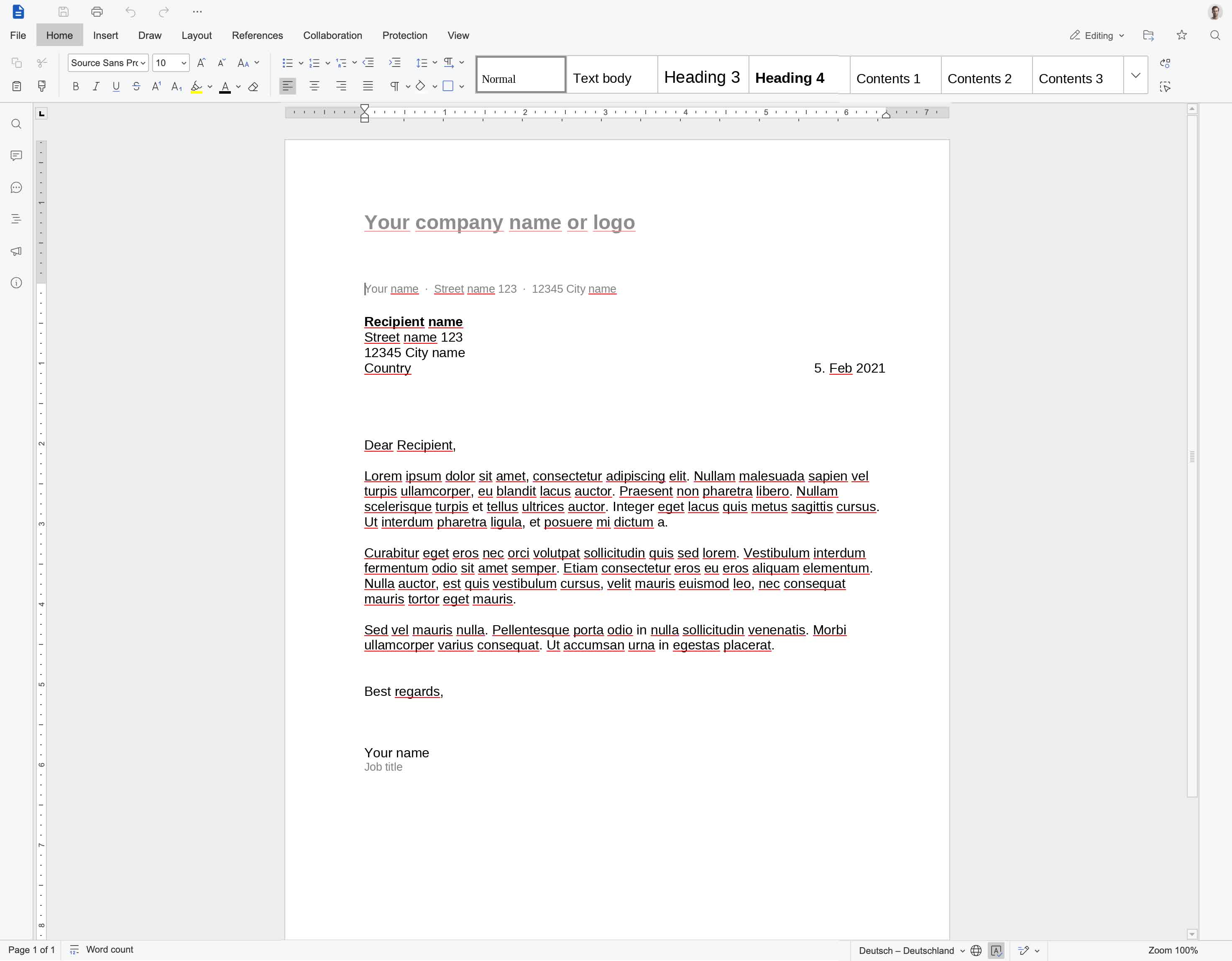
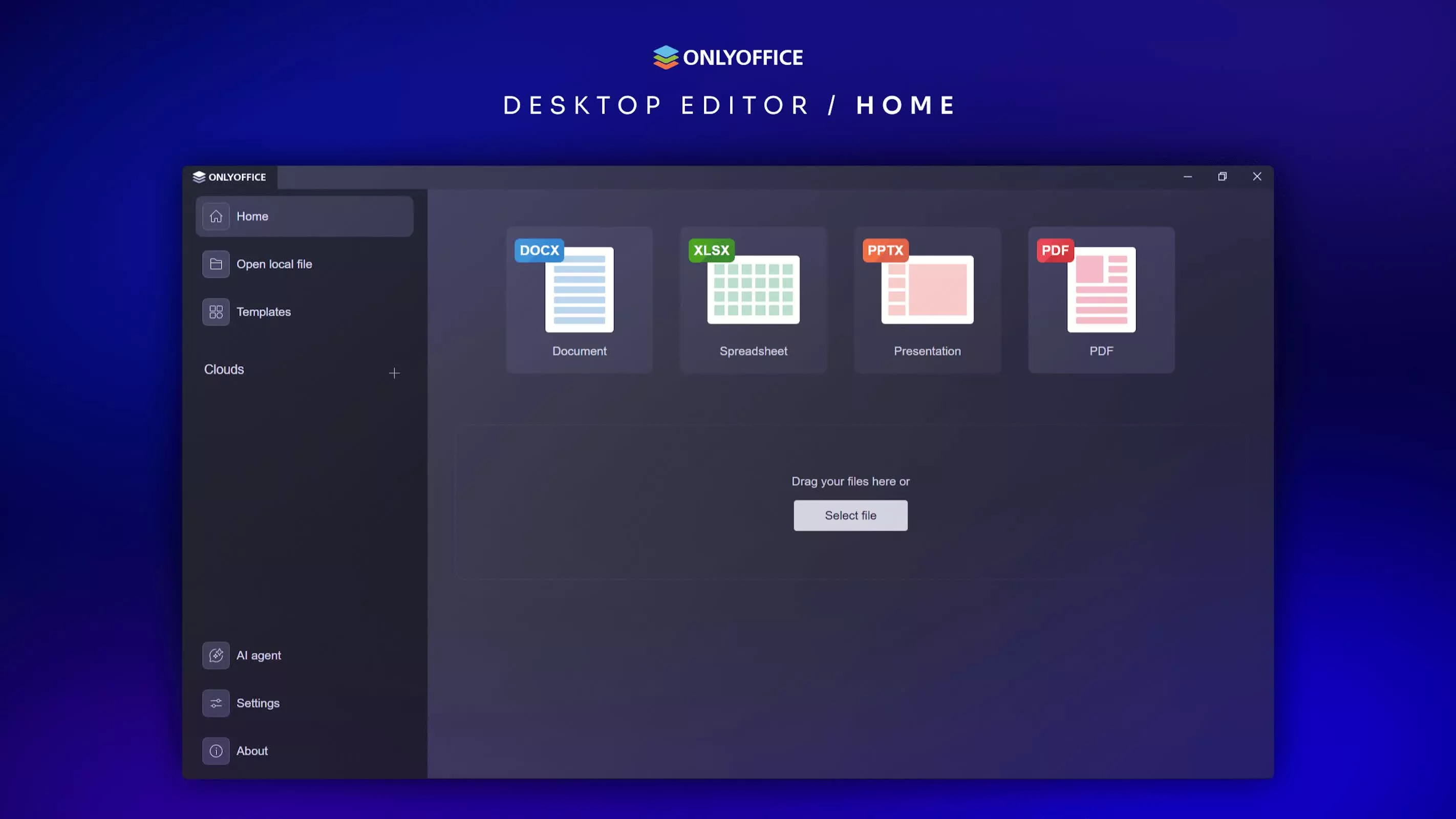
Developed by a consortium including Nextcloud, Ionos, and Proton, Euro-Office builds directly on the open-source OnlyOffice codebase. It offers a word processor, spreadsheet editor, presentation tool, and PDF editor, all supporting Microsoft formats (docx, pptx, xlsx) and open standards such as ODF. Its preview version is already available on GitHub, with a 1.0 release expected this summer.

The new suite reflects a wider European push to reduce reliance on US technology providers. It sits within broader digital sovereignty efforts aimed at keeping critical infrastructure, data, and core productivity tools under European jurisdiction. For many public agencies and enterprises, control over code, governance, and product roadmap is becoming as important as matching the features of established US suites.

The project's emergence has also sparked a controversy about open-source and licensing compliance. OnlyOffice, whose software forms the foundation of Euro-Office, has sharply criticized the fork, alleging that its license terms under the GNU Affero General Public License v3 (AGPLv3) were violated.

"Any argument that a modified or derivative version of the software may be distributed under a 'pure' AGPLv3 license, excluding the additional conditions imposed pursuant to Section 7, is legally unfounded," the company said in a statement.

"The right to create and distribute derivative works arises solely from the license grant. Such a grant is conditional and indivisible. Accordingly, any derivative work based on the original OnlyOffice code may be created and distributed only in compliance with all applicable license terms, including the additional conditions."

The fork also raises questions of trust and transparency. The Euro-Office developers argue that OnlyOffice's origins and developer base in Russia make collaboration challenging, given current geopolitical tensions.
On its GitHub repository, the Euro-Office developers argue that OnlyOffice has Russian roots and a development team still largely based in Russia, which they see as problematic in the current geopolitical climate. In their view, open source depends on global collaboration and trust, but both are harder to maintain when political tensions are high. They also say that a lack of transparency around how the project is developed further undermines confidence.

They further claim that contributing to OnlyOffice is "impossible or greatly discouraged" and that "build instructions are unreliable, outdated or just plain broken."

OnlyOffice, which moved its operations to Latvia, disputes the characterization but acknowledges that Euro-Office could impact its business, especially given its reliance on enterprise deployments of its collaborative office software.

The dispute lays bare a central tension in open-source development: the right to fork code versus the commercial and political realities that can drive those forks.

For Euro-Office's backers, the fork is a path toward "Made in Europe" software independence. For OnlyOffice, it is a reminder of how geopolitical mistrust and license interpretation can turn open code into contested ground.

Permalink to story:

 
As I get it, so far there are plenty of disputes over subjects that are not quite clear, and no product. But a 1.0 release is expected this summer, wow!
Microsoft is developing MS Office since the late 1980s, various free alternatives are also decades old, and these guys are starting an alternative, seriously? For 'digital sovereignty', no less .. if this thing ever takes like 5%+ of the European market (which is indeed extremely unlikely), it will probably be a digital disaster due to the amount of assorted bugs and critical flaws in new software.
You can't create a good product with bureaucratic decrees.
 
There are plenty MSOffice alternatives - problem is adoption. Especially when everyone and their granma asks for .docx all the time.


Why not use LibreOffice? It gets much more development than obscure office suites.

Cuz this civilization with declining demographics and obsession on masturbation won't buy anything without prefix "only" from now on.
 
As I get it, so far there are plenty of disputes over subjects that are not quite clear, and no product. But a 1.0 release is expected this summer, wow!
Microsoft is developing MS Office since the late 1980s, various free alternatives are also decades old, and these guys are starting an alternative, seriously? For 'digital sovereignty', no less .. if this thing ever takes like 5%+ of the European market (which is indeed extremely unlikely), it will probably be a digital disaster due to the amount of assorted bugs and critical flaws in new software.
You can't create a good product with bureaucratic decrees.
While I agree with much of your sentiment, I think you underestimate just how much other countries feel like they are being hog tied by the US currently, particularly when it comes to technology.
 
The fact that Europe is reducing its reliance on others and it's doing things itself l, constructing things based on its own needs and interests is very positive.
 
Why not use LibreOffice? It gets much more development than obscure office suites.
Part of it is because of the online version. Not to worry, a similar forking situation by Collabora has resulted in the Document Foundation responding that they would resume the development of the online version of LibreOffice. FOSS forks creating "competition" FTW! Naturally, the Document Foundation isn't happy about the Collabora fork either, though their "counter" is on geo-politics and fragmentation grounds, not license violations. IMO the whole purpose of FOSS *is* fragmentation.

Despite their talk of freedom, GPL-based licences are restrictive. The simpler MIT has grown popular of late.
They are copyleft, so your freedoms cannot be revoked because derivatives must have the same license. Plenty of MIT and BSD licensed software, so called permissive licenses, have had cases where the next version has been released under a proprietary license like the BSL and SSPL. This includes Terraform, Redis, MongoDB, and Elasticsearch.

Note that even software (like MongoDB) licensed under AGPL can be relicensed under a non-FOSS license if the copyright owner decides to do so. If there are multiple code contributors (who would default to owning part of the copyright), they would have say over that decision, so if a company (like Mongo) requires code contributors to sign a CLA (Contributor License Agreement) giving up that right, they can unilaterally make that move. A permissive license doesn't require downstream licenses to have the same, so the CLA shenanigans aren't required to make it proprietary.

In this case, the license violation that OnlyOffice claims Euro-Office violated is this section of the AGPL that they added for their software:
"Pursuant to Section 7(b) of the License you must retain the original Product logo when distributing the program. Pursuant to Section 7(e) we decline to grant you any rights under trademark law for use of our trademarks."

Which effectively bars redistribution of the software since the logo is trademarked. Euro-Office removed this section of the license in their version, claiming:
"Under AGPLv3 Section 7, downstream recipients may remove terms that constitute "further restrictions" beyond what Section 7(a)-(f) permits, as affirmed by the FSF."

So who knows how this will shake out. There's some more legal info on this and the LibreOffice situation here: https://www.theregister.com/2026/04/02/eurooffice_forks_onlyoffice/
 
Why not use LibreOffice? It gets much more development than obscure office suites.

Despite their talk of freedom, GPL-based licences are restrictive. The simpler MIT has grown popular of late.

I wouldn't call OnlyOffice "obscure".

It's the most popular free open-source office suite after LibreOffice and OpenOffice.

OnlyOffice is pretty good, and would be my office suite of choice over LibreOffice... if it wasn't an Electron app. Yuck.
 
The fact that Europe is reducing its reliance on others and it's doing things itself l, constructing things based on its own needs and interests is very positive.
Yes, Europe can't defend itself, but give this project 5-10 years, and it'll be able to create its own documents!
 
Why not use LibreOffice? It gets much more development than obscure office suites.

Despite their talk of freedom, GPL-based licences are restrictive. The simpler MIT has grown popular of late.

Probably because LibreOffice looks and feels like it was made in 2003. When I want to remind myself how Microsoft maintains its top market position despite all the jank, I just need to use these "alternatives" for a few minutes. They make Microsoft look like an elite design house.

OnlyOffice is getting some traction because it looks like its UX is designed for actual humans and rivals MS Office.
 
Last edited:
Part of it is because of the online version. Not to worry, a similar forking situation by Collabora has resulted in the Document Foundation responding that they would resume the development of the online version of LibreOffice. FOSS forks creating "competition" FTW! Naturally, the Document Foundation isn't happy about the Collabora fork either, though their "counter" is on geo-politics and fragmentation grounds, not license violations. IMO the whole purpose of FOSS *is* fragmentation.
If Collabora Online were free, it would be the right option. FOSS and fragmentation tend to go hand in hand.

They are copyleft, so your freedoms cannot be revoked because derivatives must have the same license. Plenty of MIT and BSD licensed software, so called permissive licenses, have had cases where the next version has been released under a proprietary license like the BSL and SSPL. This includes Terraform, Redis, MongoDB, and Elasticsearch.

Note that even software (like MongoDB) licensed under AGPL can be relicensed under a non-FOSS license if the copyright owner decides to do so. If there are multiple code contributors (who would default to owning part of the copyright), they would have say over that decision, so if a company (like Mongo) requires code contributors to sign a CLA (Contributor License Agreement) giving up that right, they can unilaterally make that move. A permissive license doesn't require downstream licenses to have the same, so the CLA shenanigans aren't required to make it proprietary.
Certainly, copyleft makes sure that derivative works follow the same licence. Which is desirable. But take a hypothetical case: I give someone, say, a loaf of bread for free; I am transferring ownership to them. I might not like it, but they can do what they want: toss it in the bin or sell it for ten times the shop price. The question is, shouldn't free software be the same? I don't know. On a personal note, I've grown fed up with the complicated GPL licences we championed in our youth.

I wouldn't call OnlyOffice "obscure".

It's the most popular free open-source office suite after LibreOffice and OpenOffice.

OnlyOffice is pretty good, and would be my office suite of choice over LibreOffice... if it wasn't an Electron app. Yuck.
Fair enough. As for Electron, it's the fashion these days to make the world web-rendered.

Probably because LibreOffice looks and feels like it was made in 2003. When I want to remind myself how Microsoft maintains its top market position despite all the jank, I just need to use these "alternatives" for a few minutes. They make Microsoft look like an elite design house.

OnlyOffice is getting some traction because it looks like its UX is designed for actual humans and rivals MS Office.
No doubt, LibreOffice needs major work on the UI, both design and performance. For my part, though, Office's Ribbon has always been confusing.
 
While I agree with much of your sentiment, I think you underestimate just how much other countries feel like they are being hog tied by the US currently, particularly when it comes to technology.
They don't feel tied, they are tied for the lack of good enough non-US alternatives.
It's OK to want to be self -reliant, but creating a good, reliable and secure product requires many things ... like a lot of time. And a lot of expertise, a business -friendly environment etc.
Europe lacks the last two for sure.
A group of bureaucrats deciding "we will have digital sovereignty" is most definitely not enough.
 
Yes, Europe can't defend itself, but give this project 5-10 years, and it'll be able to create its own documents!
France would disagree, it controls Europe's only independent nuclear deterrent, I'm discounting our Trident 2's as they are leased from the Yanks and no one here in blighty believes the government line / myth that it's independent from Gile... sorry the US.

As for the topic, is it any wonder countries want to end dependence on US tech in the current climate?
 
Why not use LibreOffice? It gets much more development than obscure office suites.

Despite their talk of freedom, GPL-based licences are restrictive. The simpler MIT has grown popular of late.

(A) There is absolutely nothing obscure about OnlyOffice. And, it has shot ahead of LibreOffice in many of its capabilities.

(B) The MIT license is great if you want to throw code out there and you could care less how it is used and doesn't encourage broader open source collaboration.
 
They don't feel tied, they are tied for the lack of good enough non-US alternatives.
It's OK to want to be self -reliant, but creating a good, reliable and secure product requires many things ... like a lot of time. And a lot of expertise, a business -friendly environment etc.
Europe lacks the last two for sure.
A group of bureaucrats deciding "we will have digital sovereignty" is most definitely not enough.

There are a number good enough alternatives. OnlyOffice is one of them. The challenge is good enough support. And, of course, industry still expects proprietary formats. Docx, for example, is a vastly inferior format for documents, but it is still what so many industries require to be passed around. It will take a government to shove industry in a new direction. This may be the one good thing Trump had done for the world.
 
Probably because LibreOffice looks and feels like it was made in 2003. When I want to remind myself how Microsoft maintains its top market position despite all the jank, I just need to use these "alternatives" for a few minutes. They make Microsoft look like an elite design house.

OnlyOffice is getting some traction because it looks like its UX is designed for actual humans and rivals MS Office.
The irony that millions cried and gnashed their teeth for YEARS ver the office redesign, and how they would never move from XP and office 2003, yet here we are praising Office for being a more modern design.
 
The irony that millions cried and gnashed their teeth for YEARS ver the office redesign, and how they would never move from XP and office 2003, yet here we are praising Office for being a more modern design.

I always thought that Office 2003 had the best design. Even 2000. The Ribbon, in my opinion, clutters the screen, taking up more screen space than a menu and mental attention. But Microsoft always persists in forcing designs onto people till they accept it by desensitisation.
 
France would disagree, it controls Europe's only independent nuclear deterrent, I'm discounting our Trident 2's as they are leased from the Yanks ....
I'll give France partial credit, reduced only by their willingness to sell their weapons to their own enemies. They even built a reprocessing-capable nuclear reactor for Iraq that, had Israel not destroyed it, would have given them nukes before the Gulf War.
 
I'll give France partial credit, reduced only by their willingness to sell their weapons to their own enemies. They even built a reprocessing-capable nuclear reactor for Iraq that, had Israel not destroyed it, would have given them nukes before the Gulf War.
The Osirak reactor? Attacked by IAF in 1981 when Saddams Iraq was firmly allied to the West including France, US and UK, had been armed to the teeth by both Super Powers. including chemical weapons and had been encouraged by the US and its allies to mount its Invasion of Iran in 1980. By the time of Iraqs well publicised military build up and subsequent invasion of Kuwait in 1990, Iraq had served its purpose by keeping Iran contained and the oil flowing, the Berlin Wall had fallen, the Cold War was in effect over, old 'allies' could discarded.
 
I always thought that Office 2003 had the best design. Even 2000. The Ribbon, in my opinion, clutters the screen, taking up more screen space than a menu and mental attention. But Microsoft always persists in forcing designs onto people till they accept it by desensitisation.
The Ribbon was a great achievement. People are visually driven, clicking on pictures comes far more naturally for 99% of people VS text drop downs. Same reason GUIs utterly displaced text based OSes the moment they were feature complete.
 
(A) There is absolutely nothing obscure about OnlyOffice. And, it has shot ahead of LibreOffice in many of its capabilities.

(B) The MIT license is great if you want to throw code out there and you could care less how it is used and doesn't encourage broader open source collaboration.

Couldn't care less... :)
 
The Ribbon was a great achievement. People are visually driven, clicking on pictures comes far more naturally for 99% of people VS text drop downs. Same reason GUIs utterly displaced text based OSes the moment they were feature complete.

Bad choice of word on my part, but I meant toolbar, not menu. What do you think of the toolbar vs. the Ribbon? Not trying to change the goalposts. The toolbar is pictorial but more compact. If a majority of people think the Ribbon is better user design, I will accept it, but I am sceptical that it is.
 
The Osirak reactor? Attacked by IAF in 1981 when Saddams Iraq was firmly allied to the West including France, US and UK
You've proved why stopping these nuclear programs early is so crucial. Hossein went from ally to bitter foe in just a few years. Had he completed Osirak, he would have used nukes in the war against Iran, captured Kuwait, and controlled the bulk of Mideast oil.

...had been armed to the teeth by both Super Powers including chemical weapons.
Don't repeat this canard, please. Iraq's arsenal came almost entirely from the USSR and France, and its chemical weapons plant was built by Germany.

And still, we saw "armed to the teeth" with those low-grade weapons meant that the average US soldier fighting in the Iraq War was statistically safer in combat than he was walking the streets of an urban center like Chicago or Philadelphia.

... by keeping Iran contained and the oil flowing, the Berlin Wall had fallen, the Cold War was in effect over, old 'allies' could discarded.
Iraq 'discarded itself' when it invaded peaceful Kuwait and massed troops to invade Saudi Arabia.
 
Back