

OK, I'll admit it: I was a skeptic at first.
After all, some of the early iterations of AI browsers basically took the Chromium engine, added a slightly modified UI, and replaced the traditional search bar on the home page with a chatbot prompt. Not exactly revolutionary.
Over time, however, it's becoming clear that AI browsers have the potential to do significantly more. In fact, I think they could be the trigger that finally makes on-device AI meaningful and impactful for a huge range of consumer and business users. Beyond that, they could serve as a critical cog in driving distributed, hybrid AI architectures and applications.
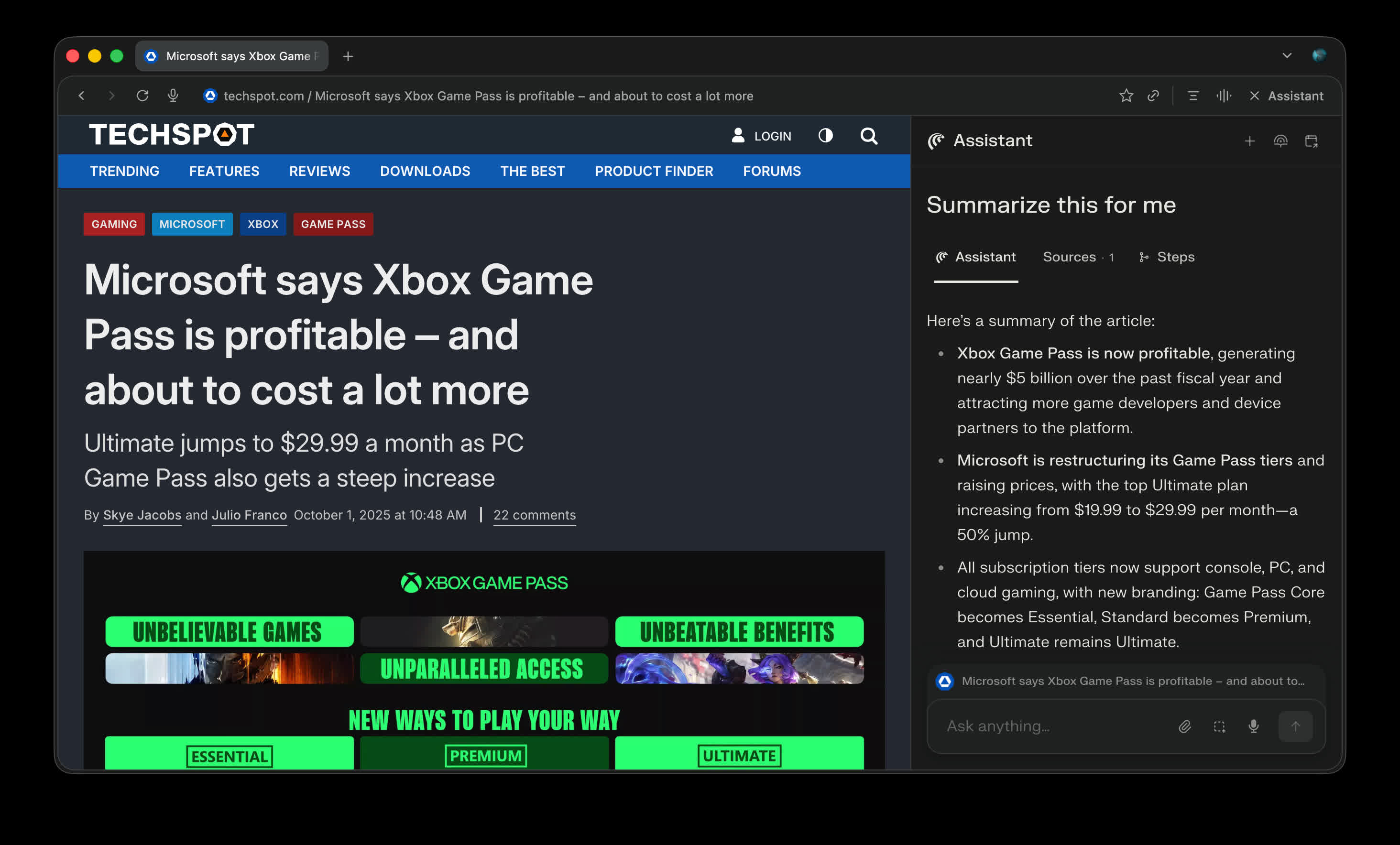
What I didn't initially consider is that AI browsers are much more than just another application – they're essentially becoming platforms upon which a whole range of other applications and services can run. Admittedly, the idea of a browser as a platform isn't new, and the concept of websites or collections of HTML pages functioning as standalone applications has been around for a long time.
What's different now, however, is that we're starting to see more distributed applications – where certain elements run in one environment and other elements run in another – coming to the fore. While this isn't necessarily because of the rise of cloud-based, AI-powered applications, there certainly seems to be a strong correlation. Initially, of course, much of this was due to the fact that the core LLMs driving AI applications like chatbots were only available in enormous, cloud-based datacenters. The terminal-like interface of chatbot prompts acted as a simple way to interact directly with those large models.
With the development and proliferation of Model Context Protocol (MCP), however, it became possible to treat AI models less like monolithic endpoints and more like interoperable resources that can be accessed across different environments. In other words, MCP enables coordination – allowing an application to dynamically engage multiple models, potentially running in different locations, as part of a single workflow.
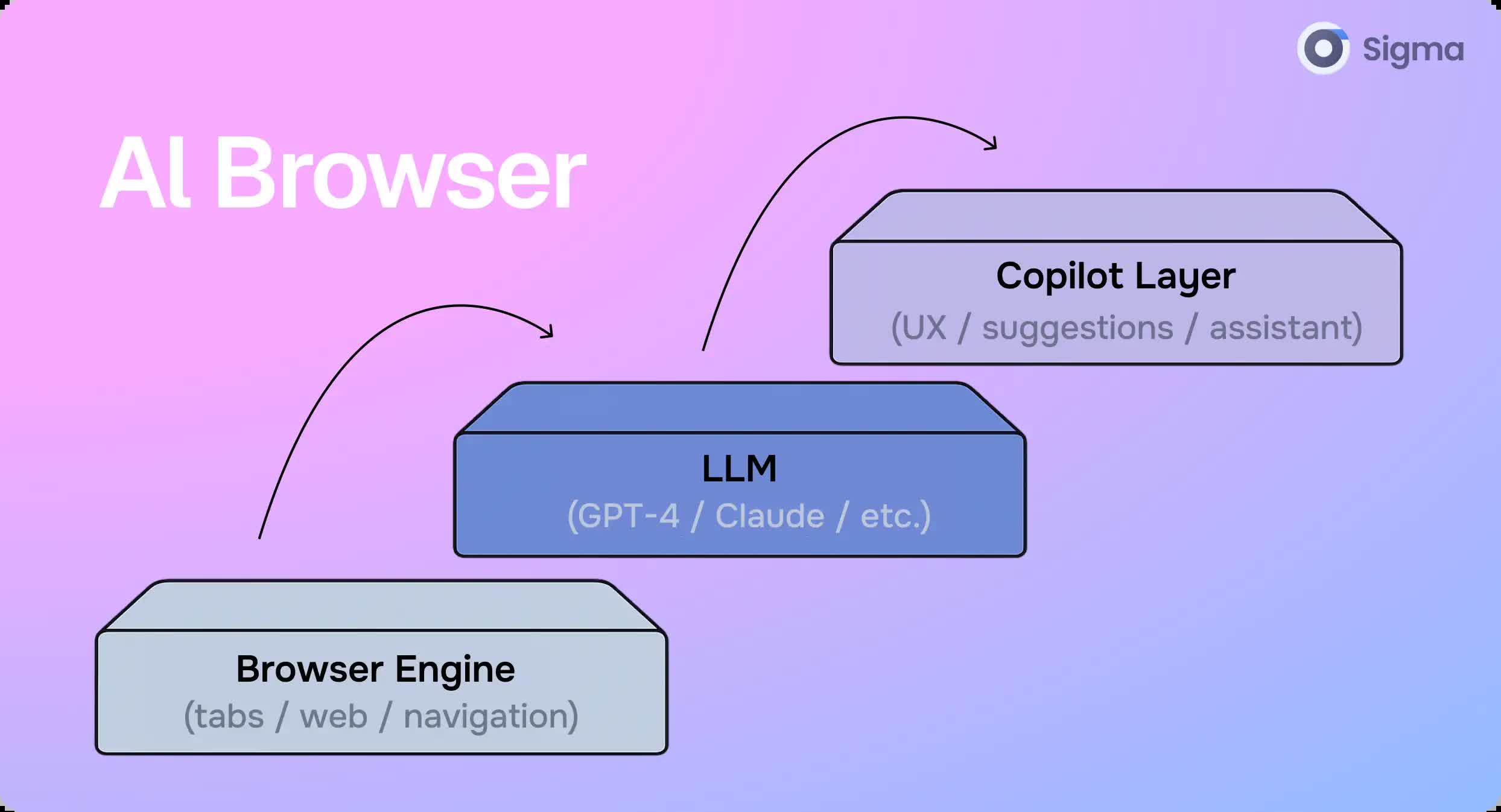
This concept becomes even more powerful when applied to mixture-of-experts (MoE) models and the intelligent, real-time "chunking" of requests into smaller tasks that can be routed to specialized models. Critically, this raises an important architectural question: where should the intelligence that performs this routing actually live?
Placing that decision-making logic close to the user – rather than deep inside a cloud service – creates opportunities to take advantage of local context, available device resources, and even enterprise infrastructure that may be invisible to a purely cloud-based application.
Inherent in this type of architecture is the need for an orchestration engine – something that can determine how to break a problem into smaller workloads and decide where each should be executed. This is the point at which AI browsers begin to look far more consequential than they first appear.
Imagine if that orchestration engine were embedded directly into the browser – an application that already sits at the intersection of user intent, data access, identity, and device resources. Put another way, browsers are uniquely positioned to become AI orchestration platforms because they are ubiquitous, frequently updated, already trusted with identity, data, and permissions, and inherently cross-platform.
To complete the picture, there are two other critical elements to consider. First, all of the AI browsers are being built by companies that have their own frontier AI models and have also created – or are at least working on – smaller versions of these models optimized to run directly on devices.
By embedding these device-specific Small Language Models (SLMs) into their browsers, they could customize the orchestration agent to intelligently understand what resources are available within their range of frontier models, enabling the most efficient use of computing power. In addition, because browsers are updated so frequently, this provides an easy mechanism for vendors to keep these local models up to date.
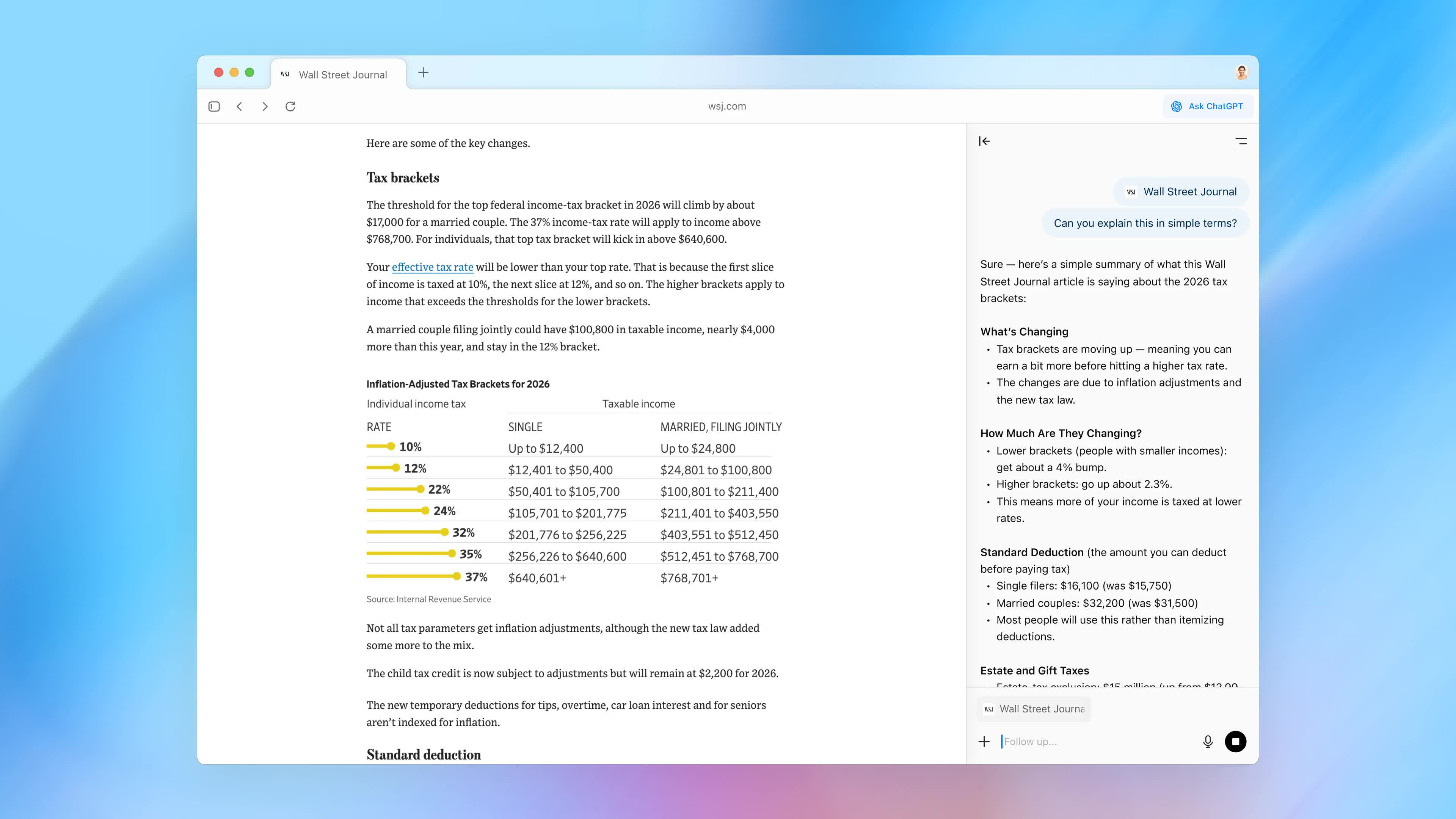
The real game-changer for AI browsers is their ability to serve as the hub from which AI agents are run and controlled. Everyone, it seems, is expecting agentic AI to completely rewrite the rules on how we perform tasks, get information, and interact with our devices. Exactly how (and where) those interactions will occur hasn't been entirely clear – until now.
While operating system vendors will undoubtedly try to claim this orchestration layer for themselves, the browser's agility and cross-platform consistency make it a more practical execution engine for these tasks.
The second and final critical element is that modern PCs and smartphones are now much better equipped to run these local models, thanks to the integration of more powerful CPUs, GPUs, and a brand-new class of NPUs. Hardware support is essential to making a distributed hybrid AI architecture possible, and the installed base of these devices is starting to hit critical mass.
So, if you put all these different pieces together, you can start to imagine a number of intriguing possibilities with very important implications. First, the ability to have an orchestration agent run locally on a device and determine, for example, what elements of a query it could answer using its own local models – and what elements need to be sent to other environments – could greatly improve computing efficiency and drive a significant reduction in power consumption. Instead of sending everything to the cloud, workloads could leverage all the compute resources available to them.
Oh, and by the way, the resources to which these workload components could be sent also include enterprise data centers equipped with AI infrastructure, not just the cloud. Organizations creating custom applications for their own purposes are likely to want to tap into those enterprise AI factory resources for access to proprietary or fine-tuned models.
Plus, as we enter an era where serious questions about the power grid's ability to support all the expected AI traffic are rising rapidly, the ability to leverage local datacenters and the computing horsepower of personal devices is going to make a big difference. The desire for greater control and guarantees (not just over power, but also over compute availability) is undoubtedly going to become more important as we move deeper into the AI computing era.
In addition to compute efficiency and power savings, the privacy and security benefits of initiating AI workloads on device and being able to tap into local data opens up a huge range of opportunities for customization and personalization.
Finally, the real game-changer for AI browsers is their ability to serve as the hub from which AI agents are run and controlled. Everyone, it seems, is expecting agentic AI to completely rewrite the rules on how we perform tasks, get information, and interact with our devices. Exactly how (and where) those interactions will occur hasn't been entirely clear – until now.
Just this week, Google announced important extensions to its Chrome browser that not only allow Gemini to run in a sidebar, but to run agentic applications that tap into local resources. This concept of driving agentic AI through the browser hearkens back to my earlier point: AI browsers are becoming the platform upon which more and more of our actual work gets done.
To be clear, there are bound to be several security-related challenges when it comes to running agents on personal devices, and I expect a number of hiccups along the way. In addition, while many of these arguments about AI browsers and agentic applications sound good in theory, the reality is that transitions like this tend to take longer than many initially expect, so don't hold your breath.
Ultimately, however, the idea of leveraging a familiar application like a browser in a smarter way seems like the most logical means of integrating AI and agents into our everyday workflows and onto our devices. While, like others, I originally thought AI-powered features in office productivity and creative applications were the key to driving on-device AI experiences, I'm increasingly convinced there is a new path forward, and AI browsers are the way to get there.
Bob O'Donnell is the founder and chief analyst of TECHnalysis Research, LLC a technology consulting firm that provides strategic consulting and market research services to the technology industry and professional financial community. You can follow him on Twitter @bobodtech


