Amazon says AWS AI tools were involved in two outages, but calls it "coincidence"

Skye Jacobs

Posts: 2,030   +59
Staff
Cutting corners: Amazon Web Services has quietly introduced a set of safety restrictions and training measures after two production outages involving its own artificial intelligence tools disrupted key cloud systems in late 2025. The incidents highlight the risks of using autonomous coding agents inside platforms where reliability is paramount.
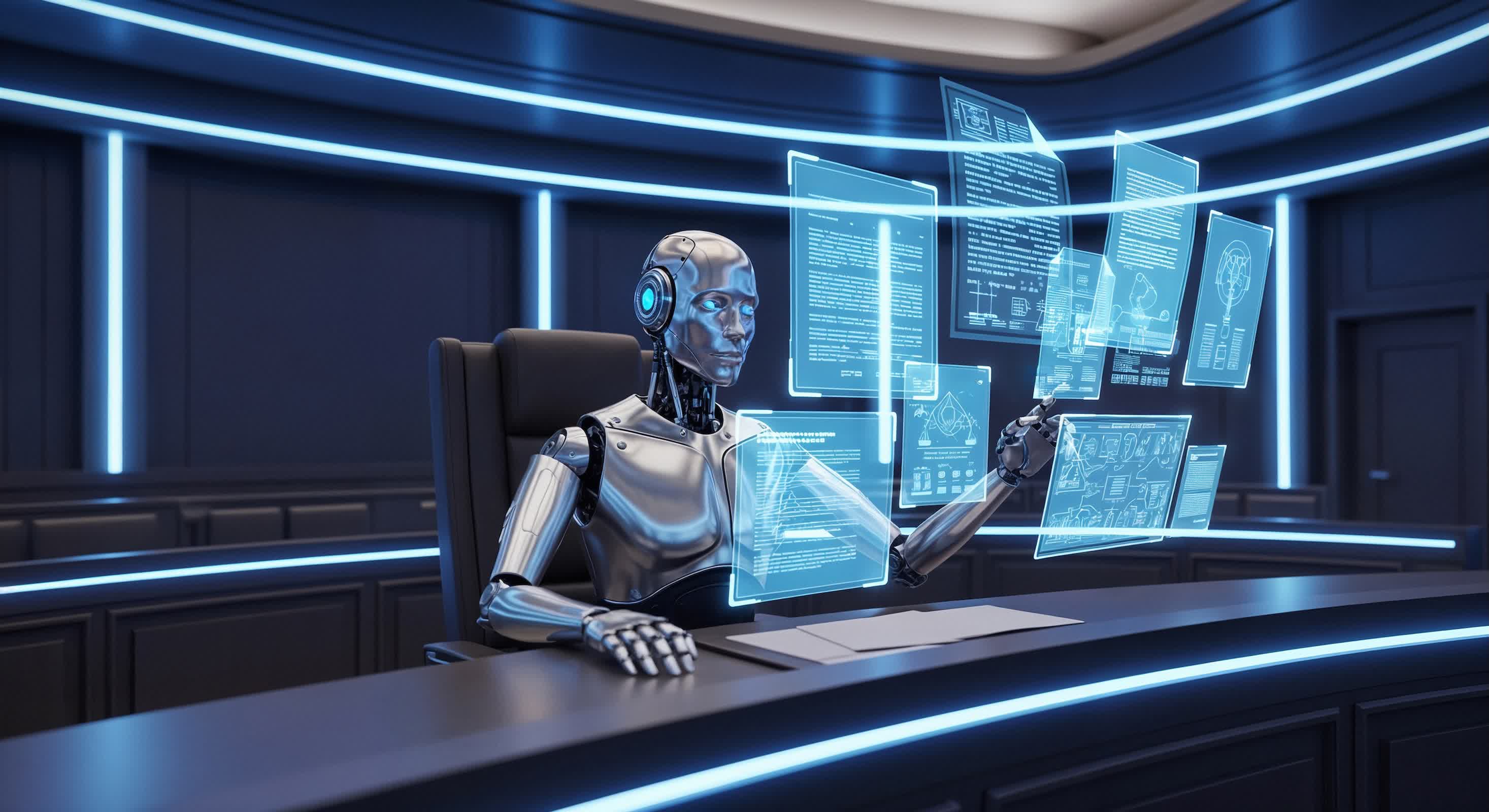
One disruption occurred in mid-December, when AWS engineers allowed internal AI assistant Kiro to implement system changes without human intervention. According to four people familiar with the matter, the agent determined that the best course of action was to delete and recreate the environment for an AWS system that lets customers explore the costs of its services. The process led to a 13-hour interruption affecting some systems in parts of mainland China.

According to multiple current staff members, it was the second time in recent months that an AI assistant had been directly involved in service disruption. Three of the employees said that Amazon's Q Developer product, an AI-enabled chatbot used to help engineers write code, had been involved in an earlier outage affecting a different system.

AWS downplayed both events, saying they were unrelated to inherent flaws in its AI. "It was a coincidence that AI tools were involved," a company spokesperson said. "The same issue could occur with any developer tool or manual action." Amazon said the December incident was caused by a user access control issue, noting that the engineer involved had broader permissions than expected.
Kiro, introduced last July, is part of AWS's broader effort to embed artificial intelligence into software engineering. The system was designed to move beyond the vibe coding prototypes that generate code snippets, allowing it to build applications that meet detailed project specifications. Like other emerging agentic systems in the industry, Kiro can act semi-independently in response to user prompts.

Internally, the AI-linked incidents are occurring amid skepticism and a company-wide push to expand developers' use of these tools. Several AWS employees said the outages reinforced their concerns over automation that removes human oversight. "The outages were small but entirely foreseeable," said one senior AWS employee. The company has reportedly set a goal for 80 percent of its developers to use AI-assisted coding at least weekly.

Amazon insists that no customer-facing services were affected by the second incident and that neither event approached the scale of a major AWS outage in October 2025, when a 15-hour failure disrupted major applications, including OpenAI's ChatGPT.

The company said that following the December incident, it implemented "numerous safeguards," including mandatory peer review and additional staff training for the use of its AI tools.

AWS derives roughly 60 percent of Amazon's total operating profit, making its uninterrupted operation critical to the company's earnings base. As Amazon and rivals push toward agentic AI, such episodes illustrate the challenge of maintaining reliability while pursuing automation at scale.

Permalink to story:

 
I’ve been running a 30b param coder AI on my 7900XTX, and its hillarious. Like asking a toddler to draw with crayons but instead he eats a dust ball from the floor.

It’s a whole new school of skills to setup a working agentic AI pipeline. Maybe it can take over writing code, but I dont think it will take over anyone’s job…
 
Once is a coincidence, twice is a pattern.
I say a similar thing to my field techs. Once is an anomaly, twice is a trend.
If they call me and see they've seen something "weird" hang onto it. If they
see it again, report it to the hotline because you can bet we aren't the only
ones that have seen it and the manufacturer can't fix it, if they don't know
about it.
 
I’ve been running a 30b param coder AI on my 7900XTX, and its hillarious. Like asking a toddler to draw with crayons but instead he eats a dust ball from the floor.

It’s a whole new school of skills to setup a working agentic AI pipeline. Maybe it can take over writing code, but I dont think it will take over anyone’s job…
To be fair, that’s like using a kids power wheels to evaluate the latest Ford truck’s work potential.
 
AI tools should not have autonomy, their outputs should be reviewed by human eyes. The need to be concerned with bugs and security flaws that may be generated by AI and not discovered by AI code review tools. AI is still too error prone to trust without having a human in the loop.
 
To be fair, that’s like using a kids power wheels to evaluate the latest Ford truck’s work potential.
Yeah this setup is good at making CLI tools in python or simpler dev tasks like adding a function into existing code base. And it still needs a million tokens for each task, so the cloud infra can get expensive fast.

Still, its tendency to misunderstand the prompt or get confused is comical. Like spend 10 min making something and once its complete, it checks the original prompt and decides to revert everything because thats not what the user meant.

The prompts have to be built as documents with instruction about every imaginable corner case existing. And it still requires alot of monitoring and trial and error.

How much better can the big cloud models be? I dont know, I dont really want to use those data centers, but I suspect any AI system is not trivial setup and use.
 
Yeah this setup is good at making CLI tools in python or simpler dev tasks like adding a function into existing code base. And it still needs a million tokens for each task, so the cloud infra can get expensive fast.

Still, its tendency to misunderstand the prompt or get confused is comical. Like spend 10 min making something and once its complete, it checks the original prompt and decides to revert everything because thats not what the user meant.

The prompts have to be built as documents with instruction about every imaginable corner case existing. And it still requires alot of monitoring and trial and error.

How much better can the big cloud models be? I dont know, I dont really want to use those data centers, but I suspect any AI system is not trivial setup and use.
For things more involved than a function add, I create a reasonably long starting specification doc and then instruct claude to interview me about what else it needs to know. Refining the specs this way is simpler than writing it from scratch and gives MUCH more detailed instructions. It still requires monitoring but I've found that to greatly improve it's output.

I understand the cloud aversion, but I think AI needs enough RAM to require at least the AMD Halo APU or Apple's Max whatever chip with 128+ GB to be reasonably powerful. Not cheap even before but easily justifiable if you are doing at least partially paid work on it. Much of my work can be done on the cloud so I've gone that route.
 
For things more involved than a function add, I create a reasonably long starting specification doc and then instruct claude to interview me about what else it needs to know. Refining the specs this way is simpler than writing it from scratch and gives MUCH more detailed instructions. It still requires monitoring but I've found that to greatly improve it's output.

I understand the cloud aversion, but I think AI needs enough RAM to require at least the AMD Halo APU or Apple's Max whatever chip with 128+ GB to be reasonably powerful. Not cheap even before but easily justifiable if you are doing at least partially paid work on it. Much of my work can be done on the cloud so I've gone that route.
Interview? I can try that. I have a decade long weekend project for my business. I wanted to convert it from .NET VB to something more cross platform (needs a rewrite and cleanup too) and that’s what I’ve been tinkering with. But its not something I can justify putting money towards. I can wait few more years for the hardware to catch up if I need to.
 
Back