AMD Ryzen CPUs continue to crush Intel processors on Amazon best-seller list

Daniel Sims

Posts: 2,422   +73
Staff
In brief: AMD dominated socketed CPU sales on Amazon's US site in March, and the picture doesn't seem to have changed a few months later. Intel's new Core Ultra 200 series chips struggled to climb the retailer's rankings back then and have since almost completely disappeared.
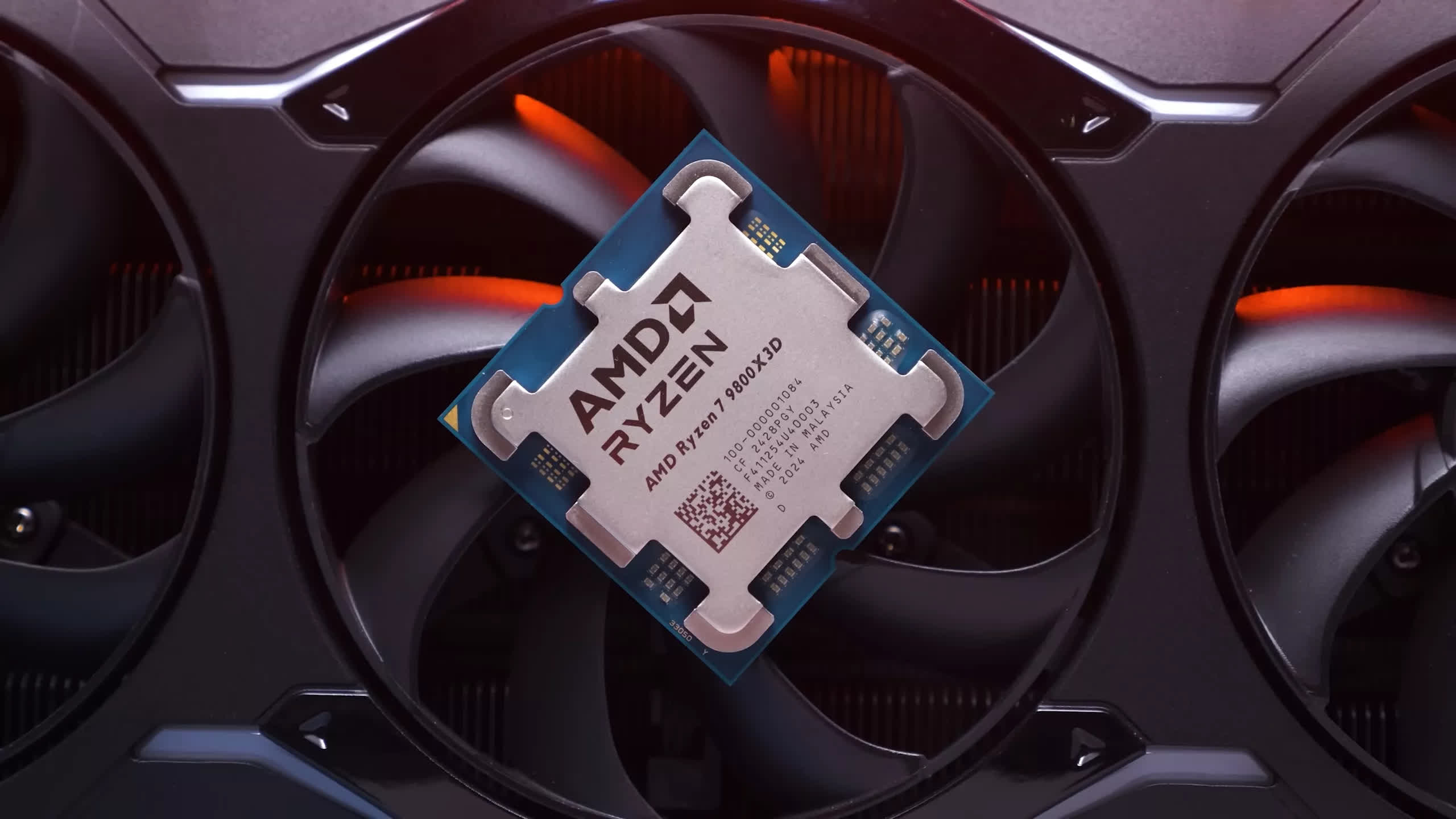
Intel CPUs have been completely shut out of Amazon's top 10 best sellers as of late June. While AMD's Zen 3, 4, and 5 chips occupy most of the top 50 spots, Team Blue's latest lineup remains under the shadow of its predecessors.

The most popular Intel CPU is the Raptor Lake flagship Core i9-14900K, ranked 12th. Its newer Arrow Lake equivalent, the Core Ultra 9 285K, lags behind in 32nd place, and our face-off from December explains why: it's 5% slower in gaming on average and can sometimes fall behind by over 20%.

The only other Arrow Lake processors in the top 100, the Core Ultra 7 265K and 265KF, rank 23rd and 25th, respectively. Intel customers appear to prefer Raptor Lake and even older Alder Lake chips such as the Core i7-12700K. The $108 Core i5-12400F, our top choice for budget-conscious new builds, also remains a popular CPU.

Meanwhile, Team Red's Ryzen 7 9800X3D, our current favorite gaming CPU overall, has fallen from the top spot since March but maintains second place behind its predecessor, the 7800X3D. Other Ryzen 5 and Ryzen 7 chips from the company's last three generations occupy the rest of the top 10 list, with the 5700X3D being the only other 3D V-Cache CPU. The 9800X3D is so popular that it caused 8-core CPUs to finally overtake 6-core processors in recent CPU-Z telemetry reports.

Also read: The Best Value Gaming CPUs

The stark difference between Zen 5 and Arrow Lake has persisted all year. In January, AMD blamed "horrible" Intel CPUs for shortages of the 9800X3D. Later that month, Intel promised that incoming patches would boost Core Ultra 200 gaming performance by up to 26%, but they had no effect. Recent benchmarks also revealed that high-end SSDs suffer performance deficiencies when paired with Arrow Lake processors.

In early April, TechEpiphany reported that 78 percent of socketed CPUs sold on Amazon in the US in March were Ryzen, with the 9800X3D selling over 6,000 units and AMD quintupling Intel's revenue. The following month, Intel Arrow Lake's market share fell below 2% while Team Red's 3D V-Cache chips nearly reached 30%.

Although data from CPU-Z and Steam surveys shows that Intel processors are still installed in more PCs overall, Team Red is closing the gap.

Permalink to story:

 
Whenever I see people talk about new gaming builds, I never see any Intel CPU's released after the naming scheme change. It's no wonder, given all the issues since the 13th gen that don't seem to be getting much better. Weird to see their GPU's getting more attention than the CPU's when it comes to gaming lately.
 
Surprise, Surprise!
In addition to the performance and heat/power issues, it does not help that the new Intel naming scheme is absolute trash and makes it really hard to compare to previous Intel CPUs and current AMD options.
That was probably a goal of Intel's marketing department. Their R&D put out what they thought was a better trash can when it really wasn't, and Intel's marketing has to sell it - any way they are able to.
 
40% on Steam survey vs those Amazon results… will be curious if the new Intels get any market share back.
Laptops where OEM's are getting money to slap in Intel CPU's anyway, and the previous base of Intel CPU's will be why despite AMD's major successes in the last few years
 
Since I do more productivity than gaming, if Arrow Lake wasn't on a 1 term MB, I'd get one of the crazy good deals on a i7 265K over a 9900X for sure. But since I can use Zen 6 on any AM5 MB I get now, it's another reason to avoid Intel. I'm thinking of getting 9800X3D now and replacing it with Zen 6 with the 12 core ccd. Imagine 10800X3D with 12 cores for both gaming and productivity. No need for 10900X which will probably be 12+6.
 
265kf right now is 209$ a steal and properly tuned gets close to the amd counterparts. out of box yes not as fast, but half the price
 
Since I do more productivity than gaming, if Arrow Lake wasn't on a 1 term MB, I'd get one of the crazy good deals on a i7 265K over a 9900X for sure. But since I can use Zen 6 on any AM5 MB I get now, it's another reason to avoid Intel. I'm thinking of getting 9800X3D now and replacing it with Zen 6 with the 12 core ccd. Imagine 10800X3D with 12 cores for both gaming and productivity. No need for 10900X which will probably be 12+6.
As: ur planning on zen6, zen6 not far off, Zen6 IS beneficial, Zen6 has the neat 12c ccd, 3d cache is little help on productivity... then maybe u should get the cheaper & older AM5 8 core, & 64GB? for now.
 
Used early Intels in the 90s and the AMD Phenom 2 but when the shitfest of Bulldozer dropped been on Intel ever since.

That being said I am considering Zen6, however, I do a lot of work on my PC, if Intel keeps dropping prices and its cheap, may do a 265k if the boards come down a little. Gaming is not my priority and AMD is acting like Intel with pricing.
 
Used early Intels in the 90s and the AMD Phenom 2 but when the shitfest of Bulldozer dropped been on Intel ever since.

That being said I am considering Zen6, however, I do a lot of work on my PC, if Intel keeps dropping prices and its cheap, may do a 265k if the boards come down a little. Gaming is not my priority and AMD is acting like Intel with pricing.
Just remember that while Intel CPUs look good on benchmarks, their tendency to save power by putting "background" tasks into Crap cores (E-cores) make them practically unusable. You can avoid that by putting everyting on P-cores first but then power consumption goes out of roof. Unless willing to tweak voltages etc that you can do with AMD also.

Hard to recommend Intel for anything unless prices are ultra cheap.
 
265kf right now is 209$ a steal and properly tuned gets close to the amd counterparts. out of box yes not as fast, but half the price
Saw it, good price to upgrade now. If I was in the process of upgrading, I would probably be tempted even despite all the issues Intel had in recent years.
 
Saw it, good price to upgrade now. If I was in the process of upgrading, I would probably be tempted even despite all the issues Intel had in recent years.
I went with 265k 2 months ago. 200s boost is good, but I just went 30% more all those extra boosts and its fast. no extra voltage needed. im happy
 
There's no way in hell that an Intel CPU is worth it, no way.

First off, any Intel CPU you buy is on a dead (or soon to die) platform with no upgrade path.

Secondly there's the clown show with the e-cores as others have said.

I would not get an Intel CPU even if it was offered to me free of charge. Contemplate that and you'll see the predicament Intel is in.
 
There's no way in hell that an Intel CPU is worth it, no way.

First off, any Intel CPU you buy is on a dead (or soon to die) platform with no upgrade path.

Secondly there's the clown show with the e-cores as others have said.

I would not get an Intel CPU even if it was offered to me free of charge. Contemplate that and you'll see the predicament Intel is in.
half the price... 10% slower for gaming. faster for productivity. hmm I think not. Whats wrong with ecores? all the game I play run just fine on performace cores. no tools needed. are you using windows 10? that may be the issue as its not optimized. Also hyperthreading still has more exploits than not having smt. you will be seeing a shift to no hyperthreading for gaming anyways with higher core counts. hyperthreading is not really a gaming booster.

I build a new pc every 7 to 8 years. I dont care about the board being able to get a new cpu in 8 years... by then the board will not have the connectivity I need anyways. if you upgrade your pc every 3 years sure am5 is better...

if x3d was within 25% the price then may as well, but its not. it twice the price.
 
Last edited:
faster for productivity. hmm I think not. Whats wrong with ecores?
Faster for productivity only on benchmarks. See, backround tasks easily go to Crap cores that are painfully slow. I have seen workers wiggle virtual machine window so that it's considered foregound task and therefore run faster on P-cores. Additionally E-cores pose serious compatibility problems. See, programmers were not prepared for two different CPU architectures on same CPU. Many of those issues will never get fixed.

AMD is faster everywhere outside bechmarks, runs much cooler and is much more hassle free. That makes it pretty much impossible to recommend Intel for anything.
 
Just remember that while Intel CPUs look good on benchmarks, their tendency to save power by putting "background" tasks into Crap cores (E-cores) make them practically unusable. You can avoid that by putting everyting on P-cores first but then power consumption goes out of roof. Unless willing to tweak voltages etc that you can do with AMD also.

Hard to recommend Intel for anything unless prices are ultra cheap.
That’s a bit of an oversimplification. The E-cores aren’t "crap", they’re designed exactly for background tasks to improve efficiency, not sabotage it. Windows and apps still have catching up to do with thread scheduling, but that’s hardly a reason to throw the whole architecture under the bus.

Also, if you’re pushing everything to P-cores manually, of course you're going to lose the efficiency gains, that’s not a fault of the hardware, that’s just bad tuning. Same applies to AMD if you're disabling features to force a certain behavior.

Tuning voltages, core affinity, and load balancing isn't exclusive to AMD, and in fact Intel has gotten a lot better with power and performance scaling. Blanket statements like “hard to recommend Intel for anything” just ignore use cases where Intel still wins, like high frequency single core loads or software optimized for their hybrid design.

If all you do is game, then yes, I would most likely do an AMD build, for those of us that prioritize work, Intel is not a bad choice and a lot cheaper.
 
That’s a bit of an oversimplification. The E-cores aren’t "crap", they’re designed exactly for background tasks to improve efficiency, not sabotage it. Windows and apps still have catching up to do with thread scheduling, but that’s hardly a reason to throw the whole architecture under the bus.

Also, if you’re pushing everything to P-cores manually, of course you're going to lose the efficiency gains, that’s not a fault of the hardware, that’s just bad tuning. Same applies to AMD if you're disabling features to force a certain behavior.
E-cores are just to sabotage performance. Just like I gave an example, virtual machines are considered background. Too bad if virtual machine is where all work is done. Solution? Just disable E-cores. Or even better, do not include E-cores at all. AMD currently have no desktop solutions with "small" cores. Because you really don't need them. Intel needs because P-cores are too power hungry. E-cores on desktop exist just because Intel cannot put 16 P-cores without breaking power budget. Whole E-core thing is panic solution like I have said long time. AMD solution (c-cores) just is much better.

I want my virtual machine to work full speed without too much hassle. With AMD this is pretty much automatic. With Intel, no.
Tuning voltages, core affinity, and load balancing isn't exclusive to AMD, and in fact Intel has gotten a lot better with power and performance scaling. Blanket statements like “hard to recommend Intel for anything” just ignore use cases where Intel still wins, like high frequency single core loads or software optimized for their hybrid design.

If all you do is game, then yes, I would most likely do an AMD build, for those of us that prioritize work, Intel is not a bad choice and a lot cheaper.
User cases where single core performance really matters a lot and Intel is much faster (not talking single digit percentages) are ultra rare. And for those cases, overclocking is best option. However Intel durability even without overclocking is very suspicious. That possible durability issue is enough not to recommend Intel. There are very few software that is optimized for hybrid architecture because it barely makes any sense.

Like said, Crap cores are practically awful, they are only included on desktop CPUs because Intel had no other options to look good on benchmarks. For work where stability is needed, Intel is pretty impossible to recommend. AM5 platform is also miles better than Intels current one.
 
Most people who buy a new PC don't notice (or care) if there is a CPU that performs better... as long as their PC does what they want, they're fine. If the Intel was cheap enough, it would be fine to recommend... as of now, however, it would have to drop considerably to recommend it over any Ryzen PC...
 
E-cores are just to sabotage performance. Just like I gave an example, virtual machines are considered background. Too bad if virtual machine is where all work is done. Solution? Just disable E-cores. Or even better, do not include E-cores at all. AMD currently have no desktop solutions with "small" cores. Because you really don't need them. Intel needs because P-cores are too power hungry. E-cores on desktop exist just because Intel cannot put 16 P-cores without breaking power budget. Whole E-core thing is panic solution like I have said long time. AMD solution (c-cores) just is much better.

I want my virtual machine to work full speed without too much hassle. With AMD this is pretty much automatic. With Intel, no.

User cases where single core performance really matters a lot and Intel is much faster (not talking single digit percentages) are ultra rare. And for those cases, overclocking is best option. However Intel durability even without overclocking is very suspicious. That possible durability issue is enough not to recommend Intel. There are very few software that is optimized for hybrid architecture because it barely makes any sense.

Like said, Crap cores are practically awful, they are only included on desktop CPUs because Intel had no other options to look good on benchmarks. For work where stability is needed, Intel is pretty impossible to recommend. AM5 platform is also miles better than Intels current one.
You're not wrong that E-cores can cause issues if the scheduler doesn’t behave, but calling them “sabotage” is a bit much. E-cores exist because Intel went hybrid to stay competitive in both performance and efficiency. It’s not panic.....it’s evolution. ARM does it. Apple does it. Even AMD is heading that way (see Strix Point).

Yes, Intel's implementation isn't perfect, and VM behavior can be frustrating without proper tuning. But that’s a Windows scheduling problem more than a hardware flaw. And while AMD’s homogeneous core setup avoids this pitfall for now, their own hybrid designs are already coming, C-cores are just their version of small cores.

So let’s not pretend AMD is above this. The industry is heading hybrid whether we like it or not. The real solution isn’t “kill all E-cores,” it’s smarter scheduling and giving users control without having to jump through hoops.

If you want raw performance without scheduler quirks, AMD might be easier today, but calling Intel’s approach a failure is just simple minded.

You’re mixing a few valid concerns with a lot of hyperbole.

Yes, in most workloads today, the massive single core advantage isn't a huge deal, but acting like it’s “ultra rare” is a stretch. High fps gaming, emulation, certain legacy apps, and even frontend heavy dev work still scale with single thread performance.....and Intel is still competitive, often leading in real world scenarios, not just benchmarks.

Durability concerns? That feels like Reddit level fearmongering unless you're pushing past stock voltages or have a bad cooling setup. Both AMD and Intel chips can degrade if abused, but there’s no epidemic of Intel CPUs dying at stock settings.

And “no software is optimized for hybrid”? Windows 11 is. Game devs and creative software makers are adapting too. Just because support isn’t perfect doesn’t mean it makes no sense. Apple’s been on hybrid for years and it works. This is where the industry is going.

Yes, AMD’s AM5 platform has better longevity and features right now, no argument. But saying Intel is “impossible to recommend for work where stability is needed” is just nonsense. Tons of professionals are using Intel machines daily without issues.

If you prefer AMD for simplicity and platform stability, fair. But let’s not rewrite reality just to dunk on E-cores.
 
You're not wrong that E-cores can cause issues if the scheduler doesn’t behave, but calling them “sabotage” is a bit much. E-cores exist because Intel went hybrid to stay competitive in both performance and efficiency. It’s not panic.....it’s evolution. ARM does it. Apple does it. Even AMD is heading that way (see Strix Point).

Yes, Intel's implementation isn't perfect, and VM behavior can be frustrating without proper tuning. But that’s a Windows scheduling problem more than a hardware flaw. And while AMD’s homogeneous core setup avoids this pitfall for now, their own hybrid designs are already coming, C-cores are just their version of small cores.
Intel is only company that has gone hybrid. Other companies put bih and smaller cores. Intel is only company stupid enough to combine consumer CPUs with different instruction set on same package.
Thread director is main reason for VM problems. And btw that is Hardware solution that exists on chip.

AMD solution has been available for long ttime. Unlike Intel, CPUs have exactly same instuction set support and identical architecture from software's POV.
So let’s not pretend AMD is above this. The industry is heading hybrid whether we like it or not. The real solution isn’t “kill all E-cores,” it’s smarter scheduling and giving users control without having to jump through hoops.

If you want raw performance without scheduler quirks, AMD might be easier today, but calling Intel’s approach a failure is just simple minded.
Again, Intels hybrid is to combine two different ISA cores and then disabling some that are not supported on both CPUs. Intel is only one with stupid solution like that. Also including hardware "scheduler" on chip that works like trash is simply funny.
You’re mixing a few valid concerns with a lot of hyperbole.

Yes, in most workloads today, the massive single core advantage isn't a huge deal, but acting like it’s “ultra rare” is a stretch. High fps gaming, emulation, certain legacy apps, and even frontend heavy dev work still scale with single thread performance.....and Intel is still competitive, often leading in real world scenarios, not just benchmarks.

Durability concerns? That feels like Reddit level fearmongering unless you're pushing past stock voltages or have a bad cooling setup. Both AMD and Intel chips can degrade if abused, but there’s no epidemic of Intel CPUs dying at stock settings.

And “no software is optimized for hybrid”? Windows 11 is. Game devs and creative software makers are adapting too. Just because support isn’t perfect doesn’t mean it makes no sense. Apple’s been on hybrid for years and it works. This is where the industry is going.

Yes, AMD’s AM5 platform has better longevity and features right now, no argument. But saying Intel is “impossible to recommend for work where stability is needed” is just nonsense. Tons of professionals are using Intel machines daily without issues.

If you prefer AMD for simplicity and platform stability, fair. But let’s not rewrite reality just to dunk on E-cores.
Intel is ahead on some single core benchmarks but only because software used is very old. See, AMD Zen5 can handle AVX512 without major problems and therefore AMD is miles faster on single thread software. https://www.phoronix.com/review/amd-zen5-avx-512-9950x

No Intel because no AVX512 support.

Intel has already admitted Raptor Lake durability problems. Even with stick settings.

Windows 11 is more optimized for multi core than hybrid. Again, it rarely makes sense to optimize hybrid instead multi core.

Like already described, using VM with hybrid is simply pain unless admin rights or similar are granted. On work enviroment rarely. E-cores are simply panic solution and disaster on every front
Again Intel is only company going hybrid, tells more than enough?
 
Back