Astronomers warn of "catastrophic" consequences as startup pushes plan to launch giant space mirrors

Skye Jacobs

Posts: 2,220   +63
Staff
Why it matters: Unlike conventional satellite constellations such as SpaceX's Starlink, which can inadvertently reflect sunlight during certain orbits, Reflect Orbital's reflectors are explicitly designed to direct light downward. For scientists, that distinction makes a proposal before the Federal Communications Commission especially troubling. "From an astronomical perspective, that's pretty catastrophic," according to Robert Massey, deputy executive director of the Royal Astronomical Society in the United Kingdom.
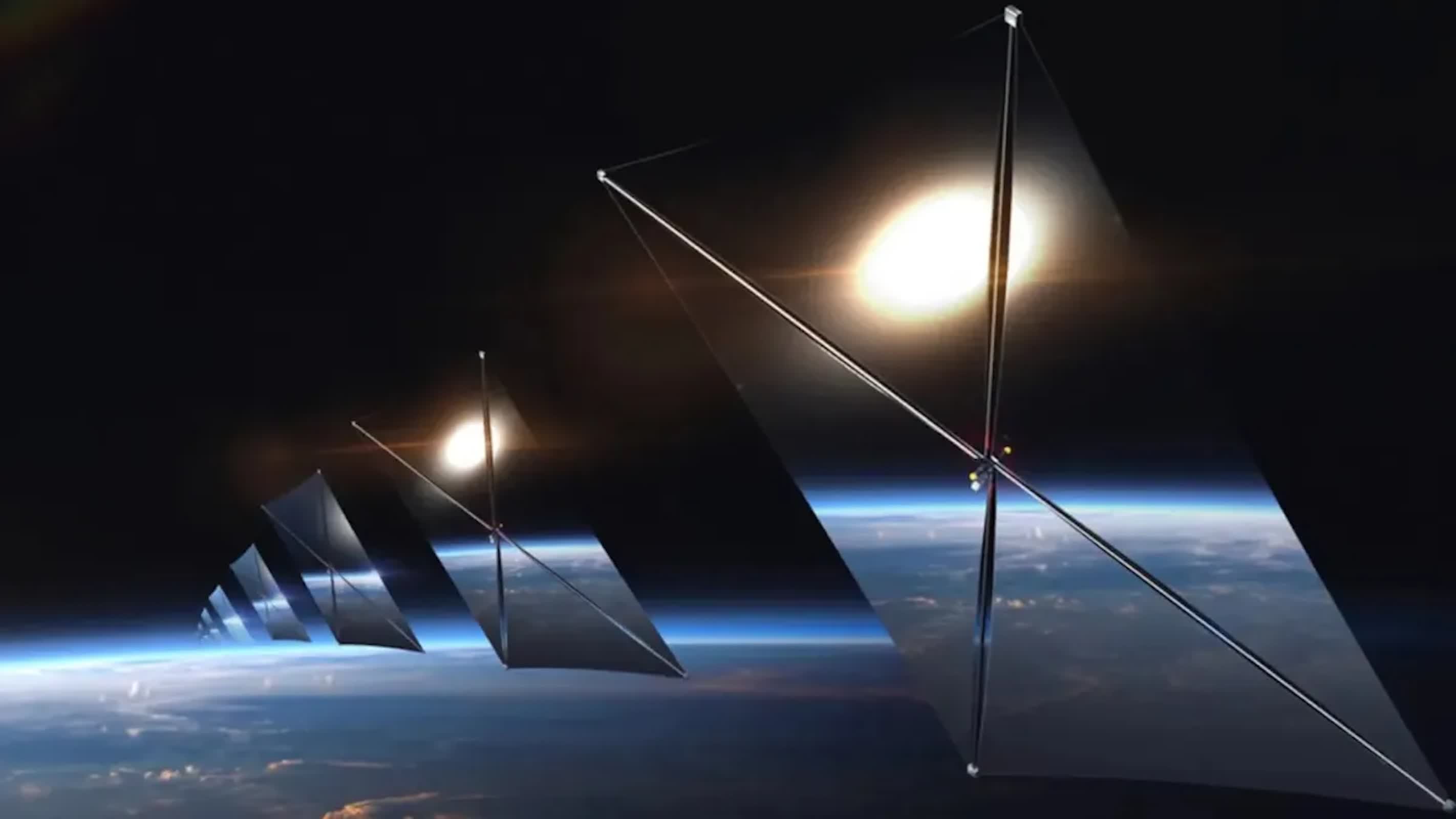
Reflect Orbital, a California-based startup, has asked the FCC for approval to launch its first experimental satellite as early as 2026. The company's long-term plan – to deploy thousands of reflective satellites designed to redirect sunlight onto Earth at night – has sparked strong opposition from the scientific community. Astronomers and aviation experts warn that the project could disrupt observations of the cosmos, pose safety risks to pilots, and permanently change the appearance of the night sky.

Reflect Orbital describes its concept as "selling sunlight," and says it ultimately hopes to place up to 4,000 mirror-equipped satellites in low Earth orbit by 2030 if early missions succeed. Each satellite would carry a foldable mirror up to 59 feet wide, covering roughly 3,500 square feet. The reflectors could redirect sunlight to illuminate specific ground regions up to three miles across. By the company's estimate, the light from a single reflector could make an area up to four times as bright as the full moon.

Future models in Reflect Orbital's proposed constellation could employ mirrors measuring 177 feet across, increasing the illuminated area and intensity. The company argues that this artificial illumination could extend daylight for energy generation, agriculture, or urban lighting – and that the targeted, time-limited reflections would minimize any broader visual impact.

"Our service is highly localized," company representatives told Space.com. "Each reflection covers a defined area for a finite period of time rather than providing continuous or widespread illumination."

Astronomers and space policy experts remain unconvinced. They say the plan poses serious risks to both scientific research and public safety.

"The central goal of this project is to light up the sky and extend daylight, and obviously, from an astronomical perspective, that's pretty catastrophic," said Robert Massey, deputy executive director of the Royal Astronomical Society in the United Kingdom.

Samantha Lawler, an astronomer at the University of Regina in Canada, told Live Science the undertaking was a "terrible idea." She said even if only one mirror were launched, its light could blind observers using telescopes or binoculars. With thousands of reflectors in orbit, she warned, stargazing would become nearly impossible in many parts of the world.
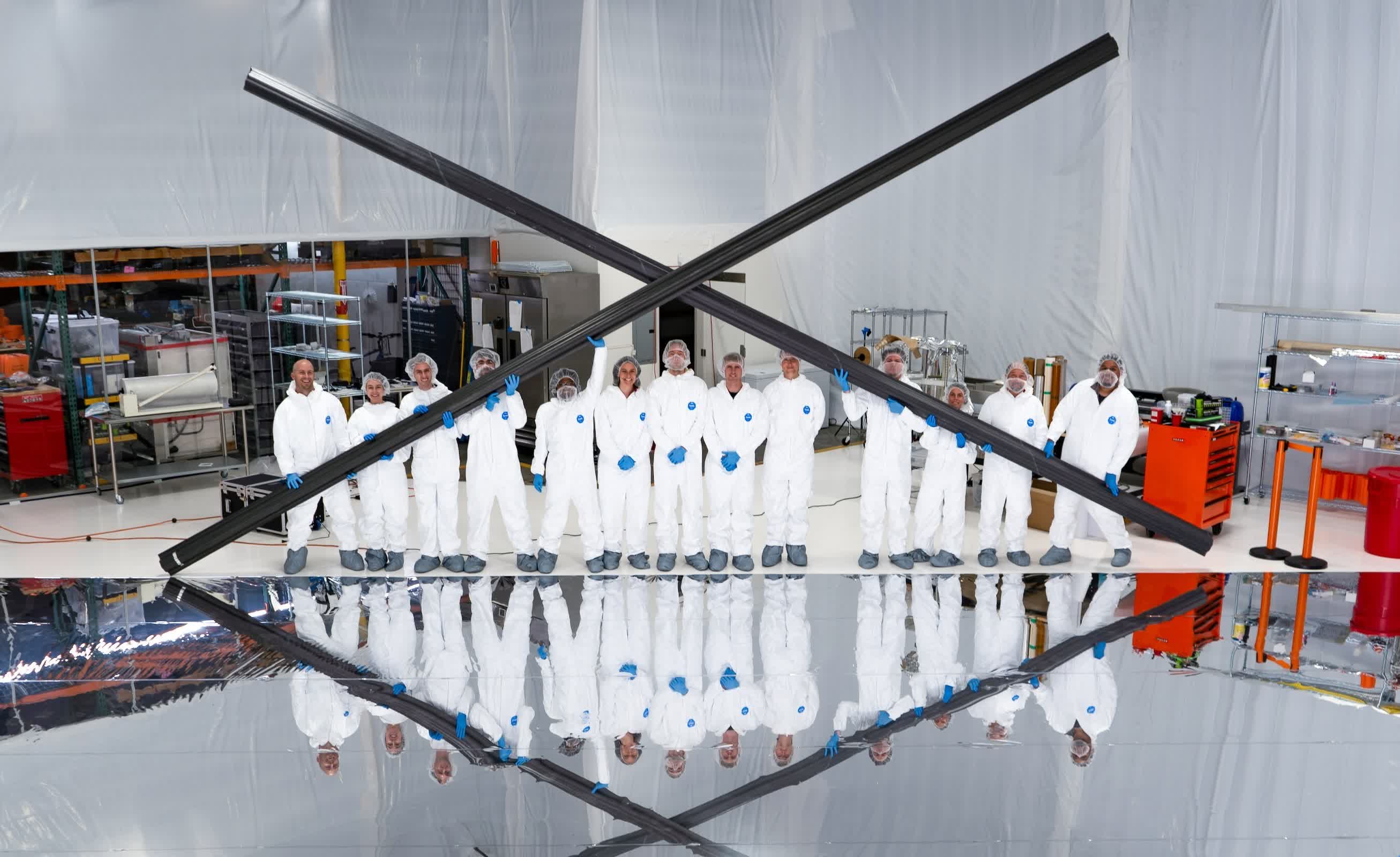
Lawler said the brightness of these mirrors could also pose a hazard to aircraft pilots, who might be distracted by sudden flashes as the mirrors rotate or reposition. "One tiny company in California can, with a few million dollars and the approval of a single US federal agency, change the night sky for everyone in the world," she said.

The EARENDIL-1 satellite would operate in a sun-synchronous orbit, circling Earth from pole to pole while maintaining alignment with the boundary between day and night. This orientation would allow the mirror to redirect sunlight from the lit hemisphere to the darkened side, briefly extending twilight for select regions.

While the physics of sunlight reflection are well understood, experts question whether the engineering demands of such a system can be met. "It is highly unlikely to come to fruition due to the complexity of the engineering involved, and trying to operate through busy orbits such as LEO," Fionagh Thomson, a space ethics researcher at Durham University in England, said.

Similar efforts in the past have failed. Russia attempted two mirror satellites in 1993 and 1999 – part of its Znamya program – but both missions were abandoned after technical difficulties, and the spacecraft eventually burned up upon re-entry.

Thomson added that even if Reflect Orbital's concept worked as intended, power generation using redirected sunlight would be prohibitively expensive. The light reflected from orbit would be thousands of times weaker than direct solar radiation, meaning solar farms would produce only a tiny fraction of their usual electricity.

Beyond light pollution, scientists have raised concerns about physical risks. Large mirrors could be vulnerable to collisions with micrometeorites or space debris, potentially creating uncontrollable spinning satellites that flash light unpredictably across the sky.

Lawler compared the scenario to NASA's Advanced Composite Solar Sail System, which began tumbling shortly after deployment in August 2024. A similar malfunction, she said, could cause unpredictable bursts of light across populated regions.

With thousands of new satellites planned globally, specialists worry that the addition of Reflect Orbital's mirrors could worsen congestion in low Earth orbit. Additionally, retired mirrors would eventually reenter Earth's atmosphere, potentially contributing to increasing levels of metal pollution.

Reflect Orbital has pledged to conduct an environmental risk assessment following EARENDIL-1's launch. But astronomers argue that the review should happen before any approval or deployment.

Massey said astronomers are deeply concerned about the precedent such approval could set. Other companies might attempt similar projects, permanently transforming the night sky and disrupting not only optical but also radio astronomy.

Permalink to story:

 
It will also screw up the biological clock for all species, including humans. One is supposed to be able to sleep after the sunset, not to "rejoice" a second sun coming up.

Birds will be messed up in particular, as they fully rely on normal day hours. And plants photosynthesis will be affected too.

In all, it is a terrible-terrible idea, breaking the day cycle on the planet.
 
Last edited:
Honestly the human race is done. It's just so dumb.
Everyone wants to be the hare, running into danger while the tortoise hopes his shell is gonna be nuke proof. Waterproof. Dumb *** proof. Fire resistant.
And that fake news doesn't trick him into buying into society, settling down to have a family, a house with solar panels that are connected to space mirrors for 24/7 electricity. To power the lights that he no longer needs because 24/7 sunlight baby.
Gimme that skinsanity syndrome, that's cancer and crazy it's the double big C cause one isn't enough.
Double down on dumb futures.
No but honestly good job. This is a brilliant idea. No really.
Wait are they wearing sarcasm reflecting overalls... Well how are they gonna know when we are taking the piss out of them.

Just because you can doesn't mean you should.


It will also screw up the biological clock for all species, including humans. One is supposed to be able to sleep after the sunset, not to "rejoice" a second sun coming up.

Birds will be messed up in particular, as they fully rely on normal day hours. And plants photosynthesis will be affected too.

In all, it is a terrible-terrible idea, breaking the day cycle on the planet.
My thoughts exactly!
 
Who cares about the advancement of human knowledge about the Universe we live in when there's money to be made, eh.

The sooner the next Dinosaur Killer asteroid hits this planet, the better, IMO.
 
It will also screw up the biological clock for all species, including humans. One is supposed to be able to sleep after the sunset, not to "rejoice" a second sun coming up.

Birds will be messed up in particular, as they fully rely on normal day hours. And plants photosynthesis will be affected too.

In all, it is a terrible-terrible idea, breaking the day cycle on the planet.
This is the cogent response to this stupid idea. Want to watch many ecosystems fall apart at a rapid pace? If this fever dream becomes reality, it will do so much more damage than any positives it could net.
 
It will also screw up the biological clock for all species, including humans. One is supposed to be able to sleep after the sunset, not to "rejoice" a second sun coming up.

Birds will be messed up in particular, as they fully rely on normal day hours. And plants photosynthesis will be affected too.

In all, it is a terrible-terrible idea, breaking the day cycle on the planet.
"The light reflected from orbit would be thousands of times weaker than direct solar radiation" "4 times brighter than moon light is 1) overly generous 2) likely to not make much of a difference anyway.

Do you all really think one 59 foot mirror hundreds of miles above the earth is going to break the day cycle on the entire planet? Even if they get 1000 of them into orbit, which they likely never will, it's not going to make such a massive difference to everyone on the earth. Even for the area the mirrors are suppose to illuminate it won't be that bright and it will still be no brighter than the lights created by city light pollution.
 
If they were serious about power generation, solar panels in orbit, with energy transmitted to the earth's surface via microwave or other high frequency RF would make far more sense. That at least could bring a useful amount of energy to earth's surface, wouldn't pose a reflection risk, and have a predictable "keep out zone" for pilots.

And even then, its a questionable idea, since such an RF beam could pose a risk to wildlife, depending on the frequency & amplitude.
 
Do you all really think one 59 foot mirror hundreds of miles above the earth is going to break the day cycle on the entire planet? Even if they get 1000 of them into orbit, which they likely never will, it's not going to make such a massive difference to everyone on the earth. Even for the area the mirrors are suppose to illuminate it won't be that bright and it will still be no brighter than the lights created by city light pollution.
Rounding to 3,500 sq ft, that is approximately 325 m^2. Given that the power of sunlight outside the Earth's atmosphere is approximately 1.36 kW/m^2, that means that these mirrors could collect 4,760 kW of solar power or put another way, that's 4.76 MW of solar power. That's no small amount.

Now we could argue that these mirrors will not be perfect reflectors, but the article neglects to mention how the mirrors will be constructed,I.,e., Gold, Silver, multi-layer dielectric, etc.

But what the heck. Why get all theoretical about it??
 
I had to check if this was the 1st of April. Way too much recreational drug use and way too much money in the hands of *****s.
 
Would this add to the heat load, and if it does by how much? It's pretty much a given at this point that we're being subjected to climate change due to rising global temperatures. Do we really need this if it could accelerate an already scary heating trend?
 
Would this add to the heat load, and if it does by how much? It's pretty much a given at this point that we're being subjected to climate change due to rising global temperatures. Do we really need this if it could accelerate an already scary heating trend?
I was about to say something similar; though my comment would be from the perspective of one who doubts the man-caused climate change stuff.
 
Agreed with the negativity here. There's plenty of open spaces on the ground for solar generation. Spread them out and you're covering lots of time zones naturally.
 
Of course the project satellite is named after a Tolkien character, (its become a techbroliarchy trend) Eärendil, Elrond's dad who bore one of the Silmaril into the heavens.

"The Star of Eärendil is the light that shines in the horizon both in the morning and the evening. It consists in a boat raised by the Valar and led by Eärendil, who carries a shining Silmaril while watching the Doors of Night"
 
NO, just don't, there some thinks that must not be allowed or a precedent to be created just NO. Once that gate is open who know what other ideas can come out.
 
Agreed with the negativity here. There's plenty of open spaces on the ground for solar generation. Spread them out and you're covering lots of time zones naturally.
I have heard that reflections from solar panels have messed with aircraft pilots.
 
People apparently have way too much time on their hands if they’re coming up with nonsense ideas like this. Stupidity sells, benevolence doesn’t, in todays society.
Not just time, also money. This reeks of indolence and insufferable ego.
 
Rounding to 3,500 sq ft, that is approximately 325 m^2. Given that the power of sunlight outside the Earth's atmosphere is approximately 1.36 kW/m^2, that means that these mirrors could collect 4,760 kW of solar power or put another way, that's 4.76 MW of solar power. That's no small amount.

Now we could argue that these mirrors will not be perfect reflectors, but the article neglects to mention how the mirrors will be constructed,I.,e., Gold, Silver, multi-layer dielectric, etc.

But what the heck. Why get all theoretical about it??

"The light reflected from orbit would be thousands of times weaker than direct solar radiation, meaning solar farms would produce only a tiny fraction of their usual electricity."

You think that's going to be bright enough to create 4MW of power on earth? You calculated the power generated by 4000 x 59-foot solar panels in space. First off there isn't a single mirror in space, yet, secondly that light has to be redirected, with losses, to earth, with more losses through the atmosphere, then that light has to be converted, with more losses, to electricity on the ground, anywhere there isn't a solar panel would not create any power and the solar panel array would have to fill the entire 3 square mile area to absorb all the available light.

How much do you think it will cost to put 100 of those mirrors in space? How much do you think it will cost to connect them all together, redirect them and keep them in orbit? How much would it cost to put 4000 of them in space, connect them all, redirect them and keep them in orbit? How much would it cost to put a 3 square mile solar panel array on earth?

 
Back