Bottom line: More local governments are ending contracts with Flock Safety as criticism of the company's AI-powered camera network spreads across the country. The pullback reflects mounting concern that Flock's fast-growing, searchable camera network is expanding surveillance faster than many local communities are willing to accept.
Secure Justice, an Oakland-based anti-surveillance group, says 214 cities and counties have dropped Flock since 2021. Ninety jurisdictions ended contracts in August alone, a fourfold increase from July, according to the group's latest update. That works out to about three cancellations a day during the month.
The cities range from Lansing, Michigan, to Pflugerville, Texas. Their concerns include the cost of the cameras, the sharing of data among agencies, the reach of Flock's surveillance network, and reports of police officers misusing the system.
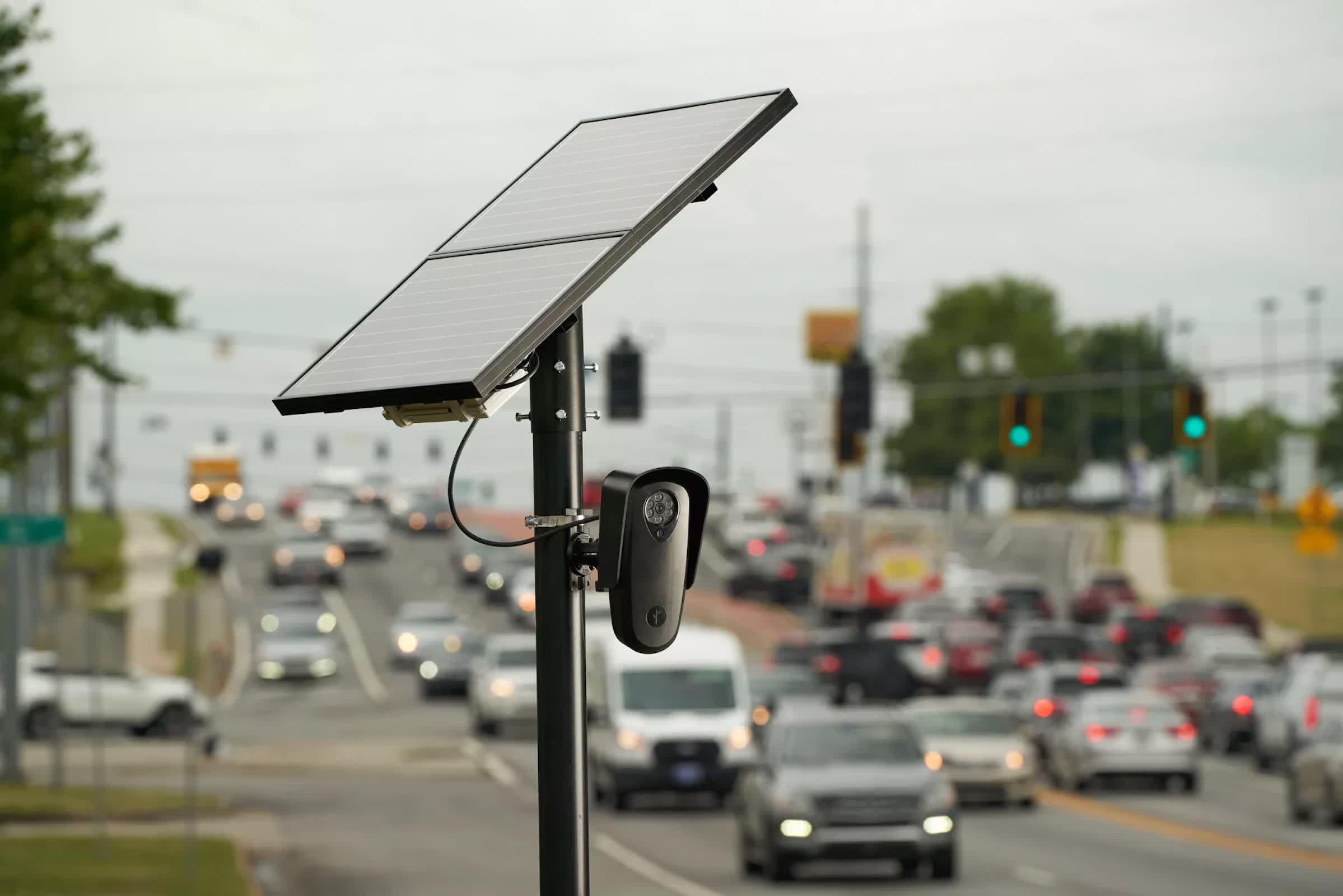
Flock sells automated license plate reader cameras and related software to police departments, local governments, and private users. Its system allows agencies to search data collected by cameras in other participating communities, making the size of the network central to its value.
Brian Hofer, executive director of Secure Justice, said the growing number of cancellations could weaken the reach of Flock's shared camera network. A smaller network gives agencies fewer cameras and fewer locations to search.
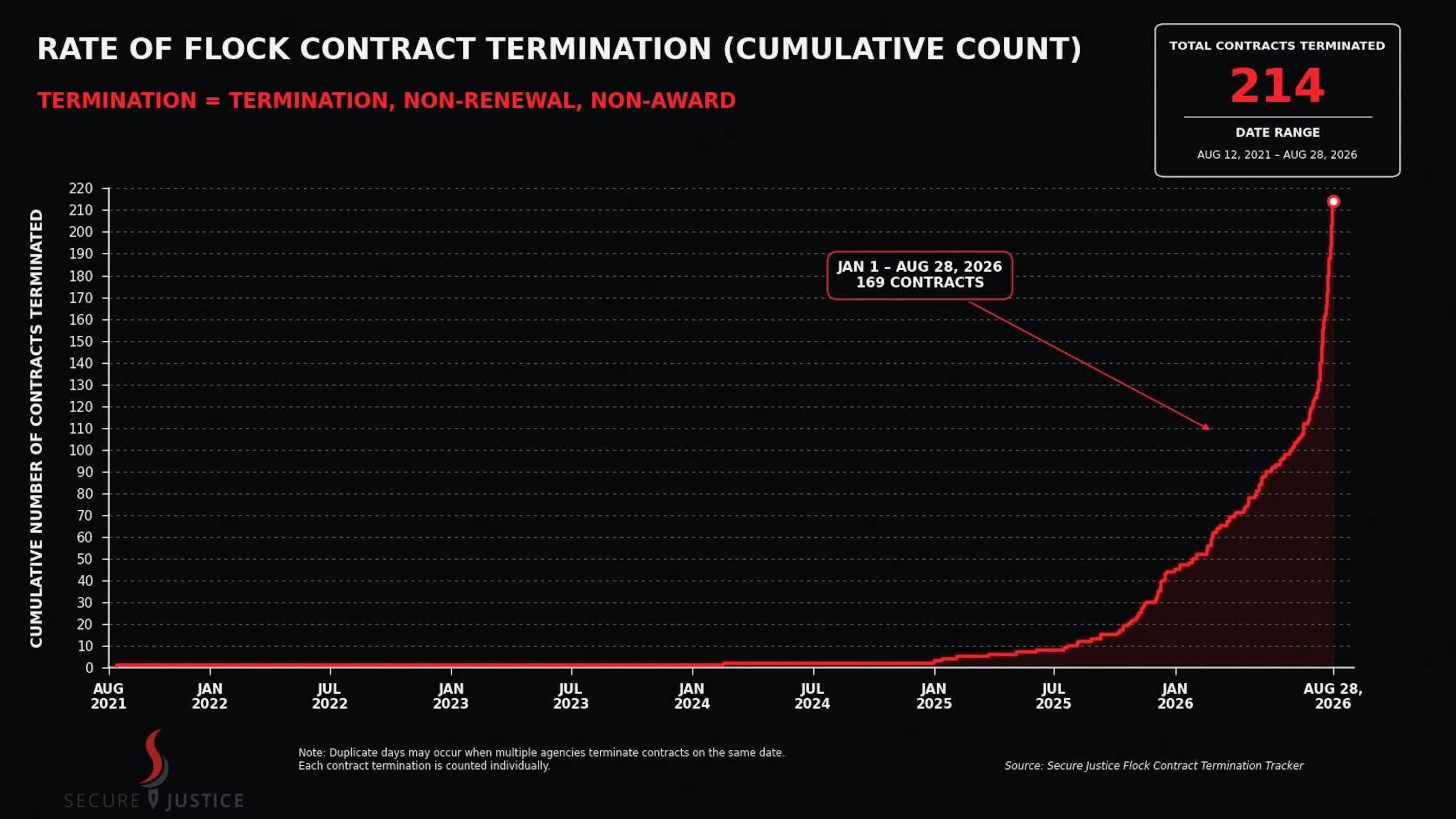
"Looking at that image, it's gone parabolic!" Hofer said. "When you see that now 165 [cancellations] are just in the first almost eight months of this year... At that speed, if it goes another year, we're talking serious money. That number is going to get huge, fast."
Flock said the loss of contracts has been outweighed by new business. Courtney Terlecki, a company spokesperson, said new city partnerships have outpaced nonrenewals by about 10 to one this year. The company did not disclose how many new customers it has added in 2026, but said its products are used by more than 5,000 communities.
"So far in 2026, new city partnerships have outpaced nonrenewals by approximately 10 to one," Terlecki said. "That does not mean every community will make the same decision, and we understand that public safety technology deserves thoughtful public discussion and community engagement."
The debate is no longer limited to traditional license plate readers. Critics say AI is expanding what the systems can do and making it easier to search large pools of camera data.
"Maybe in the past it didn't feel like every red light cam really meant a pair of eyes was watching you, but with AI, that's increasingly becoming the reality," Jake Laperruque, deputy director of the Center for Democracy and Technology's Security and Surveillance Project, said in an email to Ars.
He said Flock allows searches involving keywords and people, while other local camera networks are adding real-time facial recognition. He also pointed to Border Patrol's use of AI to analyze license plate reader data for driving patterns.
"And we're already seeing how AI can morph ALPRs [automated license plate reader] into a mass surveillance dragnet," Laperruque said. "Flock lets its cameras be searched for keywords and people, cities are incorporating real-time facial recognition into camera networks, Border Patrol is using AI to scan ALPR data for driving patterns [and] pulling people over whenever the AI deems their driving 'suspicious.'"
Flock has made policy changes amid the criticism. CEO Garrett Langley recently said the company would reduce its default data retention period from 30 days to seven days. The company also updated its terms of use to prohibit customers from using Flock services to mislead, harass, or stalk someone, or otherwise violate a person's legal rights.
The changes have not ended the political backlash. Sen. Josh Hawley, R-Mo., said last week that he is investigating Flock's collection, retention, and dissemination of data from its AI surveillance cameras. Florida Gov. Ron DeSantis also criticized the technology after two Florida police officers were arrested for allegedly misusing Flock.
Catherine Crump, a UC Berkeley law professor, said reported uses of the system have widened the concern beyond privacy advocates. She cited reports that a Texas sheriff's office used the network to search for a woman who had obtained an abortion, and that federal agents used the cameras to identify attendees at a gun show.
"It definitely does not help that this is yet another Silicon Valley product that no one asked for that threatens to reshape people's lives," Crump said.
Cities are dropping Flock's surveillance cameras at a record pace


