Florida is building a highway that can wirelessly charge EVs while you drive

midian182

Posts: 11,624   +176
Staff member
Why it matters: The Central Florida Expressway Authority (CFX) will finally begin its ambitious plan to create a stretch of highway that can wirelessly charge EVs as they travel. The project could help alleviate some of the biggest problems with electric vehicles: range anxiety, lengthy charging times, and a lack of charging facilities on busy highways.
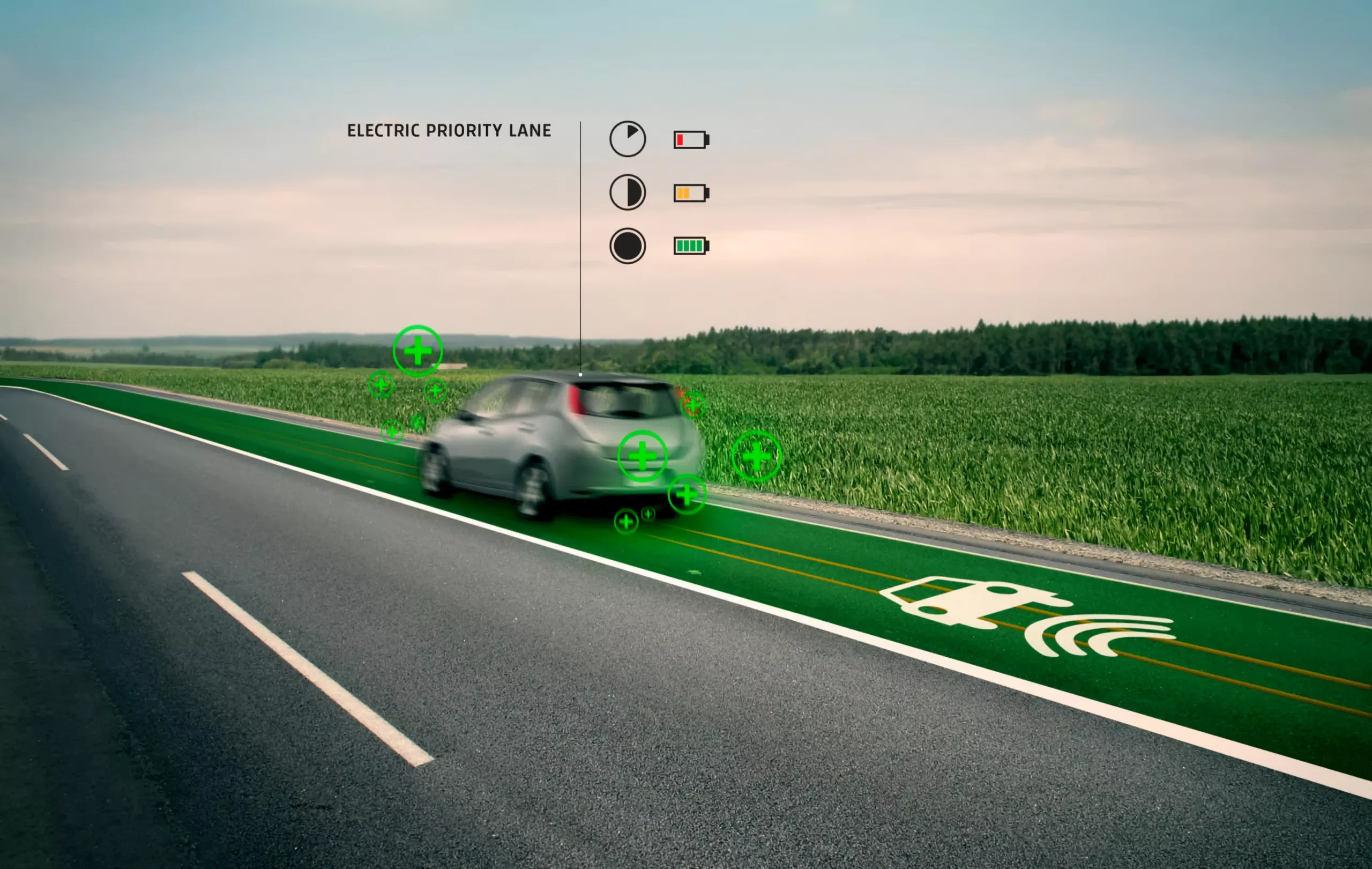
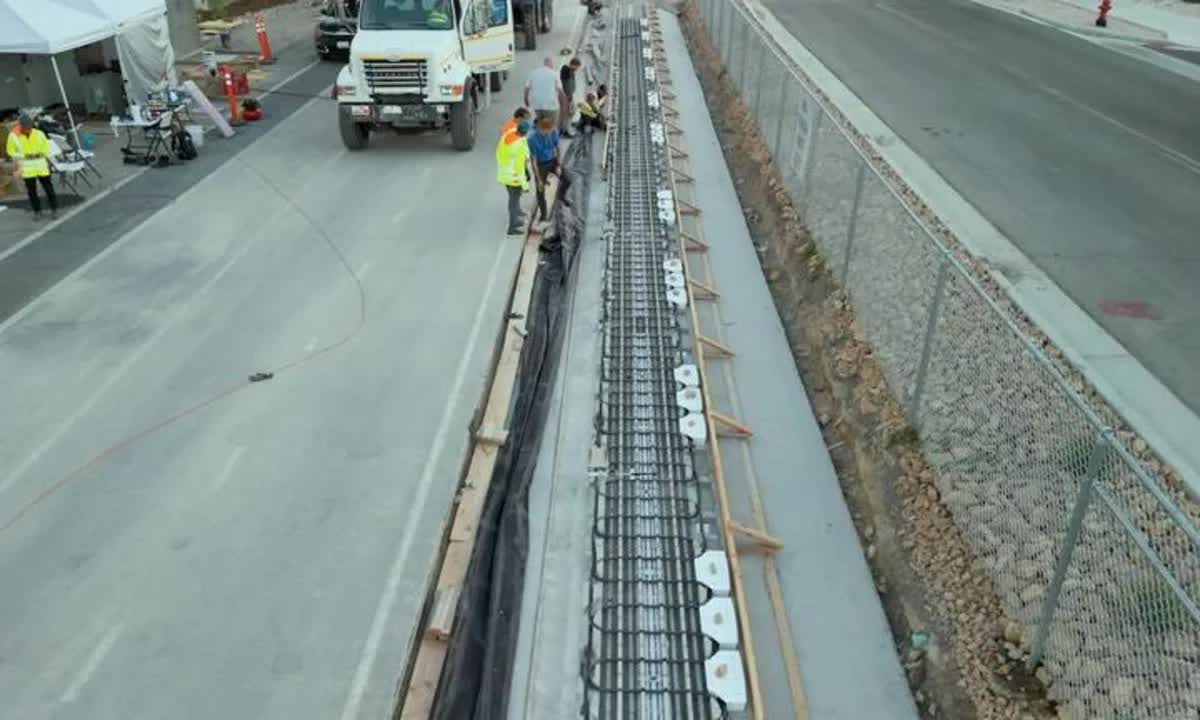
State Road 516, a brand-new 4.4-mile highway being constructed in Central Florida, is designed to do more than just move cars. The headline feature, which will be added in June 2026, is a wireless EV charging pilot embedded directly into the road. About three-quarters of a mile of one travel lane will be equipped with inductive charging coils beneath the asphalt.

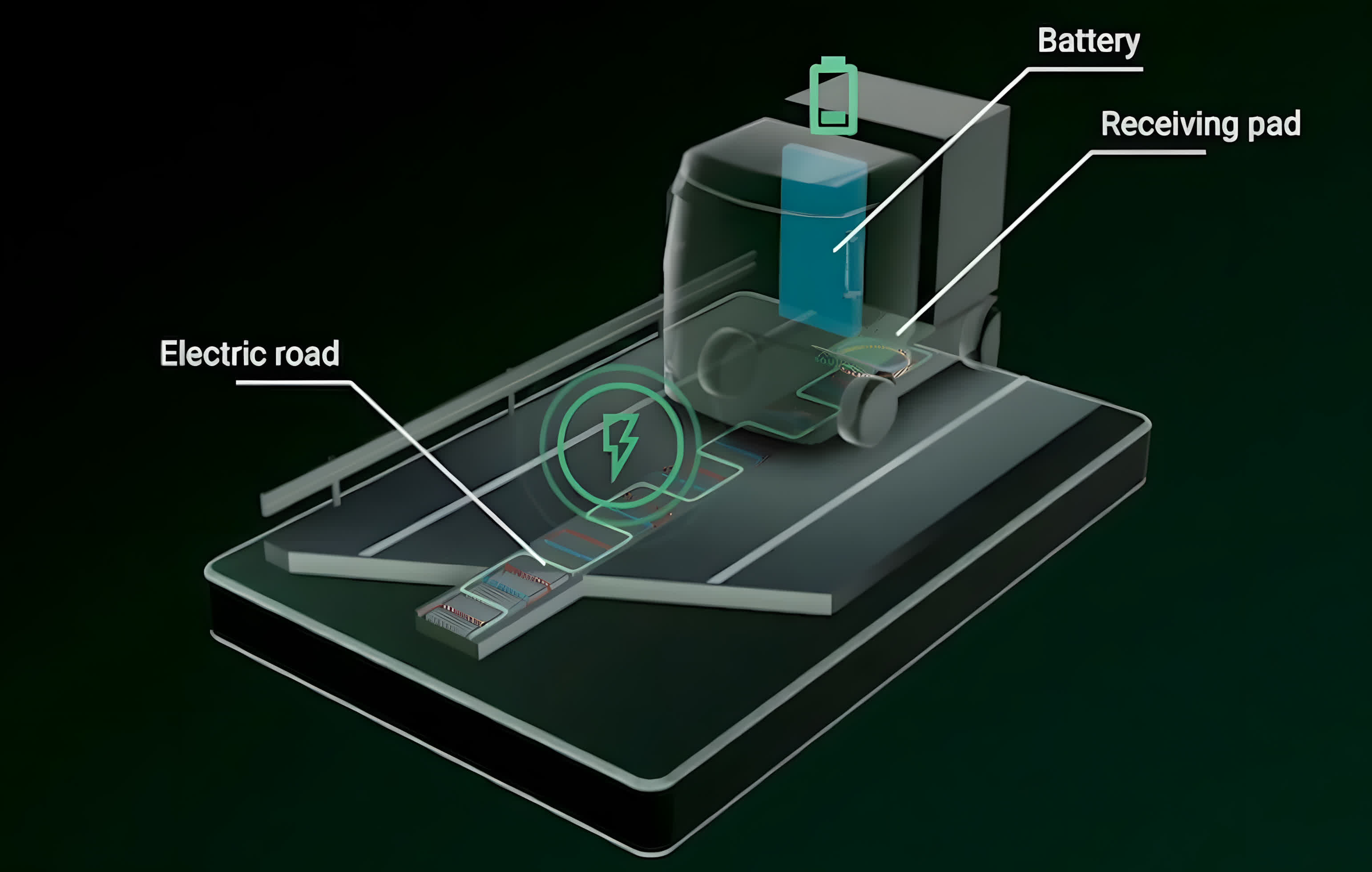
These coils generate a magnetic field capable of transferring up to 200 kilowatts of power to compatible vehicles as they drive over the surface, allowing EVs to recharge without stopping or plugging in. The goal isn't to fully recharge vehicles, but to maintain or extend range during normal travel.

The system relies on inductive charging coils installed below the asphalt, which generate a magnetic field that can be picked up by a receiver mounted to an EV. It's a technology that has been tested in limited pilot programs around the world, but Florida's project is among the most ambitious attempts to deploy it in a real-world, high-speed traffic environment rather than a controlled demo zone.
If it works as intended, the implications are significant. Range anxiety remains one of the biggest psychological hurdles for EV adoption, even as public charging networks expand. A roadway that actively recharges vehicles could reduce dependence on massive battery packs, lessen the need for frequent charging stops, and make long-distance EV travel feel far more routine.

There are caveats, of course. At launch, only vehicles equipped with the necessary receiving hardware will be able to take advantage of the wireless charging. That means most EVs currently available in the US won't benefit. Interoperability, standards, and cost will all play major roles in determining whether this becomes a niche experiment or something more transformative.
The broader expressway project carries a price tag north of $500 million and is expected to be completed by 2029. Beyond wireless charging, the design includes solar panels to help power infrastructure, wildlife crossings, and shared-use paths, turning it into a kind of showcase for next-generation transportation planning.

Whether the charging component proves revolutionary remains to be seen. But even as a pilot, the project reflects how aggressively states are beginning to think about electrification. Roads that don't just support vehicles, but actively power them, are no longer a distant concept – they're being poured into the ground, one lane at a time.

Permalink to story:

 
So I actually just returned from a 500 mile road trip in a Cadillac Optiq (My car is actually a Lyriq but I put it in for routine scheduled maintenance). The car had NACS charging (2026) and I had to stop at Tesla's superchargers twice. $45 each charge for a total of $95 with taxes.

I totally understand why people in the countryside hate EV. These things are HORRIBLE for highway driving.

However, I live in NYC and EV is perfect for city driving -especially if you have a house and can charge in your driveway. Just don't do roadtrips.

I absolutely do not see statewide/nationwide electrified roads anytime soon.
 
I mean, I'd argue the bigger caveat is physics, and the simple drop off with distance of the resonant magnetic field (which from memory will have a more severe drop off than just inverse square for a near field system like this), where if these coils are say, 50-100mm below the tarmac and then you have the height from the tarmac to the car (lets assume 200mm) before you even transmit any energy to the coil, never mind losses through the tarmac (sure, you could maybe work out a tarmac mix with better RF porosity and what not, but I sure as hell bet the road surface will be worse and degrade quicker, or just be more expensive) and the shield on the bottom of the car so you don't just shred the coil to bits.

For a stationary system, you'd probably already have 30-40 kW of loss due to said factors, never mind a moving vehicle that introduces issues with establishing that resonant magnetic field efficient transfer, moving the field with the vehicle as it travels across the pad and what not where you will get more losses, and all that for a 0.5kwh uptick per second at best (and its not like you're going to have tons of these pads in a row else the distribution network and available electricity supply soon become a problem too)

Add to that the amount of copper needed to have a coil that can deliver and receive 200kw of power like that and you're adding a good few hundred kilos to the car as well to enable what is quite pointless, sure you can make the pad use more advanced materials and get the weight down, but at additional cost.

I assume someone got a boatload of government funding and needs to spend it, since the maths itself already says this is dumb, never mind the fact that we already have a system for electrical power transmission that trains, trolleybuses and more have had for decades, its called a pantograph and overhead lines...
 
So I actually just returned from a 500 mile road trip in a Cadillac Optiq (My car is actually a Lyriq but I put it in for routine scheduled maintenance). The car had NACS charging (2026) and I had to stop at Tesla's superchargers twice. $45 each charge for a total of $95 with taxes.

EVs are perfect for your second vehicle. You can charge it at home and just do your transit within the radius of your autonomy, and it cost you dime on the dollars.

When you need to travel out of town with greater distance, then you need to rely on your conventional ICE vehicle.
 
EVs are perfect for your second vehicle. You can charge it at home and just do your transit within the radius of your autonomy, and it cost you dime on the dollars.

When you need to travel out of town with greater distance, then you need to rely on your conventional ICE vehicle.
Spending $40k on a second EV to "save" on fuel, if you are in your 20s, will cost you upwards of $700k to 900k in retirement savings. Hope it was worth it!

For reference: At the low end, at $4 a gallon that is enough gasoline to drive a F-150 over 2.6 million miles at just 15 miles per gallon. At 20 mpg that's 3.5 million miles. Or 87,500 per year, every year, for that same 40 year investment timeframe.
 
"Florida is building a highway that can wirelessly charge EVs while you drive"

Instead of this stupid idea why not bring high speed magnetic train system to US...!
 
"Florida is building a highway that can wirelessly charge EVs while you drive"

Instead of this stupid idea why not bring high speed magnetic train system to US...!
...Because the majority of the US isn't densely populated enough to benefit from it.

The EV highway is stupid, but just saying "fast trains" is pretty stupid too.
 
So there are 46,800 miles in the US Interstate highway system… at 500 million for 4.4 miles… that would be about 5.3 trillion dollars to replace… good luck with that…
 
4.4-mile highway, seriously?
That's ~5 minutes at 50 mph. How much you can charge, wirelessly at that, for 5 minutes? You can't even charge a mobile phone.

I don't even want to think about the efficiency and the cost of charging.
The amount of money wasted on this would be enough to put many thousands of chargers (of the type that can really charge your car).
 
I like EV's but that idea just sounds dumb.
Wouldn't it just be better to invest in a better charging infrastructure?
 
I mean, I'd argue the bigger caveat is physics, and the simple drop off with distance of the resonant magnetic field (which from memory will have a more severe drop off than just inverse square for a near field system like this), where if these coils are say, 50-100mm below the tarmac and then you have the height from the tarmac to the car (lets assume 200mm) before you even transmit any energy to the coil, never mind losses through the tarmac (sure, you could maybe work out a tarmac mix with better RF porosity and what not, but I sure as hell bet the road surface will be worse and degrade quicker, or just be more expensive) and the shield on the bottom of the car so you don't just shred the coil to bits.

For a stationary system, you'd probably already have 30-40 kW of loss due to said factors, never mind a moving vehicle that introduces issues with establishing that resonant magnetic field efficient transfer, moving the field with the vehicle as it travels across the pad and what not where you will get more losses, and all that for a 0.5kwh uptick per second at best (and its not like you're going to have tons of these pads in a row else the distribution network and available electricity supply soon become a problem too)

Add to that the amount of copper needed to have a coil that can deliver and receive 200kw of power like that and you're adding a good few hundred kilos to the car as well to enable what is quite pointless, sure you can make the pad use more advanced materials and get the weight down, but at additional cost.

I assume someone got a boatload of government funding and needs to spend it, since the maths itself already says this is dumb, never mind the fact that we already have a system for electrical power transmission that trains, trolleybuses and more have had for decades, its called a pantograph and overhead lines...
This sounds confident, but...
Near field inductive systems don’t behave like radiative RF links with inverse square losses, coupling efficiency is driven by coil geometry, alignment, and ferrite shaping, which is why commercial stationary systems already hit ~90% efficiency at 85–200 kW.

The assumed 50 to 100 mm burial plus 200 mm air gap isn’t how these are deployed either, pads are closer, segmented, and only energized when a compatible vehicle is present. There’s no “hundreds of kilos of copper” under the car, receivers are thin, ferrite backed, and on the order of tens of kilos. The 0.5 kWh per second figure is simply wrong anyway, that would imply megawatts of power.

You don’t have to like the idea, but writing it off as government money burning ignores that the physics is well understood, deployments already exist, and the use case is intentionally narrow.
 
So there are 46,800 miles in the US Interstate highway system… at 500 million for 4.4 miles… that would be about 5.3 trillion dollars to replace… good luck with that…
Dynamic charging is being evaluated for very short, high utilization segments. Using the cost of a pilot project and multiplying it across the whole country is a classic strawman post.
 
EVs are perfect for your second vehicle. You can charge it at home and just do your transit within the radius of your autonomy, and it cost you dime on the dollars.

When you need to travel out of town with greater distance, then you need to rely on your conventional ICE vehicle.
Not always, the average American travels 37 miles a day:
https://get.goautoinsurance.com/blo...print-an-in-depth-look-at-u-s-annual-mileage/
"Every year, Americans collectively drive more than 3.2 trillion miles, enough to circle the Earth over 128 million times. According to the Federal Highway Administration (FHWA), the average licensed driver covers roughly 13,662 miles per year, or about 37 miles a day"

My first (experimental) EV was a 2017 Focus that I had to charge every other day because it only had a max range of 104 miles, but it was all normal everyday travels.
A 10 to 90% charge (80-85 kW) on a 33 kWh battery cost average $1.15 to drive 90 miles+\-
THAT my friend is dirt cheap car ownership, after the price of the car of course.

An example I would put up around my area, folks with an EV use it as their daily driver.
The second vehicle (recreation) is an RV of some sort, or a livable watercraft.

strawman post
Damn man, you say that a LOT! :D
 
Last edited:
Dynamic charging is being evaluated for very short, high utilization segments. Using the cost of a pilot project and multiplying it across the whole country is a classic strawman post.
I didn’t calculate the costs of the actual electricity - nor the cost to actually replace existing roads… you got a better number?
 
The most glaring statement in this article, which seemingly went unnoticed based on the comments, is:

"At launch, only vehicles equipped with the necessary receiving hardware will be able to take advantage of the wireless charging. That means most EVs currently available in the US won't benefit"

That's what truly makes this project a colossal waste of taxpayer money.
 
So there are 46,800 miles in the US Interstate highway system… at 500 million for 4.4 miles… that would be about 5.3 trillion dollars to replace… good luck with that…
4.4-mile highway, seriously?
That's ~5 minutes at 50 mph. How much you can charge, wirelessly at that, for 5 minutes? You can't even charge a mobile phone.

I don't even want to think about the efficiency and the cost of charging.
The amount of money wasted on this would be enough to put many thousands of chargers (of the type that can really charge your car).
The most glaring statement in this article, which seemingly went unnoticed based on the comments, is:

"At launch, only vehicles equipped with the necessary receiving hardware will be able to take advantage of the wireless charging. That means most EVs currently available in the US won't benefit"

That's what truly makes this project a colossal waste of taxpayer money.

Techspot stated the "broader expressway project carries a price tag north of $500 million", and sadly didn't do much digging to say what the cost of the specific wireless charging part costs. A Yahoo article mentions it's just a 13.6 million dollar contract (and later estimates the cost at 18M per mile). Presumably electricity could be billed to the driver. Fair point though, most cars today are incompatible.
https://tech.yahoo.com/transportati...ghway-charge-electric-vehicles-184000847.html

It's interesting how any mundane concern now turns into a new kind of "anxiety". Can't stand this BS.
The term "range anxiety" has been around for years. Anyways, if chargers do not become as ubiquitous as gas stations (or nearly so, perhaps augmented by this technology on highways), I don't see the phenomenon going away.
 
I didn’t calculate the costs of the actual electricity - nor the cost to actually replace existing roads… you got a better number?
You don’t need a “better number” when the premise itself is wrong. No one is talking about replacing existing roads or electrifying the entire highway network, so any total cost figure built on that assumption is meaningless.

The real discussion is about targeted segments with known traffic patterns and utilization, where the comparison is against alternatives like bigger batteries, more vehicles, or more downtime, not some imaginary nationwide rebuild.

Who is paying for this electric and all the Construction to install it?
it isn’t a single company or taxpayers. These pilots are typically paid for through a mix of public research funding and private partners... It's a pilot.

The most glaring statement in this article, which seemingly went unnoticed based on the comments, is:

"At launch, only vehicles equipped with the necessary receiving hardware will be able to take advantage of the wireless charging. That means most EVs currently available in the US won't benefit"

That's what truly makes this project a colossal waste of taxpayer money.
From what I’ve read, the primary targets during the pilot test phase are commercial fleets, particularly delivery vans and long haul trucks.

There is a better article on ImpactLab for those interested.
 
Back