Intel confirms Nova Lake CPU launch in 2026: up to 52 cores, Xe3 GPU, and LGA 1954 socket

DragonSlayer101

Posts: 981   +14
Staff
Highly anticipated: Intel CEO Lip Bu Tan has confirmed key details about the company's upcoming Nova Lake desktop CPUs ahead of their launch next year. He also revealed that the next generation Panther Lake CPUs, shown at the company's fourth annual Tech Tour event in late September, will be formally unveiled at CES 2026 in January.

Speaking during Intel's Q3 2025 earnings call, Tan outlined the company's future plans for its client, server, and foundry businesses. On the client side, Intel will launch the Core Ultra 200S Plus Arrow Lake Refresh series in early 2026, followed by Nova Lake later in the year.

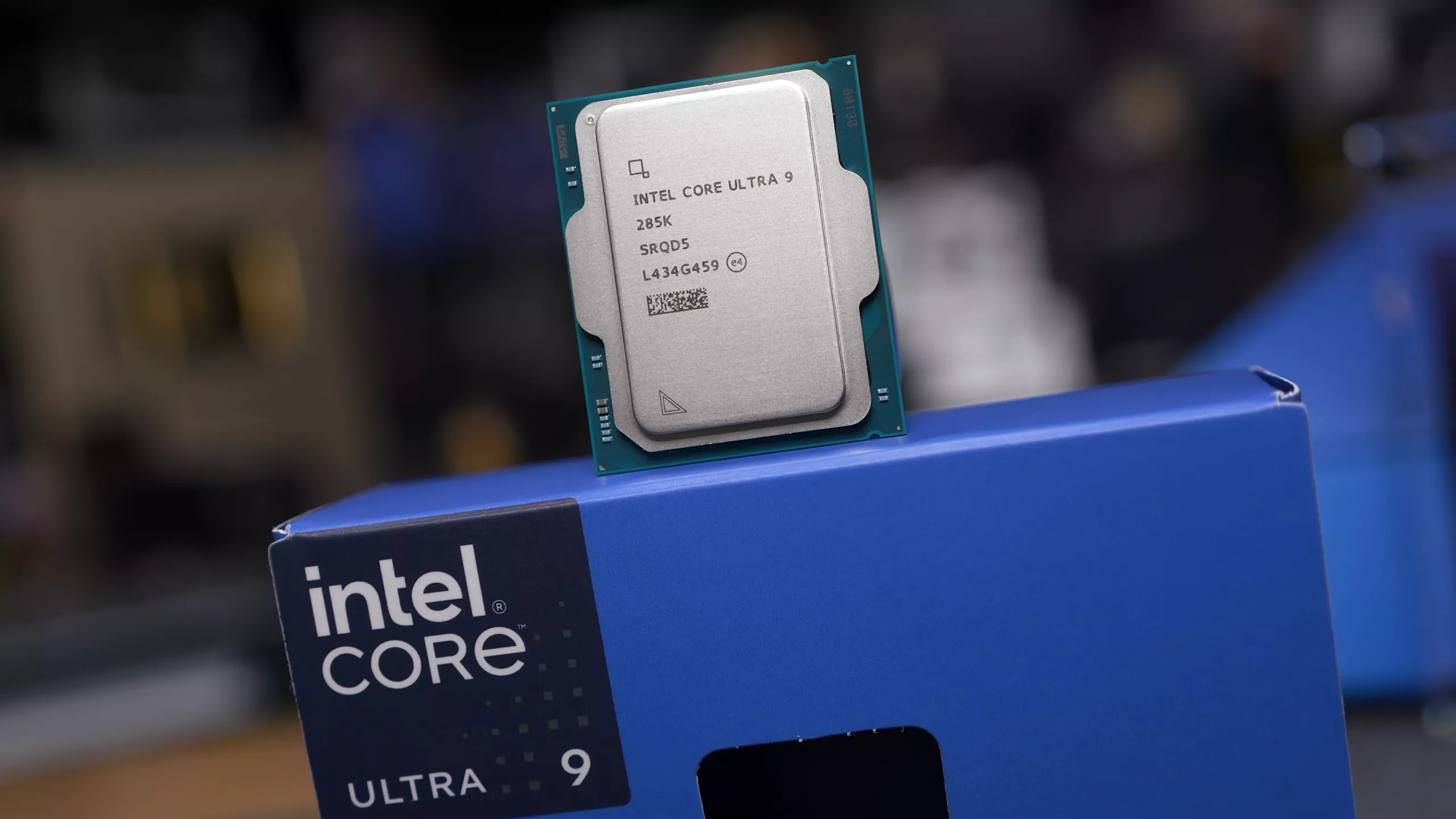
Arrow Lake Refresh will include the Core Ultra 9 290K Plus and Core Ultra 7 270K Plus, which were leaked earlier this week. The Core Ultra 9 290K Plus will serve as the flagship model, offering 24 cores and 36 MB of L3 cache. Final clock speeds are not yet confirmed, but they are expected to be higher than those of the other models in the lineup.

The Core Ultra 7 270K Plus will be positioned above the Core Ultra 7 265K, offering 24 cores with a boost speed of 5.50 GHz and a base speed of 3.7 GHz. It is also expected to include 36 MB of L3 cache, an increase over the 30 MB found in the 265K. According to a recent Geekbench listing, it performs nearly on par with the Core Ultra 9 285K in both single core and multi core tests.
Tan also confirmed that the first Panther Lake mobile CPUs will arrive by the end of this year, followed by additional models during the first half of next year. Manufactured on Intel's 18A process node, the Core Ultra 300 Panther Lake family will feature Cougar Cove performance cores, Darkmont efficiency cores, and Xe3 integrated graphics.

After Arrow Lake Refresh and Panther Lake, Intel plans to introduce Nova Lake in the second half of 2026. These processors will use the new LGA 1954 socket, scale up to 52 cores, and include Xe3 graphics. Nova Lake will also bring architectural changes and software enhancements that the company hopes will help it regain some lost ground against AMD.

Intel also plans to roll out several new server and HEDT processors based on the 18A node in the coming years. This roadmap includes Diamond Rapids in late 2025 or early 2026, Xeon 6 Plus Clearwater Forest in mid 2026, and Coral Rapids sometime between 2028 and 2029.

Permalink to story:

 
Another socket?

Probably a lot easier to lay out a new CPU if you aren't restricted to an old pin arrangement. There are definitely plusses and minuses to keeping the same socket between generations. As someone who doesn't upgrade often and usually needs a new motherboard at upgrade time anyways, this doesn't really impact my decision to upgrade or not.
 
Those specs don't seem very impressive and I have a hard time believing anything Intel promises these days. We'll have to wait and see I guess.
 
Those specs don't seem very impressive and I have a hard time believing anything Intel promises these days. We'll have to wait and see I guess.
Alright I'm curious, why is 52 cores not impressive?
Probably a lot easier to lay out a new CPU if you aren't restricted to an old pin arrangement. There are definitely plusses and minuses to keeping the same socket between generations. As someone who doesn't upgrade often and usually needs a new motherboard at upgrade time anyways, this doesn't really impact my decision to upgrade or not.
Yep. CPUs age like wine. By the time there's a reason to replace your CPU, you'll want faster RAM, more NVMe, ece.
 
Alright I'm curious, why is 52 cores not impressive?
Yep. CPUs age like wine. By the time there's a reason to replace your CPU, you'll want faster RAM, more NVMe, ece.

Not really upgraded from 3600 to 5600 to 5700X3D. All using the same motherboard, never needed faster ram or NVMe as the motherboards for these Cpu's are all limited to 2 anyways.
 
Alright I'm curious, why is 52 cores not impressive?

Probably because the vast majority of programs and games can't even use 8 cores, much less 52. And for those that can, I'm sure that those programs would do much better with full performance cores rather than just 16 of the 52. Last but not least, what happens to clock speed and TDP at 52 cores? I doubt you're looking at replacement for the 64 core Threadripper with this chip.
 
Probably because the vast majority of programs and games can't even use 8 cores, much less 52. And for those that can, I'm sure that those programs would do much better with full performance cores rather than just 16 of the 52. Last but not least, what happens to clock speed and TDP at 52 cores? I doubt you're looking at replacement for the 64 core Threadripper with this chip.


So you never seen any productivity benchmarks and think 9950X is just as slow as 9700X and it's all a marketing scam. Come on you can't be that silly. Why the hell do you think they release 96 core desktop cpu's, for shits and giggles! Maybe your just a gamer
 
Alright I'm curious, why is 52 cores not impressive?
16 P cores.
32 Crap cores.
4 Ultra-Crap cores

Arrangement is 8P+16 Crap + 8P+16 Crap + 4 Ultra-Crap.

Essentially there are 3 different types of cores on three different locations. Good luck with scheduling.
 
So you never seen any productivity benchmarks and think 9950X is just as slow as 9700X and it's all a marketing scam. Come on you can't be that silly. Why the hell do you think they release 96 core desktop cpu's, for shits and giggles! Maybe your just a gamer
Like he said: majority of programs and games do not utilize anything beyond 8, much less 16 cores.
52 cores for 95% people is pointless **** measuring contest.

And like he also said: for productivity there are far better full performance core designs that come with the advantage of much higher memory capacity and PCIe lance count that mainstream platforms like LGA1954 lack.

He never said 9950X (or by extension Intel) is a scam.
Intel's Arrow Lake is already faster in multi thread, but as we can all see from sales number that does not sell units on mainstream platforms as the number of people too poor to afford Threadripper, but rich enough to afford and utilize dual-ccd designs on mainstream is miniscule.

Most people are consumers of content. Not creators of content.
 
Back