Intel tops $300 billion market cap for the first time since the dot-com boom

midian182

Posts: 11,758   +179
Staff member
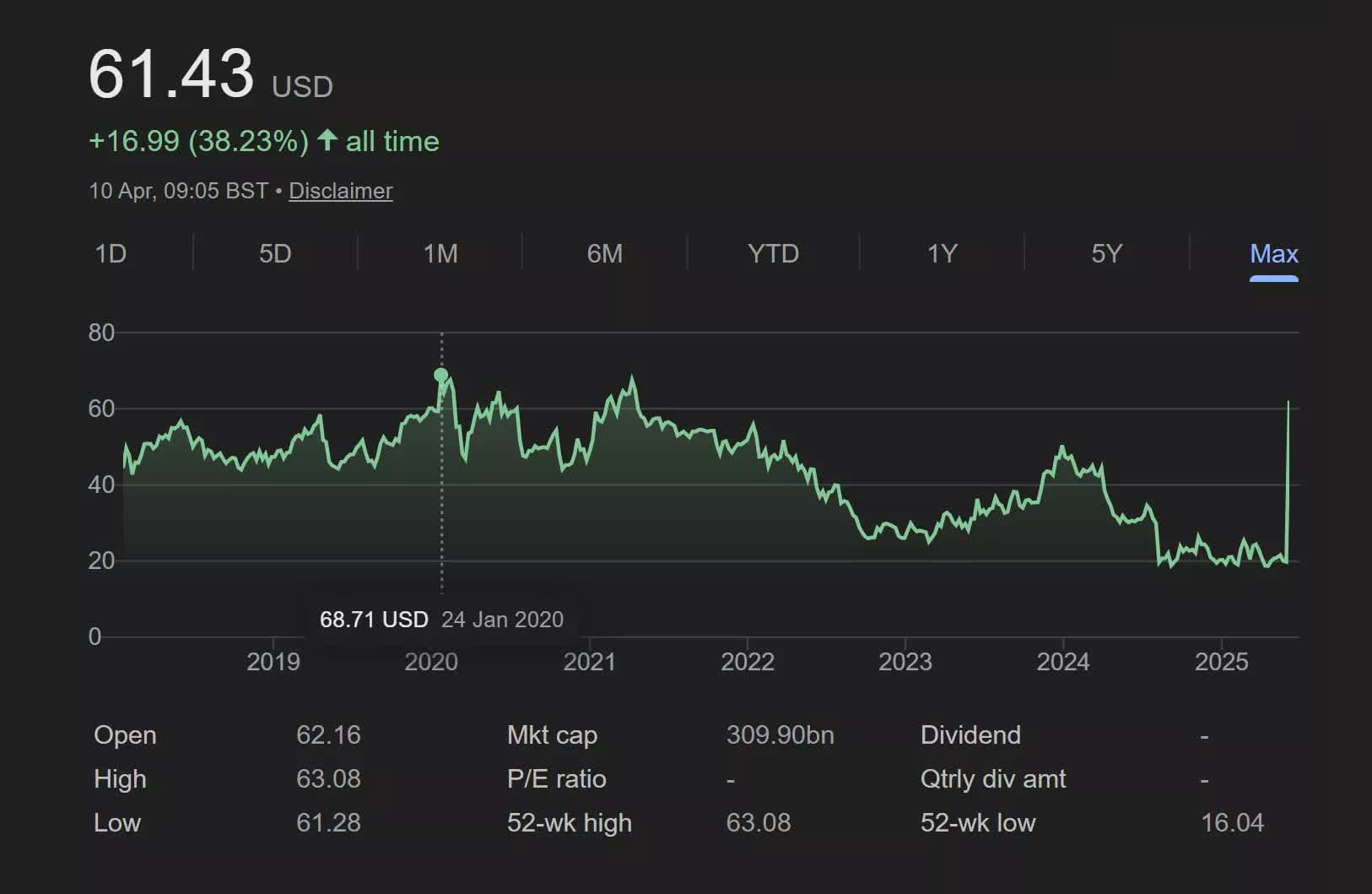
What just happened? Reports on Intel's failing fortunes have kept on coming for years, but it appears that Team Blue has turned a corner. Thanks in part to its involvement with Elon Musk's TeraFab project, Intel's market cap has reached its highest level since the dot-com boom at the start of the 2000s.
Until recently, Intel's post-pandemic years have not been ones to remember. A declining share price, combined with AMD's success, allowed Team Red to surpass its rival in market cap for the first time ever in 2022.

Things continued to get worse for Intel. In 2024, its market cap dipped below $100 billion for the first time since before its peak in 2000, a result of the massive investments in its foundry business failing to pay off and the poor reception to Raptor Lake – among other things. For a while, it appeared that Qualcomm was going to take advantage and buy Intel.

But the company's fortunes started to change when Lip-Bu Tan took over from CEO Pat Gelsinger in 2025, beginning with a share-price jump after the US government said it was taking a 10% stake in Intel.

Recent announcements have pushed that share price up almost threefold since August last year, sending Intel's market cap to $305 billion – the highest since the peak of the dot-com boom in August 2000, when it passed $500 billion.

Several factors have contributed to the success. One of the reasons Intel struggled was its failure to jump on the AI bandwagon, but that's changed recently as it signs more deals and partnerships related to the technology and its infrastructure.

Intel has also signed a multi-year collaboration with Google for the latter to continue deploying Xeon platforms for its AI and cloud divisions.

Possibly the biggest boost came from Intel's recent announcement that it had joined the TeraFab project. Musk talked about the facility in March, saying it would produce cutting-edge chips for AI, robotaxis, robotics, and space systems.

Intel said its ability to design, fabricate, and package ultra-high-performance chips at scale will help accelerate Terafab's aim to produce 1 TW/year of compute to power future advances in AI and robotics.

Permalink to story:

 
I remember how some were running down Tan last year, saying he would destroy what was left of Intel or get it ready for acquisition; but since he took over, the company has been on the right track, both on the CPU and GPU fronts, and news has been positive, compared to AMD and Nvidia.
 
Tan didn't make Intel have a comeback, massive cash flow from the US govt, Nvidia, Elon Musk, and Google did.
And unless Intel stops relying on TSMC and uses their own chip fabs, they're still way overvalued, IMO.
Someone who isn't part of the Woo Tan clan? 😮
 
Tan didn't make Intel have a comeback, massive cash flow from the US govt, Nvidia, Elon Musk, and Google did.
And unless Intel stops relying on TSMC and uses their own chip fabs, they're still way overvalued, IMO.
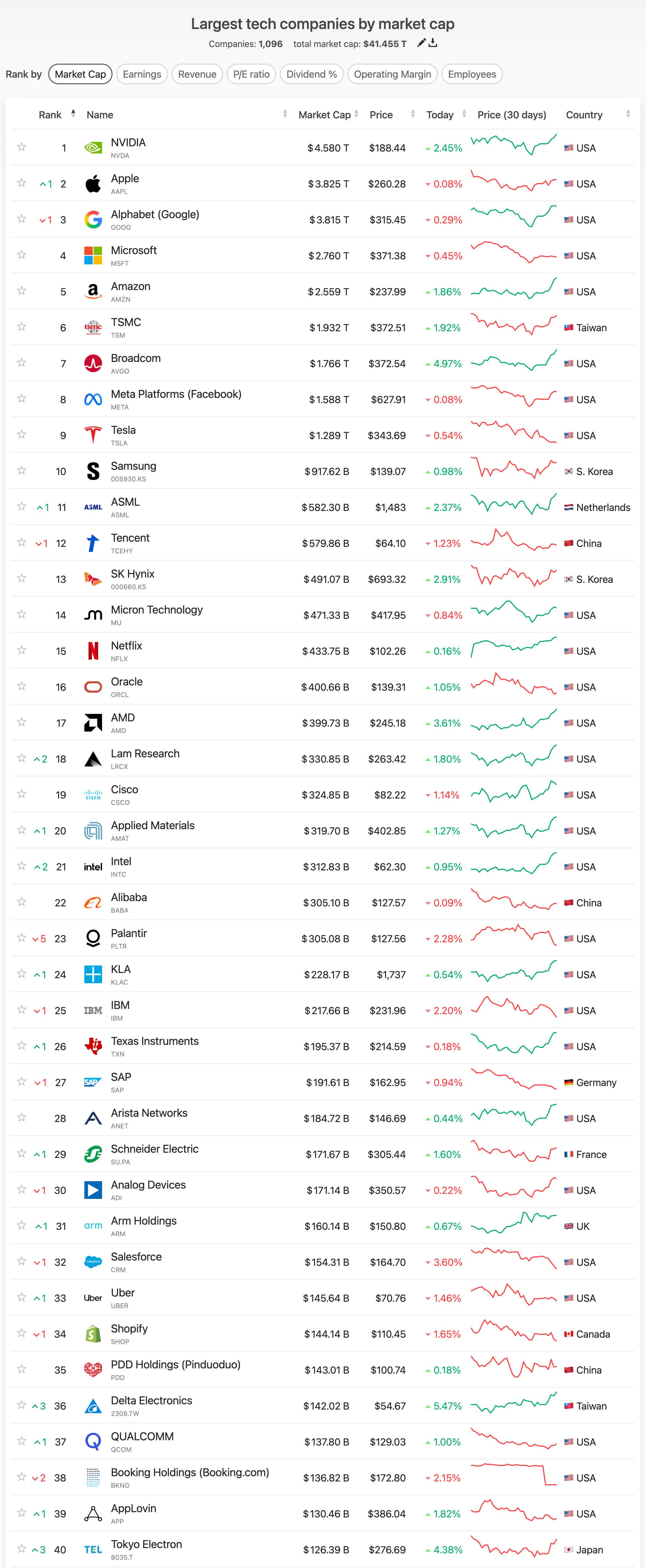
I mean that's part of the valuation, the chip fabs. If US tech companies didn't outsource chip fabrication to Taiwan in the 90s and 2000s, then intel would currently be #6 on that list of biggest tech companies instead of TSMC.
 
Against the backdrop of unverified(?) rumors, the value of Intel shares has increased.
Where is the technology here?
Is Elon Musk still digging a tunnel between Los Angeles and New York?
 
If you want to explain to someone that the stock market is almost entirely based on future expectations, show them INTC.

Intel has a higher stock valuation now than they did in 2020/2021, when they were a cash cow making over $20 billion per year in profit, and their rival AMD was seen not seen as a major threat to market share. Investors (or possibly speculators) must be very bullish on the company today, as over the past 3 years Intel has reported a net loss of over $15 billion.

Will Intel's new fab business prove to be profitable? Will AI demand for chips continue to grow exponentially for the foreseeable future, or will constraints on the other components of a data center (memory, electricity, etc) act as a bottle neck for the chip sector? Will Intel start gaining ground against AMD from a technical standpoint to recapture lost market share?

As a *former* Intel investor, the current price seems extremely speculative, and several things will have to go right for it to pay off.
 
...as over the past 3 years Intel has reported a net loss of over $15 billion.
While you make some excellent points, I'll add that Intel in 2025 managed to show a non-GAAP profit for the first time in years, and even their GAAP P/L was essentially zero. That's a substantial rebound from just a couple years ago.
 
I mean that's part of the valuation, the chip fabs. If US tech companies didn't outsource chip fabrication to Taiwan in the 90s and 2000s, then intel would currently be #6 on that list of biggest tech companies instead of TSMC.
Intel are outsourcing their own chip production to TSMC and yet you want others to use Intel.
 
Back