Intel's crashing CPU crisis deepens as more models are affected than originally thought

Skye Jacobs

Posts: 2,002   +58
Staff
A hot potato: Intel probably thought the worst was behind them after the company identified the source of the instability surrounding its 13th- and 14th-gen CPUs and promised a patch to address the issue. But new reports say that the patch won't resolve the problems for processors already experiencing crashes. Even worse, whatever the problem is, it affects a broader range of models than previously assumed.

The news coming out of Intel about its crashing 13th- and 14th-generation CPUs is not getting any better, even after they said they had finally "solved" the mystery behind the instability, and promised that a patch should arrive by the middle of next month.

The first disappointment is that the patch won't fix the processors if they are already crashing. Intel has advised owners to use Intel Default Settings in their motherboard BIOS while waiting for the microcode update, although this is not a guaranteed fix. But it appears the best course of action for customers that have already experienced damage is to simply replace the processor instead of tweaking BIOS settings. Intel would not share estimates with reporters of how many chips are likely to be irreversibly impacted.

Worse, it now appears that the crashing issue is also affecting all 65W and higher CPUs as well as the mainstream non-K models alongside their K/KF/KS variants.

Also read: Intel CPUs Are Crashing and It's Intel's Fault: Intel Baseline Profile Benchmark
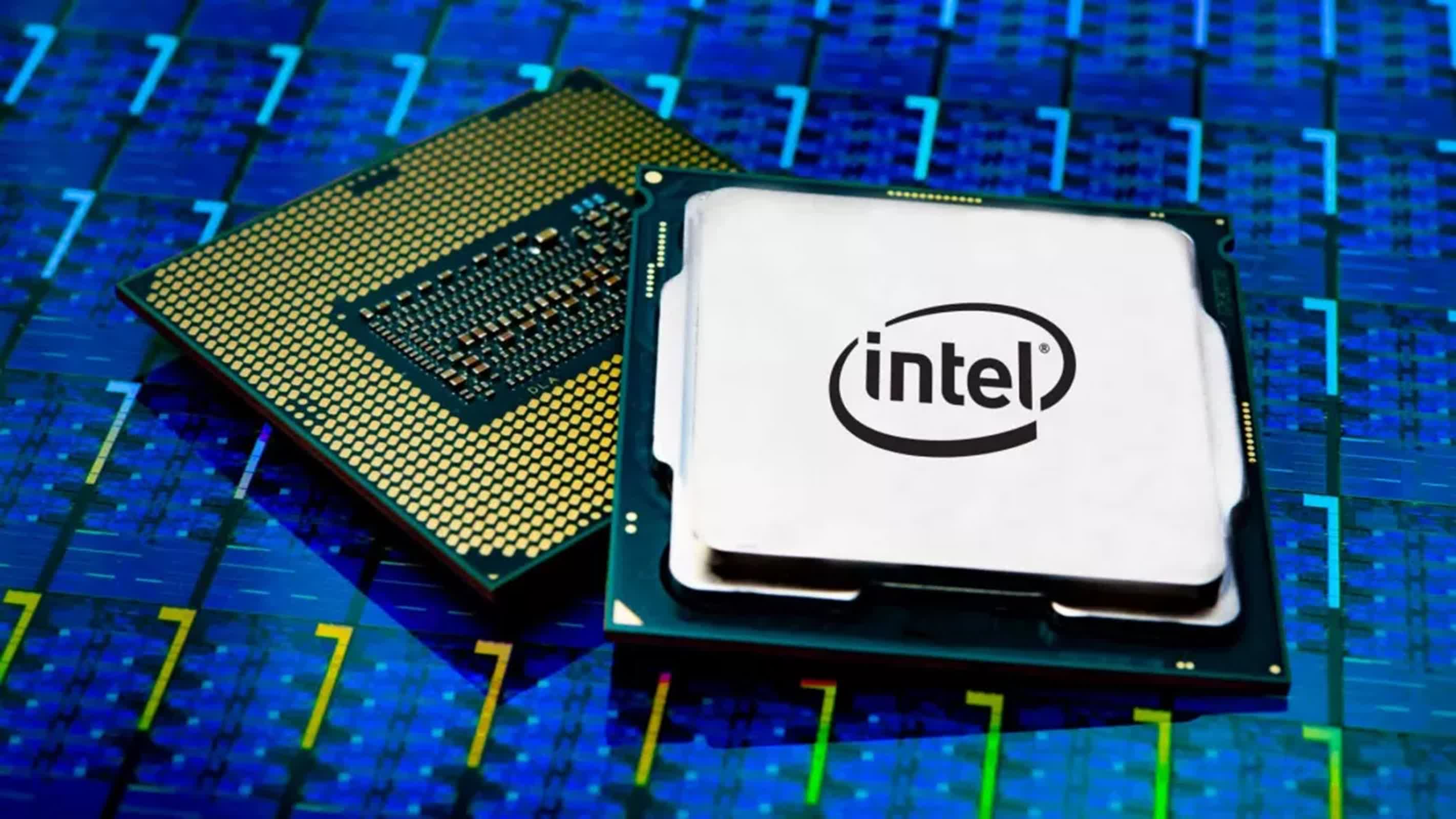
It is a troublesome turn of events. The K/KF/KS variants, designed for overclockers, feature unlocked multipliers that allow for higher performance tuning, making them more susceptible to instability when pushed beyond standard operating conditions. However, mainstream non-K models have locked multipliers, which generally results in more stable performance under typical usage conditions.

In short, the fact that even the regular models are experiencing problems means the issue is more widespread than initially thought and makes it clear that Intel hasn't fully uncovered the cause of the crashes.

As of right now, Intel says the root cause of the problem is erroneous microcode instructing the CPU to request more voltage than is safe, which can lead to irreversible damage. But Intel spokesperson Thomas Hannaford confirmed that while high voltage is the primary cause of the problems, it's not the only factor. The company is still investigating other potential causes.

So far, Intel has only grudgingly provided relief to affected customers. It is not planning a recall of the affected processors nor is it halting their sale. They've also failed to provide details on extended warranties or no-questions-asked replacements. One overture it is making: it will apply the microcode update to processors not yet shipped once the production patch is released.

Permalink to story:

 
Back in the 90's, I worked for a company that decided it was going to get ISO 9000 certified to claim that it was paying attention to quality. As part of that, they came up with a "quality" policy that read "We can ship crap as long as we document we shipped crap."

I have to wonder whether Intel has a similar policy?

Silly me. Intel have a quality policy? 🤣
 
Back in the 90's, I worked for a company that decided it was going to get ISO 9000 certified to claim that it was paying attention to quality. As part of that, they came up with a "quality" policy that read "We can ship crap as long as we document we shipped crap."

I have to wonder whether Intel has a similar policy?

Silly me. Intel have a quality policy? 🤣
I like to criticize the ISO 9000 because it is literally just a load of crap. The company I work at is ISO certified and 99% of the people that work here don't give a flip about it. When it comes time to do the audits, the week before is the only time ISO matters and everyone is scrambling to make things flow as if they've been following and doing the ISO every day.

No one cares. It's just a badge that some customers require before doing business with a company and that's the only reason why the company I'm at even got certified.

I have to figure that most other companies that are ISO certified do the exact same thing, just fly by the seat of their pants until audit time comes and then watch everyone panic as they try to make sure they're being ISO compliant by the time the auditor shows up.

I view ISO certification like the BBB - just a waste of everyone's time and money.
 
Too high voltages and too high power ...Dont wonder why it happens ! Even setting Pl1 125W and Pl2 188W (for i7 and i9) cannot resolve everything . It needs lower voltages too . Intel must act quickly .
 
They already know what it is. The fix is to run the processors at significantly lower clock speeds. Which would of course trigger a cascade of law suits. They're trying their very best to be as vague as possible and to time stretch this as long as possible. And so far they're succeeding.

In any case to fix these hardware design flaws it's going to take them at least a few years, so I'm avoiding Intel until they get their act together again and I'm certainly recommending everyone else to do so as well.
 
Something is rotten in the state of Denmark if even a 13400(F) 65w is affected by increasing instability/electron migration. Then it can't be voltage related. Because those CPUs were fed only a modest amount of voltage most of the time, as well as having locked multipliers, much less PL1/PL2 and even a TAU limited to 28 seconds. In an OEM setting (Intel largest customers see those failure rates) those CPUs will never exceed 65w for a second. So how do they start to fail, too? Oxidation? After a really small life time in rigs? Maybe some other issue? Or is it really the voltage and roughly 1.1v is already 'cooking' the thing? What a sad cluster****.

Compare that to indestructible CPUs like the infamous 4790K, that one runs strong from 2013 until today in my brothers 2nd rig (oced 4.5 GHz allcore from the beginning). How can Intel fail so hard in 2024? It's beyond me.

Also, the market for used 13th- and 14th-gen CPUs ist pretty much a mess, starting from this day on. You can't buy those CPUs anymore, unless you are willing to face the WHEAs and BSODs any time to come. This stuff will get cheap very soon.
 
Last edited:
Something is rotten in the state of Denmark if even a 13400(F) 65w is affected by increasing instability/electron migration. Then it can't be voltage related. Because those CPUs were fed only a modest amount of voltage most of the time, as well as having locked multipliers and much less PL1/PL1 and even a TAU limited to 28 seconds. So how do they start to fail, too? Oxidation? After a really small life time in rigs? Maybe some other issue? Or is it really the voltage and roughly 1.1v is already 'cooking' the thing? What a sad cluster****.

Compare that to indestructible CPUs like the infamous 4790K, that one runs strong from 2013 until today in my brothers 2nd rig (oced 4.5 GHz allcore from the beginning). How can Intel fail so hard in 2024? It's beyond me.

Also, the market for used 13th- and 14th-gen CPUs ist pretty much a mess, starting from this day on. You can't buy those CPUs anymore, unless you are willing to face the WHEAs and BSODs any time to come. This stuff will get cheap very soon.
had 0 issues with my i7 13700KF in 18 months of use
 
had 0 issues with my i7 13700KF in 18 months of use
Im with you, I see none of these issues, I have 2 systems, one is a 13400 is on a MSI B660M Mortar board, no issues since install, the 13600k is on a MSI B760M Mortar, same...no issues at all. Both have a Bequiet Pure Rock Air coolers, temps are all normal.
 
@scavengerspc
I run Fusion 360, Photoshop and Blender, and have no issues. My wattage on my 13400 never tops 71W while gaming (its my GF and not a productivity PC), the 13600k never tops 160 @ 5GHz (mine) while gaming or running any software.

I am not saying some people with specific boards are not having an issue, but I dont think its as widespread as the media claims. Most reports are just regurgitated mis-information. Show me someone that is doing test on these chips with different boards instead of public anecdotal evidence.
 
According to tech jesus there's an actual physical defect causing the problem that can't be fixed with a microcode update. Intel says it was only with select 13 series processors, but it's in their best interest to downplay the issue. So who knows how many 13 and 14 series CPUs are ticking time bombs just waiting to explode. I wouldn't touch one if I got it for free TBH.
 
The biggest difference this makes to me is re the CPU upgrade I've been sitting on the fence over.

Still using a 5800X, which has less loss than you'd think at 3440x1440 and 4K gaming vs the 5800X3D, 7700X and 7800X3D (going by Techspot's own comparison articles) That is, not enough of a consistent difference/uplift to pay the £250 of the 5800X3D or the cost of the others above that plus, of course, a new mobo, DDR5 RAM etc.

So I was thinking I'd wait and see what the upcoming Ryzen launches do, maybe even wait a bit longer to see how the X3D's turn out... But now there's a chance that the swarm of ppl usually running at new gen gear might be far larger due to the yet unfolding scale of Intel's current problems, potentially driving up prices and killing availability for a while to come. Not sure what to do now nm the 7800X3D price just took a nice dip to under £350... and here's me at my lowest ebb re disposable income for the year lol.

As for the Intel issue... twas bad enough re the reports and response to the issues known for the 14900's (and others) of nigh untameable temps aso from launch. That was enough to turn me away along with the AMD X3D's gaming prowess vs price. But the last week or two have shown things to be very bad indeed, with Intel on far thinner ice than their tight lipped stance rn might suggest they realise. Then again, I'm not sure what even a positive (to the consumer) response might be even so. Could be that they end up the replacement for the old gems about AMD flaws and fails that still do the rounds. Could be that ppl get over this fairly quickly like they tend to do for Intel or Nvidia mishaps in general.
 
No one mentioned the architecture?
efficient cores?
how is that distribute the problem within the cpu?
 
@scavengerspc
I run Fusion 360, Photoshop and Blender, and have no issues. My wattage on my 13400 never tops 71W while gaming (its my GF and not a productivity PC), the 13600k never tops 160 @ 5GHz (mine) while gaming or running any software.

I am not saying some people with specific boards are not having an issue, but I dont think its as widespread as the media claims. Most reports are just regurgitated mis-information. Show me someone that is doing test on these chips with different boards instead of public anecdotal evidence.
But it’s not anecdotal - when you have companies that are reporting that 40% or more of their CPUs are failing and we are talking about their sample being dozens of CPUs that’s the absolute opposite of anecdotal.

Moreover, Intel isn’t denying the problem (now) but witness how vague they are in their communications on the issue.

Don’t mistake your good fortune in not having (yet) a defective cpu as being the same as there is no problem or that Intel ought to be cut slack on this.
 
@Sir Reginald

I dont recall me saying "Intel should be given slack", nor "people ending up with defective cpus".

I just dont think its as wide spread as the media is making it out to be, and testing a few skus on a handful of Z790 boards is far from testing all 13 and 14th gen.
 
@Sir Reginald

I dont recall me saying "Intel should be given slack", nor "people ending up with defective cpus".

I just dont think its as wide spread as the media is making it out to be, and testing a few skus on a handful of Z790 boards is far from testing all 13 and 14th gen.
But that’s the punchline of your message otherwise it’s merely a single person with your , wait for it, anecdotal observation.

And what media reporting beyond sites like this one? Maybe if you actually watched some of the excellent investigative work by sites like gamersnexus and level 1 techs you’d see it’s far from a few skus for which you offer absolutely no proof in relation to other than your supposition.
 
I don't recall a video from GN where they tested all the cpus, hell I don't know of any channel, you can link them if you like. They have discussion about what is being claimed, most of the issues are on titles using the new Unreal engine, and Intels responses...but I digress.

I see the same everywhere, and no one truly knows what the problem is, micro code, oxidation, PLs etc. Show me a Tech Tuber that has tested every 13th and 14th Gen on all MBs...you cant.

For all we know its motherboards, Intel changes their mind like underwear because they do not truly know, but to be expected. They don't know and everyone wants answers, so they are...providing answers.

When something is working properly, it is not anecdotal.

But, lets all get the pitch forks out and go after Intel....until they truly know what the problem is, they can not address it.
 
@scavengerspc
I run Fusion 360, Photoshop and Blender, and have no issues. My wattage on my 13400 never tops 71W while gaming (its my GF and not a productivity PC), the 13600k never tops 160 @ 5GHz (mine) while gaming or running any software.

I am not saying some people with specific boards are not having an issue, but I dont think its as widespread as the media claims. Most reports are just regurgitated mis-information. Show me someone that is doing test on these chips with different boards instead of public anecdotal evidence.


Hello do you mind telling me what motherboard you are using?

Anychance you can please tell me what revision CPU you have?

I bought a 13600K last year but it's still brand new in the box as I haven't had time to upgrade my computer yet. So I am just trying to figure out of my CPU will be affected.

Thanks
 
Hello do you mind telling me what motherboard you are using?

Anychance you can please tell me what revision CPU you have?

I bought a 13600K last year but it's still brand new in the box as I haven't had time to upgrade my computer yet. So I am just trying to figure out of my CPU will be affected.

Thanks
I am running a MSI MAG B760 M Mortar WiFi
Bios is M6, the stepping code, I couldn't tell you unless I pull HSF off, I can tell you I bought it in March 2023.

Edit: Stepping Code: B0
 
Last edited:
Intel is only releasing the microcode update in mid-August, I've heard.

Their Financials call is tomorrow (Aug 1st). Presumably, by kicking the can down the road, they won't need to add a line item about this to their financials just yet, and can defer any loss to next quarter.

Next quarter is Q3, which is traditionally the strongest quarter of every year, and Arrow Lake is released, with lots of OEM/ODM support. Whatever measures Intel takes will be diluted into that quarter.

Please cover the financials, guys.
 
Back