Intel's latest microcode update fails to fix Arrow Lake performance issues

Alfonso Maruccia

Posts: 2,544   +942
Staff
WTF?! The Arrow Lake fiasco has become increasingly absurd. Intel had promised to address the ongoing performance issues with its new processors by January 2025. However, the latest firmware updates seem to be exacerbating the problems rather than resolving them once and for all.
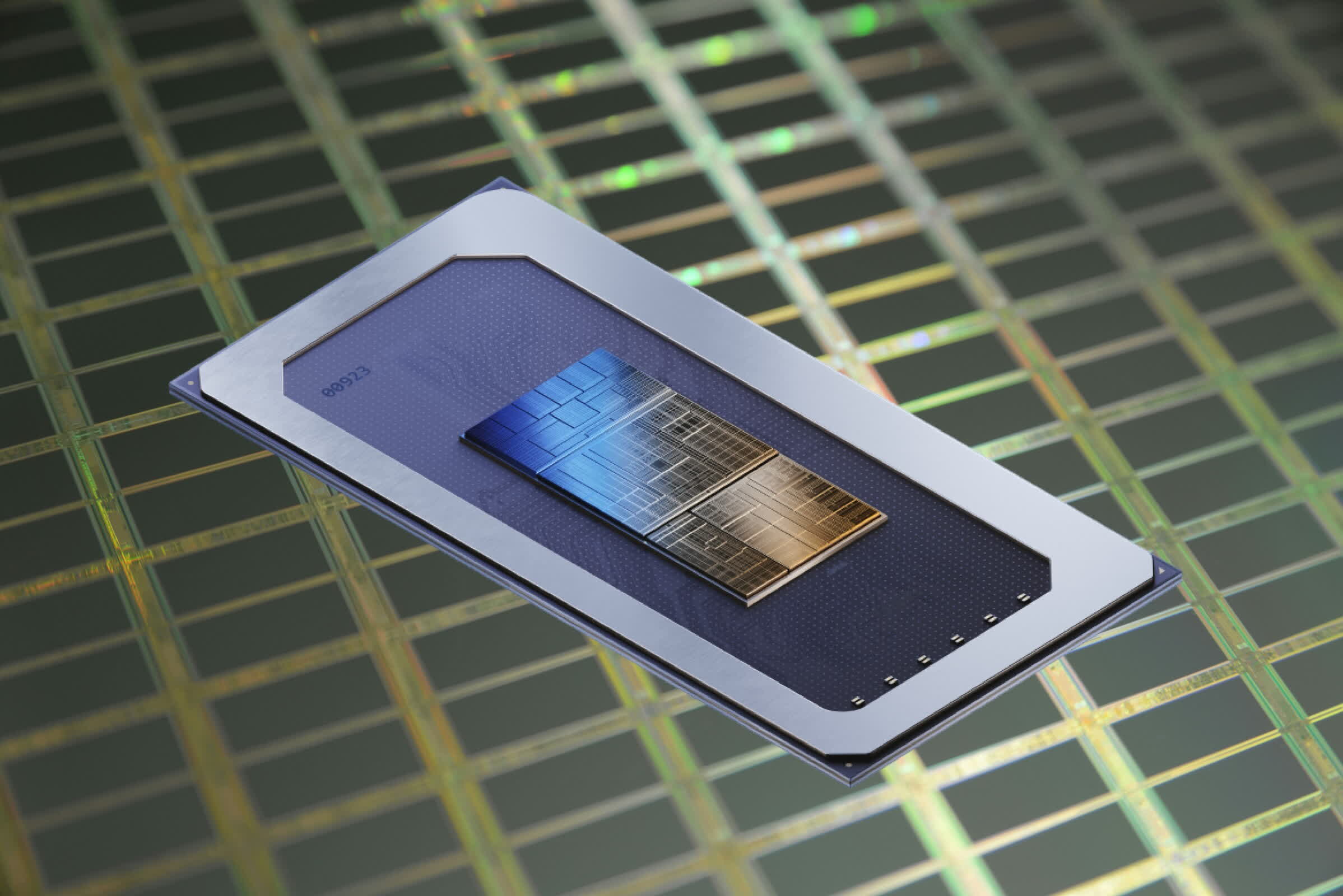
Arrow Lake's debut is shaping up to be one of the most disappointing chapters in Intel's business history. The new Core Ultra CPUs have been heavily criticized for forcing customers into a significant performance downgrade compared to both AMD's latest offerings and Intel's previous processor generations.

Intel, often referred to as "Chipzilla," has identified five distinct issues affecting the new CPU line, claiming that a microcode update would introduce further optimizations via updated firmware and platform releases.

Motherboard manufacturers have already begun rolling out new firmware based on Intel's MC version 0x114. However, the initial benchmarks are shocking, even by recent Intel standards. According to a recent post on X by CapFrameX, Arrow Lake's so-called "performance" patches are causing severe performance drops in gaming applications.

Compared to MC 0x113, the 0x114 update causes a significant performance drop in Cyberpunk 2077, reducing frame rates by approximately 20 percent. Additionally, the new firmware increases memory latency, as reported by CapFrameX, rising from around 69ns to 80ns.

Intel promised MC 0x114 would deliver a modest performance improvement. The company also plans to fully disclose the issues plaguing Arrow Lake during CES 2025, providing a detailed explanation of what went wrong with these CPUs. If CapFrameX's benchmarks are corroborated by further analyses, the upcoming CES presentation could spark a pivotal discussion within the PC chip industry.

CapFrameX has faced accusations of bias against AMD in the past, often being perceived as more lenient when evaluating Intel and Nvidia hardware. The organization provides a frame capture and analysis tool built on Intel's PresentMon, complemented by an overlay component derived from Rivatuner Statistics Server, which is also used by MSI Afterburner.

Intel has attributed Arrow Lake's subpar real-world performance to discrepancies between testing environments. According to the company, reviewers lacked critical software components, such as the Performance & Power Management (PPM) package. This package is essential for fine-tuning the processor's interaction with the operating system. Without the PPM package, Intel explained, the Application Performance Optimizer feature was unable to deliver its intended thread scheduling optimizations for gaming scenarios.

Permalink to story:

 
Love the title: WTF lololol

Intel has simply been pushing the thermal envelope for their CPU's too far while trying to compete with AMD. The first of any gen CPU is best skipped for your own sanity. I fought the demon for decades, history has a way of repeating itself. I'm still using a Gen 10 i9-10850 and it's perfect as it is, an extremely stable and well refined CPU platform. Why risk it trying to keep up with the Jones?
 
So far, the testing results are not very consistent. If we look at the testing performed at TechPowerUp, they did see some improvements, but also regressions. The conclusion at TPU was that there is basically little change when it comes to gaming. In this case, it sounds like it is an overall regression. So best to wait for more reviews to be conclude if it is worst off. But 1 thing is consistent, and that is gamers should look elsewhere.
 
Love the title: WTF lololol

Intel has simply been pushing the thermal envelope for their CPU's too far while trying to compete with AMD. The first of any gen CPU is best skipped for your own sanity. I fought the demon for decades, history has a way of repeating itself. I'm still using a Gen 10 i9-10850 and it's perfect as it is, an extremely stable and well refined CPU platform. Why risk it trying to keep up with the Jones?
As the owner of 13th gen i7 I do not recommend 13 and 14 too.
There are too many defective or those that will become defective cpus as many people reported.
I never had so many blue screens as I did for 2 years after buying 13700k
 
I went from a 9900KS to a 5800X3D to a 9800X3D and owned only Intel processors before those. I was a little surprised at how seamless the transition to AMD was. My AMD systems have actually been overall slightly more reliable and less troublesome than my past few Intel ones.

I love that AMD is doing well but do hope Intel catches up to keep the space competitive. It's not great that it's just a no-brainer right now for gaming PC builders.
 
As the owner of 13th gen i7 I do not recommend 13 and 14 too.
There are too many defective or those that will become defective cpus as many people reported.
I never had so many blue screens as I did for 2 years after buying 13700k
I had the opposite happen when I went from a 7700K to a 7700X. AM5 was a BIOS nightmare that caused a year of crashes before I finally found a BIOS that ran mostly stable. It's clear that AMD didn't properly test AM5.

Same thing with GPUs - tried AMD this generation and sold it for a Nvidia card. The features just weren't there, and multiple new games would crash before a driver update or two.
 
A bad joke that everyone saw coming. My last Intel purchase was the i8700k. Everything's AMD now, laptops, gaming builds, family's PCs... Intel can't be trusted, they just keep lying about how incompetent they are these days.

If you start launching your project by simultaneously launching an investigation why it's so bad, that's like the pinnacle of hypocrisy and an enormous red flag to avoid this product line. You know they'll never be able to fix that.
 
Last edited:
I had the opposite happen when I went from a 7700K to a 7700X. AM5 was a BIOS nightmare that caused a year of crashes before I finally found a BIOS that ran mostly stable. It's clear that AMD didn't properly test AM5.

Same thing with GPUs - tried AMD this generation and sold it for a Nvidia card. The features just weren't there, and multiple new games would crash before a driver update or two.

Had the same experience with AM5 from October '22 to March '23; after ~5 years of enjoyment with AM4. I had 4 different motherboards over ~5 months; ASUS, Gigabyte and ASRock. Had a 7700X completely die that needed RMA, and a 7600X with a bad IMC which wouldn't run RAM outside of DDR5 4800; also RMA'd. (2) Gigabyte B650 boards that were defective; one with a bad SATA port, the other a bad front panel USB-C port.

BIOS revisions from Gigabyte were frequent but crap. After the 2nd Gigabyte board was returned to Microcenter I went with ASUS. It was better than Gigabyte, but that still meant plenty of headaches. The best of the bunch was ASRock B650E mini-ITX in my HTPC. It was mostly stable for basic functionality of web browsing and watching movies.

I finally threw in the towel March '23 and replaced both systems with LGA 1700. 13700K in my primary and 12600K in HTPC. The Intel fiasco was unknown back then, but fortunately I immediately undervolted and capped power limit on the i7 to 185W. This has been the most stable system since my 4770K/4790K setups which I ran until AM4 released. AM4 was solid overall, even from the very start, but I did have to RMA several CPUs; Ryzen 3000 & 5000.

Don't plan on upgrading platforms in either PC for several generations outside of critical failure. Just not worth it for higher resolution gaming, 3440*1440 / 4K, and what else I use my PCs for.

By time I got around to selling both AM5 setups, October 2023, AMD had sorted out the BIOS/microcode conundrum. Both systems ran great and are still functioning well AFAIK; never heard any complaints from the buyers.
 
AMD cpu’s are great - but the AM5 platform has its share of instability issues. Built a system with 9800X3D and Gskill Cl32 6400 mhz modules that was on the QVL list - but it ran like dung - frequent instant restarts, found out that they used to work, but asus had bungled a bios update. Swapped the modules with kingston cl36 6000mhz instead, good and stable now - but frustrating to experience
 
AMD cpu’s are great - but the AM5 platform has its share of instability issues. Built a system with 9800X3D and Gskill Cl32 6400 mhz modules that was on the QVL list - but it ran like dung - frequent instant restarts, found out that they used to work, but asus had bungled a bios update. Swapped the modules with kingston cl36 6000mhz instead, good and stable now - but frustrating to experience
Every professional like me knows that memory QVL lists are totally useless. No matter if module is on list, it may work or not work. So what's the point of that list? As long as memory type and module type matches motherboard, that's it.

Not uncommon that motherboard QVL list contains memory modules that have known stability issues with that memory.
 
Every professional like me knows that memory QVL lists are totally useless. No matter if module is on list, it may work or not work. So what's the point of that list? As long as memory type and module type matches motherboard, that's it.

Not uncommon that motherboard QVL list contains memory modules that have known stability issues with that memory.
Well - The specs were also compatible - And I specifically bought the ones with the EXPO profile, so should've worked just fine. Anyways, water under the bridge, got stable modules in my system now
 
Well - The specs were also compatible - And I specifically bought the ones with the EXPO profile, so should've worked just fine. Anyways, water under the bridge, got stable modules in my system now
Exactly, that's problem with QVL lists. If specs match, it should work. On QVL list or not. Therefore being QVL list means practically nothing. For me, I have Never looked QVL list before buying memory.
 
Back