Linus Torvalds calls Google engineer's RISC-V code "garbage" in Linux 6.17 dispute

Skye Jacobs

Posts: 1,973   +58
Staff
Big quote: Linus Torvalds, the founder and lead developer of the Linux kernel, firmly rejected a code contribution intended to enhance RISC-V architecture support in the upcoming Linux 6.17 release. The patch, submitted by a Google engineer, was dismissed during discussions on the project's mailing lists. The incident underscores Torvalds' uncompromising standards on both code quality and the timing of contributions to the open-source operating system.
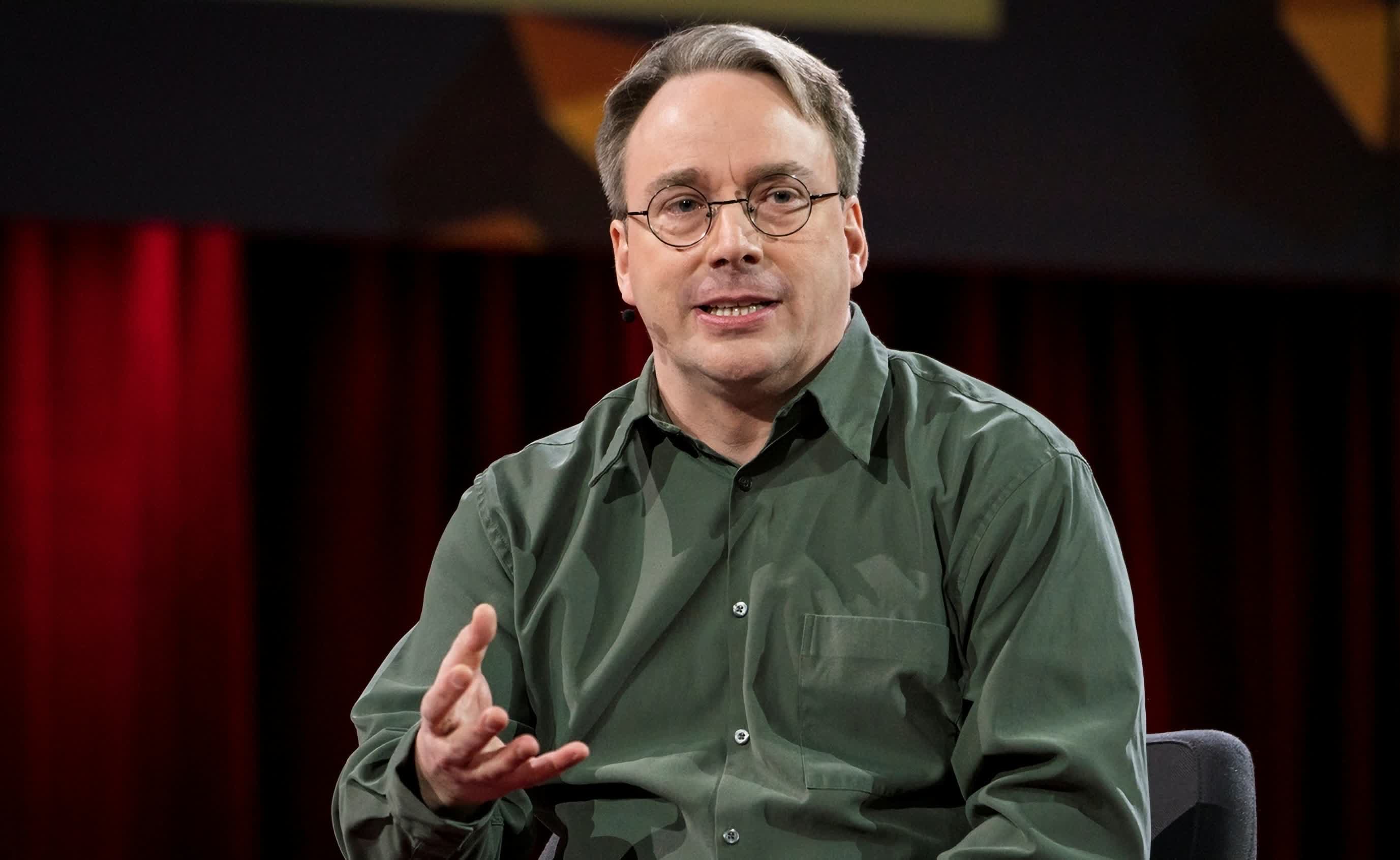
The submission, made late in the Linux 6.17 merge window, aimed to introduce new features for RISC-V. However, Torvalds decisively rejected the pull request, citing two main issues: insufficient technical merit and poor timing. He emphasized that the lateness of the request was particularly egregious given his prior notice that he would be traveling and therefore required early submissions from contributors.

In his response, Torvalds described the submission as "garbage" and took particular issue with certain aspects of the code. Notably, he criticized the inclusion of a helper function – make_u32_from_two_u16() – saying it made the codebase "actively a worse place to live."
Torvalds explained that the function's usage obscured data ordering and introduced unnecessary complexity into generic header files, extending its impact beyond RISC-V-specific code. Such practices, he argued, polluted core kernel files and undermined maintainability – a critical requirement for the Linux kernel.

Technical details further reinforced the rejection. The patch added code deemed non-essential for RISC-V development into generic Linux header files, a move Torvalds warned could increase the risk of errors in unrelated parts of the kernel.

He issued a clear directive: submissions should focus exclusively on architecture-specific changes unless there is a compelling reason for generic modifications. Even then, such changes must offer clear benefits and be submitted well ahead of deadlines.

Beyond the technical critique, Torvalds warned the developer and the wider contributor community that further late or low-quality submissions would not be tolerated. He encouraged the engineer to try again for kernel version 6.18, emphasizing that early, well-considered patches would have a better chance of acceptance. Although Torvalds' remarks were pointed, the recipient acknowledged the feedback and promised improvements in both punctuality and code quality.

The episode sparked mixed reactions online. Some defended Torvalds' candid approach as necessary to maintain the health of a sprawling, high-impact software project. Others questioned the tone of his comments, suggesting that constructive criticism might better serve the community than public rebuke. Still, Torvalds' blunt, direct leadership style remains central to the sustained rigor of Linux kernel development.

Permalink to story:

 
I mean, you've got to respect Linus. He tells it how it is. Sure, he's a little coarse and rude with his responses, but he's been the main lead for Linux since 1991. He's not just some amateur programmer; he's knows what he's doing. Whoever succeeds Linus, is going to need to bring the same kind of chutzpa. Amiable, pleasant people pleasers, afraid of confrontation and telling people when their work is sh*t, might be good for morale and a collaborative work environment, but they don't always produce a good product.

I feel like, if Microsoft had a lead developer or project lead like this, who is more concerned with "getting it right" than "release it now and fix it latter", Windows wouldn't have such a bad reputation for tech debt, unnecessary bloat and scope creep.
 
Regardless of what Torvalds has contributed, he is the prime example of why programmers are viewed as unable to deal with people well. Pretty clear this is a guy I'd never want to meet nor talk to.

I have to agree with this.
This year could be THE year of Linux taking over, but I do not see linux devs joining forces, forgetting their differences and working on a greater goal.
No, they keep as usual, in their own distro, or 100th fork of some application, that if they worked together could wipe the floor with anything from Microsoft or Apple.

Its pity really
 
I am firmly in the "With Torvalds" camp. One does not accept low quality code submissions for the core of the most popular and widely used OS on Earth. High standards and a high bar needs to be the order of the day, all day, every day. There is no room for less than the very best. Nor do I disagree with his tone. Rejections sting and rejections of very poor work need to sting more!
 
Regardless of what Torvalds has contributed, he is the prime example of why programmers are viewed as unable to deal with people well. Pretty clear this is a guy I'd never want to meet nor talk to.
He is a person I'd love to work with. Knowledgeable, direct, focused on the issue, actively working to get things done and being better for every team involved. He rightfully criticize where it is needed but always explains what is wrong so everyone can learn from that. There is no bs around that, so you get the naked truth, not just pretty words. I like it much more than some talks behind your back or some nice words and small suggestions.

I only hope his successor will have similar character traits. German ordung. Not some fancy pancy, otherwise we will start getting kernel with ads build in...
 
Regardless of what Torvalds has contributed, he is the prime example of why programmers are viewed as unable to deal with people well. Pretty clear this is a guy I'd never want to meet nor talk to.

Yeah he's well know for being a massive *sshole. A brilliant one that is the major driving force behind Linux, but an *sshole none the less. So I cut him a bit of slack and consider him the grumpy old elder of the Linux scene. My bigger problem was always with the wider Linux community that though his behaviour was acceptable and even copied it. Thankfully for the continued acceptance and growth of the platform that sort of thinking is dieing out.
 
Since he achieved more than 99.99% of humanity, I will give him a pass to be like that.

My concern is that regular people who obviously don't have even 10% of his skillset, like the average reader on this site, could be inspired to behave like that.
 
Knowing Linus both cratiques of his handling was probably correct. He was fundamentally correct and a total **** about it.
 
Steve Jobs is still worshipped like an Übermensch, and he was orders of magnitude more, shall we say, 'blunt' with people.

If you have standards, and you are presented with junk, politely saying "oh gosh, this isn't really up to snuff, a good effort, really, and we do appreciate that, please come back with it a bit later and we'll give it another go, dear friend" will only result in more inept junk.

We know the damage that handing out participation trophies did to a generation. Serious people can take serious criticism, blunt or not. Unserious people whine then run to HR.

Grow. Up.
 
Since he achieved more than 99.99% of humanity, I will give him a pass to be like that.

My concern is that regular people who obviously don't have even 10% of his skillset, like the average reader on this site, could be inspired to behave like that.

Behave like what? He reviewed the code, it was deeply insufficient, and sent it back. Coddling substandard efforts doesn't work.
 
I will never know if he is correct but he is an inventor. As inventors get older there acumen or song writing ability falters .
 
If you get pass his particular use of words, his feedback to the pull request is quite valuable and makes a lot of sense. Without time on his side, he could just simply say "no thanks" and keep going on with his own business, but he did review the request and gave detailed feedback. This shows he cares deeply about technical details and wants to prevent further similar mistakes, which will otherwise cause much nastier situations than his uncomfortable use of words.
 
LT's always been to-the-point regarding code quality, so it shouldn't come as any surprise he's not willing to compromise or coddle.
 
Linux org is going to fall apart when Torvalds finally leaves, there's not going to be anyone who can say it like it is without fear of repercussions.
 
Regardless of what Torvalds has contributed, he is the prime example of why programmers are viewed as unable to deal with people well. Pretty clear this is a guy I'd never want to meet nor talk to.
And why would he want to meet you? If you are unable to look past his demeanour especially considering the extremely high importance of doing his job well and the lack of respect that poor submissions constitute, sounds like you aren't up to the job anyway.

I don't agree with everything he says - he ideologically has held Linux back in ways but his ideology is also why Linux is where it is today.
 
Quite a few people avoid Linux because of Torvald's abrasive personality. (Oops I got ninja'd).
I was actually one of these until I recently decided to install Linux on my laptop because of Microsoft's current shenanigans.
I've wondered somewhat amused if Torvalds is aware of this or possibly even enjoys it.
 
Since he achieved more than 99.99% of humanity, I will give him a pass to be like that.

More than 99.99% of humanity?

Erm, no.

He was just one of the early people working on a monolithic kernel to go with the much larger GNU OS. There were a numbers of others, like AT&T's UNIX, Berkeley's BSD, the FSF's Hurd kernel and Minix - the latter which Linus borrowed a lot of ideas from.

The kernel that he eventually ended up releasing simply became the most popular and accessible (as opposed to the most technically impressive or elegant), in a relatively small crowd of alternatives.

In short, he was early, not brilliant.

The fact that *his* name is now permanently associated with the much wider and more impressive GNU project, is a travesty. Anyone with a shred of decency would have given the kernel a more neutral name, helping to emphasise the collaborative nature of the GNU OS and the (much more major) contributions of other people, before him.

But no, Linus had to name it Linux, which absolutely speaks volumes about his character and the manner in which he has controlled the Kernel's development in the last several decades has done nothing but reinforce that.
 
I mean, you've got to respect Linus. He tells it how it is. Sure, he's a little coarse and rude with his responses, but he's been the main lead for Linux since 1991. He's not just some amateur programmer; he's knows what he's doing. Whoever succeeds Linus, is going to need to bring the same kind of chutzpa. Amiable, pleasant people pleasers, afraid of confrontation and telling people when their work is sh*t, might be good for morale and a collaborative work environment, but they don't always produce a good product.

I feel like, if Microsoft had a lead developer or project lead like this, who is more concerned with "getting it right" than "release it now and fix it latter", Windows wouldn't have such a bad reputation for tech debt, unnecessary bloat and scope creep.

Microsoft had leadership like Linus, Bill Gates and Steve Balmer. Both notorious for their bluntness and lack of lack of people skills, yet Windows still had bloat. Now Microsoft is fighting to keep Windows 11 visible with gimmicks and toys, to lure users away from Windows 10. I wouldn't mind the frequent releases if they offered substantial benefit and function, instead of lots of fluff.

I have tried Linux multiple times and it is not all that!
 
Last edited:
More than 99.99% of humanity?

Erm, no.

He was just one of the early people working on a monolithic kernel to go with the much larger GNU OS. There were a numbers of others, like AT&T's UNIX, Berkeley's BSD, the FSF's Hurd kernel and Minix - the latter which Linus borrowed a lot of ideas from.

The kernel that he eventually ended up releasing simply became the most popular and accessible (as opposed to the most technically impressive or elegant), in a relatively small crowd of alternatives.

In short, he was early, not brilliant.

The fact that *his* name is now permanently associated with the much wider and more impressive GNU project, is a travesty. Anyone with a shred of decency would have given the kernel a more neutral name, helping to emphasise the collaborative nature of the GNU OS and the (much more major) contributions of other people, before him.

But no, Linus had to name it Linux, which absolutely speaks volumes about his character and the manner in which he has controlled the Kernel's development in the last several decades has done nothing but reinforce that.
Oh!, looks like someone's been skimming Wikipedia, lol.
 
Back