Ripple effect: Linus Torvalds, the creator of Linux and Git, has quietly joined the ranks of developers using generative AI to write code – though only as part of a small personal project. His recent experiment with vibe coding shows how even the most traditional programmers are beginning to incorporate AI tools into their workflows, at least for low-stakes development.
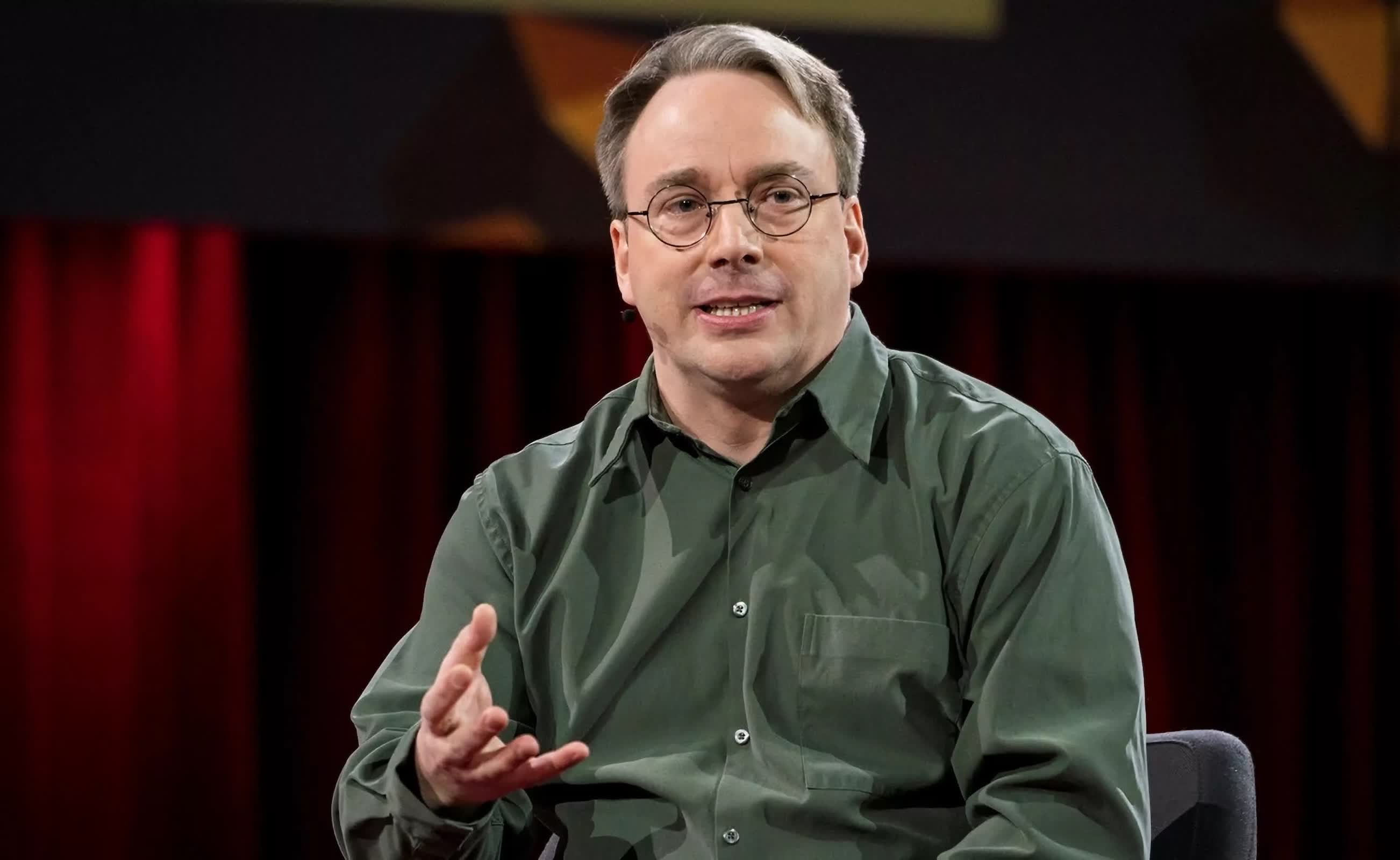
The project, called AudioNoise, appeared on Torvalds' GitHub earlier this month. Written primarily in C, the program explores digital audio effects and signal processing. It grew out of a hardware experiment he conducted last year called GuitarPedal, a series of homemade guitar effects pedals he built to learn more about analog circuits. Torvalds has since given the devices away as gifts to kernel developers and even to Bill Gates.
For AudioNoise, Torvalds used Google's Antigravity AI, a coding assistant built to generate and refine programs via natural-language input. In this case, the tool generated a Python-based audio sample visualizer that complements Torvalds' C routines.
In the project documentation, Torvalds wrote that "the Python visualizer tool has been basically written by vibe-coding," adding, "I cut out the middleman – me – and just used Google Antigravity to do the audio sample visualizer."
His comments suggest he was satisfied with the results and felt no need to manually rewrite the AI-generated code. He also noted that when working in unfamiliar languages, he often relies on online resources or code snippets, a habit most programmers can relate to.
While vibe coding has been mocked online, it has gained traction as AI tools like Copilot, ChatGPT, and Claude AI replace traditional platforms such as Stack Overflow for quick code assistance. That Torvalds – long known for his skepticism toward hype-driven technologies – would take up vibe coding at all has surprised many in the open-source community.
The experiment also reminds us how AI is steadily permeating the Linux ecosystem itself. Developers are beginning to use AI models for tasks like debugging, patch triage, and code maintenance, work that was once handled entirely by human contributors.
Torvalds has continued to warn against the marketing excess surrounding artificial intelligence, stating, "I hate the whole subject of AI, not because I hate AI, but because it's being such a hype word." Yet, he has also emphasized that he is "a huge believer in AI as a tool."
Torvalds' use of Antigravity for AudioNoise is less about automation and more about creative exploration. By applying AI to a project far removed from the Linux kernel, he frames the technology as an extension of craft rather than a challenge to it.
For developers still questioning whether AI-assisted code generation has a place in real programming, Torvalds' hobbyist approach may mark a subtle turning point, one where even the most committed traditionalists are willing to let the algorithms jam along.


