Antimonopoly investigation, for RAM makers as well.
You are using an out of date browser. It may not display this or other websites correctly.
You should upgrade or use an alternative browser.
Nvidia deliberately kept GPU prices high through circular financing deals, report claims
- Thread starter Daniel Sims
- Start date


pnntmp
Posts: 1,073 +1,630
I have literally never seen a company profit by buying its own products. Of course, you haven't seen that either, but were fooled. Having a 4K imagination is good, as long as you don't conflate it with reality.It's in your face, smacking you with a baseball bat that has nails in it, and you keep yapping like it didn't happen.
View attachment 91075
This is pure fanatical cultist behavior. You literally saw it happen in 4K from 100 different angles. Maybe you think this whole thing is just something fake made by AI? Or something crazy like that?
What's even funnier is that you talk as if you are an economist, but you ignore what every economist is saying about what Nvidia has been doing and why they are doing it. FYI unlike you I actually studied economy (from macro down to company level) in college alongside statistics and programing.
"profiting by buying your own products, is equally impossible" - it's very possible because they are jacking up the prices and creating fake demand. And the profits aren't just from the sales of the hardware, it's the highly lucrative debt interest and renting of cloud compute. At the same time Nvidia is literally locking out the competition.
There is a name for all of this besides circular financing (or round-tripping) and its called: financially engineered demand
Do you truly believe this to be just "fake news"? That poor little Jensen is attacked by jealous haters? Pffff hahaahaahaahaahaaha
In order to return to reality, why don't you try it?
Invest $100 to make some gadget, then buy it from yourself. That is, sell it to yourself with a profit. Then reinvest the profit to make another one, sell it to yourself again ... keep doing that until you become a billionaire.
It should be super easy - you don't have to bother with marketing, research, production quality, complaints, customer requirements, competition ... none of that. It's just you, and you.
Come back here to report how it goes.

LimyG
Posts: 667 +287
The above is worth watching. I am not going to express any opinion on it, people will form their own, but the things claimed here are actually backed up by the reporters.
Pretty good investigative jouranalism for a "Gaming site."
It's kind of funny in parts too.
Edit: It directly applies to the title of this thread/article.
I've owned AMD GPUs for a decade and they've always been more than enough. I currently have an RX7900XT. It's great. Sure, NVidia has faster GPUs, but they are also more expensive, and even if they were the same price, I still wouldn't buy them. My ethics are more important than a few frames per second. Shame on you that yours aren't.Remind me when AMD makes an actual, competitive top class GPU that doesn't have 19 asterisks attached. EG: the 6900xt is as fast as the 3090ti *in call of duty *at 1080p *with RT disabled *without path tracing ece ece ece.
The last time AMD was both perfoance and feature competitive was the 290x vs the 780ti which was *checks notes* 2014, over 12 years ago. Everything since has either had major caveats or flat out didn't exist *cough* 9080xt *cough*.

Reading these comments is almost as entertaining as the article itself.
We've somehow managed to turn a legitimate discussion about corporate financing, GPU pricing, and questionable demand creation into a shouting match about Trump, Democrats, Ponzi schemes, and the impending collapse of civilization. Impressive, even by internet standards.
Here's a little reality.
Supply and demand are real. So is the ability of a dominant company to influence both. Financing your own customers can stimulate purchases, but that doesn't automatically make it fraud. It makes the financial independence of those purchases an extremely important question.
And calling every questionable business arrangement a Ponzi scheme doesn't make you a financial analyst. It just means you've learned a new term and are determined to get your money's worth out of it.
Nvidia deserves scrutiny. If its financing helped artificially sustain demand or distorted financial reporting, investigate it, disclose the facts, and hold the responsible parties accountable.
But an overpriced GPU isn't proof of a criminal conspiracy, and an AI investment bubble wouldn't magically make AI technology disappear.
Some companies will fail. Some investments will be written down. Hardware prices may eventually correct. And the underlying technology will keep advancing, because technological progress doesn't require every investor to make a profit.
You can criticize Nvidia without pretending economics is fictional, and you can recognize the value of AI without worshipping Jensen Huang.
Imagine that. Two thoughts existing in the same brain without either one catching fire.
I got some popcorn, please continue!
For those interested in seeing what is really happening, here is a good take.
It's not proof by any means, but does explain a lot currently developing.
Last edited:

Puiu
Posts: 7,788 +7,492
You write the same thing as if you are copy-pasting it from a corporate spreadsheet. You have it all in your face slapping you on both checks with it's "floppy disk"... and you still yapp like those pretenders on fox news.I have literally never seen a company profit by buying its own products. Of course, you haven't seen that either, but were fooled. Having a 4K imagination is good, as long as you don't conflate it with reality.
In order to return to reality, why don't you try it?
Invest $100 to make some gadget, then buy it from yourself. That is, sell it to yourself with a profit. Then reinvest the profit to make another one, sell it to yourself again ... keep doing that until you become a billionaire.
It should be super easy - you don't have to bother with marketing, research, production quality, complaints, customer requirements, competition ... none of that. It's just you, and you.
Come back here to report how it goes.
"Invest $100 to make some gadget, then buy it from yourself." - this exactly why people are making fun of you. these are 5yo "arguments" that have nothing to do with what's happening. You clearly don't know how and why Nvidia is doing this even though it's been explained to death in thousands of articles online and hundreds of videos (including videos shared here). but hey.. you probably consider everything to be "fake news"

Please tell us more about how there's nothing to see here and how everything is fine.

pnntmp
Posts: 1,073 +1,630
How to profit by selling to yourself is not explained (at least in a way that works) in any article or video.You write the same thing as if you are copy-pasting it from a corporate spreadsheet. You have it all in your face slapping you on both checks with it's "floppy disk"... and you still yapp like those pretenders on fox news.
"Invest $100 to make some gadget, then buy it from yourself." - this exactly why people are making fun of you. these are 5yo "arguments" that have nothing to do with what's happening. You clearly don't know how and why Nvidia is doing this even though it's been explained to death in thousands of articles online and hundreds of videos (including videos shared here). but hey.. you probably consider everything to be "fake news"
Please tell us more about how there's nothing to see here and how everything is fine.
View attachment 91077
If there were a way to do that, everyone would be doing it, right? But nobody is doing it - except, according to you, Nvidia.
Looks like only you, and probably Jensen Huang, know the secret of making billions by selling to yourself.
Please spill the secret. Let us make a billion or two.
@pnntmp. @Puiu
I've been following this exchange, and I think you're both arguing past each other.
Puiu, I understand what you're trying to explain, but you're burying a legitimate financial argument under insults and accusations that go well beyond the evidence. Completely unnecessary.
Nvidia isn't literally buying GPUs from itself and magically creating profits. It's providing investments, financing support, and purchase commitments to companies that buy its hardware. That can stimulate demand, support sales volumes, and potentially influence pricing.
That's the circular financing concern, and it's a legitimate subject for scrutiny.
pnntmp, you're correct that a company cannot create sustainable economic value simply by selling products to itself. But that's not really what's being alleged here or what he is trying to say.
The issue is whether financially supporting customers creates demand that might not otherwise exist at the same level, and whether that demand can survive without continued financial assistance.
Supply and demand determine market prices, but neither exists in a vacuum. Companies can influence supply, financing, purchasing power, and market expectations. An equilibrium price doesn't automatically mean the underlying demand is economically sustainable.
Puiu, there's a substantial difference between demonstrating circular financing and proving fraud, price fixing, illegal smuggling, or fabricated revenue. Those conclusions require evidence, not repeated declarations that everyone refusing to agree is a cultist.
Here's the big question...
How much of Nvidia's current demand would remain if its customers had to finance their GPU purchases entirely independently, without Nvidia's investments, guarantees, or capacity commitments?
That's the economic question worth investigating.
If you are truly interested and need further explanation, read for your self.
Nvidia SEC Filing
Reuters
Puiu
Posts: 7,788 +7,492
Thank you for explaining the smaller details, you are completely correct. I agree with all that you said.@pnntmp. @Puiu
I've been following this exchange, and I think you're both arguing past each other.
Puiu, I understand what you're trying to explain, but you're burying a legitimate financial argument under insults and accusations that go well beyond the evidence. Completely unnecessary.
Nvidia isn't literally buying GPUs from itself and magically creating profits. It's providing investments, financing support, and purchase commitments to companies that buy its hardware. That can stimulate demand, support sales volumes, and potentially influence pricing.
That's the circular financing concern, and it's a legitimate subject for scrutiny.
pnntmp, you're correct that a company cannot create sustainable economic value simply by selling products to itself. But that's not really what's being alleged here or what he is trying to say.
The issue is whether financially supporting customers creates demand that might not otherwise exist at the same level, and whether that demand can survive without continued financial assistance.
Supply and demand determine market prices, but neither exists in a vacuum. Companies can influence supply, financing, purchasing power, and market expectations. An equilibrium price doesn't automatically mean the underlying demand is economically sustainable.
Puiu, there's a substantial difference between demonstrating circular financing and proving fraud, price fixing, illegal smuggling, or fabricated revenue. Those conclusions require evidence, not repeated declarations that everyone refusing to agree is a cultist.
Here's the big question...
How much of Nvidia's current demand would remain if its customers had to finance their GPU purchases entirely independently, without Nvidia's investments, guarantees, or capacity commitments?
That's the economic question worth investigating.
If you are truly interested and need further explanation, read for your self.
Nvidia SEC Filing
Reuters
But I'm not going to be the "nice guy" to somebody who is telling me that there's nothing wrong and that we are all wrong on all of this.
I'm not beyond reason, I just stopped caring about pleasantries after somebody kept was yelling to me here, in multiple comment threads, that Hitler was an extreme leftist just to defend trump
If facts and common sense don't work anymore...

Reading these comments is almost as entertaining as the article itself.
We've somehow managed to turn a legitimate discussion about corporate financing, GPU pricing, and questionable demand creation into a shouting match about Trump, Democrats, Ponzi schemes, and the impending collapse of civilization. Impressive, even by internet standards.
Here's a little reality.
Supply and demand are real. So is the ability of a dominant company to influence both. Financing your own customers can stimulate purchases, but that doesn't automatically make it fraud. It makes the financial independence of those purchases an extremely important question.
And calling every questionable business arrangement a Ponzi scheme doesn't make you a financial analyst. It just means you've learned a new term and are determined to get your money's worth out of it.
Nvidia deserves scrutiny. If its financing helped artificially sustain demand or distorted financial reporting, investigate it, disclose the facts, and hold the responsible parties accountable.
But an overpriced GPU isn't proof of a criminal conspiracy, and an AI investment bubble wouldn't magically make AI technology disappear.
Some companies will fail. Some investments will be written down. Hardware prices may eventually correct. And the underlying technology will keep advancing, because technological progress doesn't require every investor to make a profit.
You can criticize Nvidia without pretending economics is fictional, and you can recognize the value of AI without worshipping Jensen Huang.
Imagine that. Two thoughts existing in the same brain without either one catching fire.
I got some popcorn, please continue!
For those interested in seeing what is really happening, here is a good take.
It's not proof by any means, but does explain a lot currently developing.
A reasonable post in the comment section on Techspot; who would've thought?
All this B$ about banning a country. From 2008~2011 I was a country manager in a Gulf country known for being an export hub for the region, for one of Taiwan's biggest MB/VGA/Monitor brands in the world, the name starts with A.
At that time even with all the embargoes on Iran, it was our biggest market. Monthly we used to ship around 50k~70k MBs along with 70k VGAs and containers of monitors, SFF PCs etc. Basically all of them had their Distribution offices based in local country and a sister company with same management in their respective countries. They would order via the local office and then ship goods by sea to their countries.
Syria and Lebanon was also our market and they were buying containers from us before the US created ISIS was used to destroy both the countries later.
Nvidia/intel/ AMD bosses used to visit the biggest IT exhibition of the region in Oct every year and meet our distributors from these regions. Everyone knew who they were and all were friends with the OEMs. Our Taiwanese bosses even visited iran conducting seminars and hosting events there. We ran marketing activities for them.
Edit: adding some more:
I used to meet with AMD/Nvidia regional heads along with Iranian and syrian business owners openly and providing them with support.
So all this sanctions/embargoes are just whitewash by US and other nations and all they care about is the bottom dollar.
pnntmp
Posts: 1,073 +1,630
I mostly agree to this, with the following remark:@pnntmp. @Puiu
I've been following this exchange, and I think you're both arguing past each other.
Puiu, I understand what you're trying to explain, but you're burying a legitimate financial argument under insults and accusations that go well beyond the evidence. Completely unnecessary.
Nvidia isn't literally buying GPUs from itself and magically creating profits. It's providing investments, financing support, and purchase commitments to companies that buy its hardware. That can stimulate demand, support sales volumes, and potentially influence pricing.
That's the circular financing concern, and it's a legitimate subject for scrutiny.
pnntmp, you're correct that a company cannot create sustainable economic value simply by selling products to itself. But that's not really what's being alleged here or what he is trying to say.
The issue is whether financially supporting customers creates demand that might not otherwise exist at the same level, and whether that demand can survive without continued financial assistance.
Supply and demand determine market prices, but neither exists in a vacuum. Companies can influence supply, financing, purchasing power, and market expectations. An equilibrium price doesn't automatically mean the underlying demand is economically sustainable.
Puiu, there's a substantial difference between demonstrating circular financing and proving fraud, price fixing, illegal smuggling, or fabricated revenue. Those conclusions require evidence, not repeated declarations that everyone refusing to agree is a cultist.
Here's the big question...
How much of Nvidia's current demand would remain if its customers had to finance their GPU purchases entirely independently, without Nvidia's investments, guarantees, or capacity commitments?
That's the economic question worth investigating.
If you are truly interested and need further explanation, read for your self.
Nvidia SEC Filing
Reuters
The "circular financing" narrative implies some sort of a fraud. There's nothing to support this.
Nvidia is reeking in free cash. The most normal thing to do with piles of free cash is to invest it. They can't reinvest all of it in increasing the production capacity, so it goes elsewhere - in what they think makes most sense. Which is AI companies, datacenters etc.
Nvidia output is sold for 2 years ahead. They'll sell their chips without investing in companies that use their products - if not them, someone else will finance it.
I understand the frustration, Puiu, and I've read enough comments here to understand how frustrating these discussions can become.Thank you for explaining the smaller details, you are completely correct. I agree with all that you said.
But I'm not going to be the "nice guy" to somebody who is telling me that there's nothing wrong and that we are all wrong on all of this.
I'm not beyond reason, I just stopped caring about pleasantries after somebody kept was yelling to me here, in multiple comment threads, that Hitler was an extreme leftist just to defend trump
If facts and common sense don't work anymore...
But here's how I look at it...someone disagreeing with us doesn't necessarily mean they're ignoring reality. Sometimes they're looking at the same information from a completely different perspective.
And, I think that's exactly what happened between you and pnntmp. You were questioning the financial sustainability of Nvidia's demand, while he was defending the basic economics of supply and demand. Both are legitimate discussions.
As for the political arguments, that's an entirely different rabbit hole I don't go down.
I prefer to let the facts do the heavy lifting. If somebody disagrees, that's fine. Give me a sound argument and some evidence, and I'll gladly reconsider my position.
That's how we learn something instead of spending 20 comments trying to win an argument.
Besides, life is too short to let a TechSpot comment section raise your blood pressure.
I agree with most of this. Nvidia has tremendous cash flow, and reinvesting it in businesses that complement its products makes perfect economic sense. There's nothing inherently fraudulent about that, and I haven't suggested otherwise.I mostly agree to this, with the following remark:
The "circular financing" narrative implies some sort of a fraud. There's nothing to support this.
Nvidia is reeking in free cash. The most normal thing to do with piles of free cash is to invest it. They can't reinvest all of it in increasing the production capacity, so it goes elsewhere - in what they think makes most sense. Which is AI companies, datacenters etc.
Nvidia output is sold for 2 years ahead. They'll sell their chips without investing in companies that use their products - if not them, someone else will finance it.
Where I disagree is your assumption that because Nvidia's production is booked two years ahead, all that demand would exist independently of Nvidia's financial involvement.
Nvidia's own SEC filings acknowledge that some customers face capital constraints and that its financing arrangements, guarantees, and cloud capacity commitments help those customers deploy additional infrastructure.
That doesn't make the demand fake...but it does raise a legitimate question about how much of it depends on continued financial support.
And there's another distinction worth considering...having production booked doesn't necessarily establish that every customer can ultimately finance, deploy, and profitably operate that equipment.
You may be absolutely correct that other investors would step in if Nvidia stopped providing support. But that's a prediction.
I don't see this as evidence of fraud. I see it as a question of financial exposure and the sustainability of demand, which Nvidia itself identifies as potential risks in its SEC filings. They are quite interesting.
Puiu
Posts: 7,788 +7,492
"The "circular financing" narrative implies some sort of a fraud." - Which everybody agrees that it happened. But with the current administration nothing will happen to them. Trump got too much $$$ from Jensen. At best the new 2027 congress will call people to testify, until then I expect absolutely nothing from the most corrupt president the US has ever seen.I mostly agree to this, with the following remark:
The "circular financing" narrative implies some sort of a fraud. There's nothing to support this.
Nvidia is reeking in free cash. The most normal thing to do with piles of free cash is to invest it. They can't reinvest all of it in increasing the production capacity, so it goes elsewhere - in what they think makes most sense. Which is AI companies, datacenters etc.
Nvidia output is sold for 2 years ahead. They'll sell their chips without investing in companies that use their products - if not them, someone else will finance it.
"Nvidia output is sold for 2 years ahead" - based on what misinformation? we already know that they had too much stock and this is exactly why they resorted to these illegal tactics like smuggling to circumvent the US restrictions.
According to the data tracked by semianalysis, there could be millions of AI chips which were sent to china this way. Nvidia literally had to stop reporting the Singapore revenue because of how bad it looked last time (a city state with 22% of their global revenue). Singapore being a known entry way into China.
Are you going to tell us that this is also fake news?

Instead Of Lowering GPU Prices, Former NVIDIA CEO Jensen Huang Reportedly Financed AI Startups To Absorb Excess Silicon, Shattering The Shortage Perception
New details reveal that former NVIDIA CEO Jensen Huang used circular financing to fund AI startups and absorb excess TSMC wafers and memory rather than letting GPU prices drop
 wccftech.com
Congrats on defending criminals. I would expect nothing less from you.
Puiu
Posts: 7,788 +7,492
I truly believe he's ignoring reality. And his comments clearly show that. We don't need to be pandering to him when he has a weird agenda here.I understand the frustration, Puiu, and I've read enough comments here to understand how frustrating these discussions can become.
But here's how I look at it...someone disagreeing with us doesn't necessarily mean they're ignoring reality. Sometimes they're looking at the same information from a completely different perspective.
And, I think that's exactly what happened between you and pnntmp. You were questioning the financial sustainability of Nvidia's demand, while he was defending the basic economics of supply and demand. Both are legitimate discussions.
As for the political arguments, that's an entirely different rabbit hole I don't go down.
I prefer to let the facts do the heavy lifting. If somebody disagrees, that's fine. Give me a sound argument and some evidence, and I'll gladly reconsider my position.
That's how we learn something instead of spending 20 comments trying to win an argument.
Besides, life is too short to let a TechSpot comment section raise your blood pressure.
I agree with most of this. Nvidia has tremendous cash flow, and reinvesting it in businesses that complement its products makes perfect economic sense. There's nothing inherently fraudulent about that, and I haven't suggested otherwise.
Where I disagree is your assumption that because Nvidia's production is booked two years ahead, all that demand would exist independently of Nvidia's financial involvement.
Nvidia's own SEC filings acknowledge that some customers face capital constraints and that its financing arrangements, guarantees, and cloud capacity commitments help those customers deploy additional infrastructure.
That doesn't make the demand fake...but it does raise a legitimate question about how much of it depends on continued financial support.
And there's another distinction worth considering...having production booked doesn't necessarily establish that every customer can ultimately finance, deploy, and profitably operate that equipment.
You may be absolutely correct that other investors would step in if Nvidia stopped providing support. But that's a prediction.
I don't see this as evidence of fraud. I see it as a question of financial exposure and the sustainability of demand, which Nvidia itself identifies as potential risks in its SEC filings. They are quite interesting.
The question isn't anymore if they did it, it's if they'll get away with it. We know that smuggling happened, we know that demand was manufactured and we know that Nvidia tried to hide the revenue breadcrumbs. We are getting pretty much daily new reports on these things, well documented reports at that, not just some weird random news articles.
This should be a good read for you (it's much close to your point of view than mine, they are playing it very safe with what they say and how they are wording things):
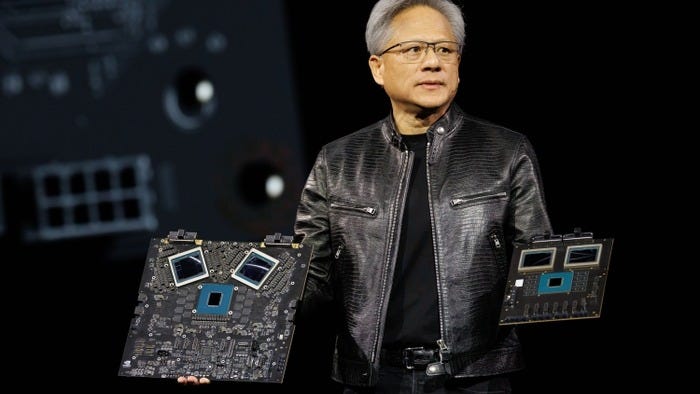
Nvidia and the World Without Jensen
Is NVIDIA Over? Export Controls, RASA, Open Source Implications, Supply Chain Implications, Affair, US Still Dependent On China
 newsletter.semianalysis.com
Last edited:
Puiu, now this is the kind of conversation I appreciate. I read the SemiAnalysis article, read the same thing elsewhere over the weekend and I'll give you credit...it's substantial, detailed reporting that raises some very serious questions.I truly believe he's ignoring reality. And his comments clearly show that. We don't need to be pandering to him when he has a weird agenda here.
The question isn't anymore if they did it, it's if they'll get away with it. We know that smuggling happened, we know that demand was manufactured and we know that Nvidia tried to hide the revenue breadcrumbs. We are getting pretty much daily new reports on these things, well documented reports at that, not just some weird random news articles.
This should be a good read for you (it's much close to your point of view than mine, they are playing it very safe with what they say and how they are wording things):
Nvidia and the World Without Jensen
Is NVIDIA Over? Export Controls, RASA, Open Source Implications, Supply Chain Implications, Affair, US Still Dependent On China
The smuggling cases are particularly troubling, especially the indictment involving a Nvidia manager in Taiwan. That's considerably more concrete than simply speculating about where GPUs might have ended up.
And the financial arrangements supporting neocloud customers deserve scrutiny. Nvidia's ability to provide capital, guarantees, and purchasing commitments can materially influence demand and the economics of its customers.
But I still think you're combining several different issues and declaring the entire case settled. If we do that we are no better than the others making accusations.
Evidence that restricted Nvidia hardware reached China doesn't automatically establish that Nvidia's corporate leadership authorized smuggling. Suspect? Yes.
Evidence of financially supported demand doesn't automatically establish fabricated revenue or illegal price fixing... Again, suspect.
And changes in revenue reporting deserve examination, but they don't independently establish deliberate concealment of wrongdoing....again.... you see where I am going.
These are important distinctions, not an attempt to defend Nvidia.
You're absolutely right that we shouldn't dismiss credible evidence simply because Nvidia is profitable or its products are in high demand. But we also shouldn't substitute our suspicions for conclusions that investigators haven't established.
I'm interested in the truth, not defending Jensen Huang or Nvidia. If the evidence establishes corporate wrongdoing, hold everyone responsible accountable 100%.
But I won't call something proven simply because I believe it probably happened.
I appreciate the article. It's exactly the kind of substance that makes these discussions worthwhile.
Puiu
Posts: 7,788 +7,492
You are right. It's the "it didn't happen/it couldn't happen" attitude that some people have that's troubling.Puiu, now this is the kind of conversation I appreciate. I read the SemiAnalysis article, read the same thing elsewhere over the weekend and I'll give you credit...it's substantial, detailed reporting that raises some very serious questions.
The smuggling cases are particularly troubling, especially the indictment involving a Nvidia manager in Taiwan. That's considerably more concrete than simply speculating about where GPUs might have ended up.
And the financial arrangements supporting neocloud customers deserve scrutiny. Nvidia's ability to provide capital, guarantees, and purchasing commitments can materially influence demand and the economics of its customers.
But I still think you're combining several different issues and declaring the entire case settled. If we do that we are no better than the others making accusations.
Evidence that restricted Nvidia hardware reached China doesn't automatically establish that Nvidia's corporate leadership authorized smuggling. Suspect? Yes.
Evidence of financially supported demand doesn't automatically establish fabricated revenue or illegal price fixing... Again, suspect.
And changes in revenue reporting deserve examination, but they don't independently establish deliberate concealment of wrongdoing....again.... you see where I am going.
These are important distinctions, not an attempt to defend Nvidia.
You're absolutely right that we shouldn't dismiss credible evidence simply because Nvidia is profitable or its products are in high demand. But we also shouldn't substitute our suspicions for conclusions that investigators haven't established.
I'm interested in the truth, not defending Jensen Huang or Nvidia. If the evidence establishes corporate wrongdoing, hold everyone responsible accountable 100%.
But I won't call something proven simply because I believe it probably happened.
I appreciate the article. It's exactly the kind of substance that makes these discussions worthwhile.


Rudyduu
Posts: 1,135 +960
Circular finanacing isn't illegal, however, when it misleads investors and regulators it would be. I don't think anyone can form an opion on what is or isn't fraud unless they can explain SEC rules and what deals NVIDIA has made with all the companies they have been dealing with and what they have been claiming in their required documents and filings.I mostly agree to this, with the following remark:
The "circular financing" narrative implies some sort of a fraud. There's nothing to support this.
Nvidia is reeking in free cash. The most normal thing to do with piles of free cash is to invest it. They can't reinvest all of it in increasing the production capacity, so it goes elsewhere - in what they think makes most sense. Which is AI companies, datacenters etc.
Nvidia output is sold for 2 years ahead. They'll sell their chips without investing in companies that use their products - if not them, someone else will finance it.
NVIDIA does not have a reputation of being the nice guy as far as the way their company has done business even before AI was their main profit generator. It's plausable NVIDIA would do anything it could to raise demand so it could raise prices and whether that was fraudulent or not is up to the facts of which we may never know most of them.
Similar threads

- Replies
- 47
- Views
- 234

- Replies
- 55
- Views
- 229
Latest posts
-
 Jensen Huang berated Nvidia employees for decades, NYT report claims
- WhiteLeaff replied
-
-
There are now more satellites over most towns than stars you can actually see
- Mr Majestyk replied


-
TechSpot is dedicated to computer enthusiasts and power users.
Ask a question and give support.
Join the community here, it only takes a minute.