Bottom line: Nvidia's Arm comeback remains anchored in reports and public clues rather than formal announcements. But with multiple hardware leaks, a clear SoC structure, and an updated supply chain roadmap, signs suggest the company is preparing a broad, scalable entry into the Arm PC space. If realized, it would mark Nvidia's first meaningful push into Windows laptops since its Tegra experiments more than a decade ago.
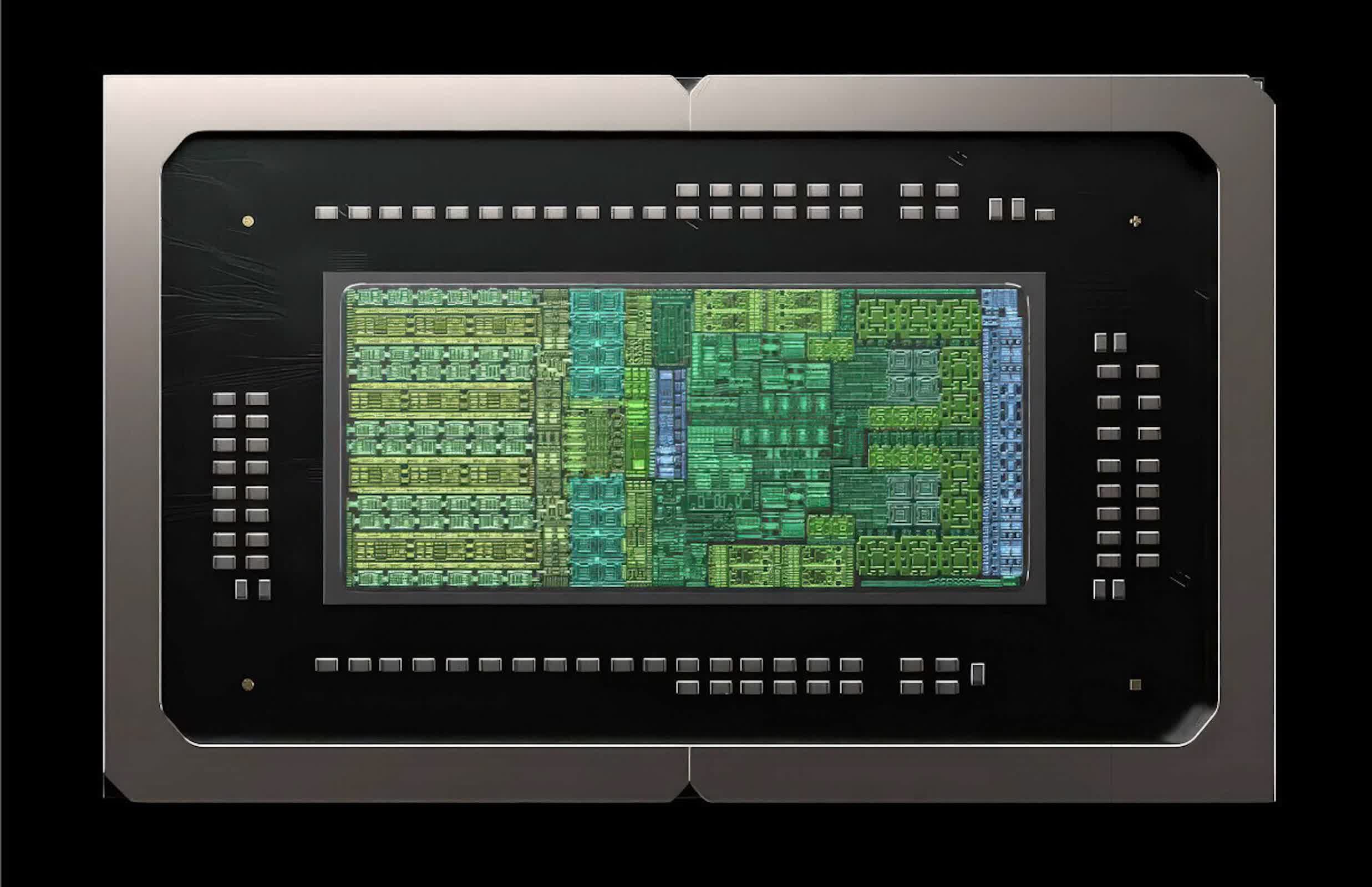
Nvidia appears ready to make its long-anticipated move into consumer Arm PCs after years of speculation and sporadic leaks. A report from DigiTimes Taiwan indicates that the company's N1 and N1X processors are again featured on Nvidia's internal roadmap, with consumer models now slated to come out in the first quarter of 2026.
The information suggests Nvidia is positioning the Windows-on-Arm platform as a new front in its competition with Apple, Qualcomm, and AMD. According to supply chain sources cited by DigiTimes, a notebook model using the N1X SoC will debut early this year, followed by three additional versions in the second quarter. A successor platform, the N2 series, is already in development and expected in 2027.
Nvidia has never formally acknowledged the N1X's delay, but recent leaks provided hints of ongoing activity. A shipping manifest spotted late last year described a Dell laptop featuring the unreleased chip, raising expectations that the company's long-concealed Arm ambitions were moving toward commercialization.
Dell 16 Premium with ES2 N1X pic.twitter.com/uHRLvaeVAj
– Gray (@Olrak29_) January 12, 2026
The N1 platform has quietly powered parts of Nvidia's AI hardware lineup for some time. CEO Jensen Huang previously confirmed that the GB10 Superchip inside the company's DGX Spark systems is based on N1 silicon.
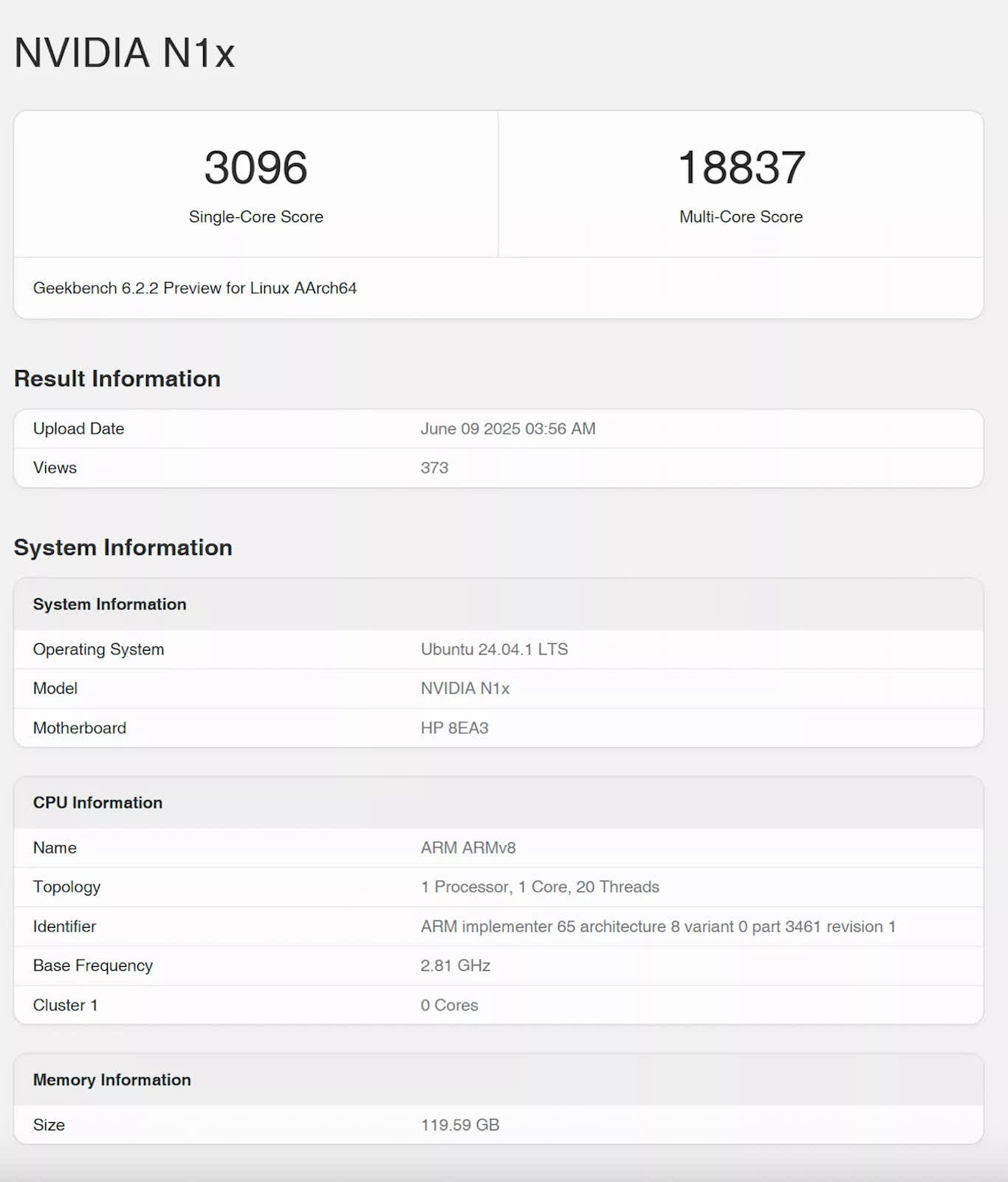
This design integrates a 20-core Arm CPU with a GPU offering roughly RTX 5070 – class performance. Early benchmark leaks suggest single-core scores competitive with Intel and AMD's mobile CPUs, but since the results are unverified, they should be treated as preliminary.
The N1X, if built on that same foundation, could mark Nvidia's first meaningful entry into consumer Arm computers. Its design focus mirrors Apple's M-series approach, merging high-performance processing, advanced graphics, and machine learning acceleration within a unified SoC that is optimized for Windows compatibility.
Nvidia's reentry into the Arm PC client market lands at a competitive moment. Qualcomm's Snapdragon X Elite chips are driving Microsoft's renewed Windows-on-Arm push, while Apple has already proved how well Arm architecture scales in consumer devices.
Meanwhile, Intel's upcoming Panther Lake lineup and AMD's Strix Halo architecture continue to tighten integration between CPU and GPU on x86 designs.
For Nvidia, whose brand strength rests on discrete GPUs and AI compute dominance, the N1X represents both an expansion and a test. If it delivers on efficiency and performance claims, it could shift expectations around Windows-on-Arm deployment and help push broader ecosystem maturity.
The N1X consumer model is expected first, with three enterprise versions following in Q2 2026. DigiTimes adds that by the third quarter of 2027, Nvidia aims to transition to the N2 architecture, with DGX Spark systems built around a new N2X model planned by year's end.
That timeline implies that much of Nvidia's current AI and data center silicon development will feed directly into the consumer ecosystem within the next two years. The company's $5 billion collaboration with Intel reinforces this theory: the two firms are co-developing x86-based SoCs that combine Intel CPUs with Nvidia RTX graphics.
Nvidia's long-rumored N1X Arm chip pairs a 20-core CPU with RTX graphics


