
What just happened? An incredible find has been made by teams investigating the Titan submersible's wreckage. The vessel's underwater camera has been discovered largely intact, and it contains a cheap SanDisk memory card with 12 stills and nine videos still accessible.
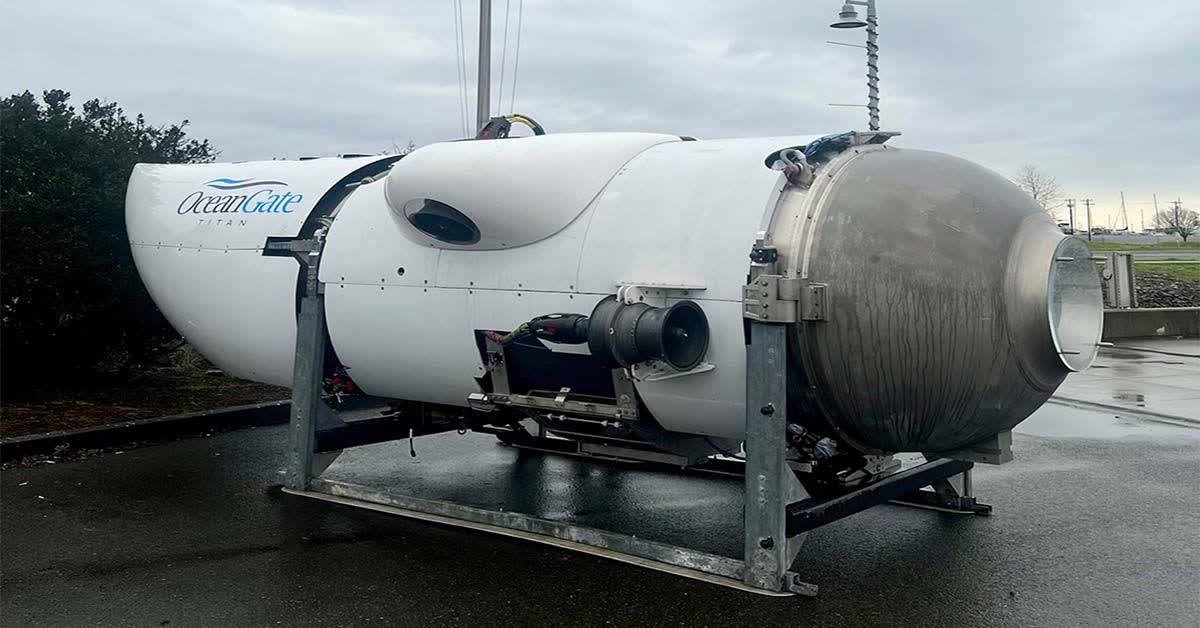
Over two years since the tragic incident, recovery teams are still making discoveries in the wreckage of the OceanGate Titan submersible, which imploded in the North Atlantic in June 2023.
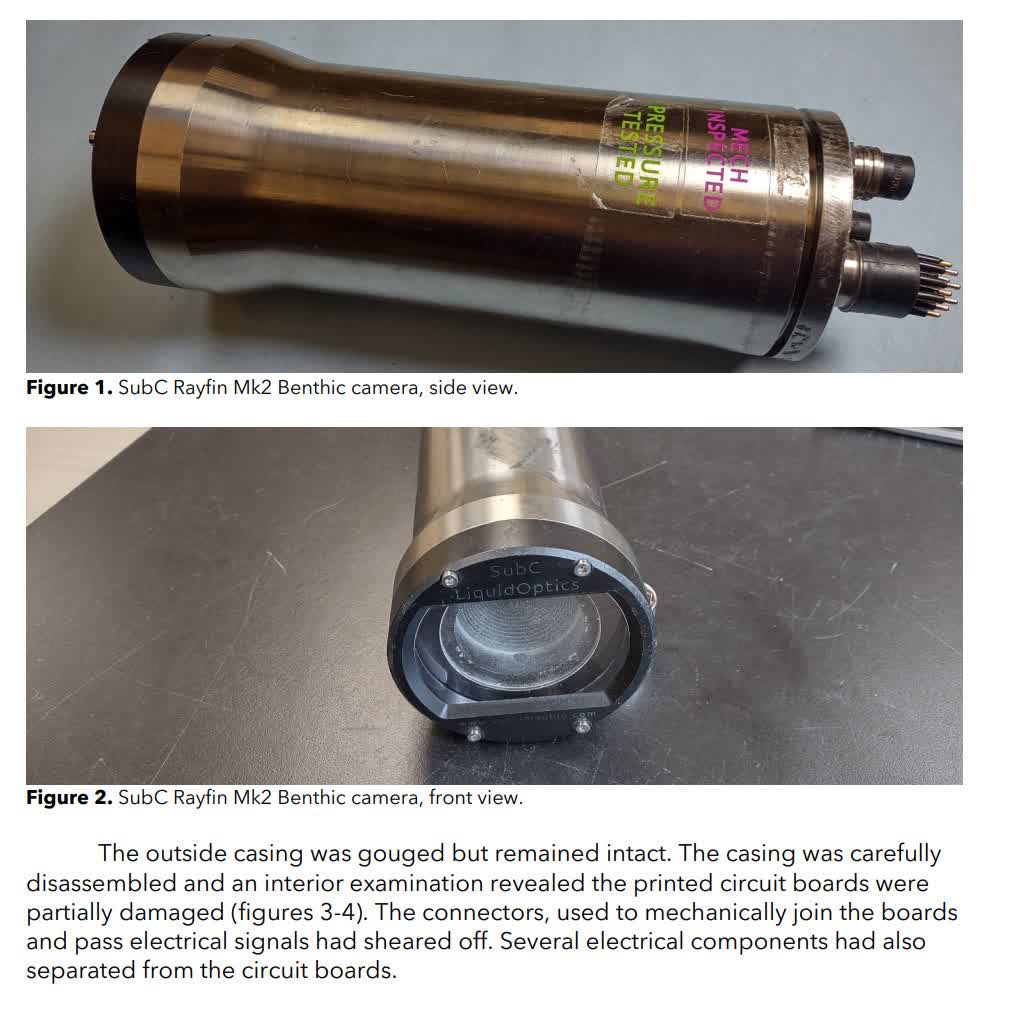
Scott Manley, the science communication YouTuber, gamer, astrophysicist, and programmer, posted about the latest find: a hardened SubC-branded Rayfin Mk2 Benthic Camera containing the undamaged SD card.
The recovery teams found a hardened underwater camera in the wreckage of the Titan submersible, and inside the casing was an undamaged SD card. pic.twitter.com/QCOtdcS7dU
– Scott Manley (@DJSnM) October 15, 2025
The titanium and synthetic sapphire crystal camera is rated to withstand depths of up to 6,000 meters (19,685 feet) – the Titan imploded at around 3,300 meters (10,827 feet). The casing is intact, though the lens is shattered and the PCBs are slightly damaged.
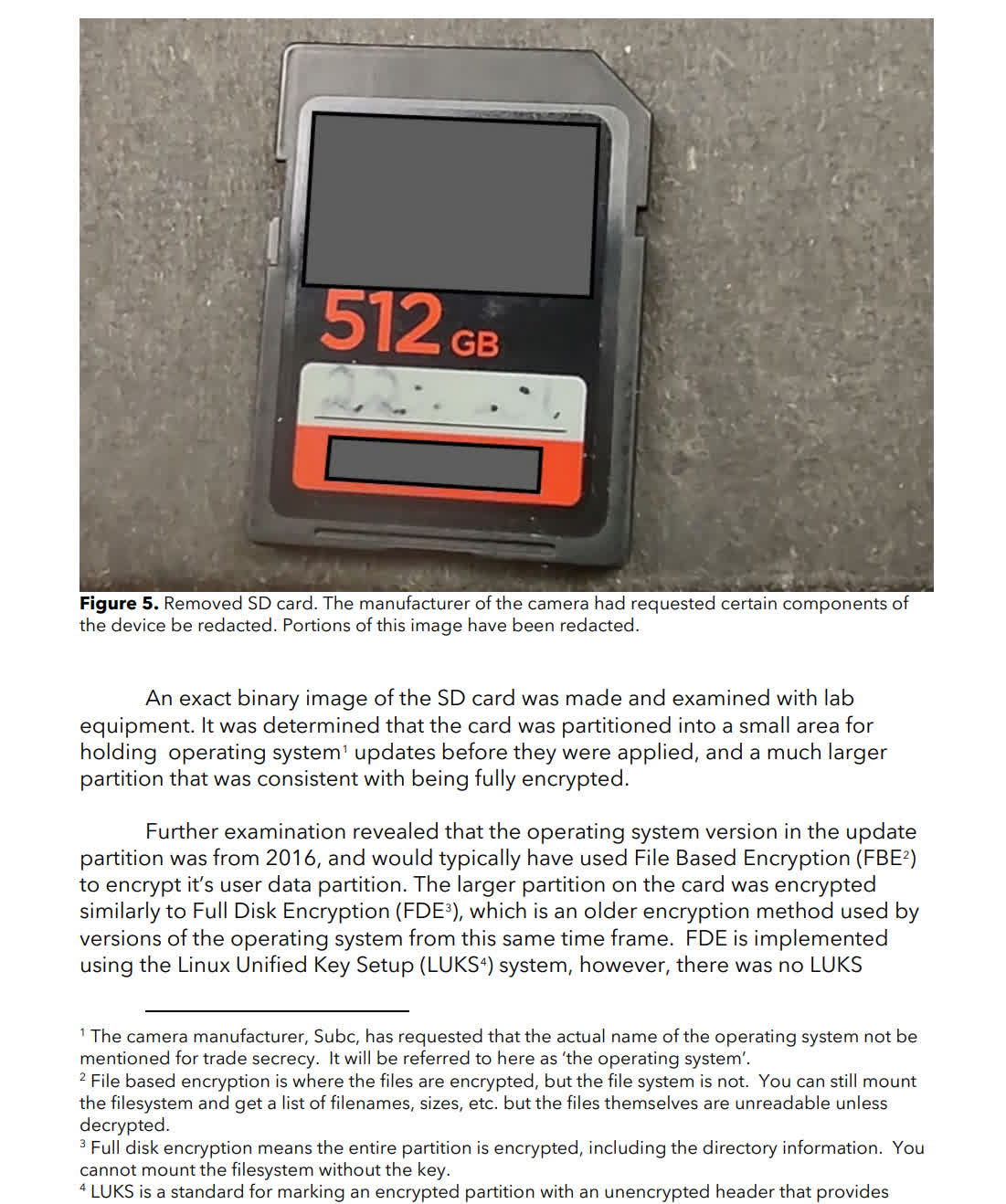
Incredibly the SD card inside the camera was undamaged. Tom's Hardware reports that it's almost certainly a SanDisk Extreme Pro 512GB, which costs around $62 on Amazon.
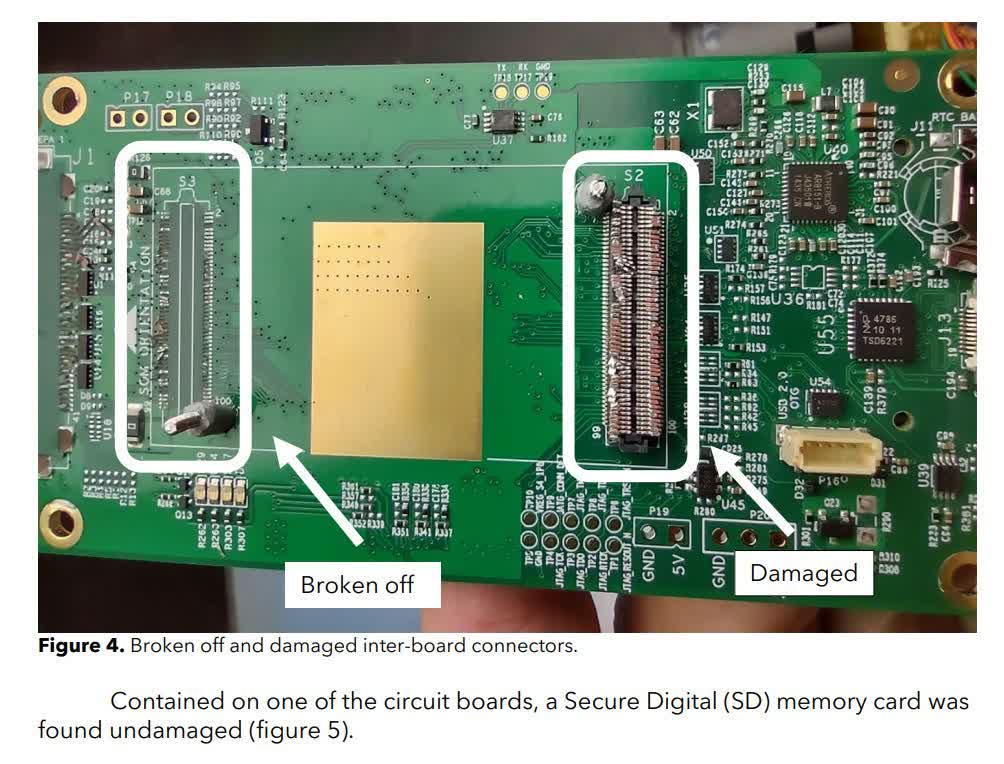
The camera's SD card was found to be fully encrypted, divided into a small partition for operating system updates and a larger one for user data. Due to impact damage from the accident, several components of the system-on-module (SOM) board – including connectors and the microcontroller – were broken, complicating the data extraction process.
Investigators removed the NVRAM chip, which potentially held encryption keys, and created both a direct binary copy of the SD card and surrogate SOM boards to aid in recovery.
The team, working with SubC Imaging, the Canadian Transportation Safety Board, and the US National Transportation Safety Board (NTSB), used specialized hardware to replicate the original board's functionality. After determining the data wasn't encrypted beyond the file system level, they successfully accessed the SD card contents using the manufacturer's proprietary equipment and procedures.
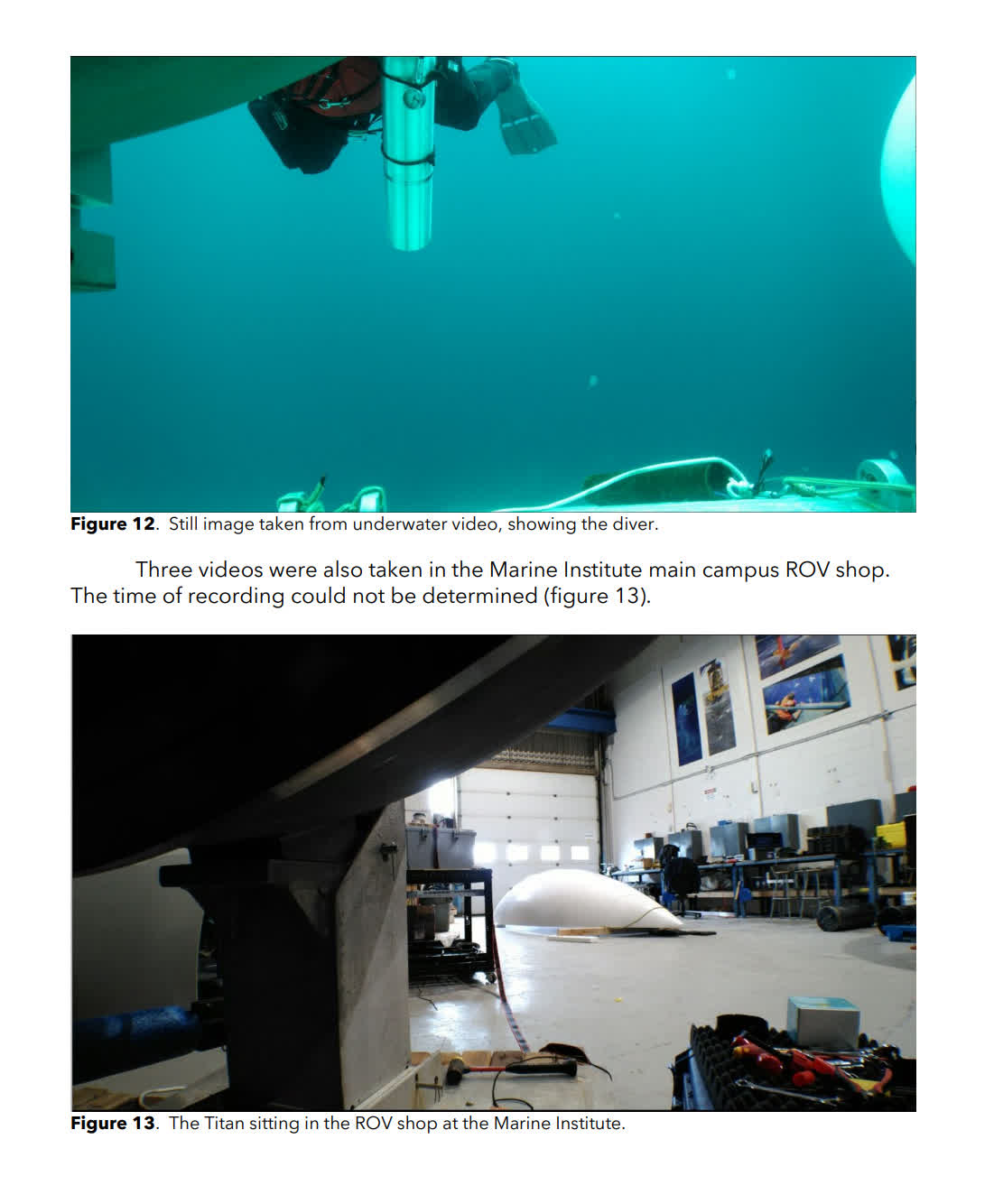
Ultimately, 12 still images (4,056 x 3,040) and 9 UHD videos were recovered from the camera. Unfortunately, none were from the Titan's final dive; they included underwater footage showing a diver and several clips recorded inside the Marine Institute's ROV workshop in Newfoundland. Manley writes that "the camera had been configured to dump data onto an external storage device, so nothing was found from the accident dive."
The OceanGate Titan implosion killed all five people on board instantly. The disaster was caused by a catastrophic failure of its carbon-fiber pressure hull, which could not withstand the immense deep-sea pressure of about 380 times that at the surface. Experts believe repeated dives caused material fatigue and microscopic cracks that led to the sudden collapse. The implosion occurred within milliseconds, leaving no chance of survival.


