PCB prices are up 40% in a month because of a material most people have never heard of

Skye Jacobs

Posts: 2,013   +59
Staff
The big picture: Most people never think about what's inside a circuit board, but a little-known resin is quickly becoming a major concern for the tech industry. High-purity polyphenylene ether resin sits deep within the electronics supply chain, yet it plays a critical role in how printed circuit boards manage heat, maintain signal integrity, and ensure reliability. The material helps boards inside smartphones, laptops, data center servers, 5G base stations, cars, and countless other devices continue operating under demanding conditions. So when the petrochemical and industrial complex in Jubail, Saudi Arabia, went offline earlier this year, that obscure resin suddenly became a major concern for electronics manufacturers.
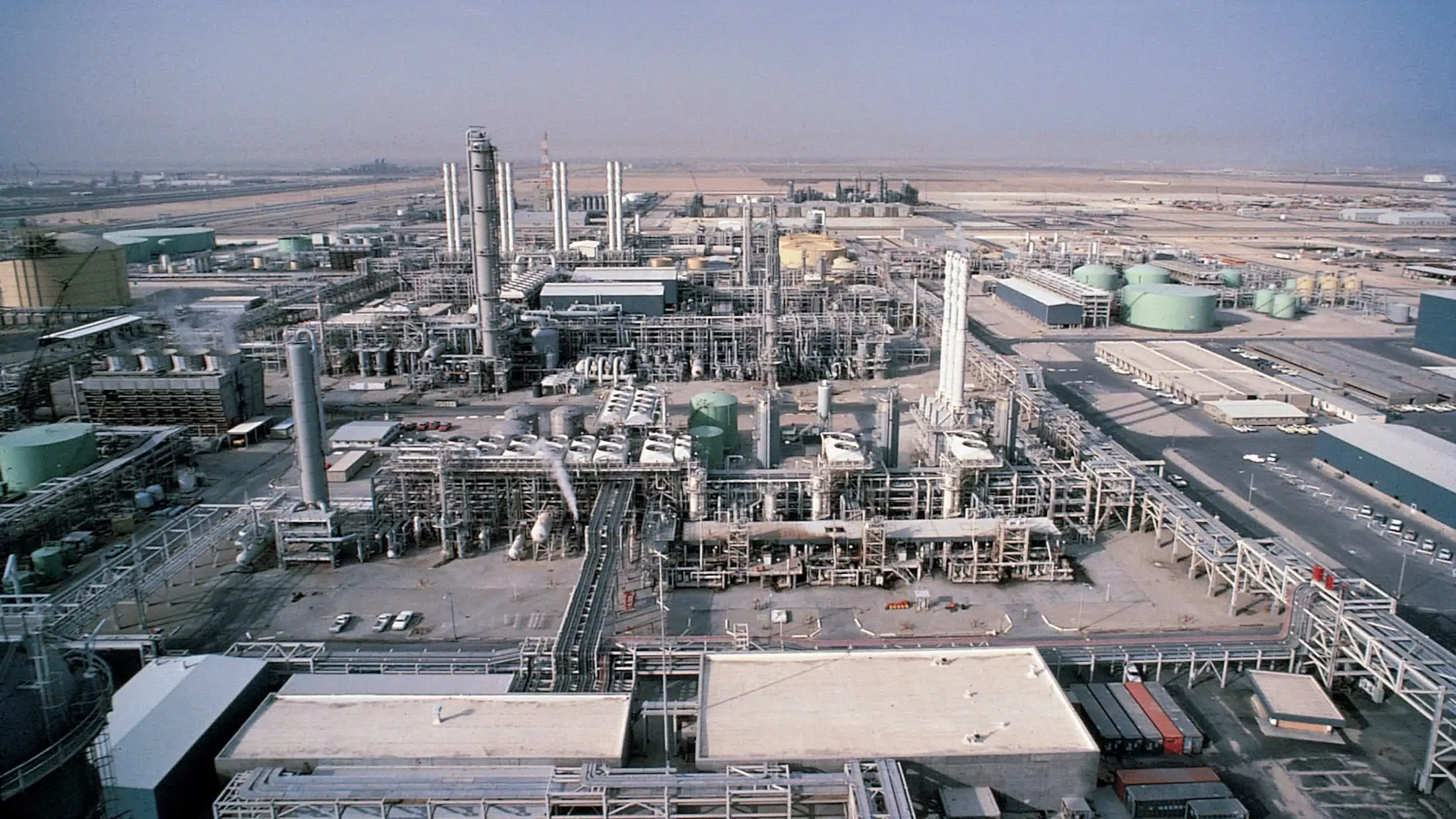
The disruption at Jubail did not begin with the missile strikes on April 6 and 7. Plants had already been shut down in late March as it became clear that moving cargo through the Strait of Hormuz was too risky amid the conflict. The attacks then added damage to a logistics system that was already at a standstill.

Dow has a joint venture at the complex with Saudi Aramco, and on an April 23 earnings call, Dow CEO Jim Fitterling said the company is still working on the assumption of a "275-day-plus" timeline before logistics and supply chains return to normal.

For the tech industry, the timing is particularly difficult. Resin is a basic input in PCB manufacturing, and substituting it requires redesigning boards, re-running reliability and performance tests, and securing new approvals.

Prices are already reflecting the strain. April's Producer Price Index showed processed goods up 9.4% from a year earlier, with plastic resins and materials among the key drivers – the largest increase in more than three years.

Nvidia supplier Victory Giant in China, one of the world's largest PCB makers, has warned that the conflict in the Middle East could push up prices for copper and resin. According to a Goldman Sachs note, PCB prices rose by as much as 40% between March and April. TTM, a US-based PCB maker whose shares are up more than 400% over the past year, told CNBC it is raising prices by roughly 5% to 25%.
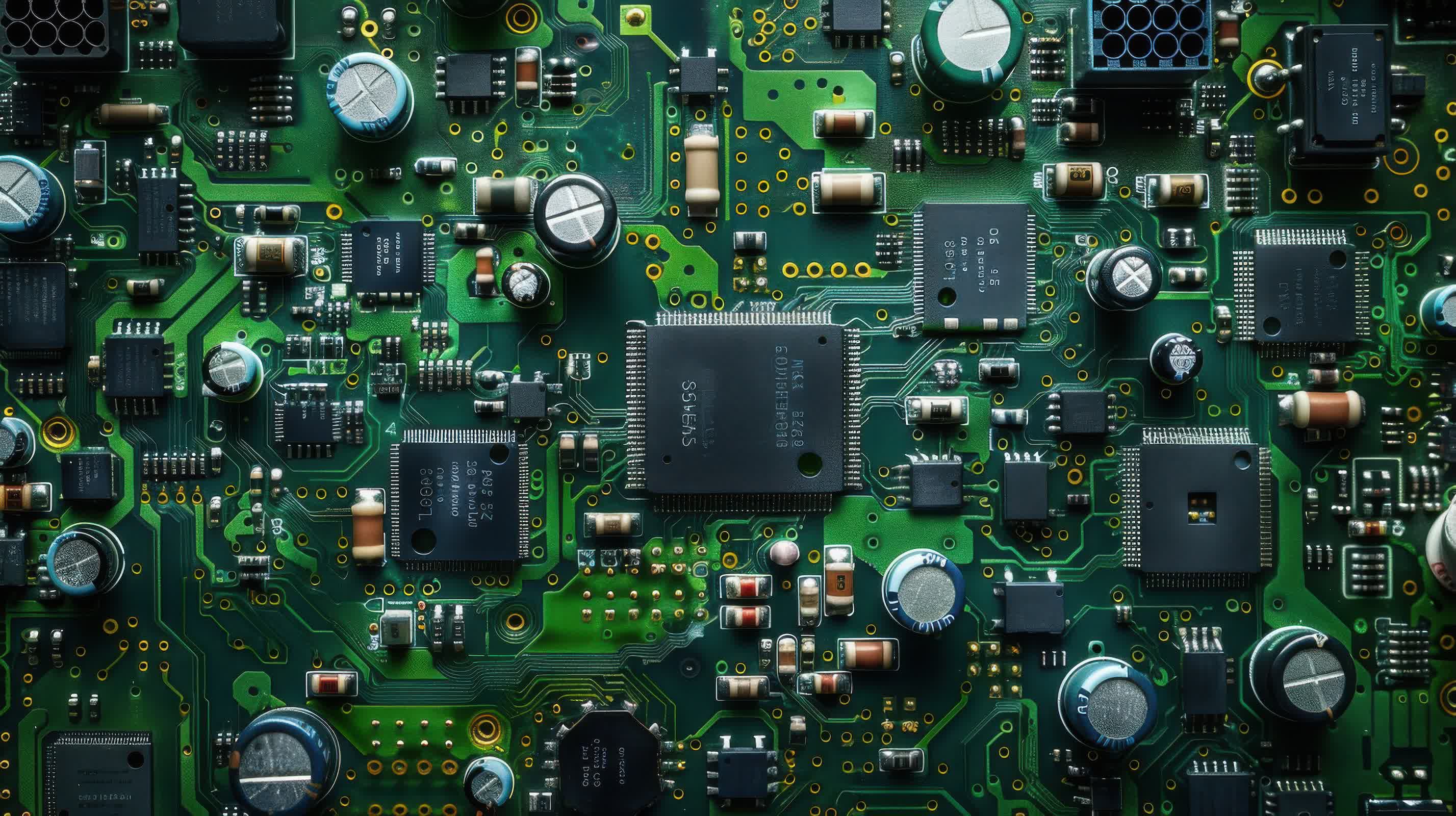
The fragility of the system was on display during a recent CNBC-accompanied tour of TTM's facilities, which highlighted just how much PCB production has shifted offshore over the past two decades.

Back in 2000, roughly 30% of the world's printed circuit boards were manufactured in the US, according to data the company provided; today, that share is closer to 4%, with China now dominating global output. The boards may be assembled in different countries, but they still depend on resin from a small group of suppliers – and a large portion of that high-purity material was coming from the Jubail complex.

Supply chain expert and Wichita State University professor Usha Haley said the Saudi complex supplied about 70% of the world's high-purity PPE resin. "Production has now come to a standstill, and no alternative supplier exists to fill the gap. PCB prices have risen 40% in a month, and lead times for epoxy-resin inputs have expanded from three weeks to fifteen," Haley said.

The effects will not show up at the checkout line all at once. Mark Vena, CEO and principal analyst at SmartTech Research, expects most consumers will never hear the phrase "PPE resin shortage" in a retail store, even if it is shaping what they pay. "Printed circuit boards are the nervous system of every modern device, and when board costs spike, the pain moves quickly through phones, laptops, wearables, gaming consoles, routers, and AI servers," he said.

Apple has more levers than most companies to manage the shock. It has scale, long-term supplier contracts, sophisticated demand forecasting, and the ability to rework designs faster than smaller competitors. But it still faces the same upstream constraint as everyone else.

But it still faces the same upstream constraint as everyone else. "But insulated does not mean immune, because every iPhone still depends on high-reliability circuit boards and the same global materials web that everyone else uses," Vena said. "Apple can move the pain around, but it cannot make a concentrated petrochemical bottleneck disappear."

That pressure is likely to show up first in product lines with thinner margins. Vena pointed to categories such as PCs, accessories, gaming devices, routers, and midrange Android phones as especially exposed, because manufacturers in those segments have less room to absorb sharp increases in PCB costs. He also said foldable smartphones are likely to feel the impact most acutely, given their more complex designs.

In the near term, flagship phone sticker prices are likely to hold. Thad Hwang, founder and CEO of Goji Mobile, said he does not expect higher retail prices for devices like the iPhone 17 or Samsung Galaxy S26 in the next couple of months. But he also pointed to autumn as the period when the longer-term effects of semiconductor disruption and supply chain instability could begin to emerge.

The US does not have the capacity to replace the lost resin from Jubail. Sridhar Tayur, professor of operations management at Carnegie Mellon University, said skills and production have shifted elsewhere, and policymakers often do not focus on these choke points until they are already in crisis. "Suddenly, people are going to be drawing down on the inventory they have," Tayur said.

If the plant in Saudi Arabia remains offline for a few more months, he expects problems to become more visible. "The situation will affect data centers, routers, and high-end 5G phones – this is where the type of resin used matters most," he said. For manufacturers, even the largest ones, the options are limited. As Tayur put it, for Apple and other electronics makers, "there's not much they can do about shortages if it's just not there."

Permalink to story:

 
Well of course They are.
Fortunately, due to high memory prices, consumer electronics are in standstill and the above hike s mostly Musk's and Altman's problem...
 
Hey, we may have lost the war but at least everything is more expensive and the peace deal is worse than the one we had before.
Keep in mind the US started the war because Iran completely ended the deal by not complying to any nuclear regulations and started enriching/stockpiling weapons-grade uranium anyways: https://www.cfr.org/backgrounders/what-iran-nuclear-deal

In addition, Trump re-initiated sanctions on Iran all the way back in 2018 because the Obama-led deal did nothing to address Iran's ballistic missile program and its proxy warfare in the Middle East. Can you remind me what kind of weapons Iran used to destroy these facilities?
 
This one is surprising. I expect most petroleum derivative products to have their production to be distributed with refining. So more like 30% of PPE coming from the Persian Gulf states. Of all the things that could have gone into shortage that most would not have expected I was expecting sulfur to be it.
 
This war is 100% gonna cause a global recession because the Orange man couldn't keep a lid on Israel.
I'm not too happy with Israel myself, but it's incredibly ironic you post this just as oil prices dropped $10/bbl. At $75/bbl, they're far below the $118/bbl they hit 4 four years ago.

But of course then the media was telling you that, "high oil prices are good for the environment", instead of inciting you into fearing a recession.
 
Keep in mind the US started the war because Iran completely ended the deal by not complying to any nuclear regulations and started enriching/stockpiling weapons-grade uranium anyways: https://www.cfr.org/backgrounders/what-iran-nuclear-deal

- It's weird the link you posted flies in the face of your own argument? Iran was keeping up its end of the deal, Trump withdrew the US from the deal and slapped on sanctions, Iran then began ramping up enrichment because... there was no deal and fresh sanctions?

Did Iran comply initially?
The agreement got off to a fairly smooth start. The IAEA certified in early 2016 that Iran had met its preliminary pledges; and the United States, EU, and United Nations responded by repealing or suspending their sanctions. Most significantly, U.S. President Barack Obama’s administration dropped secondary sanctions on the oil sector, which allowed Iran to ramp up its oil exports to nearly the level it reached prior to sanctions. The United States and many European nations also unfroze about $100 billion worth of frozen Iranian assets.

However, the deal has been near collapse since President Trump withdrew the United States from it in 2018 and reinstated devastating banking and oil sanctions. Trump said the agreement failed to address Iran’s ballistic missile program and its proxy warfare in the region, and he claimed that the sunset provisions would enable Iran to pursue nuclear weapons in the future.

Iran accused the United States of reneging on its commitments, and faulted Europe for submitting to U.S. unilateralism. In a bid to keep the agreement alive, France, Germany, and the United Kingdom launched a barter system known as INSTEX to facilitate transactions with Iran outside of the U.S. banking system. INSTEX was used only once before France and Germany announced its dissolution in 2023, citing Iranian obstruction.

Following the U.S. withdrawal, several countries—U.S. allies among them—continued to import Iranian oil under waivers granted by the Trump administration, and Iran continued to abide by its commitments. But a year later, the United States ended the waivers with the aim of halting Iran’s oil exports completely.

https://www.cfr.org/backgrounders/what-iran-nuclear-deal
In addition, Trump re-initiated sanctions on Iran all the way back in 2018 because the Obama-led deal did nothing to address Iran's ballistic missile program and its proxy warfare in the Middle East. Can you remind me what kind of weapons Iran used to destroy these facilities?

- The problem is we're right back where we started, but worse. Trump has done nothing to actually materially improve the situation, for anyone. Iranians are still stuck under an oppressive regime that now has a couple real notches on its belt, Lebanon is still occupied, Israel is still bombing everyone while simultaneously being no more secure, and the US has a bad case of the Russian "pants-around-ankles" reputational damage.

The US is going to pay Iran to reopen the strait (and Iran will almost immediately use those funds to rebuild military stockpiles), and we only have a MoU (and agreement on what we're going to talk about) rather than any kind of actual deal.

Worse, we're in a situation where we have multiple conflicting mutually exclusive interests (Israel wants the US to completely neuter Iran / Trump just wants to back out of this whole mess / Iran wants to clip Israel's wings and humiliate the US) so I figure we're really looking at a 60 day rearmament period before everything goes to **** again.
 
- It's weird the link you posted flies in the face of your own argument? Iran was keeping up its end of the deal
The problem wasn't compliance, but the deal itself, which specifically allowed Iran to continue building nuclear enrichment centrifuges and continue advancing its ballistic missile program, of which Iran did both. The deal specifically did NOT end Iran's nuclear weapons program, but was merely designed to cap how long it would take Iran to complete it. From the link you quote:

"The [signatories] wanted to unwind Iran’s nuclear program to the point that if Tehran decided to pursue a nuclear weapon, it would take at least one year...."

Iran advanced its ballistic missile range from 200km to over 2,000km, and had begun modifying its SRV missiles to allow them to strike any point in the Northern Hemisphere -- all allowed under the deal. And with the funds Iran received from the ending of sanctions, they vastly expanded their funding of terror networks across the Middle East.
 
Last edited:
The problem wasn't compliance, but the deal itself, which specifically allowed Iran to continue building nuclear enrichment centrifuges and continue advancing its ballistic missile program, of which Iran did both from the time the deal was signed until the US withdrew. In fact, the deal specifically did NOT end Iran's nuclear weapons program, but was merely designed to cap how long it would take Iran to complete it. From the link you quote:

"The [signatories] wanted to unwind Iran’s nuclear program to the point that if Tehran decided to pursue a nuclear weapon, it would take at least one year...."

Iran advanced its ballistic missile range from 200km to over 2,000km, and had begun modifying its SRV missiles to allow them to strike any point in the Northern Hemisphere -- all allowed under the deal. And with the funds Iran received from the ending of sanctions the deal brought about, they vastly expanded their funding of terror networks across the Middle East.

- OK, and to date it seems no one has had a better idea of what to do with Iran, as current events have dictated.

Trump withdrew from JCPOA and slapped on sanctions. Iran continued to enrich uranium, expand its missile range and capacity, and fund terrorism across the middle east. Did US sanctions deeply hurt Iran? Yes. Were they enough even with an overwhelming show of force to cause the collapse of the Iranian regime? No.

The concept that having some sort of practical solution now being superior to having the perfect solution when its too late seems to have completely passed over the heads of Republicans/conservatives/MAGA/war hawks.

Ironically, Trump may have actually ended Iranian nuclear ambitions for the moment. Iran has shown that it can grab the global economy by the balls without nukes. Their nuclear program might be more useful for extracting money and concessions from Trump/US than it is for actually building a bomb at this point.
 
Trump withdrew from JCPOA and slapped on sanctions. Iran continued to enrich uranium, expand its missile range and capacity, and fund terrorism across the middle east.
And now Iran's nuclear centrifuges and ballistic missile factories are smoking ruin, and this deal requires them to stop funding those terror networks.

Iran has shown that it can grab the global economy by the balls without nukes.
Eh? Iran shutting down the Strait didn't cause even the hint of a recession ... but it did motivate all other Gulf oil exporters to expand their pipeline capacity. If Iran tries this in the future, it'll find much less oil traveling through the Strait, and much more moving overland.
 
- The problem is we're right back where we started, but worse. Trump has done nothing to actually materially improve the situation, for anyone. Iranians are still stuck under an oppressive regime that now has a couple real notches on its belt, Lebanon is still occupied, Israel is still bombing everyone while simultaneously being no more secure, and the US has a bad case of the Russian "pants-around-ankles" reputational damage.
It's not America's job to baby Iran. If Iran can't comply to a deal that it made to other countries as well (not just the US), and Iran later attacks countries that only ever tried to appease it with friendly relations, no good faith deal was ever able to be relied upon in the first place.
 
And now Iran's nuclear centrifuges and ballistic missile factories are smoking ruin, and this deal requires them to stop funding those terror networks.


Eh? Iran shutting down the Strait didn't cause even the hint of a recession ... but it did motivate all other Gulf oil exporters to expand their pipeline capacity. If Iran tries this in the future, it'll find much less oil traveling through the Strait, and much more moving overland.

- So then you have to ask the natural follow-up question: Why are we signing an MOU and withdrawing our Naval blockade (Trump's words) if Iran has been neutered and the closure of the strait is a nothing burger?

Seems like a weird time to take the pressure off, doesn't it?
 
It's not America's job to baby Iran. If Iran can't comply to a deal that it made to other countries as well (not just the US), and Iran later attacks countries that only ever tried to appease it with friendly relations, no good faith deal was ever able to be relied upon in the first place.

- Then why are we signing an MoU with Iran and giving them 12 Billion dollars for them to even sit down and talk to us?
 
- Then why are we signing an MoU with Iran and giving them 12 Billion dollars for them to even sit down and talk to us?
Reuters reports that the US is not giving Iran any money: https://www.reuters.com/world/asia-...ey-have-agreed-memorandum-end-war-2026-06-15/
Reuters said:
  • The senior Iranian official said the U.S. had agreed not to impose any new sanctions on Iran until a final deal was reached.
  • They added the U.S. would waive oil sanctions on Iran for a specified period and that after the final agreement all U.S. and U.N. sanctions would be lifted to an agreed timetable.
  • The senior Iranian official said the U.S. had agreed to release $25 billion of Iran's frozen assets, including via ⁠direct cash transfers, cooperation among regional countries, and financial credit lines.
  • Washington, in coordination with its regional allies, would prepare a reconstruction and development plan for Iran, to be negotiated and agreed with Tehran within 60 days, they added.
  • Trump said Iran would not be provided with cash but that sanctions could potentially be lifted.
 
- So then you have to ask the natural follow-up question: Why are we signing an MOU and withdrawing our Naval blockade (Trump's words) if Iran has been neutered and the closure of the strait is a nothing burger?

Seems like a weird time to take the pressure off, doesn't it?
Was that a joke? We're signing a deal **because** Iran has been neutered. And why would we need a naval blockade, when Iran has agreed to stop harassing shipping in the Strait? No one called the closure "a nothing burger" It's a serious annoyance ... but once those new pipelines are completed, it won't be.
 
Last edited:
Was that a joke? We're signing a deal **because** Iran has been neutered. And why would we need a naval blockade, when Iran has agreed to stop harassing shipping in the Strait? No one called the closure "a nothing burger" It's a serious annoyance ... but once those new pipelines are completed, it won't be.

-Wait... so Iran has been neutered, but they were still capable of harassing shipping in the strait? Square that circle for me.
 
-Wait... so Iran has been neutered, but they were still capable of harassing shipping in the strait? Square that circle for me.
Now you're just being ridiculous. Iran no longer has the capability to make weapons-grade uranium, nor to manufacture long-range ballistic missile. They still have several dozen 12-foot speedboats, however.

-Sorry you're right $25 billion not $12 Billion.
The US isn't giving Iran a penny. The MoU includes a "pay for play" deal that will allow Iran to regain a small amount of their own frozen assets ... if and when they fulfill the terms of the deal. But it's nowhere near $24B, despite the false reporting that Reuters will issue a retraction on in a day or two.
 
Last edited:
Now you're just being ridiculous. Iran no longer has the capability to make weapons-grade uranium, nor to manufacture long-range ballistic missile. They still have several dozen 12-foot speedboats, however.

-Wait... So we've destroyed everything they got, but some speedboats are all that was between us and total victory? The strait can't be opened because of a couple speedboats that the US can't sink?

4-6 weeks you said, why aren't those speedboats all at the bottom of the ocean it's week 16.

You're honestly making the argument that Americans have had to spend 40+ Billion additional dollars on gas and inflated goods because the the most powerful navy, airforce, space force, and army on the planet couldn't handle a couple dozen Iranian speedboats?

The US isn't giving Iran a penny. The MoU includes a "pay for play" deal that will allow Iran to regain up to $25B of their own frozen assets ... if and when they fulfill the terms of the deal.

- Do Trump and Iran know that?

Why, if they've suffered a total military defeat (except a few speedboats mind you) are we giving them anything? I don't recall the US paying Saddam, or Al Baghdadi, or Bin Laden or Hirohito or whoever to come to the table in the past.

It's a strange form of total victory when you have to put money on the table to sweeten the pot.
 
-Wait... So we've destroyed everything they got, but some speedboats are all that was between us and total victory?
No, you're confused. This is a total victory: all our objectives were met.

4-6 weeks you said, why aren't those speedboats all at the bottom of the ocean it's week 16.
Had the US not struck, within a year Iran would have had the capability to hit any city in Europe with nuclear-tipped ballistic missiles, and soon after that, the US as well. And you're worried about a few civilian-class speedboats pretending to be a navy?

Honestly, you need to step back and read what you're typing. Not once in the entire history of modern warfare has a losing party lost every single piece of equipment that can reasonably act as a weapon.

Why, if they've suffered a total military defeat (except a few speedboats mind you) are we giving them anything? I don't recall the US paying Saddam, or Al Baghdadi, or Bin Laden or Hirohito or whoever to come to the table in the past.
Once again: you're confused. Iran isn't getting a penny to "come to the table". They're not getting a penny after the deal is signed, either. IF they make further structural changes and we see they're honoring those commitments, they'll have some assets released in the future.
 
Last edited:
Back