Scientists created a paint so black it makes cars look like silhouettes

Skye Jacobs

Posts: 1,994   +58
Staff
Looking ahead: The idea of a car that appears to swallow light rather than reflect it has lingered on the fringes of materials science for years. Now, a group of researchers says it has taken a step toward that goal with a new composite coating that combines extreme light absorption with practical durability.
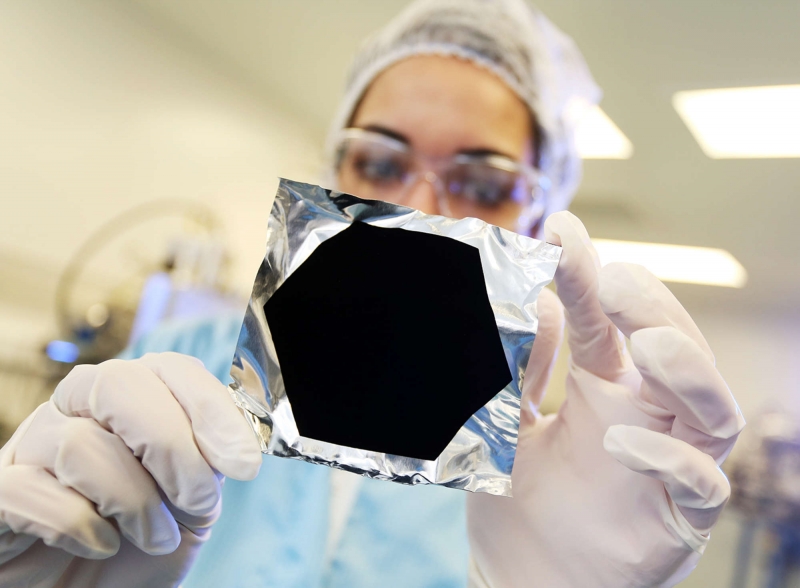
A team at Nipsea Group, working through its Color Technology and core R&D unit in Shanghai, has developed what it describes as an "ultra-black coating" capable of absorbing roughly 99.9% of visible light. The material is clearly inspired by Vantablack, the carbon nanotube coating that makes objects look almost flat and featureless.

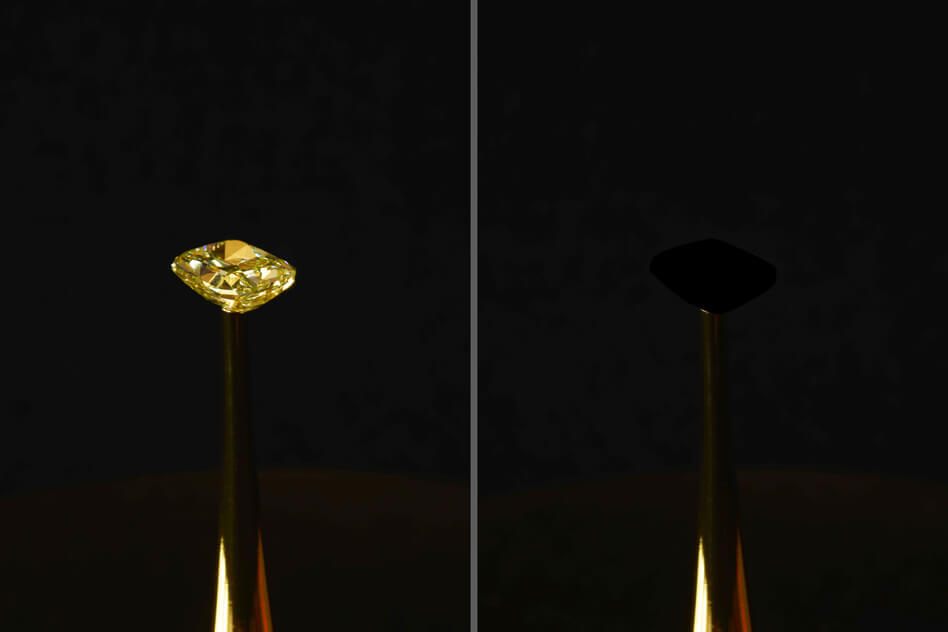
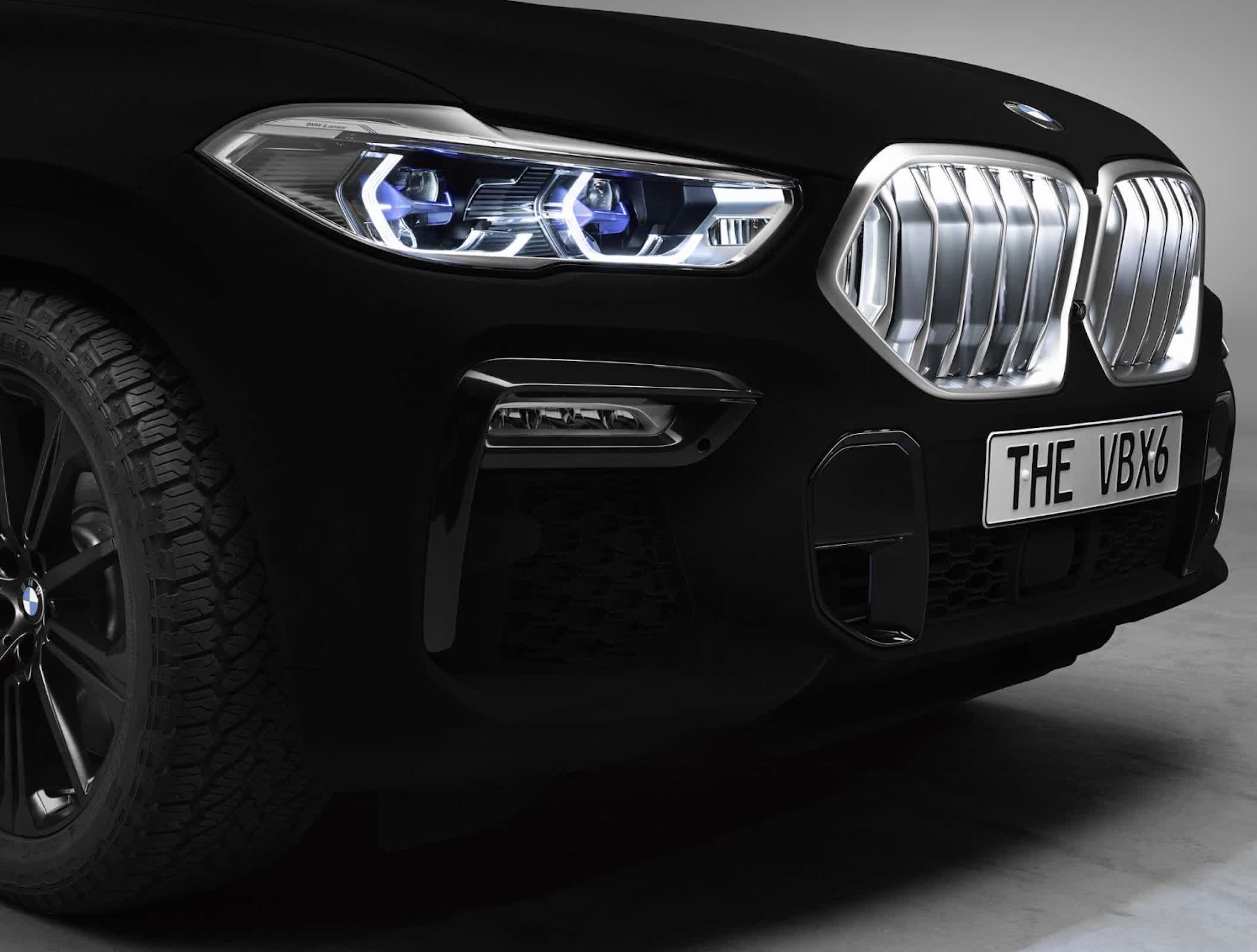
That visual effect has been demonstrated before, most notably when BMW applied Vantablack to a 2019 X6 concept vehicle. The automaker said at the time that "a surface coated in Vantablack loses its defining features to the human eye, with objects appearing two-dimensional," adding that the effect "can be interpreted by the brain as staring into a hole or even a void."

Despite the attention, coatings like Vantablack have remained impractical for production vehicles, in part because of problems with adhesion, durability, and the difficulty of scaling up production.

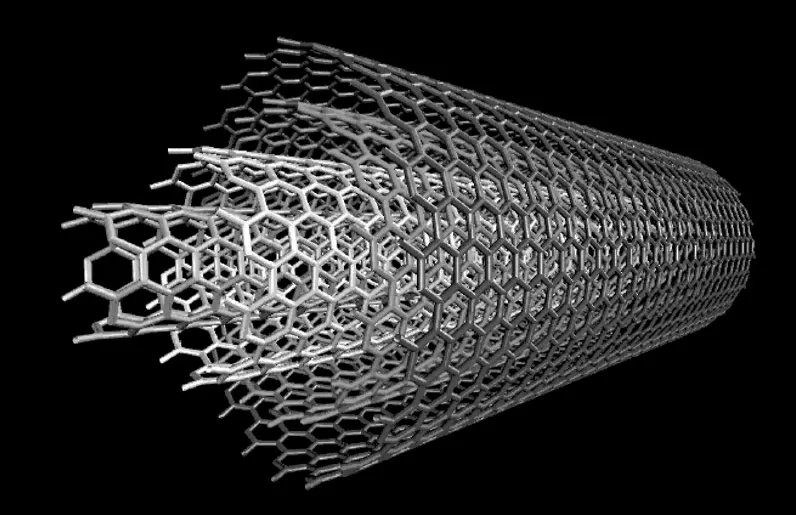
The Nipsea team is trying to get around those limitations by changing how the material is structured, instead of relying only on pure carbon nanotube arrays. Their approach combines carbon black with carbon nanotubes, taking advantage of a natural pi-interaction between the two. That interaction helps the particles line up into a connected structure that traps light more effectively.

In a paper in Matter & Light, the researchers describe the material as having a "unique structural light-trapping morphology," and say it absorbs more light than a standard carbon black coating. Instead of reflecting light off a surface, the structure repeatedly scatters and absorbs it within the coating.
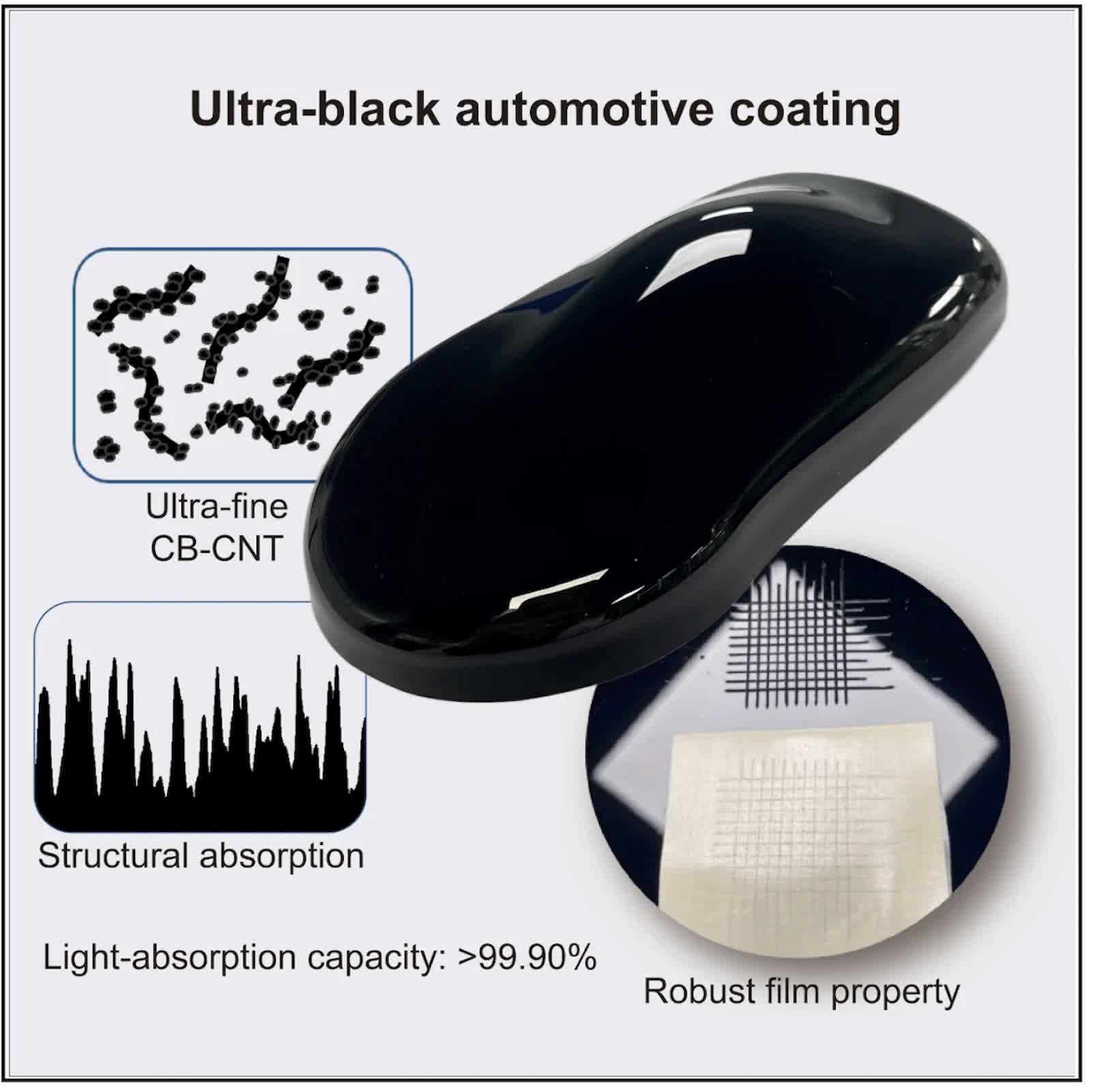
In terms of performance, the material approaches the optical characteristics of more specialized nanotube systems. The researchers note that vertically aligned carbon nanotube arrays can achieve reflectance as low as 0.04%, with Vantablack at about 0.05%.

Their composite coating measures around 0.08% reflectance across the visible spectrum. The reflectance is higher, but the tradeoff is better stability and more practical use.

Durability has been a persistent issue with nanotube-heavy coatings, particularly when it comes to adhesion and environmental resistance. To test those factors, the team exposed coated panels to prolonged heat and moisture. One sample sat in a 40°C water bath for 10 days, while another was subjected to 95% humidity for two weeks. According to the researchers, the coated panels showed "no significant visual paint defects" and passed a standard adhesion test.

There is also the question of how such a coating would function on an actual vehicle. Ultra-black surfaces can obscure contours and design details to the point where objects lose visual depth, something BMW acknowledged when it said the effect can "blot out virtually all the design details and highlights." That has implications not just for styling, but potentially for visibility.

To address that, the Nipsea team added a glossy overcoat in its automotive tests. The goal was to reintroduce enough reflectivity to preserve the perception of shape, while maintaining most of the underlying light-absorbing properties.
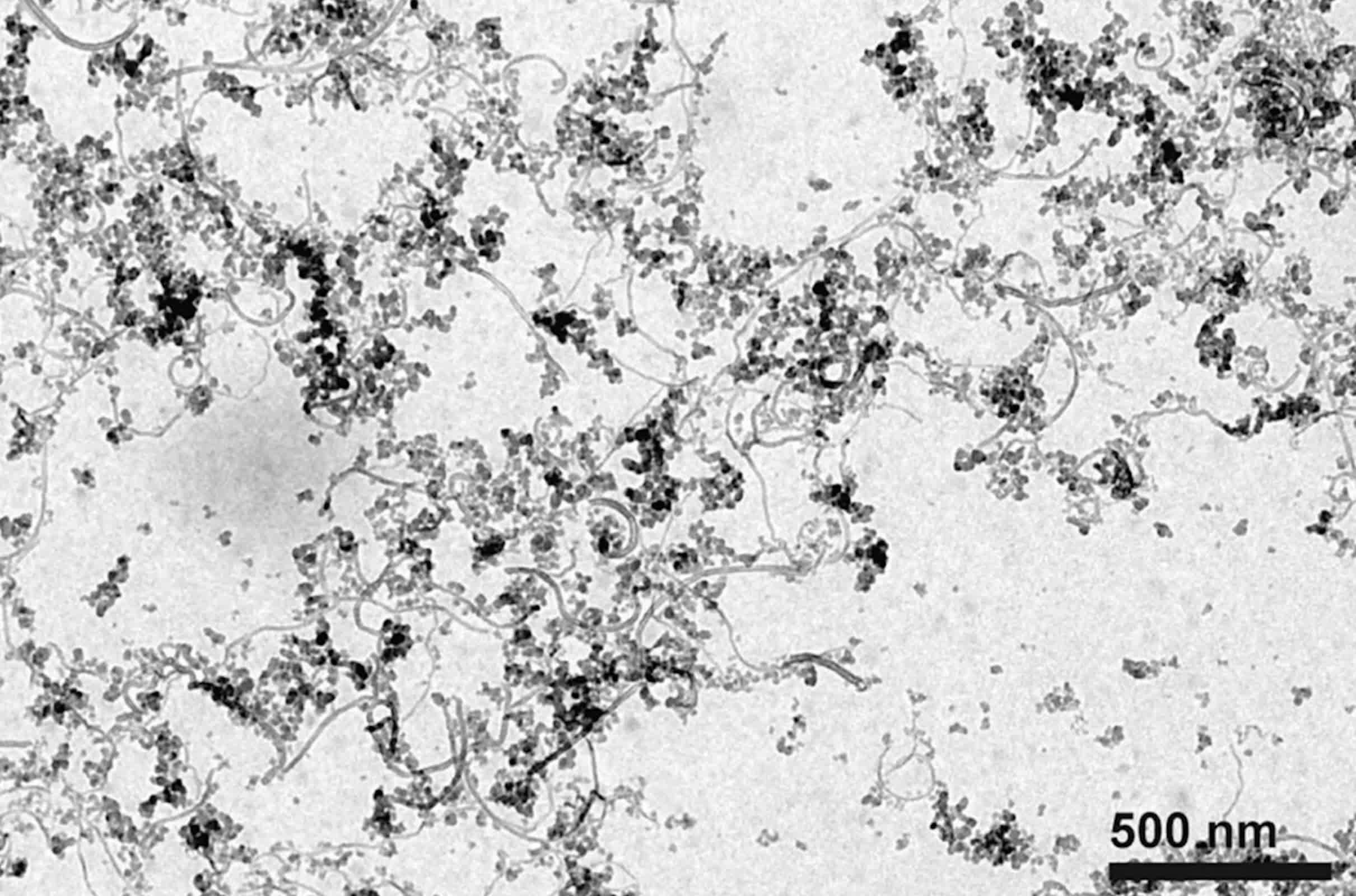
A transmission electron microscopy image shows the carbon black and carbon nanotube paint mixture that creates the ultra-dark, "optical black hole" effect

The commercial angle is tied to demand in the luxury segment, particularly in China. "In China, car color has become a key selling point," said Nipsea research chemist Zhiwei Liu. "Deep black finishes have long been the premium choice and signature color for luxury cars due to their elegant appearance, powerful visual impact, and luxurious undertone."

Even with those advances, the coating is not ready for production. Scaling nanomaterial-based systems remains a challenge, especially when consistency and cost come into play. "[There] is still room for improvements in practical processability of carbon-nanotube-containing nanomaterials," Liu said.

For now, the work signals incremental progress rather than a near-term product. It points to a shift from ultra-black coatings as lab curiosities toward materials that can actually survive in everyday use.

Permalink to story:

 
Designing a car coating that would be near-impossible to see in the dark. Yeah, I would think visibility and safety concerns should be top of the list of things that make them stop and go "Is this a good idea?".
It's nearly impossible to see any car in the dark, regardless of color ... which is why we mandate that all vehicles use bright lighting in these conditions.

That must be great in California or Texas sun.

There's a reason Arabs choose Their cars and clothes white.
The heat differential between ordinary black paint (96%) and this 99.9% black is rather small.

This "news" is from 6 years ago, so is the video shown.
Did you not read the article? The news is from this week, when this latest study was published. The research didn't have sexy graphics for the slack-jawed crowd, however, so the article **also** referenced an older, similar advance from 2019.
 
Douglas Adams "The Restaurant at the End of the Universe"

ZAPHOD:
"Look at it, Ford. Just look at it."

FORD:
"I am looking at it. There's nothing to see. It’s totally black. It’s like... you can't even see where the edges are."

ZAPHOD:
"Yeah. It’s beautiful. So black you can’t see how big it is. It doesn't reflect anything. Look at the way the light just... falls into it and disappears."

FORD:
(Reaching out a hand)
"Don't touch it! You don't know what kind of field it's got. It looks like a classic Lazlar Lyricon custom job. Look at those lines. Or rather, don't look at them, because you can't."

ZAPHOD:
"Man, the guy who owns this must have some serious ego problems. It’s so black it makes you want to cry."

FORD:
"It’s not just black, Zaphod. It’s impossible. It’s like a hole in space. Look at the cabin windows—they’re black too. How do you see out of a black window?"

ZAPHOD:
"Maybe you don't look out. Maybe you just let people look in and get freaked out by how black it is inside."

FORD:
"Look, there's a small inscription here on the side... written in black on a black background."

ZAPHOD:
"Can you read it?"

FORD:
"No, it's too black."
 
I'd rather see manufacturers creating new breakthroughts in cheaper pigment technology that can be had at any color. I miss the variety of color choices cars used to have before the 2000s and how many different colors we saw in the streets.

Nowadays for many brands and models you can pick your car at any color, as long as it's black, different shades of grey or white.
 
I'd rather see manufacturers creating new breakthroughts in cheaper pigment technology that can be had at any color. I miss the variety of color choices cars used to have before the 2000s and how many different colors we saw in the streets.
Pigments are cheap and any possible color can be easily formulated; the trend towards black and white is based on consumer purchasing demands, rather than cost.
 
Are we just recycling stuff now? Vantablack has been a thing since 2014.
This "news" is from 6 years ago, so is the video shown.
Even further. Vantablack came out in 2014. I feel like I have seen "news" about this multiple times on TechSpot.

edit:


Yup, recycled.
 
Are we just recycling stuff now? Vantablack has been a thing since 2014.
The Vantablack color part is not new. What’s new is that the researchers claim they’ve made a coating that can be applied using conventional automotive paint processes while maintaining similar ultra-black properties. The engineering challenge has shifted from making it darker to making it practical. That's what today's story is about.
 
> coatings like Vantablack have remained impractical for production vehicles, in part because
> of problems with adhesion, durability, and the difficulty of scaling up production.

And how about safety?
 
The Vantablack color part is not new. What’s new is that the researchers claim they’ve made a coating that can be applied using conventional automotive paint processes while maintaining similar ultra-black properties. The engineering challenge has shifted from making it darker to making it practical. That's what today's story is about.

Just like they did here then:
https://www.techspot.com/news/81892-mit-engineers-accidentally-create-new-king-darkness.html

 
Now make white that will show off in a full lightless
Already done: a paint so white it literally can cool whatever it's painted upon:

 
It's nearly impossible to see any car in the dark, regardless of color ... which is why we mandate that all vehicles use bright lighting in these conditions.

Could you imagine your headlights sweeping over it though?

If their lights are off (say they are parked on the street). It would be almost impossible to see
 
And what is the practical application of this for the consumer? Or, is it just a "cool" factor? Seems like it might have some potential for military applications.

More efficient thermal absorption/emission is the only thing I can think of.
Radiators, heatsinks, etc...
 
Back