Sony stops making 8K TVs, but ultra high-def cameras remain key to future

Alfonso Maruccia

Posts: 2,581   +966
Staff
What just happened? Once positioned as the successor to Ultra HD, the 8K TV format has struggled to gain traction. Sony has been one of the tech's most prominent backers, but is now stepping away from the market. A long-term return remains possible, but only if broader industry conditions shift.
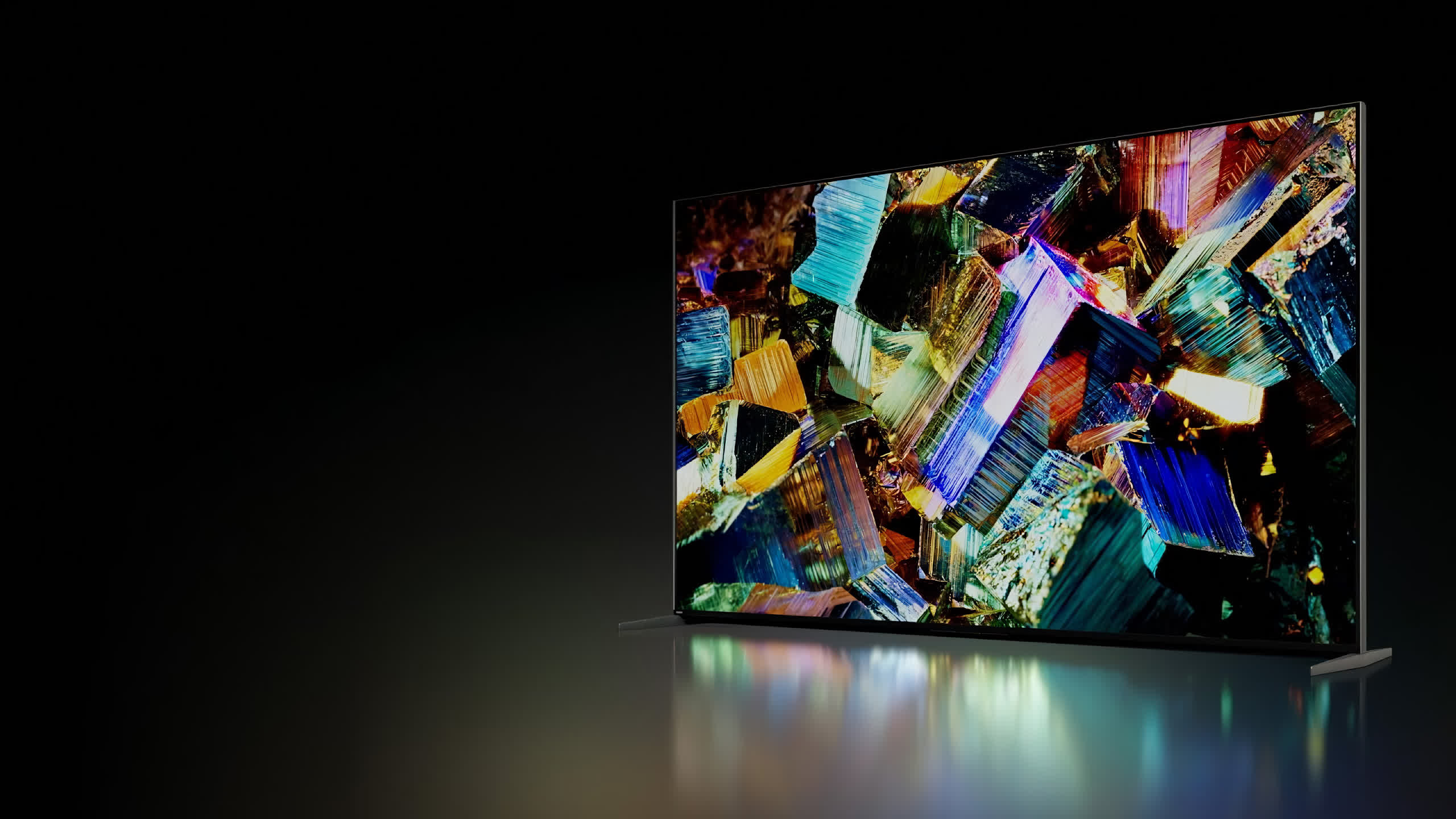
Sony has quietly confirmed it has no plans to release new 8K TVs anytime soon. Its last models, the 75 and 85-inch Bravia XR Z9K, launched in 2022 and remained in rotation for two years. Now the company is discontinuing the line entirely. Sony said it may eventually return to 8K TVs, but there is not enough momentum in the market right now.

The company's remaining 8K TVs will stay on shelves until inventory runs out. Its upcoming models focus on high-end QD-OLED panels with 4K Ultra HD resolution, sold under the Bravia 8 II brand. The manufacturer is also developing a 4K LCD prototype featuring RGB LED backlighting.
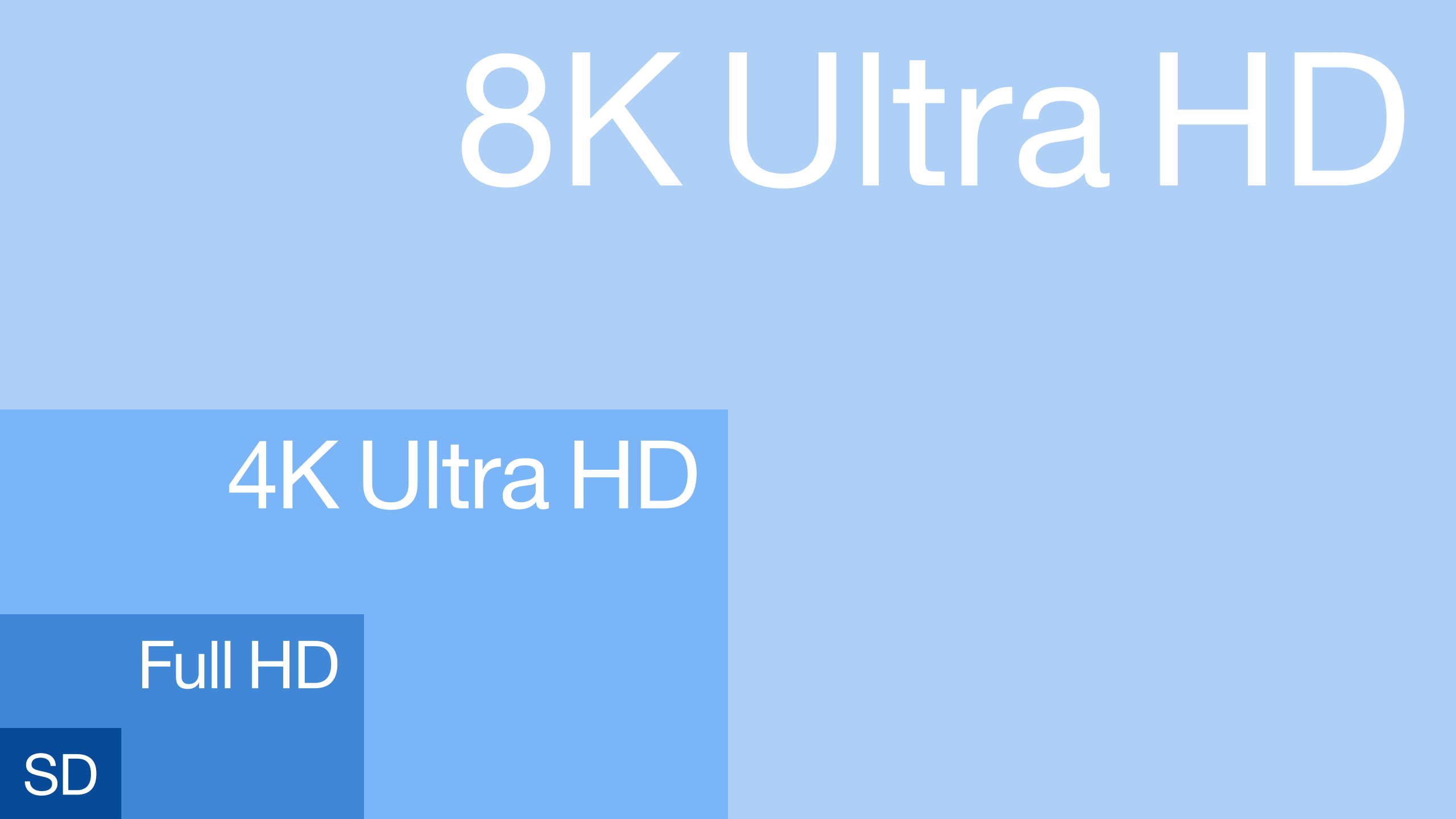
Defined by the ITU-R BT.2020 standard for 8K broadcasting, the format supports a 7680×4320 resolution with 33.2 million pixels – double the linear resolution of 4K, triple that of 1440p, and four times that of 1080p. The newly introduced PlayStation 5 Pro supports 8K video output via HDMI 2.1, but consumers have shown little interest, and 8K content remains scarce.

The PS5 Pro debut failed to ignite meaningful interest in 8K content, and the few remaining 8K TVs on the market still sell at a premium compared to 4K Ultra HD or even Full HD models.

Massive 8K displays need native 8K content to deliver optimal results since upscaled lower-resolution material can introduce artifacts or blurriness.

Ironically, Sony is exiting the 8K TV market while continuing to produce 8K native cameras designed to capture video feeds at a 7680x4320 resolution. Early adopters eager to get a jump on that 8K content have very few other options. Samsung has released massive 8K TVs with microLED backlighting, while LG introduced its latest 8K models in 2024 with the QNED 99 Series.

Permalink to story:

 
8K is here to stay and prosper, subject to improved energy efficiency. The first 8K TV-s were power hogs, is what halted their initial spread.
 
If I got one today, the only way I would use it would be for watching videos recording in 8k on my phone.
But then, 4k looks just as good.
Our technology needs adjustment.
We have 4k TVs, but GPUs that cost too much to play in 4k.
Streaming services that stream sports stream in 1080p.
So, 8k is meaningless to a lot of people
 
I would love to replace my current 3 x 32" 4K monitor setup with 1 x 8K monitor of sufficiently small size (and pixel configuration). As long as your video card can drive it's purely a matter of cost.
 
8K wont be mainstream for atleast another 10 years.....

90% of media is streamed and almost no one has the bandwidth speed w/ their ISP ... not to mention the streaming companies....christ, netflix choked on the tyson fight and that was 4k...

Even if streaming companies upgrade their servers.... the media quality will be so compressed , it won't even be true 8k.....
 
What? How shocking! I mean, there's soooo much 8k content out there and all the cool kids with their 8k enabled game consoles and PCs... What ever shall we do?!?

Oh, right..
 
To see the difference between 1080p and 4k on a TV, you need to have at least a 60” screen while sitting fairly close… and even then, the difference isn’t that great…

For anyone to see the difference between 8k and 4k, you’d need a crazy huge screen - and be sitting like 4 feet away from it.

And all that’s assuming there was some sort of 8k programming to watch - which there isn't.
 
Last edited:
To see the difference between 1080p and 4k on a TV, you need to have at least a 60” screen while sitting fairly close… and even then, the difference isn’t that great…
That's not true. the differences between 1080p and 4k are noticeable. Most people don't care about the differences in pixel density as much as the frame-rate. For example, I would rather have a 120hz 1080p TV than a 60hz 4k TV.
For anyone to see the difference between 8k and 4k, you’d need a crazy huge screen - and be sitting like 4 feet away from it.
That's true. The difference between 4k and 8k are just not visible without a magnifying glass, and yup, I've tried it.
 
8K is here to stay and prosper, subject to improved energy efficiency. The first 8K TV-s were power hogs, is what halted their initial spread.
Nope. The human eye is incapable of noticing any detail over 4K. It is an utterly pointless pursuit.

We’ve known this, TV makers knew this, but they went along anyway, in hopes of some easy bucks. Thankfully it didn’t amount to anything. It can go down the drain now.
 
8K will never be mainstream unless it's get so cheap there's no reason not to do it. The difference between 4k and 8k is totally negligible in terms of what our eyes can precieve.
 
Nope. The human eye is incapable of noticing any detail over 4K. It is an utterly pointless pursuit.

We’ve known this, TV makers knew this, but they went along anyway, in hopes of some easy bucks. Thankfully it didn’t amount to anything. It can go down the drain now.
Well, the human eye can - just not on a TV… having a 36” (or larger) monitor that’s only a few inches from your face would benefit from 8k…

Of course, there’s people who think they can hear the sound quality difference on an LP over digital…
 
8K wont be mainstream for atleast another 10 years.....

90% of media is streamed and almost no one has the bandwidth speed w/ their ISP ... not to mention the streaming companies....christ, netflix choked on the tyson fight and that was 4k...

Even if streaming companies upgrade their servers.... the media quality will be so compressed , it won't even be true 8k.....


If atmos on streaming it's that funny 768mb/s stuff
 
That has been objectively proven. The human ear can easily tell the differences between the 22khz LP recordings and the 44.1khz CD recordings. This has ALWAYS been true.

Where did you get this???? There is NO sampling frequency in an analog recording. The straw you might be trying to grasp is that the frequency range of human hearing is generally 20-20,000 HZ. LP's have a dynamic range of 80db vs 96db for CD. The 44khz sample rate refers to the Nyquist theorem for being able to create a lossless audio track using digital sampling.

One is different from the other, not necessarily better or worse.

The comment about 8k cameras allowing better zoom and effects is probably spot on. I don't have anything that will actually print and/or display pictures from my 46 mega pixel camera either.

I think 10 years is being generous....It will pick up steam when all the new super batteries we read about are ready.:)
 
That has been objectively proven. The human ear can easily tell the differences between the 22khz LP recordings and the 44.1khz CD recordings. This has ALWAYS been true.
Since when do those frequencies matter?

At high enough resolutions, digital is indistinguishable... and of course, that's assuming you have a high-quality master on your LP - and high quality audio equipment... otherwise digital will always be superior.
That's not true. the differences between 1080p and 4k are noticeable. Most people don't care about the differences in pixel density as much as the frame-rate. For example, I would rather have a 120hz 1080p TV than a 60hz 4k TV.

That's true. The difference between 4k and 8k are just not visible without a magnifying glass, and yup, I've tried it.
A human can't distinguish between 1080p and 4k UNLESS they are close enough and the screen is large enough... for the average person, assuming your viewing distance is 4-6 feet, you'd need a 60" or larger screen.


As there's very little "true" 4k broadcasts, most people probably wouldn't notice a difference either way... the reason to buy 4K today is mostly because the best refresh rates, HDR, etc only tend to be offered on 4k sets... Once this becomes true for 8K sets (Sony leaving puts a delay on that though), you'll see more people adopting 8K as they simply won't have much of a choice if they want the latest Dolby Vision, high refresh, HDR, etc..
 
To see the difference between 1080p and 4k on a TV, you need to have at least a 60” screen while sitting fairly close… and even then, the difference isn’t that great…
Broadcast TV is only 1080i or 720p to begin with. The side channels are 480i the old NTSC standard..

My latest TV doesn't have the provision to adapt to 4:3 aspect ratio. So, while watching "Buffy the Vampire Slayer" reruns stretched to 16:9, poor Sarah Michelle Gellar's A$$ is the size of Paul Bunyan's blue ox "Babe". "Six ax handles broad", IIRC.

In other news, with all the bellyaching about the price of video cards, I can't wait to tune in when y'all figure out that a RTX-5090 is about "entry level" for 8K gaming.

Then with these tariffs, just try to imagine how much one will cost.

No worry though kidz, just think how much you'll making when those jobs in the coal mines come back.
 
Nope. The human eye is incapable of noticing any detail over 4K. It is an utterly pointless pursuit.

We’ve known this, TV makers knew this, but they went along anyway, in hopes of some easy bucks. Thankfully it didn’t amount to anything. It can go down the drain now.
The human eye has no resolution limit, just like the human eye can observe far more then 30 FPS.

You likely wont see the 4k difference because the vast majority of people stream, and even with VP9 encoding or AV1 a 4k video stream still has a worse bitrate then a 1080p blu ray, and thats before getting into audio.

If you have 4k blu rays or properly encoding 4k media locally you can absolutely see the difference.
 
It’s kind of ironic but understandable — the content creation side is ahead of the consumer side. Sony’s still investing in 8K cameras, probably for archival, cinema, or futureproofing, but they know mass-market home viewing just isn’t there yet.
 
8K will never be mainstream unless it's get so cheap there's no reason not to do it. The difference between 4k and 8k is totally negligible in terms of what our eyes can precieve.
I bet 8k cheap TVs are the easier step. Proper 8k content however wont be there anytime soon. I cannot imagine a reason why even richest streaming companies would offer 8k content.
Same goes for sport pros. It would be insanely expensive to update to 8 to stream.
And many more reason such as GPUs that are too expensive, people living in rural areas on mobile internet.
 
There's no media to begin with to really take advantage of 8K.

Do you see Netflix, Youtube or any other popular streaming app capable of handling up to 8K?

Likely there's barely any difference to be seen unless you look at details compared to 4K and 8K.

 
Back