Startup aims to beam sunlight from space using mirrors

Skye Jacobs

Posts: 1,966   +58
Staff
Forward-looking: A California startup is looking to space to solve the limits of ground-based solar power. Reflect Orbital is developing a constellation of satellites with giant Mylar mirrors to beam sunlight back to Earth after dark – an idea that offers bold potential but faces steep engineering hurdles.
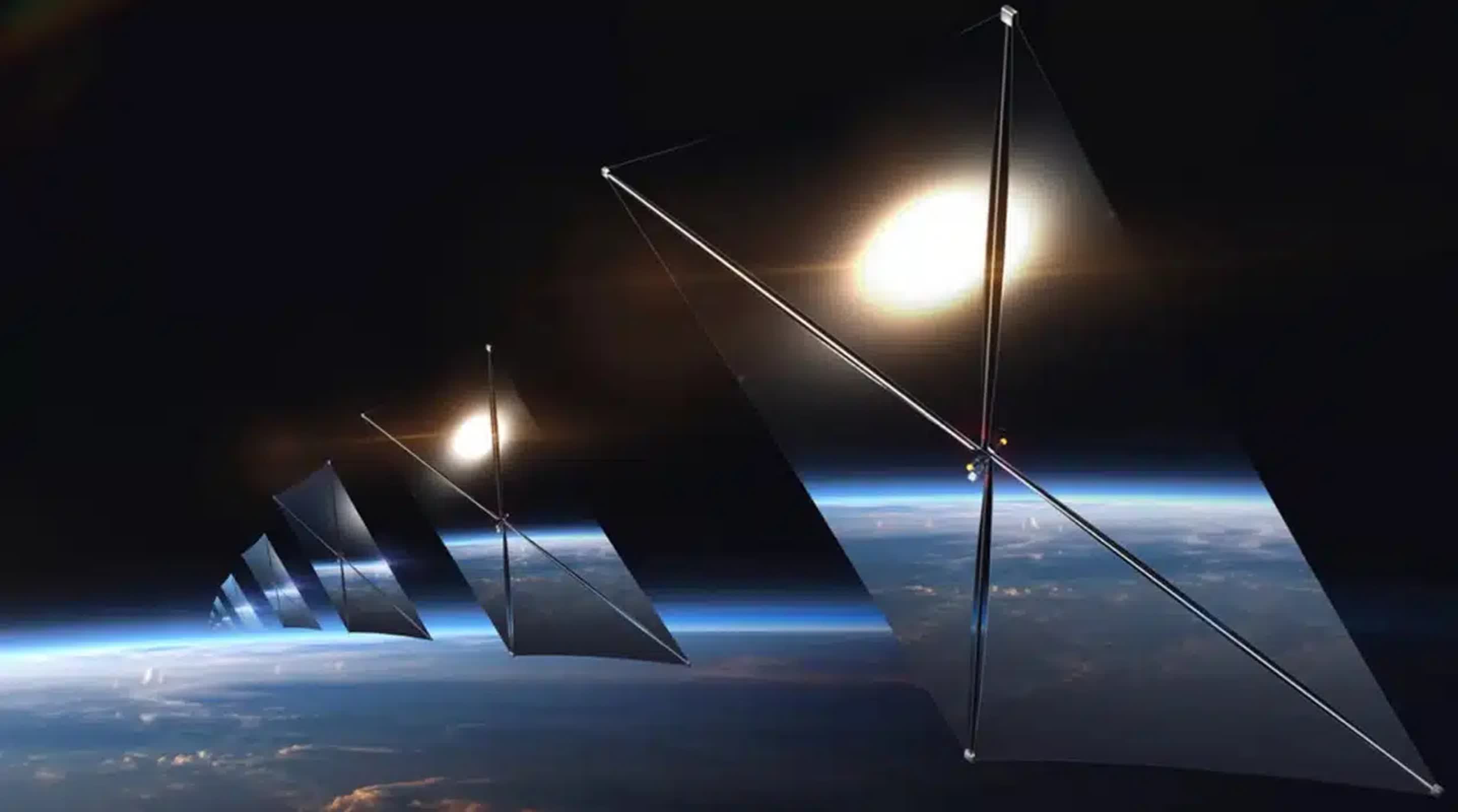
At the heart of Reflect Orbital's project are its Mylar mirrors. Each satellite will unfurl a 33-by-33-foot sheet of lightweight polyester film known for its durability and reflectivity. The satellites weigh about 35 pounds, making launches cheaper, and once in low Earth orbit, they'll aim sunlight at solar plants or other areas needing nighttime illumination.

Directing light from space with pinpoint accuracy requires serious technical skill. Each mirror must constantly adjust its attitude and orientation, using advanced control systems – likely reaction wheels or similar actuators – to track both the Sun and its Earth-bound target. Clients would specify locations online, and the system would redirect reflected sunlight accordingly. location online, after which the system directs the reflected sunlight accordingly.
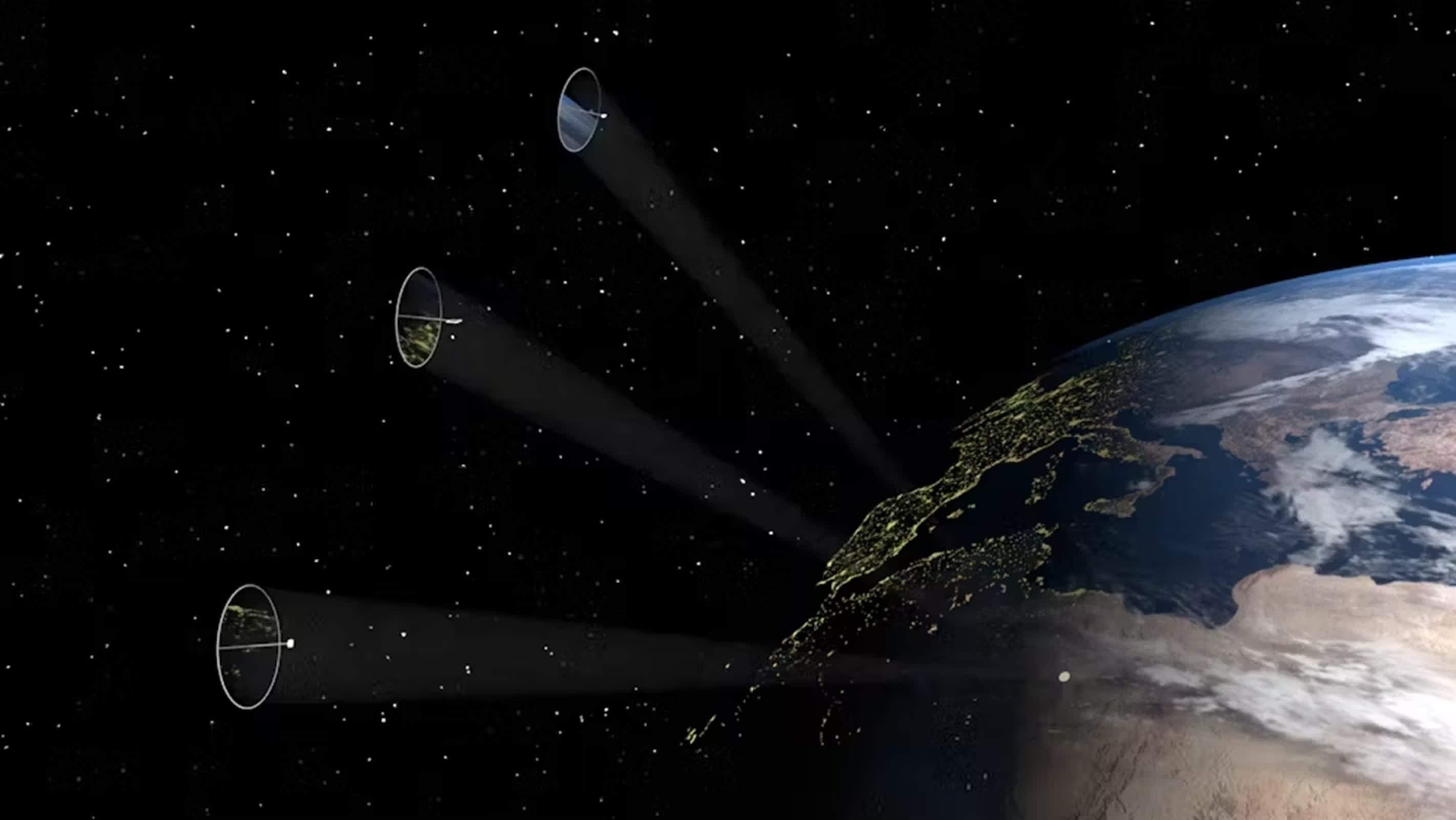
The engineering hurdles remain daunting. Satellites must coordinate with the Sun's movement and Earth's rotation, constantly fine-tuning their aim to keep the reflected beam on a small target like a solar farm. Furthermore, cloud cover and atmospheric scattering can weaken the light before it even reaches the ground. Early tests with high-altitude balloons and smaller mirrors have shown promise, but scaling to full orbital deployment raises the difficulty dramatically.

Another challenge is the risk of adding to Earth's growing cloud of orbital debris. Reflect Orbital must follow strict disposal rules, ensuring it deorbits each satellite from orbit within 25 years of completing its mission or sooner.

The startup is also working to address potential light pollution and its impact on nighttime environments and astronomical observations. The company says it designed the mirrors so that only those within a narrow band near the targeted site would experience the additional illumination.

Reflect Orbital plans to launch up to 57 satellites at an altitude of 600 kilometers, aiming to build a network that delivers sunlight on demand. Though still in early development, the project has drawn keen interest and marks a significant step toward a new frontier in renewable energy.

Permalink to story:

 
My thoughts are really just is it worth it? From a monetary or environmental perspective....
- It's a very complicated engineering and maths hurdle
- launching multiple satellites will be very expensive (environmentally and money)
- unless the satellite mirrors are huge you'll only be redirecting light to a very limited number of ground based targets
- environmentally, you'll also be redirecting the heat as well...

The amount of energy you'll capture and 'save' from this project you might as well just invest the same amount of money into buying a field, filling it with solar panels and a battery array.
 
This is obviously a weapon. As an energy source is an excuse to send them to the space. Even a magnifying glass can easily start a fire not to mention a massive array of mirror redirecting lots of sunlight directly from space. The redirected sunlight can not only target things on the ground (of other countries) but also other satellites.
 
Bold move trying to outshine the Moon with a space disco ball. Can’t wait for the first conspiracy theory about how these satellites are controlling the tides.
 
It's like the earth temperature isn't enough, let's grill it a bit more...
People lack sense nowadays. On one hand, we are combating “global warming”, then we introduce more heat. When we need to reflect heat back to space, we are doing the opposite.
 
"Each mirror must constantly adjust its attitude"

Do they reflect more light if they're being nice to the other satellites?
 
If they redirect the sunlight directly onto Solar Farms, that will give the Farms a good 4-8 hours extra power creation, then it comes to storing the power or if not store, off grid direct use, logic... NOT really because there are some people who think blocking out the sun light will make the planet cooler, but they don't follow the science, if they did follow the science they would know the Earth has never been cooler, and its a downward cooling, so the whole climate change BS scam is always No.1, repeat the lie until all the iriots believe the lie.
 
If they redirect the sunlight directly onto Solar Farms, that will give the Farms a good 4-8 hours extra power creation, then it comes to storing the power or if not store, off grid direct use, logic... NOT really because there are some people who think blocking out the sun light will make the planet cooler, but they don't follow the science, if they did follow the science they would know the Earth has never been cooler, and its a downward cooling, so the whole climate change BS scam is always No.1, repeat the lie until all the iriots believe the lie.

No. The Earth has been cooler and not all that long ago, geologically speaking.

• Most recent trend is warming.
• Next older trend is flat with small oscillations for 10,000 years, the entire history of human agriculture and the climate our food production is based on. You can see the importance of maintaining this temperature range.
• Next older trend is warming again from 20K to 10K years ago
• Next older trend is 1 million years of oscillations in an average cooler planet than today.
• Next older trend is 50 million years of cooling from a very warm planet.

All_palaeotemps.png
 
No. The Earth has been cooler and not all that long ago, geologically speaking.

• Most recent trend is warming.
• Next older trend is flat with small oscillations for 10,000 years, the entire history of human agriculture and the climate our food production is based on. You can see the importance of maintaining this temperature range.
• Next older trend is warming again from 20K to 10K years ago
• Next older trend is 1 million years of oscillations in an average cooler planet than today.
• Next older trend is 50 million years of cooling from a very warm planet.

All_palaeotemps.png
if its not observable in science its thumb suck BS, so charts mean nothing, its all based on bias fake models
 
if its not observable in science its thumb suck BS, so charts mean nothing, its all based on bias fake models

If your expertise is not in science, it's OK not to understand it. I can't observe the individual chemical reactions of gasoline burning in an internal combustion engine but I do believe the scientists that describe those chemical equations that make my car go.
 
If your expertise is not in science, it's OK not to understand it. I can't observe the individual chemical reactions of gasoline burning in an internal combustion engine but I do believe the scientists that describe those chemical equations that make my car go.
Then you don't know science, because there are loads of videos of fuel burning in combustion engines ... people who claim they follow science, but really are just people who believe and have faith in something that is impossible to explain use the excuse of science, because science makes it easy to evade responsibility, if it messes up and kills millions you just say ...oh well, its science, we learn from the mistakes...
 
Then you don't know science, because there are loads of videos of fuel burning in combustion engines ... people who claim they follow science, but really are just people who believe and have faith in something that is impossible to explain use the excuse of science, because science makes it easy to evade responsibility, if it messes up and kills millions you just say ...oh well, its science, we learn from the mistakes...

You missed the point but that's OK, have a nice day.
 
Back