Looking ahead: Home robots are no longer limited to tightly scripted routines or one-off public demonstrations as they progress from prototype to pilot programs. With one company's robot approaching its beta test, a key question looms: How close are we to a future where robots can seamlessly handle everyday household chores?
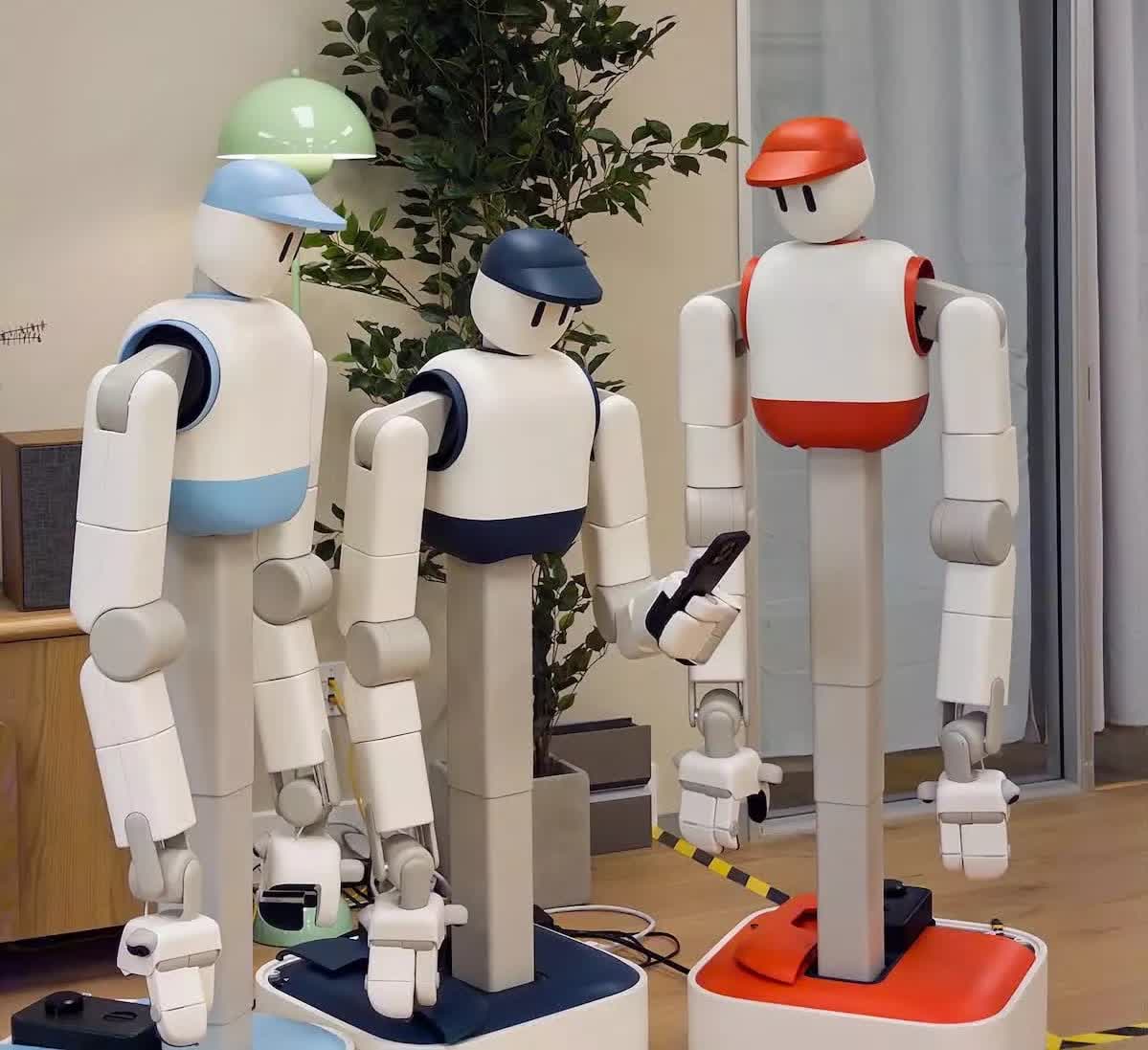
In a Mountain View kitchen, a wheeled robot named Memo methodically prepares an espresso, illustrating the technical progress underway at Sunday Robotics. The machine, roughly the size of a compact dishwasher, features two articulated arms with pincer-like grippers, a height-adjustable central column, and a display that mimics a cartoon face topped with a stylized red cap. Unlike humanoid robots designed to imitate human movement, Memo relies exclusively on wheels for mobility.
Memo's coffee-making demonstration unfolds with measured precision. After positioning itself at the countertop, the robot uses one pincer to fill the portafilter with ground coffee, tamps it down using force-control algorithms, locks the filter into an espresso machine, places a cup, initiates the brewing cycle, and ultimately delivers the finished espresso to its recipient.
Each step – mundane for a human – reveals substantial technical hurdles for robotics. Object recognition in cluttered spaces, variable grip reliability, and subtle force modulation are all essential; even small missteps could cause spills or equipment damage.
Tony Zhao and Cheng Chi, Sunday Robotics' founding engineers, see vertical integration as key to overcoming the most formidable challenge in domestic robotics: adaptability. Their team not only designs Memo's hardware but also develops the AI models required for nuanced control and learning in ever-changing environments.
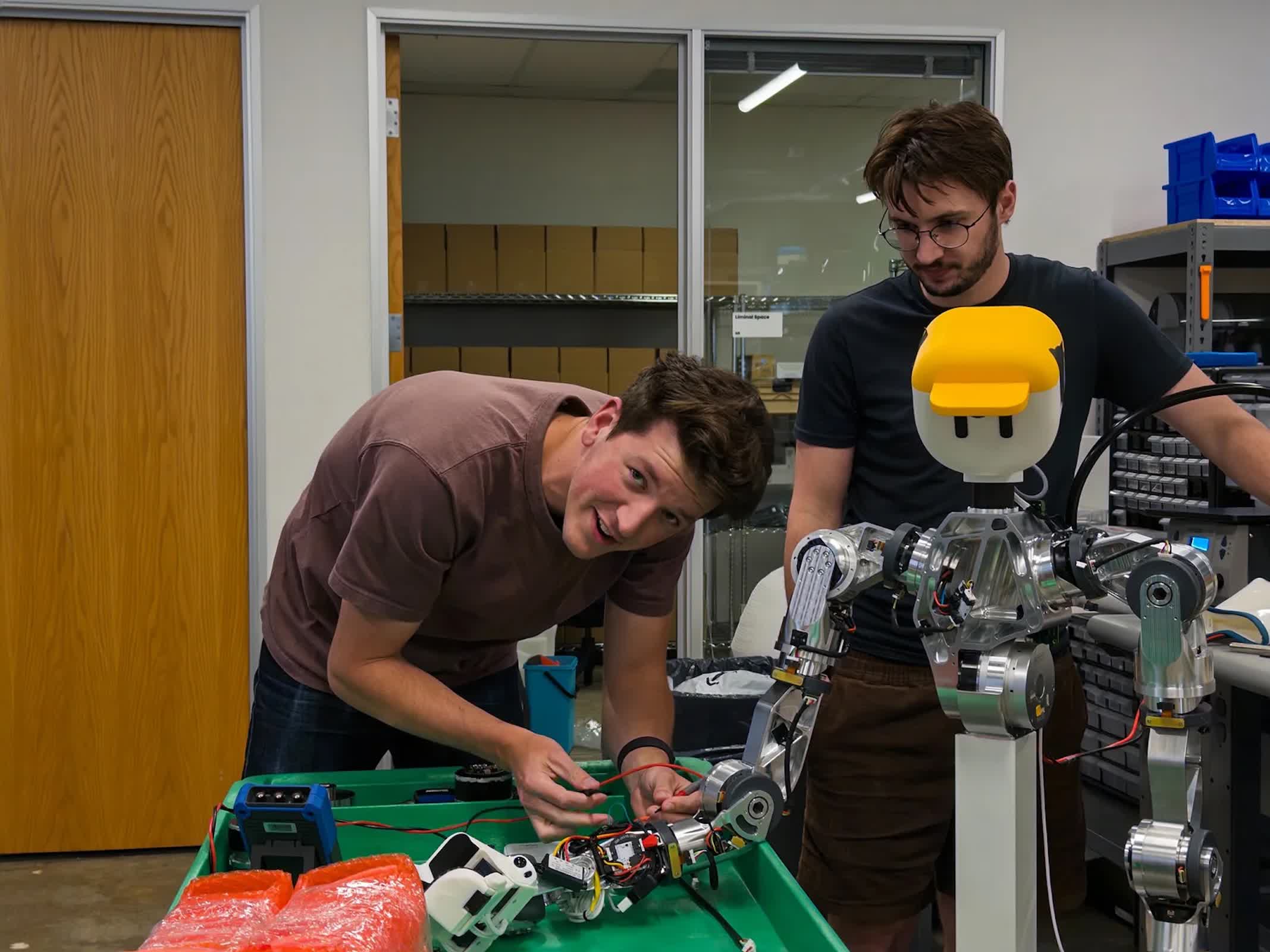
To facilitate dexterous manipulation, Sunday uses a novel data-acquisition system: remote operators wear $400 sensor-equipped gloves that mirror the movements of Memo's mechanical hands while performing real household chores. These gloves allow the company to capture direct measurements of human handling strategies including grip strength, finger placement, and motion trajectories.
As operators complete tasks, the data feeds into Memo's training pipeline, which fuses glove telemetry, vision input, and proprioceptive sensor readings to refine its manipulation models.
This approach bypasses more conventional teleoperation systems in which operators control robots via cameras and joysticks. With glove-based training, each subtle aspect of manipulation – how a glass is grasped, tilted, or rotated – is mapped directly onto Memo's hardware. The result is more natural motion and greater effectiveness when dealing with unfamiliar objects and messy real-world setups.
In one test, Memo gripped two differently sized glasses using distinct parts of a single hand, demonstrating a nuanced grasping ability enabled by data that more closely reflects human dexterity than traditional teleoperation or reinforcement-learning methods based on randomized trials.
Roboticists, including UC Berkeley's Ken Goldberg, note that capturing rich, glove-derived manipulation data is an innovative step that could accelerate progress in real-world robotic adaptability. Such data is particularly valuable as robots transition from predictable factory settings to the dynamic, cluttered environments of everyday homes.
Recent advancements have also allowed robots to leverage large language models, offering new ways for them to interpret tasks and respond intelligently to spoken or written instructions. However, the absence of a vast, shared data repository – a "robotics internet," as Zhao describes it – remains a significant roadblock.
November 19 pic.twitter.com/DS6JO76YOM
– Sunday (@sundayrobotics) November 15, 2025
Instead, progress depends on collecting vast, diverse datasets that reflect the realities of home life.
Memo's development is unfolding in a landscape where several companies are racing to bring robotics into the domestic sphere. Startups like Physical Intelligence, Skild, and Generalist are pursuing flexible, adaptive training approaches, while 1x has introduced a teleoperation-assisted humanoid home robot.
Sunday Robotics differentiates itself through a tightly integrated hardware – software stack – a point frequently cited by investors and industry observers. Sarah Guo, founder of Conviction, highlights the team's blend of Tesla and Google DeepMind veterans, while Benchmark's Eric Vishria points to Sunday's emphasis on practical, real-world deployment.
The coming year will see Memo tested in real homes, a critical evaluation of technical reliability and user satisfaction as the robot navigates children, pets, clutter, and the incomplete instructions typical of most households.
Data from this pilot phase will guide Memo's path toward broader adoption. Early enthusiasts – much like the pioneers of personal computing – are expected to shape the robot's evolution and influence its learning curve. Sunday Robotics also plans to let users teach Memo new tasks directly, adding a layer of user-driven customization that reflects broader trends in human – AI interaction.
Image credit: Wired
The age of household robots might finally be here: Meet Memo


