The most popular PC games still rarely use hardware ray tracing

Daniel Sims

Posts: 2,466   +74
Staff
In brief: Nvidia launched its push toward hardware-accelerated ray tracing in 2018 with its GeForce RTX 20 series graphics cards, promoting the technology as a defining feature of next-gen gaming. However, a look at today's most popular PC games shows that – nearly eight years later – it remains far from ubiquitous.
PC Gamer recently noted that, among the 21 most popular PC games of 2025, only five make use of hardware-accelerated ray tracing. While the demanding technology is gaining traction in visually ambitious AAA titles, it has yet to trickle down to games optimized for mainstream hardware.

It is unsurprising that popular titles with lightweight visuals skip ray tracing, including Dispatch, Hollow Knight: Silksong, REPO, Counter-Strike 2, Valorant, and Peak. More notable, however, is its absence from several high-profile, graphically intensive games such as Stellar Blade, Split Fiction, and Nioh 3. Monster Hunter Wilds, which became notorious for its performance issues, only uses ray tracing for reflections.
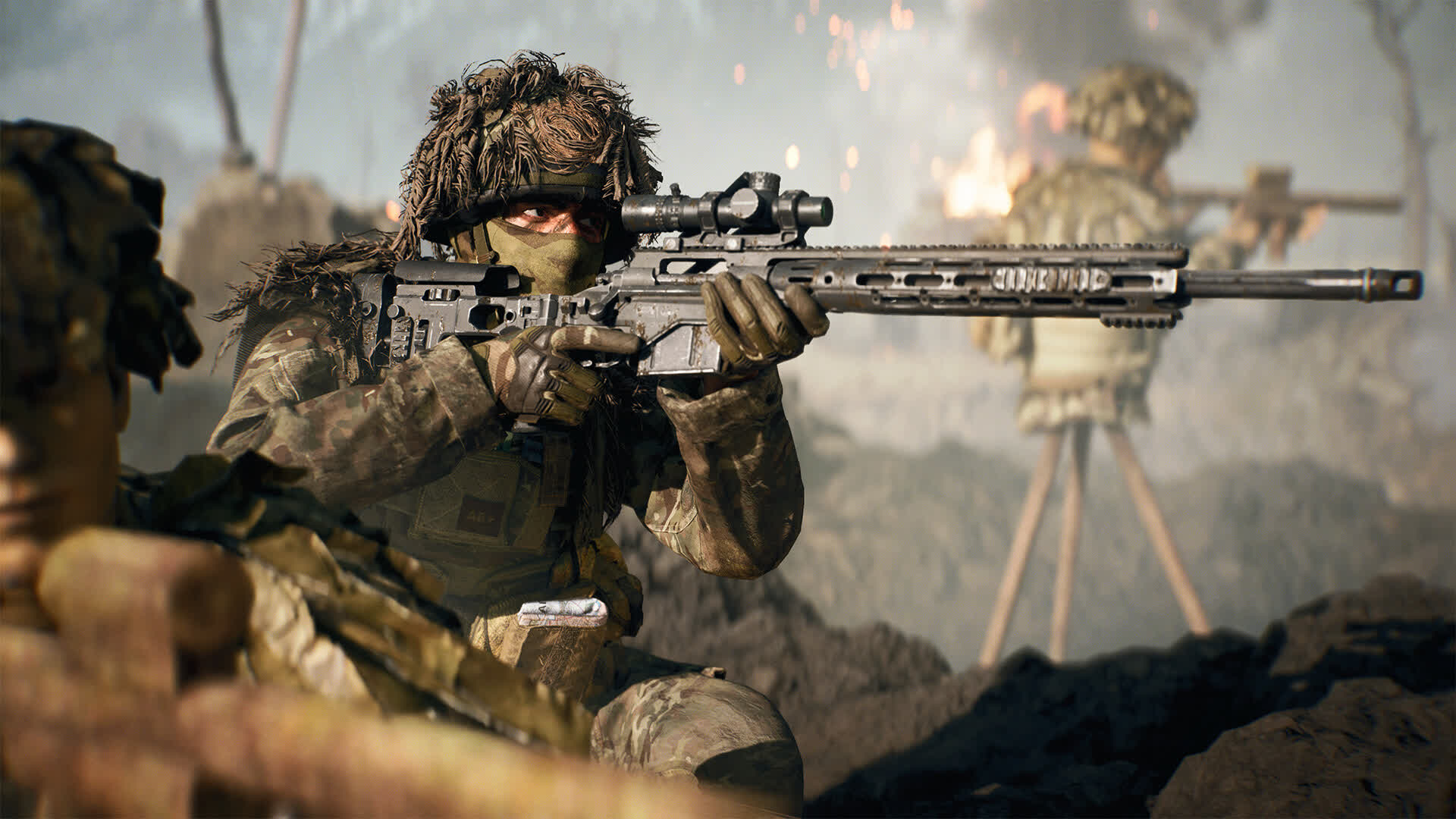
Some franchises have even stepped back from ray tracing. Battlefield V was one of the first games to support ray tracing, yet Battlefield 6 omitted it seven years later. FromSoftware's Elden Ring Nightreign also lacks ray tracing despite its inclusion in the original Elden Ring.

The Call of Duty series removed ray tracing after 2020's Black Ops Cold War, later restoring reflections in Black Ops 7 multiplayer and adding the more demanding path tracing to lobbies in Warzone 2.0 and Modern Warfare III.

Implementing ray tracing in areas where players customize cosmetics (such as menus and lobbies) is likely easier for developers than manually baking lighting and shadows for every possible configuration. Ubisoft has cited this reasoning to explain why the customizable hideout is the only area in Assassin's Creed Shadows with mandatory ray tracing. FromSoftware likely enables ray tracing in Armored Core VI's garage mode for similar reasons.

Although the adoption of hardware-accelerated ray tracing has been limited, software-based global illumination which can be considered a form of ray tracing is far more common. This is largely because Unreal Engine 5, now the dominant engine for AAA development, includes Lumen global illumination as a standard feature.
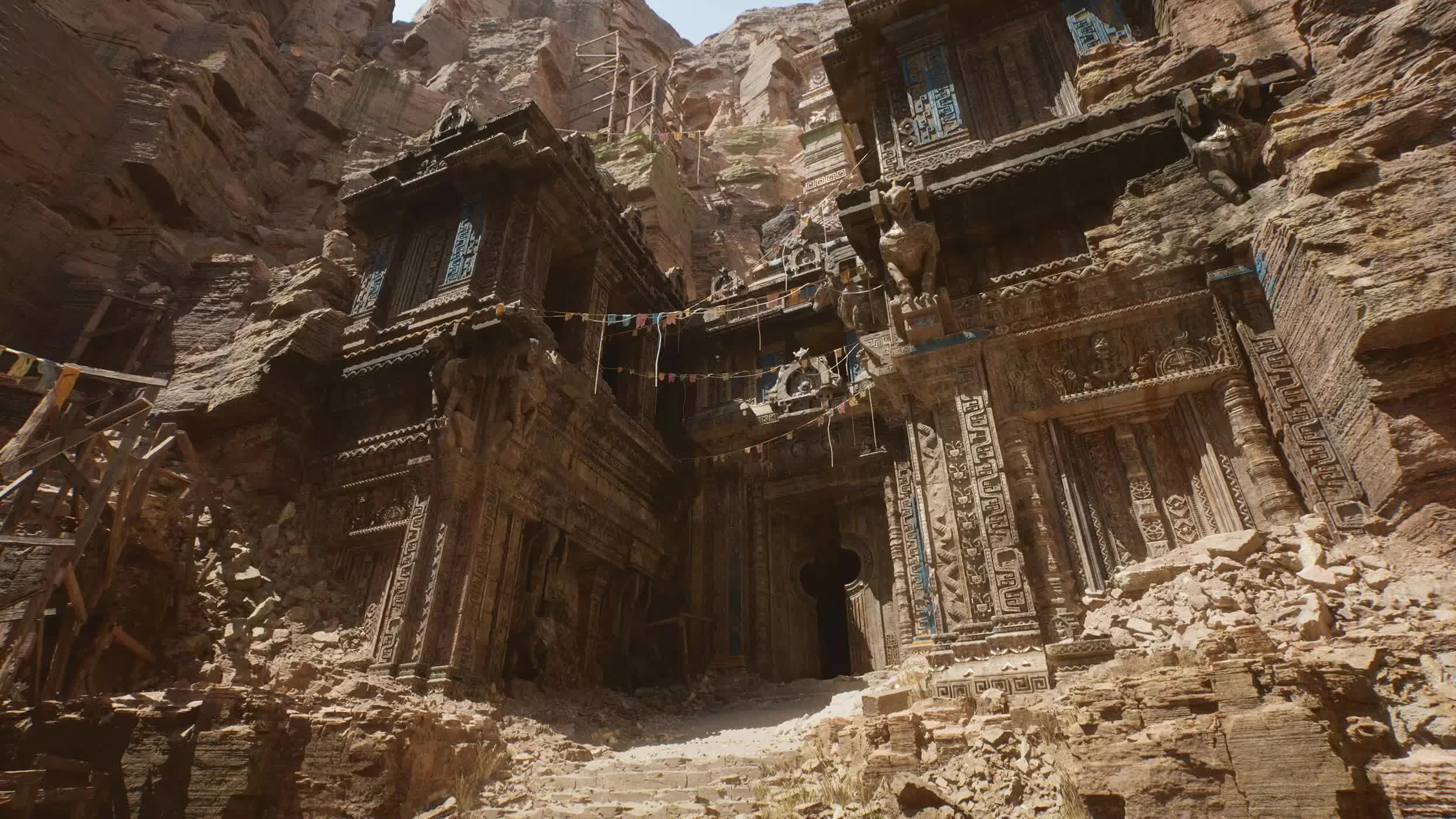
Still, most developers only rely on Lumen's software-based implementation, which produces less impressive results and shifts much of the rendering workload from the GPU to the CPU. A notable exception is one of the most popular games in the world: Fortnite – which Epic Games uses as both a test bed and a showcase for UE5 features.

The hesitation to fully embrace hardware-accelerated ray tracing is understandable. Many developers still view the performance cost as unjustified, especially since most consumer hardware outside mid-range and high-end Nvidia GPUs does not prioritize ray tracing performance. AMD graphics cards only reached parity in this area with its latest RDNA 4 architecture, which remains limited to hard-to-find desktop models.

Also see: Is Ray Tracing Worth the FPS Hit? 36 Game Performance Investigation

In addition, most AAA titles are designed around console hardware, where ray tracing support was a late addition to older RDNA 2-based chips. Even so, recent and upcoming technologies suggest that a broader shift may be approaching.

Epic's demonstrations of newer Unreal Engine 5 builds have emphasized a push toward achieving 60 fps with hardware-accelerated ray tracing on the standard PlayStation 5. Two recent idTech-powered releases: Indiana Jones and the Great Circle and Doom: The Dark Ages, have reached similar targets while also enabling path tracing on PC. Capcom's upcoming Resident Evil Requiem and Pragmata might accomplish the same feat.

Over the next few years, next-generation consoles, desktops, laptops, and handhelds powered by RDNA 5 could establish a new baseline, offering significantly improved ray tracing and path tracing performance. Whether these devices will be affordable remains uncertain, however, as tariffs and ongoing memory shortages have already driven price increases and delays.

Permalink to story:

 
Running 5070TI here it's most of the time not worth it to enable Ray-Tracing due to the performance loss for minimal graphics upgrade.

Unreal Engine 5, hardware Ray tracing feature is much worse on performance than any other engine.

I think more games need to use the Decima engine from Horizon series as you don't need Ray Tracing and runs super smooth with visuals much better than Unreal Engine 5 games.
 
Last edited:
That's fake technology, like AI - not ready for deployment, but introduced anyway - poorly, poorly used to justify use of datacentre and workstation technology in consumer products. And cut off competition, with bribes and threats to game developers. Thanks to nVidia, We went backwards last decade.
 
Still nothing better than enabling a "feature" and having it tank your FPS by 30-50%.

Then to regain some of those lost frames you need to enable upscaling and then to regain more of the lost frames you need to enable "Frame Generation".

Now you've done it! You've reclaimed your lost frames by enabling three features! Oh....what's that? You have a "fast" frame rate, but things feel sluggish? Oh, no fret! Just enable a fourth feature to reduce the increased latency that the other three features caused!

All is right in the world again because that 1440p native resolution you have is actually running at somewhere between 720 and 960p, depending on your setting choices, but that's okay because you have enabled a bunch of extra features that add a little flare to the game to get back to the playable frame rate you had without enabling said features at a better resolution! You are winning! Win with ray tracing!
 
Its like article said, current-gen consoles dont have the juice to handle hardware ray tracing Most gaming companies are releasing their titles for multi-platform, it makes no sense (in most cases) to shrink your market share over a feature that frankly, the majority of people don't notice and/or don't care about.
they care about game running smooth.
 
When enabling Ray-Tracing can drop performance to half, it's clear this tech is not ready.
And the worst part, is that in the majority of games, the difference is so small, it barely makes a difference, asides from the frame rate.
I would rather have devs polishing their game and fixing bugs, improving gameplay, add more content, rather than waste time and money on implementing Ray-Tracing or Path-Tracing.
 
Why are developers actively removing it, though, for the people who do have the hardware to run their games with it. Can't you simply just turn it off or on at will?
Likely because they are looking to cut staffing anywhere they can, and if their internal telemetry sho s a single digit percentage of players are using RT, then it's cheaper to remove it and its support requirement.
 
That's fake technology, like AI - not ready for deployment, but introduced anyway - poorly, poorly used to justify use of datacentre and workstation technology in consumer products. And cut off competition, with bribes and threats to game developers. Thanks to nVidia, We went backwards last decade.

It seems ready for deployment. I'm not sure if you noticed but it's seeing a lot of use. Societally changing level of use, really. Cutting off competition seems an odd way to describe completely outclassing their competition in pretty much every aspect except bottom barrel pricing.
 
I've taken a hard look at RT when it became a thing and think it's a seriously underwhelming feature.

However when GPU producing companies imply or bluntly say something's a must-have welll...they wouldn't lie to us would they? Would they?
 
Running 5070TI here it's most of the time not worth it to enable Ray-Tracing due to the performance loss for minimal graphics upgrade.

I think its not even a graphic upgrade. It's just a different kind of fake. In many games I don't even find RT improving the overall graphic impression.

 
Certain games, RT makes a good bit of difference for the better visually, Cyberpunk 2077 as an example, but until Consoles have the power to do proper Path Tracing at 1080p, and the performance hit isn’t quite so much on PC, developers aren’t really able to take advantage of it.

There are some major advantages for developers, games are much quicker to develop with RT, saving vast amounts of time and money, you can make your game more realistic looking if desired, there’s definitely reasons for RT, but we’re quite some way out before it becomes mainstream.
 
Certain games, RT makes a good bit of difference for the better visually, Cyberpunk 2077 as an example, but until Consoles have the power to do proper Path Tracing at 1080p, and the performance hit isn’t quite so much on PC, developers aren’t really able to take advantage of it.

There are some major advantages for developers, games are much quicker to develop with RT, saving vast amounts of time and money, you can make your game more realistic looking if desired, there’s definitely reasons for RT, but we’re quite some way out before it becomes mainstream.
The RT updates for Metro also look really good.

Fact is most devs dont care, they "add" RT without putting any work in it and are shocked when people dont like it.
 
The RT updates for Metro also look really good.

Fact is most devs dont care, they "add" RT without putting any work in it and are shocked when people dont like it.
Completely agree, it’s an afterthought, driven because consoles and most PC’s, simply don’t have the horse power to run it properly.

But transitional rasterised lighting, fake lighting if you will, all hardware today can run every trick a modern game engine has with not much trouble, it’s also easier to scale at the moment, while path tracing kinda has less wiggle room as the whole point is to replace all those raster trick's.

It’ll be something we come back to in the 2030’s most likely, when a new Gen of console is out and devs have started getting to grips with updated engines etc…
 
You either want to allow few select high end GPU owners to enjoy the natural light and shading, or you want to sell as many copies of your games as possible.
I remember how they promoted raytracing in bf5 by showing mirror clear reflections on the ground.
This not a good time to advance game graphics.
 
Got a 5080, and I always turn on RT reflections. I hate the old way of doing that. Its always obvious and bad. If you move the camera up and down... left and right... pretty much sux no matter how you move.

Even on 3070, RT reflection on ultra performance is a must in a game full of water. Rather that than prettier higher ress game imho. It depends ofc. Some games dont rly need it. RT for shadows is a 100% turn off for me. Rarely I see a big improvement, and even then... not worth the fps drop.
 
This RTX BS reminds me of 3D TVs. Still can't believe suckers dig it.

Games with RTX OFF run much, much, much, much better. And look better too.

RTX just forces everything to be dark just to show the illumination of surfaces where the light shines.

Never understood the hoopla around this RTX bs. Drag your card down for what?

(And this is coming from someone who is using a 4090).
 
It seems ready for deployment. I'm not sure if you noticed but it's seeing a lot of use. Societally changing level of use, really. Cutting off competition seems an odd way to describe completely outclassing their competition in pretty much every aspect except bottom barrel pricing.

I think the issue isn't that it's not working from a marketing perspective. The real problems is that it HAS been wildly successful. I've seen all the screen grabs of reflections, shadows, etc. that look absolutely fantastic, but let's be real. Can anyone say they noticed these things and they've made such a difference in gaming at 120fps in a first person shooter? Even walking around a MMORPG, how many players have stopped their questing to admire the water? This is another one of those things that Nvidia have marketed to perfection to get gamers to feel like they are missing out on something great that you MUST HAVE or the game is not worth playing. Nothing could be further from the truth.

This makes the $150 speaker wire scam from the audio world look like a bunch of amateurs. Nvidia has captured 90% of the market for a feature that the vast majority could never tell the difference in a double blind gaming runthrough if their life depended on it.

Is it measurably better? YES. Is it noticeably better during normal playthough? NO Has it made Nvidia a ton of money? Who cares, they've got AI now as a cash cow.
 
Back