What we know so far: Beijing's licensing regime continues to shape global access to one of the least understood yet most strategically important materials in advanced manufacturing. As governments weigh trade policy against industrial resilience, yttrium has become a symbol of technological dependence – and a warning of how fragile the supply chains behind modern innovation can be.
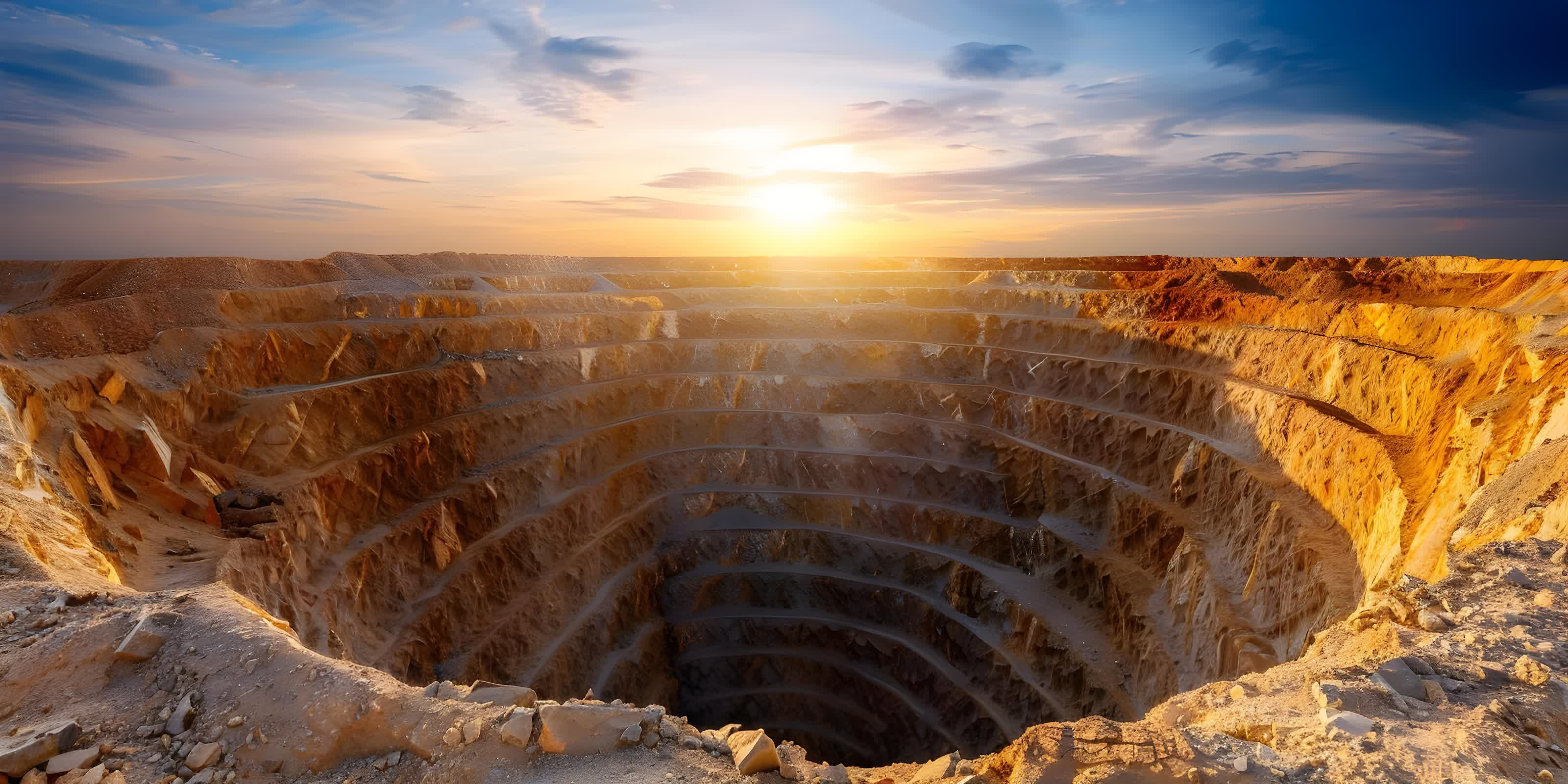
A global scramble for yttrium, a rare earth element used in high-performance alloys and protective coatings, is intensifying after China tightened export controls earlier this year. The restrictions have limited supply to key manufacturing hubs, sending prices soaring and heightening pressure on industries from aerospace to semiconductors.
Yttrium's unique thermal and chemical properties make it indispensable for advanced engineering. It strengthens nickel-based superalloys used in jet and gas-turbine engines and enhances the durability of coatings that shield against extreme heat.
It also serves a vital role in semiconductor manufacturing, where thin yttrium oxide films function as insulating and protective layers. Despite its importance, yttrium is rarely mined in pure form and must be refined from complex ore deposits, a process that remains heavily concentrated in China.
Beijing began requiring export licenses for yttrium and six other rare earths in April, in response to new US tariffs. Although some restrictions were later paused following talks between President Donald Trump and President Xi Jinping, export controls on yttrium remain in effect. Traders say the licensing process has slowed shipments to a fraction of pre-April volumes, creating months-long delivery delays.
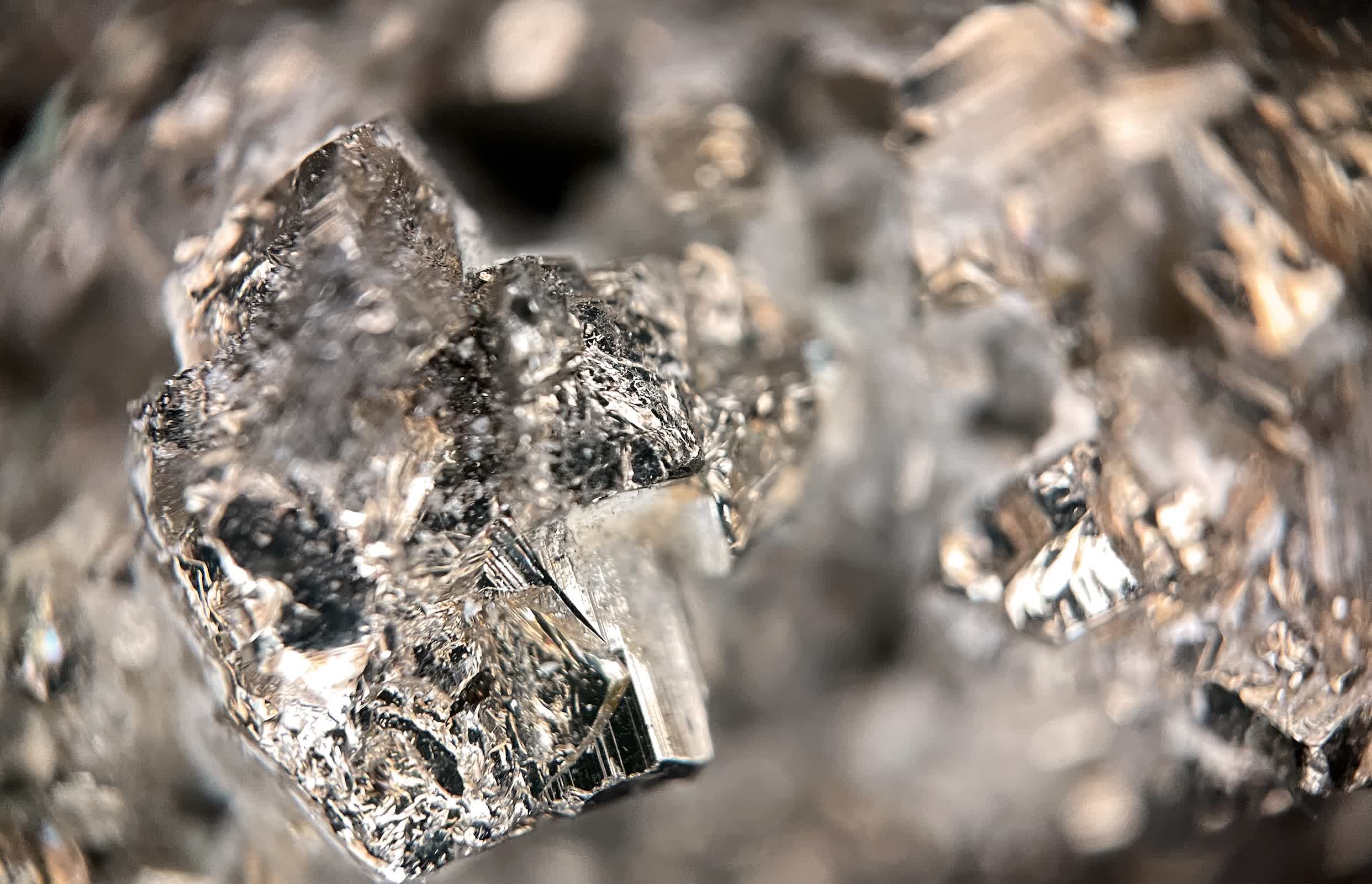
The disruption has sparked a global race to secure the rare earth element. In Europe, yttrium oxide prices have surged to $270 per kilogram – up 4,400% since January – as stockpiles dwindled. Chinese domestic prices, while much lower at around $7 per kilogram, have also risen and remain under close government supervision.
The Aerospace Industries Association warns that the US manufacturing base remains exposed. Dak Hardwick, the group's vice president for international affairs, said the element is crucial to the world's most advanced jet engines. "Our supply chain depends heavily on imports from China," he told Reuters.
Semiconductor firms report similar strains. One industry executive described the supply tightness as "a nine out of ten" in severity, citing the impact on production schedules. Richard Thurston, chief executive of Great Lakes Semiconductor, said longer lead times and higher costs are likely even without immediate factory shutdowns. "Shortages will increasingly become a real chokepoint," he said.
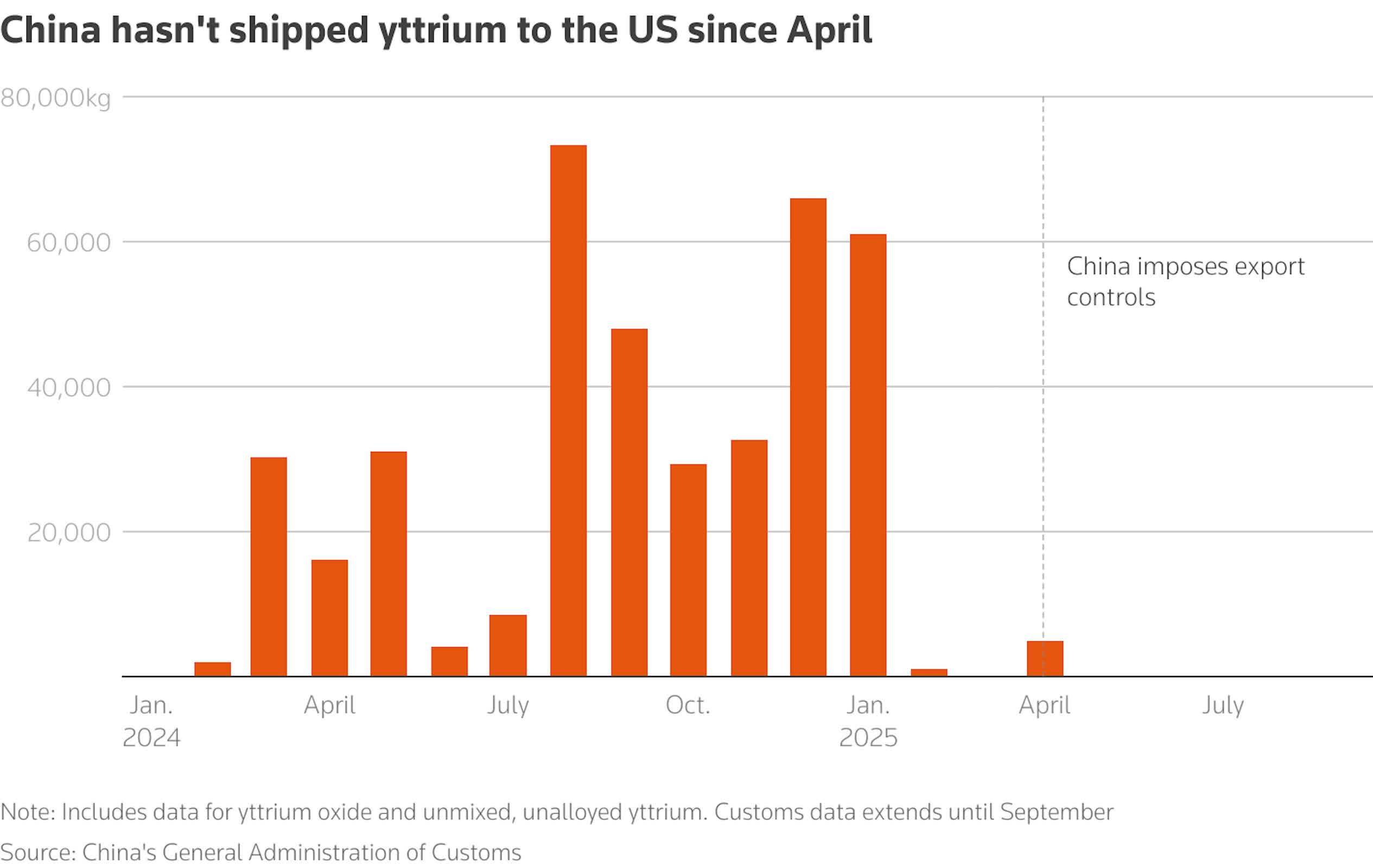
Chinese customs data confirm the contraction in supply. Direct shipments of yttrium to the United States have effectively stopped since the export controls took effect, while exports to the rest of the world have fallen by about 30%. Traders worry that rerouting material to the US could provoke further restrictions from Beijing, discouraging indirect trade.
The global market for yttrium is notoriously opaque. Industry estimates of material held outside China range from one to twelve months of consumption, but stockpiles appear unevenly distributed. One rare-earth trader said their inventories had plunged from 200 tons to just 5, while others reported being entirely out of material.
Despite the shortages, most aerospace production continues without major disruption, though executives remain cautious. Gulfstream Aerospace president Mark Burns said yttrium shortages had not yet affected deliveries but acknowledged "peripheral" concerns about future availability.
Some large energy and manufacturing firms have avoided immediate problems. Mitsubishi Heavy Industries, a leading gas turbine producer, said its operations remain stable. Siemens Energy chief executive Christian Bruch said the company is monitoring the situation closely while diversifying away from Chinese rare earth suppliers. "It is still manageable for us at the moment," Bruch said. General Electric's energy arm, GE Vernova, declined to comment.
The United States imports all of its yttrium, with about 93% sourced directly from China, according to the US Geological Survey. Domestic production may resume soon: Indiana-based ReElement Technologies plans to begin commercial output of yttrium oxide in December at roughly 200 tons per year, ramping up to 400 tons by March.
That capacity would cover most of the US' estimated 470-ton annual demand, though analysts note that scaling to industrial volumes and building refining expertise will take time.
Image credit: Reuters


