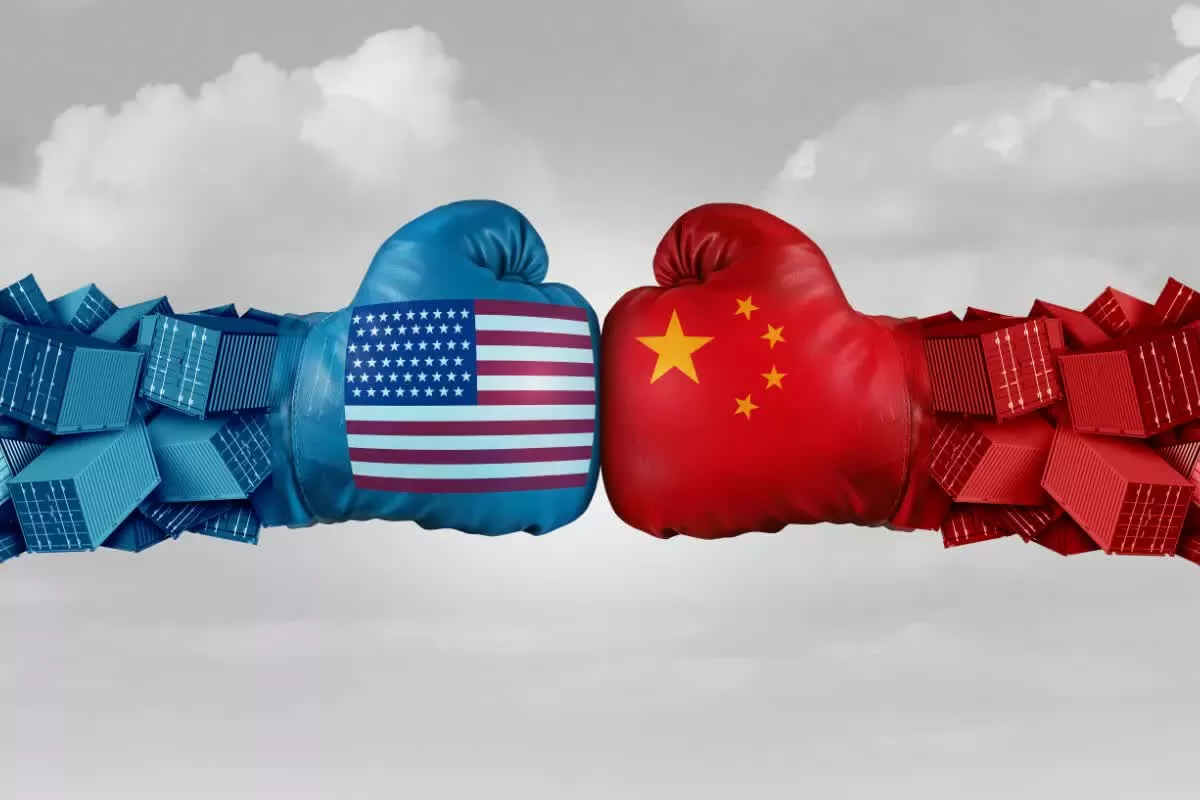
In brief: The latest tit-for-tat trade actions between China and the United States threaten to exacerbate an already strained global supply chain, affecting shipments and costs across multiple technology sectors. China's newest export measures are more targeted than previous restrictions, while President Trump has again threatened steep tariffs in retaliation.
This week, China announced new rare earth export restrictions. Reuters reports that the expanded bureaucratic controls also cover technologies critical to rare earth extraction and refinement, seemingly intended to keep other countries reliant on Chinese expertise.
Building on restrictions on magnets and raw materials enacted in April, China's new controls explicitly include semiconductor production for the first time, highlighting the country's sway over the global supply. The move comes after the US recently sought to bolster its domestic rare earth supply and restrict sales of chipmaking equipment to China.

Rare earths are crucial in the manufacture of semiconductors and many other technologies. Although they are not scarce, extracting and refining them is difficult, and China has spent decades developing the necessary infrastructure. The Asian nation controls 70 percent of global rare earth mining and 90 percent of processing capacity.
China's new controls require foreign entities to obtain export permits for rare earths from the country, effective immediately. Starting December 1, restrictions will also apply to products made outside China that incorporate Chinese materials. Additionally, authorities will block exports of advanced semiconductors on a case-by-case basis and stop all military-related shipments.
Analysts predict that the restrictions will impact products like Apple's A18 Pro iPhone chip, Nvidia's H100 AI processor, and Samsung's ninth-generation V-NAND memory chips. Shipments from ASML, the supplier of advanced semiconductor manufacturing equipment, may also encounter delays.
After harshly criticizing the decision on Truth Social, President Trump announced a 100-percent tariff on China, effective November 1. Following the announcement, the S&P 500 dropped more than 100 points in 30 minutes. Trump also threatened to cancel a scheduled meeting with Chinese President Xi Jinping. Analysts anticipate the two will meet at the 2025 APEC summit in South Korea later this month.
Tariffs, supply chain disruptions, and other factors have already driven up prices for many products in recent years. Tariffs may be contributing to the rising cost of game consoles, while NAND manufacturing bottlenecks could worsen global supply amid growing AI-driven demand. Renewed trade tensions could echo the cryptocurrency craze that once inflated graphics card prices.