TikTok settles three addiction lawsuits as new case blames social media for teen suicides

DragonSlayer101

Posts: 1,017   +15
Staff
A hot potato: Social media companies are facing thousands of lawsuits alleging that they failed to adequately protect minors and young adults from harmful content, digital addiction, cyberbullying, and online grooming. Just last week, four families from across the US sued Meta, TikTok, Snapchat, and YouTube, alleging that the platforms were directly responsible for the deaths of their teenage children.
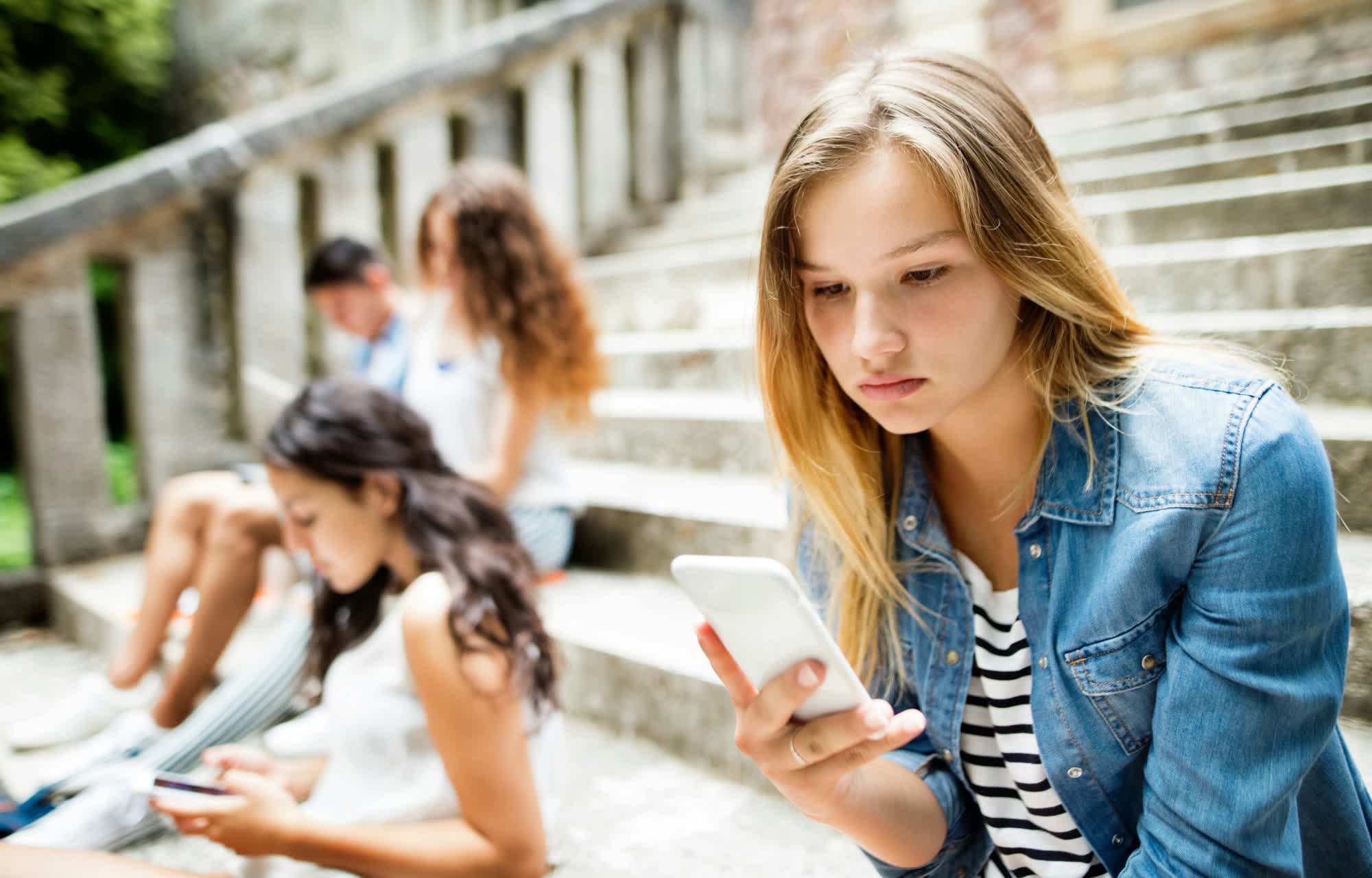
The lawsuit was filed in the Superior Court of Delaware on behalf of the victims by the Social Media Victims Law Center, a national legal advocacy organization representing families who say they have been harmed by social media and AI platforms. According to the complaint, the four teens who died by suicide experienced severe sleep deprivation, depression, anxiety, and suicidal ideation linked to their social media use.

The Social Media Victims Law Center is representing the families of Livi Castro, 13, Riv Kelleher, 14, Nathaniel Chambers, 17, and Dawson Holden, 18. All four died by suicide over a 14-month period between July 2024 and September 2025, following what the lawsuit describes as "years of escalating harms" from using "addictive and dangerous" social media platforms.

Speaking to reporters, SMVLC founder Matthew Bergman slammed social media companies, saying the children died because the companies simply did not care. "These platforms continue to kill kids, despite the platitudes of their executives. This is a clear and present danger to the health and safety of children, not just in the United States but around the world," he added.
Days after the Delaware case was filed, TikTok agreed to settle three other lawsuits alleging that the company deliberately designed its platform to be addictive, harming the mental health of young people. Speaking to the media, the plaintiffs' lawyer, Joseph VanZandt, said the terms of the settlements are confidential and subject to the finalization of written settlement agreements with TikTok.

Authorities did not disclose the full names of the plaintiffs because they are minors, opting to refer to them by their initials instead. They include a 15-year-old Illinois girl identified as S.J., a 15-year-old New Jersey resident referred to as P.M.Y., and an 18-year-old from Mississippi listed as K.D.B. in the official press release.

Social media companies are facing thousands of lawsuits across several US states, the vast majority of them alleging that the companies knowingly sacrifice the mental well-being of their users at the altar of increasing profits. According to Reuters, around 3,300 lawsuits have been filed against social media companies in Los Angeles Superior Court, where Judge Carolyn Kuhl is presiding over the cases.

In addition to the multiple lawsuits filed by users, Meta is also being sued by 40 US states for allegedly contributing to a youth mental health crisis by encouraging teens to spend too much time on its platforms. The lawsuits claim that the company ignored its own studies indicating a direct correlation between social media addiction and deteriorating mental health.

Permalink to story:

 
Social media is just the medium. PEOPLE are the problem. Give them an anonymous bullhorn and you'll always see who they really are. But in this particular instance it *might* be possible to cram the genie at least partway back into the bottle. Its beyond dispute that these platforms are designed to keep you scrolling endlessly, and the mental and physical health detriments are becoming better documented by the day. I'd support government efforts to work with the social media barons to make their products safer.
 
Social media is just the medium. PEOPLE are the problem. Give them an anonymous bullhorn and you'll always see who they really are. But in this particular instance it *might* be possible to cram the genie at least partway back into the bottle. Its beyond dispute that these platforms are designed to keep you scrolling endlessly, and the mental and physical health detriments are becoming better documented by the day. I'd support government efforts to work with the social media barons to make their products safer.
AKA: "Please daddy government, shove that Real ID boot further down my throat! Please, I need more government in my life!".
 
Social media is just the medium. PEOPLE are the problem. Give them an anonymous bullhorn and you'll always see who they really are. But in this particular instance it *might* be possible to cram the genie at least partway back into the bottle. Its beyond dispute that these platforms are designed to keep you scrolling endlessly, and the mental and physical health detriments are becoming better documented by the day. I'd support government efforts to work with the social media barons to make their products safer.
I can only partially agree with that.
With something like snapchat, yeah it's probably bullying that was the cause and you can couple it to the 'anonymous bullhorn' analogy.

Had to click the link in the article as the article is spart on details, but it's as I expected. Two of three cases mentioned for TikTok involved an eating disorder. Wouldn't see that as much as people directly (intentionally) bullying people or trying to ruin their lives. More of a case of people trying to get clicks and offering terrible advice.

First we had media / 'super models' glorifying a super skinny look.
Then we had tumblr with a pro-ana movement (people trying to push anorexia on other people as a positive thing). Which is worse, but you still had to click your way into it yourself mostly.
Now we have TikTok where if it determines you're a young girl* with an interest in losing weight will mix in more and more extreme content. Just another form of looksmaxxing after all isn't it? Definitely the worst form of it so far imo and a reason to try and get TikTok to take steps against it.

So I wouldn't exactly see TikTok as something where people with an anymous bullhorn the (majority of the) problem. It's in their lackluster moderation and their automated algorithm that will steer you further and further into a corner - even when that corner is clearly harmful. Or to keep analogy going, TikTok directing the crowd to that bullhorn without checking if that what is being shouted through the bullhorn is actually something people should be hearing.

*I just used a young girl as a typical example that's easier to relate to the two examples before it. Guys nowadays are just as looks obsessed although the harmful angle there will likely be more in the form of pushing steroid content.

PS: For any parents, also be aware that TikTok live streams are a thing where pervs will try to get kids to perform certain actions in exchange for gifts using lingo that gets around TikToks automated moderation. They're not very active when it comes to manual moderation of these even after reports are send in and afaik they're more likely to suspend the stream then put in much effort to get the pervs off the platform.
 
This isn't necessarily a bad thing. Too many of these Gen Zs are indoctrinated fools. They were taught and follow that to think, rather than how to think, (Critical Thinking Skills comes to mind) let alone stand up for what's right or wrong. And the rest simply don't give a S !~!~
 
People are ultimately responsible for the cruelty, harassment, and garbage they post, but these platforms are not merely neutral pipes. Their algorithms are deliberately designed to maximize engagement, keep people scrolling, and repeatedly feed them whatever triggers the strongest reaction.

That is especially concerning with teenagers, who are more vulnerable to social pressure, compulsive behavior, and harmful content. Government should not decide what opinions people may express, but requiring stronger protections for minors, safer recommendation systems, meaningful parental controls, and greater transparency seems entirely reasonable.

At the same time, social media cannot be held solely responsible every time a young person takes their own life simply because society needs someone to blame. These situations are usually far more complicated. Responsibility also begins at home...with parental involvement, communication, supervision, recognizing warning signs, and knowing what children are doing online.

The platforms may amplify the problem, and they should be held accountable when their designs knowingly make it worse, but they cannot replace parenting or carry all the blame for every tragedy.
 
Back