Toshiba starts shipping SMR MAMR enterprise hard drives offering up to 34TB of storage

Alfonso Maruccia

Posts: 2,594   +976
Staff
What the Byte: Toshiba has announced a new series of hard disk drives designed for data center and enterprise customers. Just in time for World Backup Day, the drives feature significant technological upgrades and a slew of industry acronyms – although a HAMR-based unit has yet to appear.
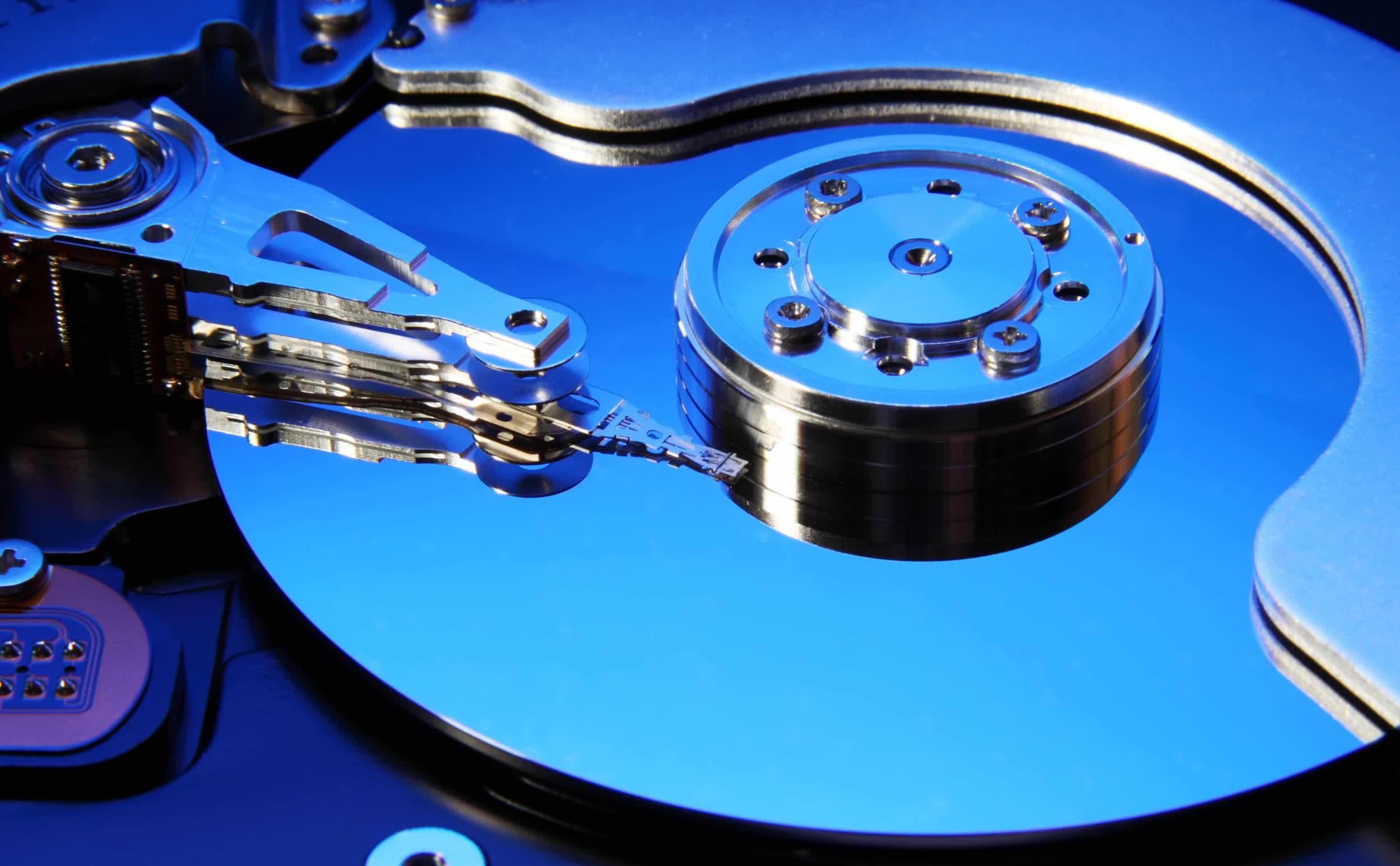
Toshiba's M12 Series of 3.5-inch drives uses Shingled Magnetic Recording to achieve storage capacities ranging from 30 to 34TB. The Japanese corporation – one of the world's largest HDD manufacturers alongside Seagate and Western Digital – said the new line of drives is specifically designed for hyperscale customers, cloud service providers, and large-scale data center operations.

Toshiba introduced the M12 Series on World Backup Day, emphasizing the importance of regular backups to protect valuable data. The need for backups and larger storage drives is now more critical than ever due to cloud computing, "data-hungry" AI technologies, and the growing demand for video content distribution.

The M12 Series incorporates several of Toshiba's latest technological advancements to improve upon the previous MG11 Series. Most notably, the new drives include an additional magnetic platter, bringing the total to 11. The recording media has replaced the traditional aluminum substrate with glass, offering higher durability and enabling thinner drive designs.
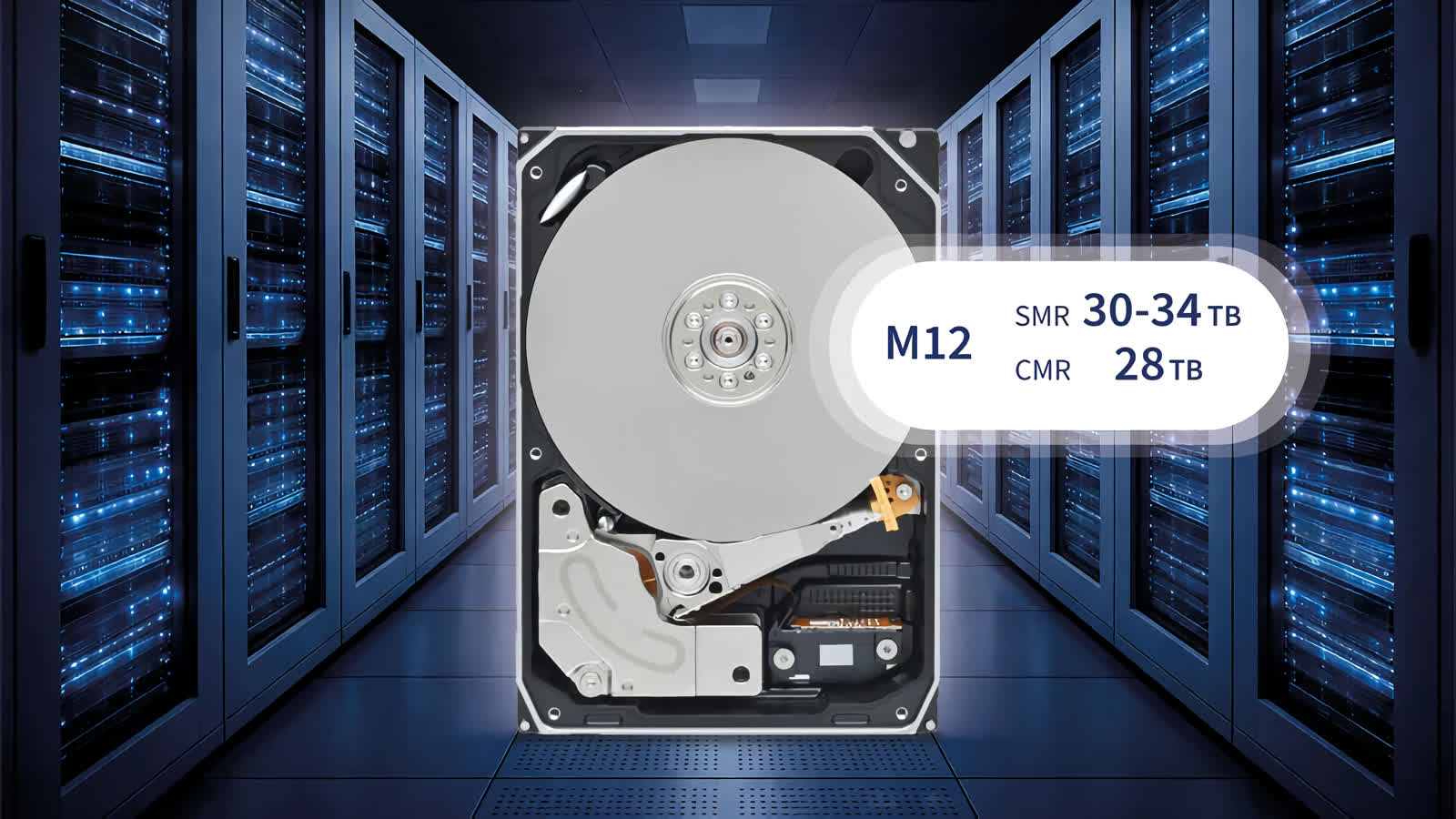
The helium-filled M12 drives are based on Toshiba's proprietary Flux Control Microwave-Assisted Magnetic Recording. Combined with SMR, FC-MAMR significantly increases data density, enabling higher storage capacities. MAMR uses high-frequency magnetic fields to achieve results similar to those of laser-based, heat-assisted magnetic recording drives.

Shingled Magnetic Recording can cause performance degradation in certain workloads, which is why Toshiba employs a "host-managed SMR architecture" to mitigate these issues. In this design, the host system determines and manages data placement and rewrite operations, with Toshiba promising enhanced efficiency and performance in server environments.

Toshiba also plans to release new drives using the faster, more reliable Conventional Magnetic Recording technology in the third quarter. However, these CMR drives will offer "limited" storage capacities of up to 28TB.

The M12 Series can reach a maximum data transfer rate of 282MB per second, an 8% improvement over the M11 Series. The drives are designed for continuous operation, supporting an annual workload rating of 550TB. Looking ahead, Toshiba's roadmap includes HAMR drives and larger units with up to 12 platters.

Seagate has already launched its HAMR drives, while Western Digital plans to follow in 2027.

Permalink to story:

 
34TB HDD I'm guessing would go for about $3K in Australia these days.

Well, a Seagate IronWolf Pro 32TB HDD is about AUD$1600 to AUD$1800 price range (at various Aussie computer shops).

So probably AUD$2000 to AUD$2200 price range for 34TB HDD? Maybe? *shrugs shoulders*
 
Give me hard drive sizes with SSD reliability.
Something that maybe works like a hard drive but lacks
moving parts. I am not even asking for the same low price
of HDDs. Say this new tech cost more than typical HDD per TB
but was a lot more reliable.
But then, in times when AI eats everything a computer is made of, expecting
something good is like believing in magic.
 
Give me hard drive sizes with SSD reliability.
Something that maybe works like a hard drive but lacks
moving parts. I am not even asking for the same low price
of HDDs. Say this new tech cost more than typical HDD per TB
but was a lot more reliable.
But then, in times when AI eats everything a computer is made of, expecting
something good is like believing in magic.

Soooo, a high capacity SSD? These things exist in the enterprise space. SSDs exceed HDD density actually. Unfortunately, storage cartel has kept the pricing of those unobtainable for anyone else. 8TB has been the max in the consumer space for a while, even as NAND density has increased greatly. And not even 8TB costs more than any consumer can reasonably afford.
 
Soooo, a high capacity SSD? These things exist in the enterprise space. SSDs exceed HDD density actually. Unfortunately, storage cartel has kept the pricing of those unobtainable for anyone else. 8TB has been the max in the consumer space for a while, even as NAND density has increased greatly. And not even 8TB costs more than any consumer can reasonably afford.
No, not an SSD. No matter how hard they try to make NAND cheaper, the price would still be a lot more than for HDD. But if someone could come up with a clever trick to get rid of moving parts and still use some sort of plates, it would boost reliability while retaining a much bigger size compared to SSDs.
 
No, not an SSD. No matter how hard they try to make NAND cheaper, the price would still be a lot more than for HDD. But if someone could come up with a clever trick to get rid of moving parts and still use some sort of plates, it would boost reliability while retaining a much bigger size compared to SSDs.
The problem is that NAND is cheaper, or would be if it wasn't price fixed by purposly limiting manufacturing capacity and supply by a trio of colluding companies. Encomy of scale doesn't work when greed controls the scale.
 
No, not an SSD. No matter how hard they try to make NAND cheaper, the price would still be a lot more than for HDD. But if someone could come up with a clever trick to get rid of moving parts and still use some sort of plates, it would boost reliability while retaining a much bigger size compared to SSDs.
SSD price doesn't have to achieve parity with HDD at the same capacity. Despite higher price and lower capacity no one uses cheap 1-3TB HDD's anymore.

Not sure what's wrong with SSD reliability that it needs to be "boosted" with archaic 10TB platters that take up 2,5"-3,5" space.

SSD's already far eclipse HDD sizes at comparable size and far exceed it at smaller size. Their price has much less to do with their capacity, than their target market.

Sure, higher capacity SSD's do cost more, but not to a degree that manufacturers have us believe.
HDD's are a technological dead end. Even if their capacity keeps slowly increasing (roughly 2TB per year) their speeds do not and that a major issue. It's like mounting a garden hose to a fire truck to put out a fire.
 
Back