First look: Vodafone Group and its Ukrainian subsidiary are building a new submarine cable across the Black Sea to connect Europe and Asia while deliberately bypassing Russian territory. The system marks one of the region's most ambitious telecommunications infrastructure projects in years.
The first segment of Vodafone's Kardesa undersea cable will begin in Bulgaria in 2027 and eventually extend to other coastal nations, including Ukraine, Georgia, and Turkey. Although parts of Ukraine remain affected by the ongoing conflict, the cable will pass only through internationally recognized safe zones. Tom's Hardware reports that project estimates put the total cost at more than €100 million, or about $116 million US.
The region currently hosts only one cable linking Georgia to Bulgaria across the Black Sea. Other backbones in the area primarily serve short regional routes, such as those connecting Russia with Georgia or Bulgaria with Turkey. Kardesa would establish a broader transnational corridor, providing an alternative link between Europe and Asia that avoids both Mediterranean and Russian routes.
The Kardesa project comes as undersea cable networks – which carry 95 percent of international data traffic – face increasing physical and geopolitical risks. Concerns about vulnerabilities have intensified following a spate of disruptions since late 2024. Western intelligence agencies have accused Russia of conducting reconnaissance or interference operations targeting submarine infrastructure. In the Red Sea, several fiber connections were damaged in recent months, temporarily reducing network traffic between Europe, Asia, and the Middle East.
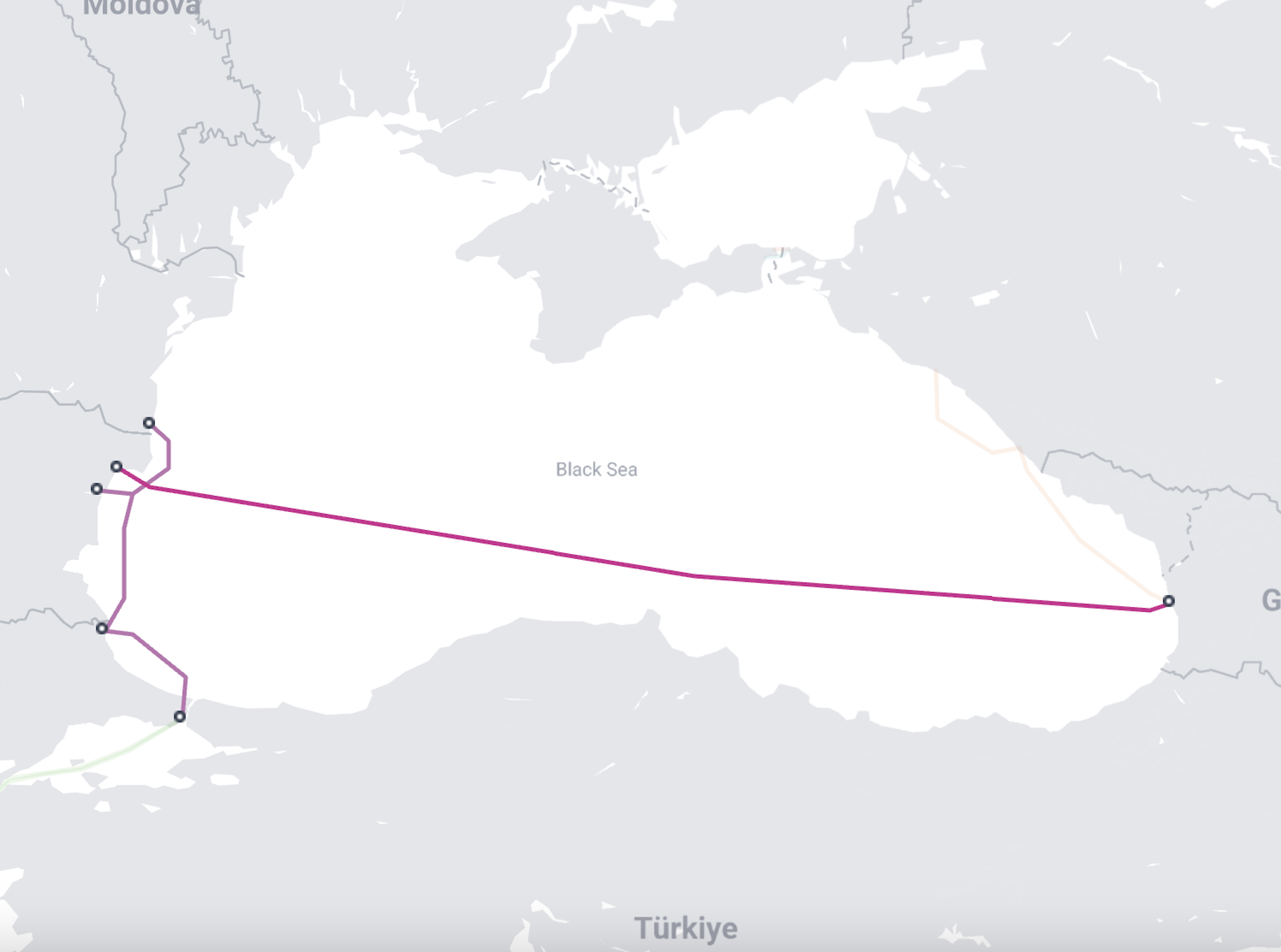
By providing a direct route through the Black Sea, the Kardesa project would offer network redundancy – often called "route diversity" – enabling data to be rerouted if a cable is compromised. This redundancy is crucial for preventing large-scale disruptions to cloud services, financial networks, and government communications.
Global technology firms are also taking steps to harden their systems against such disruptions. For example, Meta is developing a massive 50,000-kilometer undersea network connecting the US, Brazil, Africa, India, and Australia while avoiding regions considered at higher geopolitical risk.
Efforts to secure undersea infrastructure are also expanding. German engineering firm AP Sensing has introduced Distributed Fiber Optic Sensing technology, which uses acoustic monitoring along cable lines to detect early signs of damage or tampering. Additionally, NATO has begun deploying sea drones to patrol and inspect cable routes in the North Atlantic. Meanwhile, Taiwan has strengthened maritime surveillance to monitor more than two dozen vulnerable fiber lines along its coast.
For Europe and its eastern partners, the Kardesa initiative could offer more than improved connectivity. The new Black Sea link could stimulate secondary investments in regional data centers and artificial intelligence development, both of which rely on stable, high-capacity networks. If completed as planned, the project would provide a physical and strategic backup to some of the world's most heavily trafficked digital routes – this time entirely avoiding Moscow's periphery.
Image credit: TeleGeography
Vodafone is building a new Black Sea cable to link Europe and Asia while bypassing Russia


