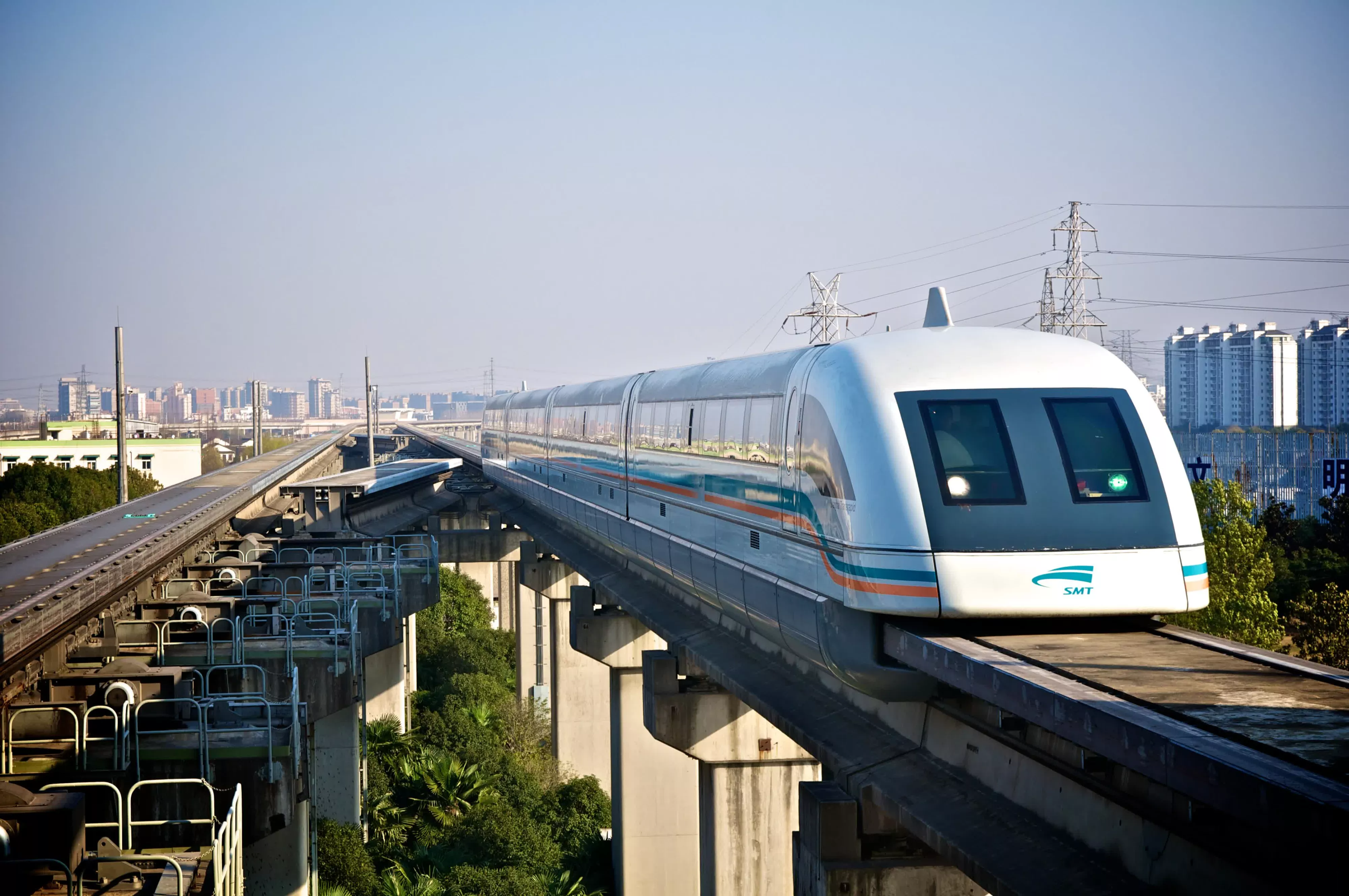
Something to look forward to: The risk of generating dangerous shockwaves when exiting tunnels has long challenged high-speed rail systems. As maglev trains reach higher speeds, the problem becomes even more pronounced, increasing the need for an effective solution. Now, researchers believe they have developed a mitigation method that releases compressed air from tunnels before it can disturb humans or wildlife.
The Guardian reports that researchers have developed a new method to reduce the "tunnel boom" effect that occurs when high-speed trains exit tunnels. The technology could soon prove essential, as next-generation maglev trains approach speeds exceeding 600 mph.
Engineers have long known that when a high-speed train enters a tunnel, it compresses the air in front of it. That air is forced toward the opposite end of the tunnel, where it accumulates. As the train emerges, it disrupts the compressed air, creating a shockwave similar to the sonic boom produced when an aircraft breaks the sound barrier.
While aircraft typically must reach about 762 mph to create a sonic boom, a train can generate a comparable shockwave at much lower speeds. Such shockwaves can harm people and wildlife, as well as damage infrastructure.

Until now, tunnel booms have been a manageable problem because the fastest passenger trains in service – just over 200 mph – require a tunnel at least 3.73 miles long to generate a shockwave. But a recent maglev prototype in China reached 600 kph (373 mph), reducing that distance to just 1.2 miles. Other tests have exceeded 620 mph, faster than many aircraft.
Researchers say installing 100-meter-long porous, soundproof buffers at tunnel entrances, along with a porous coating along the interior, can cut tunnel boom intensity by up to 96 percent. The material works by letting compressed air escape before the train bursts out of the tunnel.
Maglev trains levitate a few millimeters above the track using magnetic and electromagnetic forces. With no physical contact with the rails, speed is limited mainly by air resistance and passenger comfort, allowing them to reach extreme velocities.
Shanghai's Transrapid, the world's first maglev train, still holds the record as the fastest electric passenger train, cruising at nearly 270 mph after more than 20 years in service. But while China and other countries test increasingly faster maglevs, the US has yet to put one into service – and likely won't anytime soon. The Trump administration defunded both the proposed Baltimore – Washington maglev line and California's high-speed rail projects.