Ripple effect: The proliferation of sidewalk robots reflects the broader challenge of integrating automation into everyday life. Supporters argue that the technology addresses concerns related to cost, sustainability, and labor shortages. Skeptics counter that it prioritizes investor interests while sidelining broader community concerns about privacy, employment, and equity. As Atlanta's experience demonstrates, the robots – however visible – may still have progress to make before fulfilling their claimed potential as transformative urban assets.
Robots like 'Courtney' and 'Esther', conspicuous for their blinking LED "eyes" and compact, cooler-like frames, have quietly settled into the daily rhythms of Atlanta's Midtown neighborhoods. Developed by Serve Robotics, these autonomous four-wheeled machines deliver Uber Eats orders over short distances – generally less than a mile – and have become both a familiar sight and a source of ongoing debate about urban automation and its limits.
Serve's delivery robots rely on a combination of sensors and navigation software to maneuver city sidewalks. Each vehicle is equipped with an array of proximity detectors, cameras, and telemetry systems that allow it to traverse crosswalks, avoid obstacles, and deliver packages to consumers.
Despite their all-terrain wheels, real-world performance varies... drawing mild frustration among cyclists and pedestrians, who now treat the bots as everyday obstructions rather than novelties.
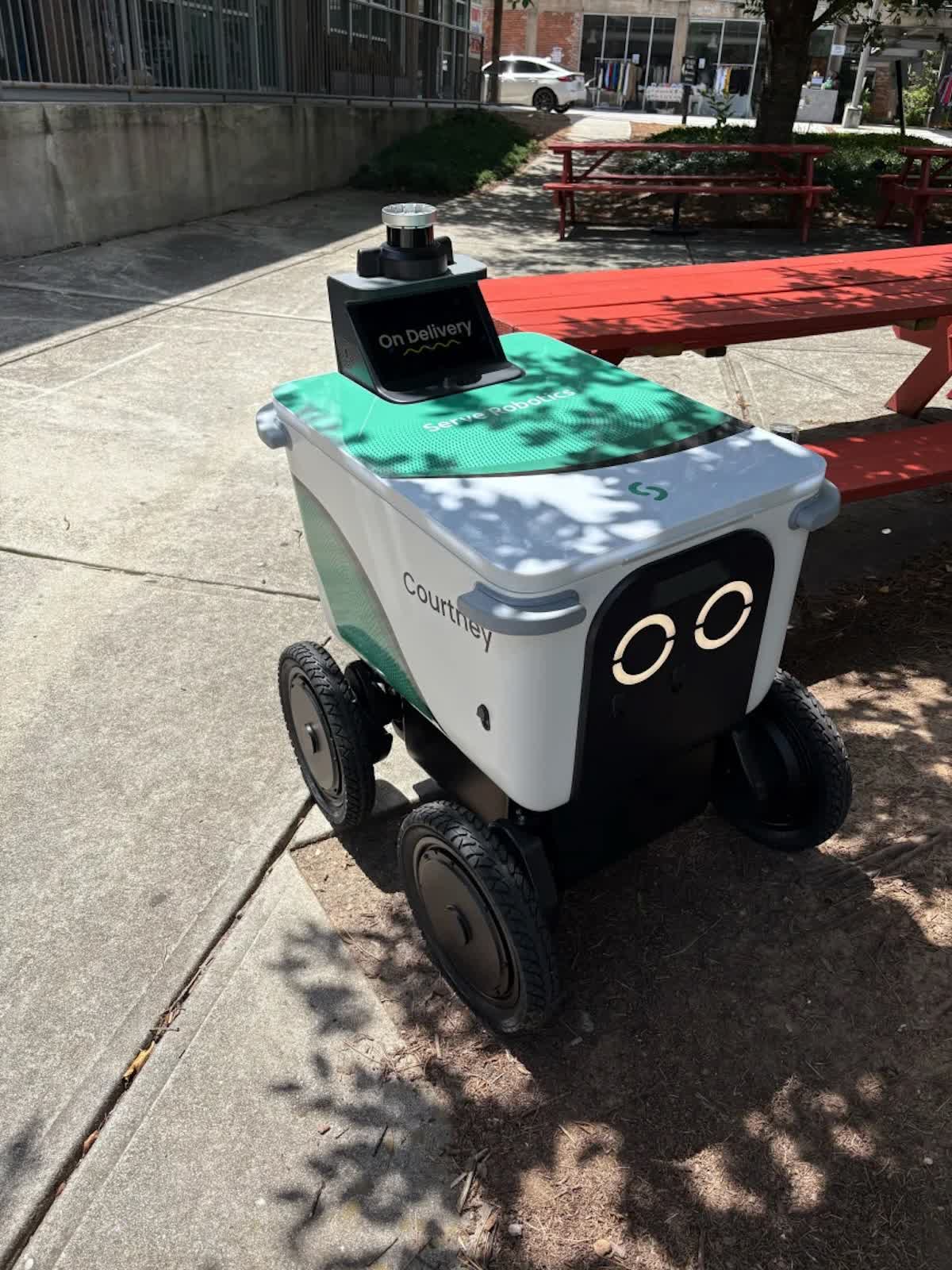
Despite their all-terrain wheels, real-world performance varies. The robots have been observed moving hesitantly, sometimes pausing for long stretches or getting temporarily stuck on uneven walkways. These quirks have drawn everything from viral curiosity on social media to mild frustration among cyclists and pedestrians, who now treat the bots as everyday obstructions rather than novelties.
The arrival of autonomous couriers initially sparked waves of online attention. Many Atlantans documented their first encounters, capturing both amusement and uncertainty about the practical benefits of such technology.
Three months later, the novelty has faded for many residents as the bots have become integrated – if sometimes obstructively – into the city's streetscape. The robots are now found in multiple US cities like Miami, Dallas, Los Angeles, and Chicago, to name a few.
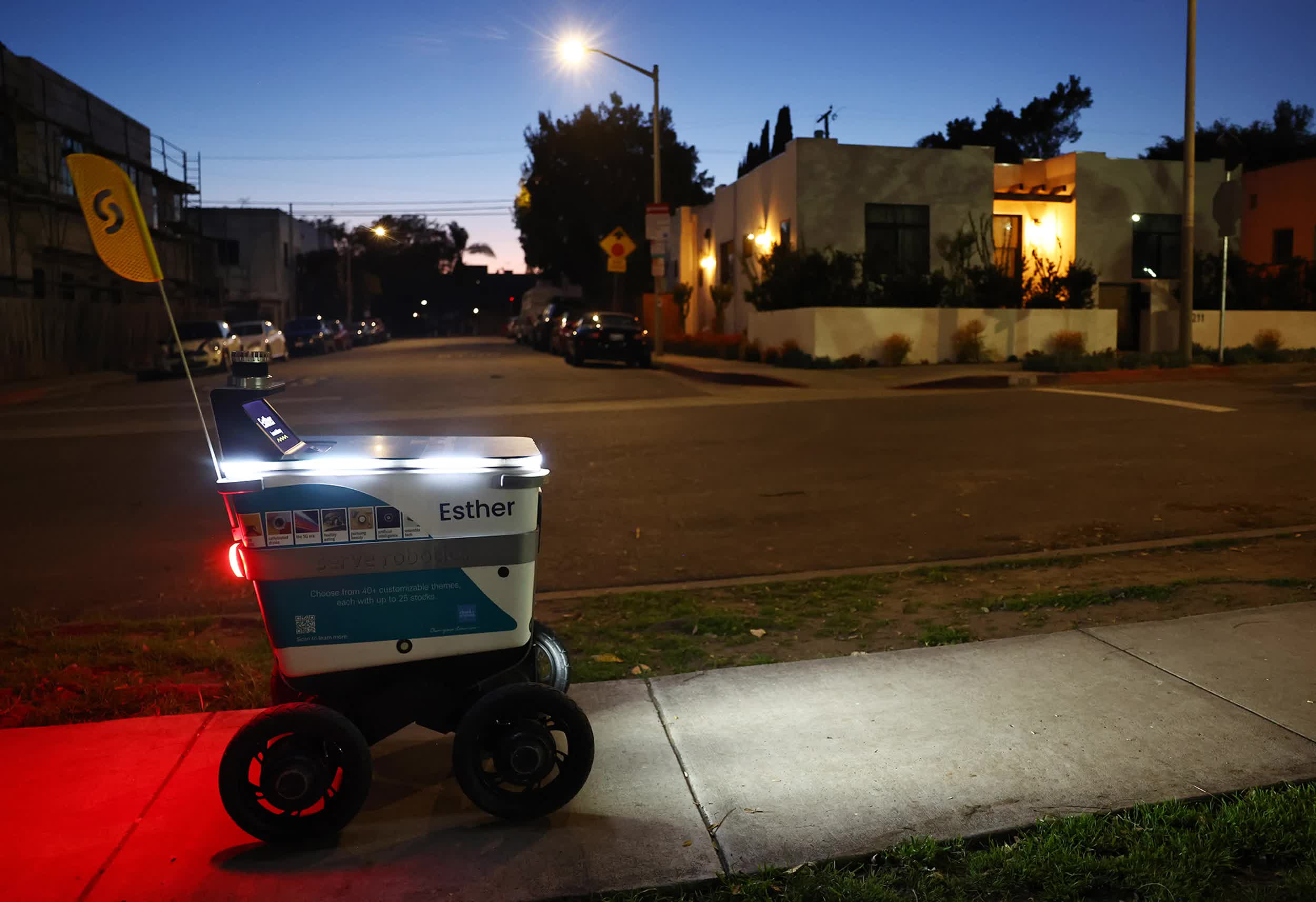
To foster community acceptance, Serve gives each robot a personal name and playful design, including animated LED "pupils" that mimic expressive eyes. "We want the robots to be friendly and fun and embraced by the communities they go to," Ali Kashani, CEO of Serve Robotics, told CNN. Branding stunts, such as robots with rainbow paint jobs for Pride Month and cameo appearances on variety television, further reflect an effort to present automation as approachable and beneficial.
Yet, experts warn that these attributes can blur the line between product and companion. "People think they are your friends, but they're actually cameras and microphones of corporations," said Joanna Bryson, an artificial intelligence scholar at the Hertie School in Berlin.
Edward Ongweso Jr., a researcher with Security in Context and a frequent critic of unchecked tech expansion, questioned the lack of public input on the rollouts of urban robots. "They're being rolled out without any sort of input from people, and as a result, in ways that are annoying and inconvenient," he said. Ongweso Jr. notes that, while companies like Serve, Avride, and Coco Robotics have deployed delivery robots in multiple cities, residents have little opportunity to weigh in on the decision.
For Kashani and other proponents, the goal is to encourage consumers toward a future where robots are commonplace. "The way to do that is to just push it into as many places as possible, and have these spectacle demonstrations, get some friendly coverage, try to figure out the ways in which you're selling this as the only alternative," Ongweso Jr. explained.
Despite their continued presence, Serve's bots have not replaced human couriers. Attempts to summon a robot delivery have frequently resulted in conventional cyclists arriving at doorsteps instead – often faster than the 18-minute average delivery time reported by Serve. The company says it targets short, sub-mile trips in walkable, high-density areas, but results have been mixed, with reliability often called into question.
Serve claims its robots can operate year-round and handle extreme weather, but incidents elsewhere have tested those assurances. Reports have documented robots requiring rescue after severe weather events, casting doubt on whether the machines are as robust as advertised.
Kashani maintains that robot delivery could yield benefits, including lower car traffic, reduced emissions, and cost savings for consumers – especially since "you don't have to tip the robots."
Critics argue that delivery robots have broader implications for public safety, employment, and city life. Dylan Losey, a Virginia Tech assistant professor of mechanical engineering, notes that unregulated AI presents unresolved safety concerns. "We don't know if a third party has checked the hardware and software and deemed the system 'safe' – in part because what it means for these systems to be 'safe' is not fully understood or standardized," Losey said.
Accessibility remains a challenge, as incidents in Los Angeles and other markets illustrate the risk of collisions and sidewalk obstructions, especially for people with disabilities. In one widely shared video, a Serve robot collided with a man using a mobility scooter.